“I am Mordred. I am a knight. But I am not my father's son, nor my mother's; I am my own.”
— Mordred's declaration of his own identity, separate from his parents' influence.

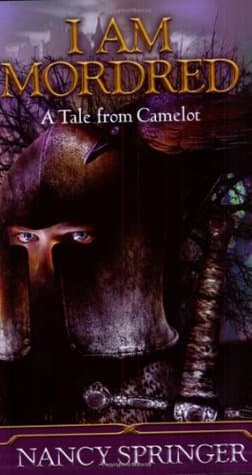
Nancy Springer (1998)
Genre
Fantasy / Historical Fiction / Young Adult
Reading Time
150 min
Key Themes
See below
Sign in to track this book
Dressed in black and named Arthur's killer by prophecy, Mordred fights his grim fate and seeks his father's love, finding an unexpected ally in the sorceress Nyneve, who gives him a white pup and a chance at goodness away from Camelot.
The story begins with Mordred's birth, a secret affair resulting from King Arthur's unwitting incest with his half-sister, Morgan le Fay. Merlin, the court wizard, immediately declares a grim prophecy: this child, born on May Day, will destroy Arthur and Camelot. Despite Arthur's attempt to drown all May Day infants to prevent the prophecy, Mordred is saved by the sea, eventually washing ashore and being raised by a kind couple who do not know his true parents. He grows up feeling an unexplained pull towards Camelot and a sense of being different, often dressed in black as a symbol of his destined sorrow.
At age ten, Mordred, now a somber and observant boy, travels to Camelot. He is drawn by an unknown desire for a father figure and a place to belong. Upon his arrival, his resemblance to Arthur, along with his May Day birth, immediately marks him as the child of Merlin's prophecy. King Arthur recognizes the boy, torn between paternal affection and the overwhelming fear of his predicted doom. Mordred is allowed to stay, but he is treated with pity and isolation, constantly reminded of his cursed fate by the knights and courtiers.
Merlin, always watching his prophecy, subtly reinforces the court's fear and suspicion of Mordred. He uses his magic and influence to ensure Mordred remains an outcast, believing that isolating the boy can prevent the prophecy. Mordred, desperate for love, tries to prove his worth, but every attempt is seen through the lens of his predicted evil. He finds himself constantly misunderstood, his good intentions misinterpreted, and his natural sadness deepened by the widespread belief that he is inherently bad.
Amidst the general fear and prejudice, Nyneve, Merlin's beautiful and intelligent apprentice, offers a glimmer of hope. Unlike others, Nyneve sees past the prophecy to the lonely, misunderstood boy. She shows him genuine kindness, listens to his thoughts, and believes that destiny is not fixed, that Mordred can choose his own path. Her compassion is a great relief for Mordred, giving him the first true human connection he has experienced in Camelot and planting the idea that he might not be evil.
Recognizing how Camelot's atmosphere harms Mordred, Nyneve acts decisively. She plans to free him from Merlin's oppressive influence and the court's judgment. Nyneve, using her growing magical abilities, traps Merlin in a crystal cave, removing his manipulative presence. Before leaving, she gives Mordred a white puppy, whom he names Gull, a symbol of innocence and companionship. Together, Nyneve, Mordred, and Gull travel to his mother's castle, where he can grow up away from the prophecy's shadow.
At Morgan le Fay's castle, Mordred has a complex upbringing. Morgan, a powerful sorceress, treats him with a possessive, yet sometimes cold, love. She teaches him magic and herbal lore, encouraging his intellectual curiosity. While he finds some belonging and a sense of family, Morgan's own bitterness towards Arthur and Camelot subtly influences Mordred, filling him with conflicting emotions about his father and his heritage. He wants Arthur's love but is also exposed to Morgan's deep resentment, shaping his views on loyalty and betrayal.
Years later, Mordred, now a young man, returns to Camelot. He still seeks Arthur's acceptance and a place among the Knights of the Round Table. However, the court is full of tension and moral decay. He discovers the secret affair between Sir Lancelot, Arthur's most trusted knight, and Queen Guinevere. This discovery deeply disturbs Mordred, as it shatters his idealized image of Camelot and his father's reign. He struggles with the moral implications, feeling a duty to Arthur but also wanting to avoid more conflict and pain, especially with his own prophetic burden.
Torn between his desire for Arthur's love and his mother's influence, Mordred feels compelled to expose Lancelot and Guinevere's affair. He does this, not out of malice, but from a misguided sense of duty and a desire for justice, hoping to restore order to Camelot. His actions, however, trigger a catastrophic chain of events. Lancelot flees, Guinevere is condemned, and the Knights of the Round Table are broken. This leads directly to a devastating civil war, tearing Arthur's kingdom apart and setting the stage for Merlin's prophecy to come true.
The civil war ends in the tragic Battle of Camlann. Mordred, now leading a faction against Arthur, is forced into a confrontation with his father. Despite his deep desire for Arthur's love, the prophecy looms, and fate pushes them towards their inevitable clash. In the chaos, Mordred is mortally wounded by Arthur, and in turn, strikes a fatal blow upon his father. The prophecy is fulfilled, not as an act of pure evil, but as a tragic consequence of misunderstandings, fear, and destiny's unyielding grip.
Mordred dies on the battlefield, his last moments filled with sorrow, regret, and the lingering hope that he was not entirely evil. His death marks the end of Arthur's reign and the beginning of the legend of his betrayal. Despite his internal struggles and his desperate attempts to defy his fate, he is forever branded as the villain, the destroyer of Camelot. The story closes, leaving the reader with a profound sense of tragedy and the understanding that Mordred's life was a constant battle against a destiny he never truly wanted, a destiny shaped by others' fears and prophecies.
The Protagonist
From an outcast child burdened by prophecy, Mordred struggles to define his own identity, ultimately succumbing to the tragic fate he tried to avoid, yet maintaining his internal goodness.
The Supporting
Arthur attempts to defy prophecy but is ultimately consumed by it, his reign ending in tragedy due to his own actions and inactions.
The Supporting
Morgan remains largely unchanged, driven by her bitterness, but her actions indirectly shape Mordred's path towards his destiny.
The Antagonist
Merlin's rigid adherence to prophecy leads to his temporary incapacitation by Nyneve, removing him from direct influence but not altering the prophecy's course.
The Supporting
Nyneve grows in magical power and moral conviction, becoming Mordred's protector and offering him a chance at a different destiny.
The Supporting
Gull remains a steadfast companion, symbolizing the untainted good within Mordred amidst his tragic fate.
The Supporting
Lancelot's affair leads to his exile and involvement in the civil war, further fragmenting Arthur's kingdom.
The Supporting
Guinevere's affair with Lancelot is exposed, leading to her condemnation and the ultimate collapse of Camelot.
The central theme explores whether Mordred is truly evil or simply a victim of an inescapable prophecy. From birth, Merlin's pronouncement casts a shadow over Mordred's life, making others see him as inherently bad. Despite his attempts to find love and acceptance, his actions are constantly misinterpreted through the lens of his predicted doom. Nyneve's belief in his free will and his own internal struggles highlight the tension between a preordained fate and an individual's capacity to choose their path. Ultimately, the story suggests that while individuals can fight destiny, the collective belief in it, and the actions taken because of that belief, can be just as powerful in shaping outcomes, as seen in the Battle of Camlann.
“I was born on a May Day that Merlin had foretold. I was born to destroy King Arthur and Camelot. I was born to be evil. But I only wanted to be loved.”
This theme appears in how Mordred is treated by Camelot's court. Fear of Merlin's prophecy leads to prejudice against Mordred from childhood, denying him the love and acceptance he needs. King Arthur, despite his paternal feelings, gives in to this fear, creating distance between himself and his son. This constant rejection and the pervasive belief in his evil destiny contribute to Mordred's sadness and isolation, pushing him toward the very actions he seeks to avoid. The fear of what Mordred 'will be' ultimately becomes a self-fulfilling prophecy, showing how prejudice can shape reality.
“They hated me because I was Mordred, and because Merlin had said I would destroy the king. They hated me for what I was, not for what I did.”
The book examines various forms of love and betrayal. Mordred's desire for Arthur's love is central, contrasted with Morgan le Fay's possessive and manipulative affection. The betrayal of Lancelot and Guinevere's affair deeply wounds Arthur and ultimately shatters Camelot, showing how personal betrayals can have vast political consequences. Mordred's own 'betrayal' in exposing the affair is driven by a complex mix of duty, justice, and a desperate desire for his father's approval, rather than pure malice, blurring the lines between right and wrong. The tragic ending suggests that even love, when mixed with fear and prophecy, can lead to ultimate betrayal and destruction.
“I loved my father, though he feared me. I loved Camelot, though it shunned me. And in the end, that love became the instrument of our destruction.”
Mordred's entire life is a search for identity and a place where he truly belongs. Born of a forbidden union and burdened by a prophecy, he struggles to understand who he is apart from his predetermined fate. His journey from an outcast child to a young man seeking acceptance in Camelot, then finding a complex belonging with his mother, and finally confronting his destiny, illustrates this struggle. The gift of Gull and Nyneve's kindness are moments where he feels truly seen and valued, offering glimpses of an identity not defined by prophecy. Ultimately, his tragic end highlights the profound difficulty of forming one's identity when constantly defined by external forces.
“I was Mordred, and I was nobody. I was Mordred, and I was everyone's fear. But who was I, truly?”
Merlin's prophecy of Mordred's destiny to destroy Arthur and Camelot.
This is the primary plot device, setting the entire tragic trajectory of the story. Merlin's prophecy, delivered at Mordred's birth, acts as an overarching, inescapable fate that shapes every character's actions and perceptions. It creates the initial conflict, drives Arthur's fear, fuels Morgan's manipulation, and defines Mordred's internal struggle. The prophecy functions as a self-fulfilling one, not necessarily because Mordred is inherently evil, but because the characters' belief in and reactions to the prophecy inevitably lead to its fulfillment, demonstrating the power of belief over free will.
The story is told entirely from Mordred's perspective.
Telling the story through Mordred's eyes is crucial for humanizing the traditionally villainous character. This device allows the reader direct access to his thoughts, feelings, and motivations, revealing his yearning for love, his struggles with his identity, and his constant battle against the prophecy. It forces the audience to empathize with a character usually portrayed as purely evil, providing a nuanced and sympathetic portrayal of his tragic journey and challenging preconceived notions about his role in the Arthurian legend.
Nyneve's gift of a white puppy to Mordred.
The white puppy, Gull, serves as a powerful symbol of innocence, unconditional love, and the potential for good within Mordred. In a world that constantly labels him as dark and evil, Gull offers him pure companionship and affection, a stark contrast to the fear and suspicion he faces from humans. This device highlights Mordred's capacity for gentleness and his yearning for connection, reinforcing the idea that he is not inherently malicious, but rather a victim of circumstance and prophecy. Gull's presence is a constant reminder of the kindness Nyneve showed him and the life he could have had.
Nyneve trapping Merlin in a crystal cave.
This device serves as a crucial turning point, temporarily removing the most active antagonist and manipulator from the narrative. By trapping Merlin, Nyneve frees Mordred from his direct, oppressive influence, allowing him a period of growth and development away from Camelot's toxic environment and the constant reinforcement of his doom. It represents a brief window of opportunity for Mordred to potentially forge a different path, highlighting the idea that external forces, particularly Merlin's fatalism, were a significant factor in shaping his destiny.
“I am Mordred. I am a knight. But I am not my father's son, nor my mother's; I am my own.”
— Mordred's declaration of his own identity, separate from his parents' influence.
“It is not the sword that makes the knight, but the heart.”
— Mordred reflecting on the true meaning of knighthood, beyond mere combat.
“Sometimes the greatest battles are fought within oneself.”
— Mordred's internal struggles with his lineage, destiny, and desires.
“Love is a strange thing. It can make you do things you never thought you would.”
— Mordred contemplating the complex and often contradictory nature of love and its effects.
“A king's duty is not to be loved, but to be just.”
— Mordred observing Arthur's reign and the responsibilities of leadership.
“The past is a heavy cloak, and it can smother the future if you let it.”
— Mordred's struggle to escape the shadow of his birth and the prophecies surrounding him.
“Even the mightiest oak can be brought down by a persistent vine.”
— A metaphor for how seemingly small threats or persistent issues can undermine great powers.
“There are no true heroes or villains, only people making choices.”
— Mordred's nuanced view of the characters around him, including Arthur and himself.
“To be alone is not always to be lonely.”
— Mordred finding solace and strength in his solitude, despite his isolated circumstances.
“Truth is a weapon, and sometimes it cuts the wielder most deeply.”
— Mordred dealing with revelations about his family and the consequences of those truths.
“A man can choose his path, even if the gods have whispered a different one.”
— Mordred's assertion of free will against the backdrop of prophecy and fate.
“The world is not black and white, but shades of grey, and in those shades lies understanding.”
— Mordred's growing maturity and ability to see complexity in situations and people.
“Hope is a fragile thing, but it is also the strongest.”
— Mordred's enduring hope for a better future, despite the tragedies he faces.
Ready to see how well you understood this book? Take our interactive quiz with 10 questions.

Biography coming soon.







