“Full dark, no stars. The end of the world came and went and no one noticed. What does it matter? It doesn't matter. It never did.”
— Neville's internal reflection on the apocalypse and his isolation.

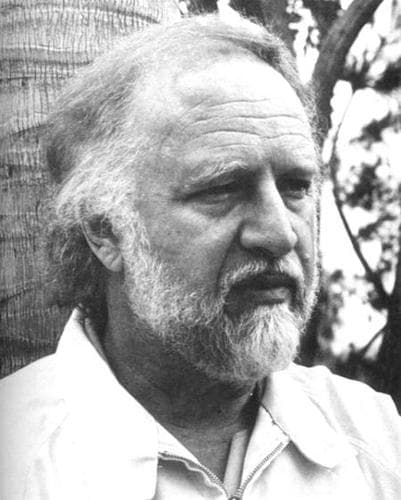
Richard Matheson (2015)
Genre
Fantasy / Science Fiction
Reading Time
180 min
Key Themes
See below
Sign in to track this book
As the last man on Earth, Robert Neville lives in a desolate world where he is a hunter by day and the hunted by night, pursued by the vampiric hordes that now inhabit the planet.
Robert Neville lives a monotonous and terrifying life as the only uninfected human in Los Angeles. Each day, he repairs his house, boards up windows, and scavenges for supplies like food, gasoline, and garlic. He is haunted by the constant presence of vampires, both the living dead and the more intelligent, organized 'infected' who besiege his home nightly. He often drinks to cope with loneliness and fear, thinking about the past and the plague that changed humanity. His routine is a desperate effort to stay sane and survive in a world where he is the prey.
During the day, when the vampires are dormant, Neville ventures out in his station wagon, hunting the sleeping creatures. He stakes them, recording his kills in a logbook. This grim task is not just about survival but also an attempt to understand the plague. He collects dead vampires, bringing them to his makeshift laboratory in his basement. There, he performs autopsies and microscopic examinations, trying to uncover the infection's biology, hoping to find a cure or a weakness.
Every night, Neville's house is surrounded by a horde of vampires, led by his former neighbor, Ben Cortman. Cortman, now a sophisticated and relentless vampire, constantly calls Neville's name, mocking him and demanding he come outside. This nightly psychological warfare wears on Neville's nerves, making sleep difficult and increasing his loneliness. Cortman's taunts remind Neville of his isolation and the loss of his old life, pushing him closer to despair.
Through fragmented flashbacks, Neville remembers the plague's terrifying start. He recalls the panic, the quarantine, and the rapid spread of the disease. Most painfully, he relives the deaths of his wife, Virginia, and his daughter, Kathy. He recounts how Virginia died from the disease and, after her initial burial, returned as a vampire, forcing him to stake her, an act that deeply traumatized him. These memories fuel his hatred for the vampires and his drive to understand and destroy them.
One day, Neville spots a stray dog near his house. Driven by a need for companionship, he tries to lure it to him, leaving out food for weeks. The dog is terrified and wary, but eventually, after persistent efforts, it allows Neville to approach. He brings the dog, whom he names 'Sam,' into his home, feeling relief and connection. For a short time, Sam gives Neville comfort and a reason to keep fighting, easing his isolation.
Neville's brief happiness with Sam ends tragically. After a few weeks, Sam becomes sick, showing plague symptoms. Despite Neville's desperate attempts to save her, the dog dies from the infection. Neville must bury his only companion, an experience that plunges him back into despair and shows the futility of his fight against the disease. Sam's death leaves him more isolated and broken than before.
After years of research and experimentation, Neville makes a scientific discovery. He finds there are two types of vampires: the living dead, animated by a bacterial infection, and the 'infected' (later revealed as the new species), who are still alive but changed by a viral strain. He learns that sunlight, garlic, and stakes kill the living dead due to their bacterial nature, while the new species, though sensitive to light, are not killed by garlic or stakes in the same way. This realization gives him a deeper understanding of his enemies.
One day, while scavenging, Neville spots a woman walking in daylight. Stunned, he realizes she is not a vampire. He cautiously approaches her, and she identifies herself as Ruth. Overjoyed and desperate for human connection, Neville brings her back to his home. Ruth is wary and secretive at first, but they slowly form a bond. She is well-dressed and seems healthy, a contrast to the decaying world outside, and her presence sparks a fragile hope in Neville.
Neville discovers Ruth's true nature when he finds her trying to inject herself with a sedative, a common practice among the 'infected' to counteract their vampiric tendencies during the day. Ruth confesses she is one of the new, intelligent 'infected' and was sent to spy on him. She reveals that her people, though still sensitive to sunlight and needing blood, have formed a new society, organized and striving for a new way of life. They view Neville as a dangerous killer, a relic of the old world who preys on their kind.
Despite Ruth's warning, Neville is captured by the new society. He is taken to their stronghold, a fortified building where he is put on trial. The 'infected' people, now the dominant species, accuse him of murder, detailing his years of hunting and killing their kind. Neville, bewildered and horrified, realizes that from their perspective, he is the monster, the one who stalks and executes them without mercy. His understanding of the world is completely inverted.
Neville is sentenced to death. Ruth visits him in his cell, expressing sorrow and explaining that his death is necessary for the new society to move forward without fear. She offers him a quick, painless poison. As he looks out at the faces of the 'infected' people, gathered to witness his execution, he sees fear and hatred in their eyes. He realizes that just as vampires were a legend of terror to humanity, he, Robert Neville, has become a terrifying legend to the new race, 'the last legend' of a bygone era.
With Ruth's poison, Neville calmly accepts his fate. He observes the crowds of 'infected' people, their faces showing fear, awe, and relief at his coming death. He understands that his existence, his daily hunts, and his survival have made him the ultimate boogeyman in their new world. As he watches them, he realizes he represents the old order, a horrifying relic that must be removed for the new order to truly begin. His final thought is of the irony: he is the monster, the legend, to a world that has moved beyond humanity.
The Protagonist
Neville transforms from a despairing survivor to a scientific investigator, ultimately realizing he is the antagonist in the new world's narrative, accepting his legendary status as the 'last man.'
The Antagonist/Supporting
Cortman remains a static, tormenting force, embodying the relentless and personal nature of Neville's nightly siege.
The Mentioned/Flashback
Her story is told through flashbacks, revealing the initial horror and personal tragedy of the plague's onset.
The Mentioned/Flashback
Her brief appearance in flashbacks underscores the complete personal devastation wrought by the plague.
The Supporting
Sam's arc is brief but impactful, serving as a beacon of hope that is tragically extinguished, deepening Neville's despair.
The Supporting/Antagonist
Ruth evolves from a perceived survivor to a spy, and finally, a sympathetic messenger who helps Neville understand his inverted role in the new world.
The Antagonists
They emerge as the dominant, organized force, defining the new world order and Neville's place within it.
The novel explores the psychological cost of complete isolation. Robert Neville is the last uninfected man, surrounded by creatures who want to kill him or are mindless. His daily routine is an effort to stay sane, but he constantly fights overwhelming loneliness, leading to alcoholism and deep despair. The brief companionship he finds with Sam the dog shows his need for connection, and Sam's death plunges him back into despair. Even when Ruth appears, her presence ultimately highlights his unique isolation from both humanity and the new species.
“And the loneliness was bad. It was a physical ache, a palpable presence that sat with him in his empty house.”
Matheson expertly reverses the traditional vampire story, asking who the real monster is. Initially, Neville sees himself as the last human, fighting monstrous vampires. However, as he discovers the 'new people' – intelligent, organized 'infected' beings – his view is challenged. From their perspective, Neville is the legendary killer, who hunts and murders their kind without mercy, stalking them in their sleep. This theme makes the reader consider how 'humanity' and 'monstrosity' are relative and depend on perspective, especially when a new dominant species appears.
“He was an aberration. A foulness. And his death was a necessity.”
The novel shows the human will to survive, even in the worst situations. Neville shows remarkable resilience, adapting to a world without society, electricity, or safety. He learns to scavenge, repair, and fortify his home, and he applies scientific methods to understand the plague. His survival is not just physical but also mental, as he fights to stay sane against constant terror and loneliness. However, the ultimate adaptation is not Neville's, but that of the 'new people,' who have created a functioning society, making Neville the obsolete, unadapted relic.
“He knew that he would never give up. He would fight until he died.”
Neville initially relies on traditional vampire superstitions (garlic, crosses, stakes). However, his scientific curiosity drives him to research the biological cause of the plague. He conducts experiments, uses microscopes, and performs autopsies, eventually discovering that vampirism is caused by bacteria (for the living dead) and a virus (for the new people). This shift from superstition to scientific understanding is important for his survival and helps him grasp the true nature of his enemies, replacing myths with biological facts. This theme shows humanity's reliance on reason even when facing the seemingly supernatural.
“Superstition, he thought, was a chemical reaction, a result of the bacteria.”
The story is told entirely from Robert Neville's point of view.
This narrative choice immerses the reader directly into Neville's isolated and terrifying world. It allows for deep insight into his psychological state, his loneliness, his scientific frustrations, and his shifting understanding of his reality. The reader experiences his paranoia, grief, and eventual epiphany alongside him, making the final twist – where he realizes he is the monster – all the more impactful and personal. His internal monologues and observations are crucial to conveying the immense burden of his existence.
Interspersed memories of the pre-plague world and the initial outbreak.
Flashbacks are used to reveal the backstory of the plague, the loss of Neville's family (Virginia and Kathy), and the initial chaos of the world's collapse. These fragmented memories provide crucial context for Neville's current trauma, his motivation to fight, and the depth of his grief. They contrast the vibrant past with his desolate present, emphasizing what has been lost and fueling his desperate hope for a cure or a return to normalcy. They also serve to humanize Neville, showing the life he once had.
The audience's understanding of events differs from a character's.
Dramatic irony is powerfully employed, particularly in the latter half of the novel. For most of the story, Neville and the reader believe he is the last human hero fighting monstrous vampires. However, as Ruth reveals the existence of the 'new people' and their organized society, it becomes clear that Neville's actions, from their perspective, are those of a ruthless killer. The audience comes to understand that Neville is the 'legend' of terror to this new species, a realization that completely recontextualizes his entire struggle and his role in the world.
Light represents safety and day, dark represents danger and night.
The stark contrast between day and night is a core structural and symbolic element. Day represents Neville's period of relative safety, where he can hunt, scavenge, and conduct his research, embodying a fragile sense of control and purpose. Night, conversely, brings terror, siege, and the constant threat of the vampires, representing his vulnerability and the overwhelming power of the 'infected.' This binary reinforces Neville's isolation and the constant, existential threat he faces, underscoring his inverted existence where the sun is his only true ally.
“Full dark, no stars. The end of the world came and went and no one noticed. What does it matter? It doesn't matter. It never did.”
— Neville's internal reflection on the apocalypse and his isolation.
“He was a new species, an anachronism, a ghost, a relic, a living dead man. He was the legend.”
— The realization of what Robert Neville has become in the eyes of the new vampire society.
“Normalcy was a relative concept. He had to be normal, even if it was a normal of one.”
— Neville's struggle to maintain sanity and routine in his solitary existence.
“He knew what they were. They were the new race, the inheritors of the earth.”
— Neville's dawning understanding of the vampires' evolution and their place in the world.
“Another day. Another day of the same, of the endless, of the meaningless.”
— Neville's weariness and despair over the repetitive nature of his survival.
“The feeling of being watched was a constant, gnawing presence, even when he knew they weren't there.”
— Neville's paranoia and the psychological toll of his situation.
“He had hoped for a miracle, but miracles were rare, and he had used up his quota long ago.”
— Neville's fading hope for a cure or rescue.
“They were not monsters, not in the way he had always thought. They were merely different.”
— Neville's evolving understanding of the vampires as a new species, not just diseased humans.
“The silence was the worst. The silence that screamed of absence, of emptiness, of death.”
— Neville reflecting on the pervasive quietness of the world without other humans.
“He was the aberration, the mutation, the freak. He was the thing that had to be destroyed.”
— Neville's final realization of his role as the 'monster' in the new world.
“What was the purpose of living, if all you did was exist?”
— Neville's existential questioning of his solitary and unchanging life.
“He was a symbol of their past, a living ghost of a world they had moved beyond.”
— The vampires' perspective of Robert Neville and what he represents to them.
“Fear was a constant companion, a shadow that never left him, even in the brightest day.”
— Neville's pervasive sense of dread and danger.
“Sometimes, he thought he was going mad, and then he would remember that there was no one left to tell him otherwise.”
— Neville's internal struggle with his sanity and the lack of external validation.
“The future belonged to them, the nocturnal, the strong, the adaptable.”
— Neville's acceptance of the vampires as the dominant species.
Ready to see how well you understood this book? Take our interactive quiz with 10 questions.
Biography coming soon.







