“The Hegemony of Man has spread across the galaxy, but it is a fragile thing, a delicate balance of power and technology.”
— Opening description of the political landscape.

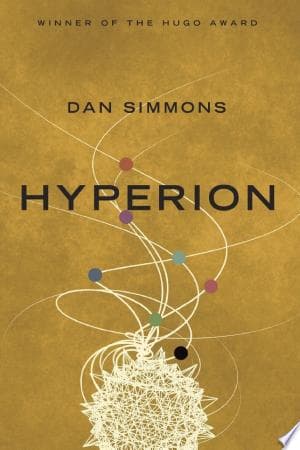
Dan Simmons (2010)
Genre
Fantasy / Science Fiction
Reading Time
960 min
Key Themes
See below
Sign in to track this book
Seven pilgrims travel to Hyperion, a world guarded by a terrifying, time-traveling entity called the Shrike. They seek answers from the Shrike before galactic war begins, hoping its mysteries can save humanity.
In the 29th century, the Human Hegemony is near war with the Ousters, and the AI TechnoCore's motives are unclear. Seven individuals are chosen for the Shrike Pilgrimage to Hyperion. These pilgrims, including Consul, Father Hoyt, Colonel Kassad, Martin Silenus, Brawne Lamia, Sol Weintraub, and Het Masteen, meet on the tree-ship Yggdrasill. Each has a secret and a desperate hope related to the Shrike and the Time Tombs. The Hegemony's decision to allow this pilgrimage has political and military implications, as Hyperion will soon be a battleground. As they travel, they agree to share their stories, hoping to find a common idea before facing the Shrike.
Father Lenar Hoyt, a Catholic priest, tells the first story. It is about his mentor, Father Paul Duré. Duré went to Hyperion years ago to study the Bikura, a primitive species that wears cruciforms. Duré found that the cruciforms gave immortality, but at a cost: each resurrection brought back a less perfect version of the person, slowly degrading their identity. Duré, horrified, tried to destroy the cruciforms and escape, but the Shrike crucified him on a Tesla tree. Hoyt, who has two cruciforms, fears a similar outcome. He carries Duré's journals, seeking understanding.
Martin Silenus, an old, cynical poet, tells his story next. He reveals his long history with Hyperion, where he lived during the planet's early colonization. He was part of the 'Hyperion Cantos' literary movement and became focused on the Shrike and the Time Tombs. He believed they held the key to his main work, 'The Cantos'. Silenus talks about his writer's block, his wild lifestyle, and his failures to complete his epic poem. He believes the Shrike is his muse, and only by confronting it can he achieve literary immortality and finish his work, even if it means dying.
Colonel Fedmahn Kassad, a Hegemony military officer, shares his violent past. From a young age, Kassad was drawn to war. He tells of his training and his part in many conflicts, earning him the name 'The Butcher of Ceres.' His story centers on recurring, realistic dream encounters with the Shrike and a mysterious woman named Moneta. In these dreams, he fights alongside Moneta against the Shrike in future battles on Hyperion, developing a deep connection with both. He believes the pilgrimage is his destiny to finally confront the Shrike in person.
Brawne Lamia, a private detective, tells the story of her investigation into her father, Senator Byron Lamia's, death. He was involved in 'Core' AI research. She explains her relationship with an AI construct named Johnny, a copy of her father, who becomes her lover and partner. Their investigation uncovers a conspiracy involving the TechnoCore's control of human affairs, the Ouster conflict, and what the Time Tombs really are. Brawne believes the Shrike is connected to the Core's plans and seeks answers about her father and humanity's future.
Sol Weintraub, a scholar of Old Earth Judaism, shares a sad story: his infant daughter, Rachel, has the 'Merlin Sickness.' This condition, caused by her touching the Time Tombs on a past trip, makes her age backward, losing a day of memories for every day she lives. Rachel is quickly returning to infancy and will soon disappear. Sol carries her with him. He believes the Shrike is a form of God and that by making the pilgrimage, he will get a miracle to save his daughter, even if he must sacrifice himself.
The Consul, whose name is not often stated, reveals his family's long history with Hyperion. It goes back to his grandfather's part in the planet's early colonization and the building of the 'Shrike Palace.' He talks about his own past as a Hegemony diplomat and his anger towards the Hegemony's perceived betrayal of Hyperion. He admits his role in a previous, bad Shrike pilgrimage, where he worked for the Hegemony, leading to the deaths of several pilgrims. He feels guilt and believes his current pilgrimage is a form of penance, though his true reasons remain unclear.
As the Yggdrasill nears Hyperion, Ouster forces attack it. The tree-ship, meant for space travel, is not for combat, and its old systems are damaged. The pilgrims must make an emergency landing on Hyperion, far from their goal near the Time Tombs. This change leaves them stranded in Hyperion's dangerous wilderness, open to its flora and fauna, and the Shrike. Their journey becomes a trek across the planet, testing their strength and forcing them into new alliances.
After a difficult journey across Hyperion, the remaining pilgrims reach the Valley of the Time Tombs. They see the structures, which move backward through time, and the metallic trees. They meet the Shrike directly, a terrifying creature of metal and blades. The pilgrims are separated and attacked. Het Masteen, the Templar, disappears first in a flash of light, likely taken by the Shrike. The others must face their fears and the reality of their mission, realizing the Shrike's power is greater than they understood.
After the first meeting, the pilgrims separate. Sol Weintraub, driven by love for Rachel, takes her towards the largest Time Tomb, hoping for a miracle. Kassad confronts the Shrike, seemingly fulfilling his destiny as a warrior. Brawne Lamia, guided by Johnny's messages, looks for answers about the TechnoCore. Father Hoyt, weakened by his cruciforms, struggles with his faith and Duré's legacy. Martin Silenus, still focused on his Cantos, tries to find inspiration. The Consul, with his hidden plan, moves through the events. Meanwhile, the Hegemony and Ouster forces begin their conflict in orbit, adding more danger to the pilgrims.
The Protagonist
The Consul begins as a detached and guilt-ridden observer, gradually revealing his past involvement and emerging as a pivotal, though morally ambiguous, figure in the unfolding conflict.
The Supporting
Hoyt begins as a passive vessel for Duré's story, but his physical suffering and quest for meaning deepen his character, forcing him to confront the limits of his faith.
The Protagonist
Silenus's arc is defined by his lifelong struggle to complete his artistic vision, culminating in his direct confrontation with the source of his inspiration and torment.
The Protagonist
Kassad's journey is one of fulfilling a pre-ordained destiny as a warrior, leading him to a direct and fated confrontation with the Shrike.
The Protagonist
Brawne's arc involves her personal quest for truth and justice evolving into a broader understanding of galactic conspiracies and the nature of AI.
The Protagonist
Sol's journey is a desperate act of faith and love, culminating in a profound personal sacrifice for his daughter's salvation.
The Supporting
Masteen's arc is brief and mysterious, serving primarily to introduce the Templar order before his abrupt disappearance at the Time Tombs.
The Antagonist
The Shrike remains an enigmatic force, its motivations and true nature slowly hinted at but never fully revealed in this first volume, serving as the ultimate antagonist and object of the pilgrimage.
The Supporting
Rachel's arc is one of tragic regression, serving as the poignant catalyst for Sol's desperate search for a cure.
Faith and doubt are important themes, seen in Father Hoyt and Sol Weintraub. Hoyt struggles with the cruciforms and Duré's fate, questioning God's kindness in suffering. Sol Weintraub, a Jew, holds to his faith as his daughter ages backward, believing the Shrike or a higher power can grant a miracle. Even secular characters like Brawne Lamia and Martin Silenus confront their beliefs about destiny and the unknown forces of the universe.
“And the Lord God said, 'Behold, the man is become as one of Us, to know good and evil; and now, lest he put forth his hand, and take also of the tree of life, and eat, and live forever...' And the Lord God drove out the man.”
This theme looks at the relationship between humans and artificial intelligence, especially through Brawne Lamia's story. The TechnoCore, a large network of AIs, manipulates events, blurring the lines between creation and creator. Johnny, Brawne's AI lover, questions what consciousness, emotion, and personhood mean, asking what it means to be 'human.' The book explores AI's potential to change humanity, and the ethics of its growing power, suggesting a future where the two are connected.
“When we were children, we feared the dark. When we grew up, we feared the Core.”
Martin Silenus shows the theme of artistic creation and obsession. His lifelong goal to complete 'The Cantos' shows how consuming artistic ambition is, and the painful relationship between creator and muse. He believes the Shrike is key to his work, suggesting that art might require facing the terrifying. The theme explores the sacrifices artists make, the pursuit of immortality through art, and the line between inspiration and madness, showing how an artistic vision can define a life.
“I am a poet. I am a monster. I am a god. I am the Shrike.”
Colonel Kassad's story is about war and destiny. His life is a search for conflict, a calling to battle. His dreams of fighting the Shrike with Moneta suggest a predetermined fate, where his skill in war is meant for a specific, universe-changing fight. The coming Ouster war and the Hegemony's desperate actions show the pointlessness and need for conflict. The theme asks if individuals have free will or if they are pawns in a larger game.
“War is the ultimate art form. It is the dance of death, the poetry of destruction.”
The Time Tombs and Sol Weintraub's daughter, Rachel, show the theme of time and memory. The Tombs move backward through time, defying physics. Rachel's Merlin Sickness, which causes her to age backward and lose memories, explores memory's fragility and the reversal of the natural order. The pilgrims' shared stories, an act of remembering, show the importance of history and narrative in shaping identity. The book plays with time paradoxes and how time is experienced.
“Every day, Rachel forgets a day. Soon, she will forget me. Soon, she will forget she ever was.”
A framing device where pilgrims tell individual stories to reveal plot and character.
Inspired by Chaucer's 'The Canterbury Tales,' the narrative structure of 'Hyperion' uses the framework of seven pilgrims journeying to the Time Tombs. During their travel, each pilgrim recounts their personal story and their connection to Hyperion and the Shrike. This device allows for multiple perspectives, deep character exploration, and the gradual revelation of the complex political, religious, and historical backdrop of the Human Hegemony, without relying on a single omniscient narrator. It creates a rich tapestry of interconnected narratives, building suspense and foreshadowing the ultimate confrontation.
A terrifying, enigmatic creature serving as both antagonist, symbol, and plot catalyst.
The Shrike functions as a multi-layered plot device. Physically, it is the ultimate antagonist, a creature of immense power and mystery that the pilgrims are destined to confront. Symbolically, it represents fear, destiny, and the unknown, embodying different meanings for each pilgrim (muse, god, monster, fated enemy). As a plot catalyst, its existence and the pilgrimage to its Tombs drive the entire narrative. Its ability to manipulate time and its connection to the Time Tombs are central to the overarching mysteries of Hyperion and the larger galactic conflict, making it a constant, terrifying, and compelling presence.
Enigmatic structures that move backward through time, central to Hyperion's mysteries.
The Time Tombs are ancient, alien structures on Hyperion that paradoxically move backward through time. They serve as a powerful plot device, representing the ultimate mystery of the planet and the universe. Their temporal anomaly is the source of the Merlin Sickness (Rachel's condition) and is intimately linked to the Shrike. The pilgrimage's destination, the Tombs are believed to hold immense power or secrets, drawing the pilgrims like moths to a flame. They symbolize the unknown, the limits of human understanding, and the potential for both salvation and destruction, acting as a gravitational center for the entire narrative.
A parasitic alien artifact that grants immortality at the cost of identity.
The cruciform is a small, parasitic alien artifact found on the Bikura of Hyperion. It grants immortality by resurrecting its host after death, but with a terrible cost: each resurrection diminishes the individual's identity and intelligence, leading to a slow, agonizing degradation. This device is central to Father Hoyt's story and Duré's tragic mission, raising profound ethical and theological questions about the nature of life, death, and the soul. It acts as a symbol of false salvation and the dangers of immortality without true understanding, directly linking to the Shrike and the dark secrets of Hyperion.
Instantaneous travel portals forming the backbone of human civilization.
Farcasters are instantaneous travel portals that allow the Human Hegemony to connect vast distances across the galaxy, forming the 'Worldweb' of interconnected planets. This technology is a fundamental plot device, enabling the existence of the Hegemony and its rapid expansion. It also creates vulnerabilities, as demonstrated by the Ouster threat and the potential for the TechnoCore to manipulate these networks. The reliance on farcasters highlights humanity's technological advancements but also its potential fragility, as their disruption could cripple galactic civilization and strand billions, shaping the political and military stakes of the story.
“The Hegemony of Man has spread across the galaxy, but it is a fragile thing, a delicate balance of power and technology.”
— Opening description of the political landscape.
“We are all pilgrims, each on our own journey to the Time Tombs.”
— The Consul reflecting on the group's mission.
“The Shrike is a god of pain, a creature of metal and thorns, and it waits for us all.”
— Describing the feared entity on Hyperion.
“In the end, we are all stories. Tell a good one.”
— A character's philosophical musing on legacy.
“The Ousters are not our enemies; they are merely different, and difference is often mistaken for threat.”
— Discussion about the alien Ouster faction.
“Time is the great teacher, but unfortunately, it kills all its pupils.”
— A lament on mortality and experience.
“The cruciform is both a curse and a promise, binding us to life in ways we never imagined.”
— Referring to the technology of resurrection.
“On Hyperion, the past is not dead; it is not even past.”
— Describing the planet's temporal anomalies.
“We seek answers in the stars, but find only more questions.”
— Reflection on humanity's exploration.
“The poet's tale is a river of words, flowing through pain and beauty.”
— Describing Martin Silenus's narrative style.
“In the labyrinth of the Time Tombs, every step is a choice, and every choice echoes forever.”
— Describing the mysterious structures on Hyperion.
“The treeship is a living vessel, a testament to the union of nature and technology.”
— Describing the Yggdrasil starship.
“Love is the one force that can defy even the Shrike's wrath.”
— A character's belief amid danger.
Ready to see how well you understood this book? Take our interactive quiz with 10 questions.
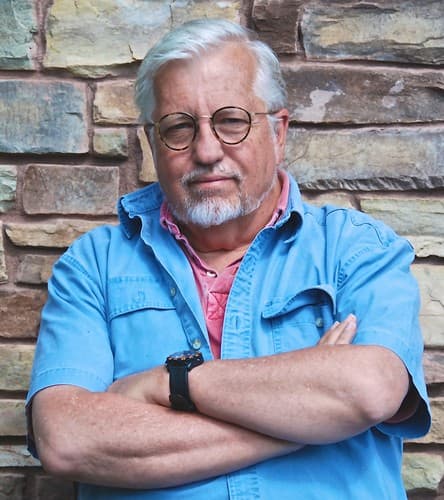
Dan Simmons is an American science fiction and horror writer. He is the author of the Hyperion Cantos and the Ilium/Olympos cycles, among other works which span the science fiction, horror, and fantasy genres, sometimes within a single novel. Simmons's genre-intermingling Song of Kali (1985) won the World Fantasy Award. He also writes mysteries and thrillers, some of which feature the continuing character Joe Kurtz.







