“A man's character is his fate.”
— Charlie Citrine's reflection on the classic Greek adage as he grapples with his own life choices.

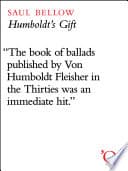
Saul Bellow (2013)
Genre
Literary Fiction
Reading Time
992 min
Key Themes
See below
Sign in to track this book
A struggling writer, caught in domestic chaos and mob dealings, gets a posthumous 'gift' from his dead poet mentor, making him face the complex legacy of genius and failure.
The novel opens with Charlie Citrine, a moderately successful but thoughtful writer, reflecting on his current messy life. He is in the middle of a bitter divorce from his second wife, Denise, who is suing him for significant alimony and property. Charlie is also romantically involved with Renata, a much younger and impulsive woman, and finds himself increasingly drawn into the world of Rinaldo Cantabile, a minor but threatening mafioso. Cantabile initially seeks revenge for a perceived slight involving a poker game and a broken windshield. Charlie's finances are unstable, and he feels his creative life has stalled, a sharp contrast to his more promising early years.
Charlie's current problems are constantly compared to his memories of Von Humboldt Fleisher, a charming and once-famous poet who was Charlie's mentor and friend when he was young. Humboldt, a man of great intellectual energy and strong emotions, took Charlie under his wing, introducing him to literature and high culture. Charlie remembers Humboldt's quick rise and his later fall into obscurity, paranoia, and madness, caused by academic politics, money problems, and a deep feeling of artistic betrayal. These memories provide a constant point of comparison and a source of both inspiration and warning for Charlie.
Rinaldo Cantabile, a strange and dramatic gangster, becomes a regular part of Charlie's life. At first, Cantabile harasses Charlie over a small incident involving a broken car windshield, demanding payment and respect. His methods are unusual, ranging from physical threats to odd philosophical discussions. Charlie, though genuinely scared, finds himself strangely drawn to Cantabile's raw energy and his twisted sense of honor. This dynamic forces Charlie to face his own passivity and the absurdity of his situation as he tries to handle the demands of a man who lives outside normal societal rules.
The divorce proceedings with Denise cause Charlie much stress and humiliation. Denise, shown as vengeful and materialistic, is determined to get as much as possible from Charlie, despite his already tight finances. The legal battles are long and emotionally draining, forcing Charlie to confront his past relationship failures and his own role in his marriage's collapse. He struggles with the legal system's impersonality and how it reduces complex human relationships to financial deals, further highlighting his feelings of alienation and disappointment.
Charlie's relationship with Renata is passionate but unstable. Renata is beautiful, volatile, and demanding, always pushing Charlie for commitments he is hesitant to make. She represents a chaotic, sensual side of life that both attracts and drains him. Their dynamic involves dramatic arguments and make-ups. Eventually, Renata, feeling Charlie cannot provide the stability she wants, suddenly leaves him to marry Flonzaley, an older, wealthy undertaker. Her departure leaves Charlie feeling deeply abandoned and further increases his emotional turmoil.
Charlie vividly describes Humboldt's last, desperate years. After losing his academic jobs and battling mental illness and alcoholism, Humboldt falls into paranoia and poverty. He is institutionalized several times and eventually dies poor, a shadow of his brilliant former self. These memories are especially moving for Charlie, who feels guilt and regret for not having helped Humboldt more effectively. Humboldt's tragic end serves as a warning for Charlie, reminding him of how fragile genius is and how harsh the literary world can be.
After Humboldt's death, Charlie receives a mysterious package from Humboldt's widow, Kathleen. Inside, he finds a collection of Humboldt's unpublished manuscripts. Among these is a screenplay, which Humboldt had clearly worked on during his final, desperate years. This discovery is a profound moment for Charlie. It represents a continuation of Humboldt's presence and a potential lifeline for his own stalled career. The package's contents spark hope and purpose in Charlie, offering a chance to honor his friend's legacy and perhaps improve his own fortunes.
After reading Humboldt's screenplay, Charlie sees its unique mix of literary ambition and commercial appeal. It is a surreal, autobiographical piece that reflects Humboldt's own struggles and quirks. Charlie decides to pursue a film deal, believing it could not only give him much-needed money but also finally give Humboldt the recognition he deserved, even in death. This venture into Hollywood, a sharp contrast to his literary sensibilities, shows Charlie trying to balance artistic integrity with the practical needs of survival.
Rinaldo Cantabile, despite his earlier threatening behavior, unexpectedly helps secure the film deal for Humboldt's screenplay. Through his underworld connections and unusual negotiating tactics, Cantabile helps Charlie navigate the unclear world of Hollywood producers and agents. This strange alliance highlights the novel's themes of unexpected connections and the blurred lines between legitimate and illegitimate influences. Cantabile's involvement is both a source of anxiety and a strange kind of help, emphasizing the unpredictable nature of Charlie's life.
The successful film deal gives Charlie financial stability and a renewed sense of purpose. He can pay off his debts, finalize his divorce, and find some peace. With his immediate pressures gone, Charlie can more fully reflect on his relationship with Humboldt and the lessons learned from his mentor's tragic life. He recognizes the lasting power of art and the importance of human connection, even amid life's absurdities and betrayals. The gift from Humboldt, both literally and figuratively, allows Charlie to start a new chapter, carrying forward the spirit of his complicated friend.
Charlie eventually travels to Europe, where he meets Kathleen and arranges for Humboldt's remains to be properly reburied. This act of respect and remembrance gives Charlie closure regarding his complex relationship with his deceased mentor. The journey itself is symbolic, representing Charlie's own intellectual and spiritual pilgrimage. He thinks about the passage of time, the nature of genius, and the lasting bonds of friendship. This final act allows Charlie to fully embrace Humboldt's legacy, not as a burden, but as a source of ongoing inspiration.
The Protagonist
Charlie moves from a state of paralysis and self-pity to a renewed sense of purpose and a more mature understanding of his past and his place in the world.
The Central Catalyst (Antagonist/Mentor)
Humboldt's arc is presented retrospectively, showing his decline from a celebrated poet to a forgotten, mentally unstable figure, ultimately leaving a posthumous gift that revitalizes Charlie.
The Supporting
Cantabile remains largely static in his eccentric persona, serving as a dynamic foil and catalyst for Charlie's actions.
The Antagonist
Denise remains a largely static antagonist, representing the external pressures and legal entanglements Charlie must overcome.
The Supporting
Renata's arc sees her leaving Charlie for a more stable, albeit less passionate, partner, pushing Charlie further into self-reflection.
The Supporting
Kathleen largely functions as a steadfast character, a guardian of Humboldt's memory and the vehicle for his posthumous influence.
The Mentioned
Flonzaley's role is primarily as a plot device to further Charlie's emotional isolation and Renata's departure.
The Mentioned
Thaxter's role is static, existing primarily as a symbol of betrayal in Humboldt's past.
The novel explores the complexities of genius through Von Humboldt Fleisher, a brilliant poet who ultimately falls to paranoia, mental illness, and obscurity. It examines the societal pressures, academic politics, and personal struggles that can lead to the downfall of great talent. Charlie, a successful but struggling writer, constantly deals with Humboldt's legacy, fearing a similar fate. The film deal for Humboldt's posthumous screenplay shows the tension between artistic honesty and commercial success, questioning what truly defines an artist's success or failure. Humboldt's life is a warning, yet his 'gift' ultimately provides Charlie with a path forward, suggesting that even in failure, genius can leave a lasting mark. Charlie's own struggles reflect the difficulty of maintaining a creative life in a materialistic world.
“A man must be true to his gifts. But the gifts are not enough. You must also live, and that's the hard part.”
Charlie Citrine's life is marked by a deep sense of aimlessness and a struggle to find meaning amid personal chaos—a bitter divorce, a volatile love affair, and encounters with a gangster. He constantly seeks philosophical and intellectual anchors, reflecting on life, death, art, and the human condition. His internal thoughts are filled with existential questions about his purpose and the value of his work. The novel suggests that meaning is not easily found but must be actively built, often through connection with others and engagement with one's creative spirit. The 'gift' from Humboldt ultimately gives Charlie a renewed sense of purpose, linking his personal quest to a larger artistic legacy.
“What do we live for? It's a question you can't put out of your mind, no matter how busy you are.”
Memory plays a central role, with Charlie constantly revisiting his past relationship with Humboldt Fleisher. These recollections are not just nostalgic; they help Charlie understand his current problems and process his mentor's influence. The past is not fixed; it continuously informs and shapes Charlie's view of himself and the world. Humboldt's tragic decline and Charlie's own past failures (like his marriages) weigh heavily on him. The novel explores how individuals deal with their personal histories, the idealized versions of the past versus its harsh realities, and the lingering presence of those who have shaped them. The posthumous gift from Humboldt is a literal example of the past reaching into the present.
“The past is an immense weight. You carry it with you, whether you like it or not.”
The novel shows the absurdities and contradictions of modern American society, especially through Charlie's encounters with figures like Rinaldo Cantabile and the superficiality of the entertainment industry. Charlie, an intellectual and artist, constantly feels at odds with the materialistic, litigious, and often vulgar aspects of the world around him. Humboldt also spent his life fighting against what he saw as the lack of culture in academia and the commercial world that failed to appreciate true art. The characters' struggles highlight the tension between high culture and popular culture, intellectual pursuits and basic desires. The bizarre interactions and often farcical situations underscore the novel's satirical edge, suggesting that life, especially for a thinking person, is often a bewildering and irrational experience.
“The world is full of madmen, and the sanest thing you can do is to acknowledge their existence.”
The complexities of human relationships are central to the story, particularly through Charlie's failed marriages and his tumultuous affair with Renata. The novel explores the pain of betrayal, the difficulty of sustaining love, and the deep impact of both intimate and platonic connections. Charlie's strong bond with Humboldt, despite its later strains, highlights the lasting power of mentorship and friendship. The divorce from Denise is a painful example of how love can turn into bitterness and legal conflict. Even the strange relationship with Cantabile, initially hostile, develops into a form of bizarre connection, suggesting that human bonds can form in unexpected ways and places. Ultimately, the novel emphasizes the essential human need for connection, even amid its inherent difficulties and disappointments.
“Love is a great thing, a powerful force, but it's also a terrible burden.”
Humboldt's unpublished manuscripts and screenplay, delivered after his death.
This is the central plot device that drives Charlie's renewed purpose. Humboldt's 'gift' is not just a collection of papers but a symbolic inheritance, a final act of mentorship and a chance for Charlie to redeem both his own and Humboldt's legacy. It provides the financial catalyst for Charlie to escape his personal crises (divorce, debt) and forces him to confront his artistic responsibilities. This device also allows Humboldt to remain a powerful, active force in the narrative even after his physical death, emphasizing the enduring impact of a mentor.
Charlie's frequent, detailed recollections of his past with Humboldt.
The narrative frequently shifts between Charlie's chaotic present and his vivid memories of Humboldt. These flashbacks are not linear but often triggered by present events or thoughts, creating a rich tapestry of past and present. This device allows Bellow to develop Humboldt's character retrospectively, showing his brilliance and his decline, and to illustrate the profound influence he had on Charlie. It also serves to highlight Charlie's internal struggle and his constant comparison of his own life to his mentor's, deepening the themes of genius, failure, and the weight of the past.
Rinaldo Cantabile, the philosophical gangster who alternately threatens and aids Charlie.
Cantabile functions as a multi-faceted plot device. Initially, he serves as an external antagonist, introducing an element of physical danger and absurd humor into Charlie's already troubled life. However, he unexpectedly transforms into an unlikely ally, using his underworld connections to facilitate the film deal for Humboldt's screenplay. This device injects unpredictability into the plot, forces Charlie out of his intellectual comfort zone, and highlights the blurred lines between legality and illegality, high culture and street smarts. Cantabile's bizarre philosophical musings also mirror Charlie's own intellectual preoccupations in a distorted, streetwise manner.
The parallel stories of Humboldt's tragic artistic decline and Charlie's own creative stagnation.
The novel essentially tells two intertwined stories of artistic struggle: Humboldt's complete downfall and Charlie's mid-life creative block. Humboldt's past acts as a constant mirror and warning for Charlie, whose present struggles echo his mentor's. This device allows for a deeper exploration of the challenges faced by artists in a commercialized world, the pressures of success, and the pain of creative failure. The ultimate resolution for Charlie, facilitated by Humboldt's posthumous work, suggests a cyclical nature to artistic endeavor and the potential for one generation to build upon or redeem the legacy of another.
“A man's character is his fate.”
— Charlie Citrine's reflection on the classic Greek adage as he grapples with his own life choices.
“Intellectuals are people who think that ideas are more important than people.”
— A cynical observation by Charlie about the academic and literary circles he inhabits.
“We are all dying, but we are also all living.”
— Charlie's contemplation on mortality and the simultaneous vitality of existence.
“The soul has its own secret history.”
— A thought from Charlie regarding the inner, unexpressed life of individuals.
“America is a great place to be if you're a genius, but if you're not, it's hell.”
— Humboldt's bitter assessment of the American cultural landscape and its demands on artists.
“What is art but a way of seeing the world more clearly?”
— Charlie's musing on the purpose and function of artistic endeavor.
“The true business of life is to become a human being.”
— A central philosophical point of the novel, expressed by Charlie.
“Every man has a right to be miserable, but not to make others miserable.”
— Charlie's internal monologue on personal suffering versus inflicted suffering.
“The past is not dead, it is not even past.”
— A reflection by Charlie on the enduring influence of history and personal experience.
“Money is a kind of poetry.”
— A provocative statement by Charlie, linking the mundane with the sublime in an ironic way.
“The world is too much with us; late and soon, Getting and spending, we lay waste our powers.”
— Charlie quoting Wordsworth, lamenting the distractions of modern material life.
“There are people who want to be famous, and people who want to do good work. They are not always the same people.”
— A distinction drawn by Charlie regarding motivations in the arts and public life.
“To be a man is to know that you are a temporary creature, but to act as if you are eternal.”
— Charlie's contemplation on the paradox of human existence and agency.
“Genius is the capacity for taking infinite pains.”
— A thought on the nature of genius, often attributed to others but reflected upon by Charlie.
Ready to see how well you understood this book? Take our interactive quiz with 10 questions.
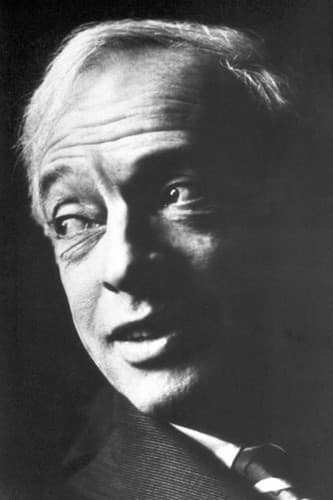
Saul Bellow was a Canadian–American writer. For his literary work, Bellow was awarded the Pulitzer Prize, the Nobel Prize for Literature, and the National Medal of Arts. He is the only writer to win the National Book Award for Fiction three times, and he received the National Book Foundation's lifetime Medal for Distinguished Contribution to American Letters in 1990.







