“It was the human act of all human acts, the most basic, the one that made us human to begin with. The act of caring for one another.”
— The narrator reflects on the kindness shown during a horrific event.

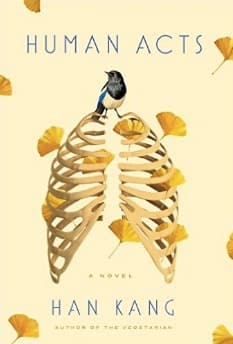
Han Kang (2016)
Genre
Literary Fiction / Historical Fiction
Reading Time
240 min
Key Themes
See below
Sign in to track this book
Han Kang's novel uses fragmented, haunting accounts from those affected by a boy's death during a brutal South Korean uprising to show the lasting trauma and defiant search for justice amid state violence.
In May 1980, during the Gwangju Uprising, fifteen-year-old middle school student Dong-ho goes to the provincial office and then to the gymnasium, which has become a temporary morgue for those killed by soldiers. He helps organize the bodies, cleans them, and keeps watch. He finds his friend Jeong-dae's body and is deeply affected by the silent suffering of the dead and the wailing of the grieving. Dong-ho's innocence breaks as he sees the brutality against Gwangju citizens, including disfigured faces and mutilated bodies. He struggles to understand the horror compared to his previous view of the world, feeling a strong sense of responsibility toward the deceased.
This chapter is told by the ghost of Jeong-dae, Dong-ho's friend, who died during the uprising. Jeong-dae describes his own brutal death, shot by soldiers, and his experience as a spirit watching the aftermath. He recounts being brought to the gymnasium where Dong-ho works, a poignant reunion in death. Jeong-dae’s story highlights the shared suffering and fate of the victims, their bodies becoming symbols of state violence. He thinks about the indignity of their deaths and the later efforts to identify and mourn them, showing the strong bond formed in shared trauma and the wish for their stories to be remembered.
Years after the Gwangju Uprising, Eun-sook, a former editor, deals with lingering trauma and widespread censorship about the May 1980 events. She remembers trying to publish accurate accounts of the massacre, facing constant threats and suppression of truth by authorities. Her experience shows the systemic effort to erase Gwangju's memory and the personal cost of resisting such oppression. Eun-sook feels deep guilt and responsibility for not doing more, haunted by images and stories she had to suppress. She thinks about the psychological cost of living in a society that denies its own history, experiencing panic attacks and a strong sense of isolation.
This section follows a former student activist, called the 'prisoner,' who was arrested, brutally tortured, and imprisoned for his part in the Gwangju Uprising. He recounts the physical and psychological torment he endured in detention, including waterboarding, beatings, and sleep deprivation, as well as the dehumanizing conditions of prison life. His story is fragmented, showing the broken nature of his memory and identity due to trauma. He struggles with survivor's guilt, the loss of his friends, and the deep changes to his personality. The prisoner’s story emphasizes the long-term impact of state violence on individuals, even decades later, and the difficulty of regaining a sense of self after such extreme experiences.
Seon-ju, a factory worker who was involved in the uprising and shared a cell with Eun-sook, struggles to live normally years later. She is haunted by memories of the atrocities she saw and the loss of her friends, especially Dong-ho. Seon-ju carries a huge burden of grief and survivor's guilt, feeling she should have done more or doesn't deserve to live. She experiences vivid flashbacks and nightmares, making it hard for her to form connections or find peace. Her story shows how trauma affects the lives of ordinary citizens, changing their futures and continuing their suffering long after the immediate violence stops.
Dong-ho's mother describes her lasting grief and the deep emptiness left by her son's death. She recounts the agonizing search for his body, the eventual identification, and decades of living with an unfillable void. Her memories are vivid, focusing on small details of Dong-ho's life and her dreams for him. She expresses a deep sense of injustice and anger toward those who caused the massacre, who never faced true accountability. Her story highlights the personal, intimate devastation caused by political violence, showing how a mother's love turns into an enduring, heartbreaking sorrow that shapes every part of her life.
This chapter is told by an unnamed writer, who struggles with the ethical and emotional challenges of documenting the Gwangju Uprising. The writer collects testimonies, interviews survivors, and immerses herself in the brutal history, but finds it very hard to turn the raw, unspeakable horror into words. She questions if language can truly capture such immense suffering or if it risks sanitizing or exploiting the victims' experiences. The writer's struggle reflects Han Kang's own process, showing the responsibility and burden of witnessing and giving voice to the silenced, while acknowledging the limits of representation.
This section is told by a collective 'soul' or chorus of the dead from the Gwangju Uprising. They reflect on their lives, their deaths, and their later existence as forgotten or partly remembered beings. They speak of their bodies being disrespected and the pain of being erased from official history. The souls express a longing for remembrance and for the truth of their deaths to be acknowledged. They watch over the living, especially those who continue to suffer or fight for justice. This chapter shows the lasting presence of the past and the spiritual weight of unaddressed trauma, emphasizing the connection between the living and the dead.
As the story goes on, the characters, both living and dead, highlight the ongoing fight for truth and accountability regarding the Gwangju Uprising. Decades later, the official story remains debated, and the perpetrators are largely unpunished. Survivors and their families continue to demand justice, facing indifference, denial, and continued attempts to downplay the atrocities. This section shows the political side of memory and history, illustrating how powerful forces actively work to suppress uncomfortable truths. The unwavering efforts of individuals like Eun-sook and the persistent grief of Dong-ho's mother show the human need for justice and recognition, even against strong opposition.
The book ends by reflecting on the lasting aftermath of the Gwangju Uprising. The trauma inflicted on individuals and the city continues to affect generations, appearing as psychological scars, social divisions, and a collective wound in the nation's mind. The characters, even those who survived, find their lives forever changed, marked by the violence they experienced or saw. The story emphasizes that while the immediate conflict ended, the struggle for healing, remembrance, and justice continues. The book closes with a strong call to remember, to witness, and to acknowledge the human acts that both caused and resisted unspeakable cruelty, ensuring the victims are not forgotten.
The Central Figure/Victim
From innocent volunteer to a symbolic victim whose death galvanizes the collective memory and search for justice.
The Victim/Narrator (Ghost)
From a living friend to a disembodied spirit, he becomes a voice for the collective dead, emphasizing the enduring presence of past trauma.
The Survivor/Activist
From a determined editor fighting censorship to a survivor grappling with profound psychological trauma and a persistent sense of responsibility.
The Survivor/Victim of Torture
From an idealistic student activist to a broken man haunted by torture, he represents the enduring scars of state violence.
The Survivor/Witness
From a young woman caught in the uprising to a factory worker burdened by chronic grief and trauma, she represents the silent suffering of the working class.
The Bereaved Parent
From a loving mother to a perpetually grieving parent, her arc emphasizes the timeless and unending nature of a mother's sorrow.
The Narrator/Conscience
From a researcher seeking truth to a writer wrestling with the moral implications and limitations of language in representing trauma.
The Collective Narrator/Voice of the Dead
From individual victims to a unified spiritual presence, they become the eternal witnesses and reminders of the massacre.
The novel clearly shows the extreme brutality of the military regime during the Gwangju Uprising, from graphic descriptions of torture and murder to the systematic suppression of truth. Characters like the 'prisoner' vividly recount their physical and psychological torment, while Dong-ho's experience in the gymnasium shows the horrific physical cost. The aftermath is shown through the lasting trauma of survivors like Eun-sook and Seon-ju, who suffer from panic attacks, nightmares, and survivor's guilt decades later, illustrating that violence goes far beyond the immediate event.
“What is it that allows a person to violate another person, to destroy another person? What is it that makes it possible for them to crush another person's body and soul?”
A main theme is the difficult process of remembering and how trauma affects memory. The characters' stories are fragmented, often returning to the horrific events of May 1980, showing how trauma twists and controls their lives. The book also highlights society's fight against censorship and historical revision, with characters like Eun-sook working to preserve the truth of Gwangju. The collective memory of the victims, symbolized by Jeong-dae's ghost and the 'collective soul,' demands recognition and remembrance in the face of deliberate erasure, emphasizing memory as an act of resistance.
“I often wonder if the act of remembering is a kind of violence, too. Or if it is a kind of love.”
The novel explores the constant tension between attempts to strip people of their humanity through violence and torture, and the strong, unyielding dignity of the human spirit. Dong-ho's careful attention to the dead bodies in the gymnasium is an act of restoring dignity to those who were brutally dehumanized. Conversely, the torture endured by the 'prisoner' aims to break his spirit and reduce him to an animal. The book suggests that even in extreme cruelty, mourning, remembering, and demanding justice are acts of reclaiming and asserting human dignity.
“It was not just the dead bodies that were being abandoned. The living were being abandoned too, one by one.”
The story's structure, with its changing viewpoints and connected lives, shows that suffering is not isolated but shared. Dong-ho's empathy for the dead links him to Jeong-dae, while Eun-sook and Seon-ju's shared prison experience creates a strong bond. The 'collective soul' further emphasizes this, showing how individual experiences of the deceased contribute to a larger, unified story of pain and longing for justice. The book argues that true understanding and healing come from recognizing and empathizing with others' suffering, building a collective humanity.
“Your most precious possession, your life, is not yours. It is ours.”
The novel examines the role of language in conveying unspeakable trauma. The 'writer' character openly struggles with words' inability to capture Gwangju's raw horror, questioning if language is ever truly enough or if it risks sanitizing or exploiting the experience. Conversely, writing, publishing, and sharing testimonies are presented as important forms of resistance against censorship and historical erasure. The book suggests that while language may be limited, the persistent effort to articulate and bear witness remains a vital human act in the pursuit of truth and remembrance.
“The human voice is a fragile thing. Sometimes it can barely hold itself together.”
The story is told through multiple, distinct character voices.
The novel employs a polyphonic narrative structure, presenting the events of Gwangju and its aftermath through the eyes of various characters: Dong-ho, Jeong-dae's ghost, Eun-sook, the prisoner, Seon-ju, Dong-ho's mother, the writer, and a collective soul. This allows for a multifaceted exploration of trauma, memory, and the human cost of violence, ensuring that no single perspective dominates and highlighting the widespread impact of the uprising. Each voice adds a unique emotional and experiential layer to the central event, creating a mosaic of suffering and resilience.
The story jumps back and forth in time, often revisiting the same events from different angles.
Instead of a chronological progression, the novel moves between the immediate aftermath of the Gwangju Uprising in 1980 and various points in the subsequent decades. This fragmented structure mirrors the fractured nature of traumatic memory and allows the author to explore the long-term psychological and societal repercussions of the massacre. By revisiting key moments from different perspectives and at different times, the novel emphasizes how the past continually intrudes upon and shapes the present, refusing to be forgotten.
The inclusion of narrators from beyond the grave, specifically Jeong-dae and the 'collective soul'.
The use of Jeong-dae's ghost and the 'collective soul' as narrators introduces a subtle, yet powerful, supernatural element. This device serves to represent the enduring presence of the dead and their unacknowledged suffering. It underscores the idea that the victims' voices cannot be truly silenced and that their spirits continue to bear witness and demand justice. This also emphasizes the spiritual and emotional weight of unaddressed trauma, suggesting that the past literally haunts the living until it is properly confronted and remembered.
Direct address to 'you' in certain chapters, often blurring the lines between specific characters and the reader.
Several chapters, particularly those by the 'prisoner' and the 'writer', utilize second-person narration, addressing 'you.' This technique draws the reader directly into the emotional and ethical dilemmas presented, making them complicit in the act of bearing witness and confronting the uncomfortable truths of Gwangju. It blurs the line between the character's experience and the reader's, fostering a deeper sense of empathy and responsibility, and challenging the reader to consider their own role in remembering and understanding historical atrocities.
“It was the human act of all human acts, the most basic, the one that made us human to begin with. The act of caring for one another.”
— The narrator reflects on the kindness shown during a horrific event.
“What is it that makes us human? The ability to kill, or the ability to refuse to kill?”
— A character grapples with the violence they witnessed and participated in.
“The past is not a story you can tell. It is a wound you can’t heal.”
— A survivor reflects on the lasting trauma of the Gwangju Uprising.
“Even after the massacre, the sound of the birds, the smell of the flowers, the warmth of the sun, they were still there. And that was the most unbearable thing of all.”
— A character describes the disorienting normalcy of nature after extreme violence.
“Is it possible for a person to be born and die without ever knowing the full extent of the cruelty and beauty the world contains?”
— A philosophical musing on human experience in the face of atrocity.
“When your body is broken, you find out what your soul is made of.”
— A character endures torture and reflects on their inner strength.
“Every single one of us is a human act. Every breath, every heartbeat, every thought, every word, every deed. Every single one.”
— The narrator considers the profound significance of individual existence.
“The dead don’t go away. They just change their address.”
— A character discusses the lingering presence of the deceased.
“To forget is to betray. To remember is to suffer.”
— A character struggles with the burden of traumatic memories.
“We are all connected by the same pain, the same fear, the same hope.”
— A reflection on the shared human experience during a time of crisis.
“The world is not always a kind place, but it is always a place where there is light.”
— A character finds a glimmer of hope amidst despair.
“How can one live on, knowing what happened, knowing that the world continued as if nothing had changed?”
— A survivor questions the possibility of moving forward after witnessing horrific events.
“The silence was not empty. It was full of screams.”
— Describing the oppressive quiet after an act of violence.
“Only when you acknowledge the darkness can you truly appreciate the light.”
— A character reflects on the necessity of confronting difficult truths.
Ready to see how well you understood this book? Take our interactive quiz with 10 questions.
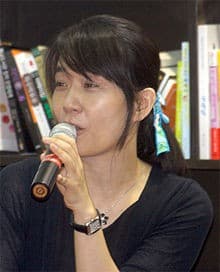
Han Kang is a South Korean writer. She won the Man Booker International Prize for fiction in 2016 for The Vegetarian, a novel about a woman's descent into mental illness and neglect from her family. The novel is also one of the first of her books to be translated into English.







