“There are some things you can't be brave about, and one of them is being small.”
— Hiccup reflecting on his physical size and lack of strength compared to other Vikings.

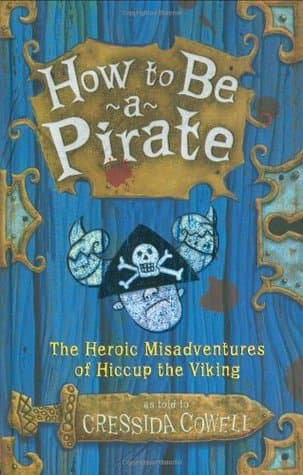
Cressida Cowell (2004)
Genre
Fantasy / Children's / Young Adult
Reading Time
150 min
Key Themes
See below
Sign in to track this book
Before he was a hero, a young Hiccup Horrendous Haddock III navigates the challenges of Viking adolescence, where the biggest problems are not just swordfights and shipwrecks, but learning how to not be eaten by his own dragon.
The story begins with Hiccup Horrendous Haddock III, a scrawny and unheroic Viking heir, facing the Dragon Initiation Test, a passage for all Hooligan Tribe boys. The test requires each boy to capture a dragon from the Wild Dragon Cliff. While his peers, like Snotlout, easily secure large, fearsome dragons, Hiccup, with his copy of 'How to Train Your Dragon,' struggles. He is scared and unskilled, barely avoiding disaster. Eventually, he finds a tiny, common, and seemingly toothless dragon, which he names Toothless. Toothless is weak, sick, and not what Hiccup wanted, but he is the only dragon Hiccup can catch, and he hopes to pass the test with him.
Hiccup brings Toothless back to the Dragon Nursery, where the other boys are presenting their impressive catches. Toothless is a disappointment and an embarrassment. During the initiation ceremony, Toothless refuses to perform and instead causes chaos, biting Hiccup and making a fool of him in front of the tribe, including his father, Stoick the Vast. For his failure and for bringing such a useless dragon, Hiccup and Toothless are sent away from the Hooligan Tribe and set adrift in a small boat. They soon encounter a storm, and their small vessel wrecks on a remote island, separating them from the rest of the tribe.
Stranded on the island, Hiccup and Toothless explore. They find a hidden cave system that leads them to a discovery: a hoard of pirate treasure, including ancient maps, jewels, and weapons. While exploring the treasure, they also uncover a giant, ancient map detailing a hidden island and hinting at a creature. Their exploration leads them further into the caves, where they accidentally wake a colossal and terrifying sea monster, a 'Green Death,' that had been sleeping for centuries, guarding the treasure. The monster is enormous, with multiple heads, and immediately poses a threat.
Meanwhile, the Hooligan Tribe, including Stoick and Snotlout, has been searching for Hiccup. They eventually find him on the island, much to their relief, though Stoick is still frustrated by his son's usual actions. However, their reunion is short. The awakening of the Green Death causes tremors and chaos throughout the island. The monster, now fully awake and enraged, bursts forth from its lair, its immense size and power instantly making everything else seem small. It begins to attack the Hooligan ships and warriors, proving to be an unstoppable force that threatens to destroy the entire tribe and their fleet.
The Hooligan Tribe, despite their bravery, is no match for the colossal Green Death. Their weapons and strategies do not work against its thick hide and multiple heads. Panic spreads as the monster destroys their ships and devours their warriors. Hiccup, seeing the destruction, realizes that traditional Viking strength and force are useless. Using his intelligence and his knowledge of dragons, however limited, he begins to form a desperate plan. He understands that this dragon is different and needs a different approach than simply fighting it directly. He must use his wits, not his muscles.
As Hiccup tries to tell his plan to a skeptical Stoick, Toothless, who had seemed useless, sees Hiccup's determination. Surprisingly, the small, seemingly cowardly dragon begins to show flashes of bravery. Inspired by Hiccup's courage and perhaps sensing the danger, Toothless, despite his small size, takes on a more active role. He starts nipping at the Green Death's heels, distracting it, and even managing to annoy it enough to draw its attention away from the more vulnerable Vikings, proving to be a small but helpful asset in the overwhelming battle against the giant monster.
Hiccup, using his understanding of dragons' weaknesses and his quick thinking, creates a strategy. He realizes the Green Death is attracted to light and sound. He tells the Vikings to create a diversion using their torches and shouting, drawing the monster's attention. Then, he uses a small, shiny piece of treasure as bait, luring the colossal dragon towards a narrow, unstable rock archway. With precise timing and a burst of courage from Toothless, Hiccup tricks the Green Death into smashing its own heads against the rocks, causing the archway to collapse on top of it, burying and ultimately defeating the monster.
With the Green Death defeated, the surviving Hooligan Tribe members are astonished and relieved. Hiccup, who was once ridiculed and sent away, is now called a hero. Stoick the Vast, proud and relieved, finally recognizes Hiccup's intelligence and unique strengths, understanding that heroism comes in many forms. The tribe celebrates Hiccup's cleverness and bravery, and his status among them changes. More importantly, his relationship with Toothless transforms. Toothless, having shown his loyalty and courage, is no longer seen as a useless runt but as Hiccup's brave companion, making their bond stronger.
After the battle, the Hooligan Tribe recovers from their losses, and the island is no longer threatened by the Green Death. The pirate treasure is saved, providing resources and a reward for their ordeal. Hiccup, though still not the strongest or most fearsome Viking, has earned his tribe's respect and, importantly, his father's. He has learned that being a hero does not mean fitting traditional Viking ideas of strength, but rather using one's own unique talents and intelligence. The story ends with Hiccup, Toothless by his side, looking towards a future where he can continue to be a hero in his own way, ready for more adventures.
The Protagonist
From a ridiculed, exiled failure, Hiccup transforms into a respected hero by using his intelligence rather than brute force.
The Supporting
From a cowardly, embarrassing pet, Toothless evolves into a loyal and brave companion.
The Supporting
Initially disapproving and traditional, Stoick learns to accept and respect Hiccup's unconventional strengths.
The Supporting
Maintains his arrogant nature but is forced to witness Hiccup's unexpected heroism.
The Supporting
Remains a steadfast mentor and warrior throughout the story, witnessing Hiccup's transformation.
The Supporting
Remains a loyal friend to Hiccup, witnessing and supporting his journey.
The Antagonist
Awakens from slumber, terrorizes the Vikings, and is ultimately defeated by Hiccup's ingenuity.
The Supporting
Remains a wise and traditional elder, observing the events and Hiccup's rise.
Hiccup's journey is about finding and accepting who he is. He struggles to fit the traditional Viking idea of strength and aggression, which makes him feel inadequate and like an outsider. Through his experiences with Toothless and the Green Death, he learns that his intelligence, empathy, and different way of thinking are strengths. The story supports the idea that heroism can look different, and true strength is in recognizing and using one's authentic self, even if it goes against what society expects.
“''But even Viking heroes have to begin somewhere. And that, I suppose, is where I come in.'”
The book challenges the common definition of heroism. The Hooligan Tribe values physical ability, strength, and aggressive dragon-slaying. Hiccup, being physically weak, constantly fails to meet these expectations. However, his intelligence, strategic thinking, and ability to understand and 'train' dragons (or at least outwit them) ultimately save the tribe from the Green Death. This shows heroism as not just about physical power, but also about wit, kindness, and the courage to be different, proving that a true hero can be an unexpected person.
“'There are more ways than one to skin a dragon, as my father always says. No, wait, that's not right...'”
A main theme is the Vikings' relationship with the wild world of dragons. Initially, dragons are seen as enemies to be conquered or captured through force, as shown by the Dragon Initiation Test. However, Hiccup's unique approach, especially with Toothless, suggests a different dynamic: one of understanding, communication, and even friendship. The main enemy, the Green Death, represents nature's power, which cannot be defeated by force alone, making Hiccup use his intellect to overcome it, hinting at a more harmonious or cunning way to live with nature.
“'The Vikings were a very simple people. They knew how to fight, how to raid, and how to eat. But they did not know how to think.'”
The strained relationship between Hiccup and his father, Stoick, is a central emotional part of the story. Stoick, a traditional Viking chief, struggles to understand and accept his scrawny, intellectual son, often showing disappointment and frustration. Hiccup, in turn, wants his father's approval. The story's climax, where Hiccup saves the tribe, makes Stoick finally recognize and appreciate his son's unique strengths, leading to a moment of acceptance and pride. This theme explores the challenges of parental expectations and the eventual acceptance of a child's individuality.
“'The thing about Stoick the Vast, my father, was that he was vast. And very, very vast-minded.'”
Hiccup and Toothless both represent the underdog. Hiccup is the smallest, weakest, and least Viking-like boy in his tribe, often underestimated and made fun of. Toothless is a tiny, sickly, and seemingly useless dragon, very different from the strong beasts caught by the other boys. Yet, this unlikely pair, through their bond and Hiccup's cleverness, ultimately defeat the terrifying Green Death, an enemy the strongest warriors could not conquer. The story celebrates the victory of the underestimated and the power found in unexpected places.
“'Nobody ever expects the smallest, most pathetic-looking dragon to be the one to save the day.'”
Hiccup's direct, humorous, and self-deprecating voice guides the story.
The entire story is told from Hiccup's perspective, both as a young boy experiencing the events and as an older, wiser Viking hero looking back. This allows for his unique, often self-deprecating humor, his internal struggles, and his intelligent observations to shine through. The narrative voice is highly engaging and directly connects the reader to Hiccup's thoughts and feelings, making his growth and triumphs more personal and impactful. It also allows for foreshadowing and ironic commentary from his future self.
Hiccup's unconventional guide to understanding dragons.
Hiccup carries a copy of 'How to Train Your Dragon,' which serves as both a literal and symbolic plot device. Literally, it's his only 'weapon' and source of knowledge during the Dragon Initiation Test, contrasting with the other Vikings' brute force. Symbolically, it represents Hiccup's intellectual approach to problems versus the tribe's traditional, physical one. The manual's often-incorrect or unhelpful advice also highlights Hiccup's need to learn through direct experience and develop his own unique methods, rather than relying solely on established rules.
A catalyst for the adventure and the awakening of the antagonist.
The discovery of the pirate's treasure and the ancient map on the deserted island serves as a crucial plot device. It not only provides a tangible reward for the Vikings but, more importantly, leads Hiccup to the lair of the Green Death. The map's hints about the monstrous creature and its location directly propel the narrative towards the climactic confrontation. It adds an element of mystery and ancient lore, enriching the world-building and providing the 'MacGuffin' that sets the main conflict in motion.
A colossal, ancient sea dragon serving as the ultimate antagonist and catalyst for Hiccup's heroism.
The Green Death acts as the primary antagonist and a significant plot device. Its immense size and destructive power create an overwhelming external conflict that the Hooligan Tribe cannot overcome with traditional methods. This forces Hiccup to step up and use his intelligence, providing the ultimate test for his unconventional heroism. The monster's awakening and subsequent rampage create the high stakes necessary for Hiccup's transformation from an outcast to a hero, demonstrating that true strength lies beyond physical might.
“There are some things you can't be brave about, and one of them is being small.”
— Hiccup reflecting on his physical size and lack of strength compared to other Vikings.
“The world is full of things that can eat you, and most of them are bigger than you.”
— A general observation about the dangers of the world, often repeated by Hiccup.
“Sometimes you have to do things you don't want to do, because they're the right thing to do.”
— Hiccup making a difficult decision that is morally correct, despite personal fear.
“A hero is not someone who is brave. A hero is someone who is afraid, but does it anyway.”
— Hiccup's evolving understanding of what it means to be a hero, contrasting with traditional Viking ideals.
“Being a hero isn't about being strong, it's about being clever.”
— Hiccup realizing that his intelligence is his greatest asset, not physical strength.
“It's not about how big you are, it's about how big your heart is.”
— A theme throughout the series, often related to Hiccup's small stature but great spirit.
“Dragons are not just dragons. They are creatures with feelings, just like us.”
— Hiccup's groundbreaking realization that dragons are not mindless beasts, leading to his unique bond with Toothless.
“Sometimes the best way to win is to make friends with your enemy.”
— Hiccup's unconventional approach to dealing with threats, often involving diplomacy and understanding.
“It's a lot easier to be brave when you've got a dragon on your side.”
— Hiccup acknowledging the comfort and confidence that Toothless brings him.
“Every Viking knows that the most dangerous thing in the world is a dragon that doesn't like you.”
— A common Viking proverb, highlighting the fear and respect for dragons in their culture.
“There's nothing more terrifying than a Viking who's decided he's going to be brave.”
— A humorous observation about the often reckless bravery of Vikings.
“Being different isn't a bad thing. It means you have the courage to be yourself.”
— Hiccup's journey of self-acceptance and finding strength in his unique qualities.
“The greatest treasure is not gold, but friendship.”
— A realization Hiccup often comes to, valuing his relationships over material wealth.
“Even the smallest of us can change the world.”
— Hiccup's overarching message, demonstrating how his actions as a small, seemingly insignificant Viking have profound impacts.
Ready to see how well you understood this book? Take our interactive quiz with 10 questions.

Cressida Cowell is the bestselling author and illustrator of the "How to Train Your Dragon" series, which inspired a major film franchise. She also penned the "Emily Brown" books. Cowell's imaginative storytelling and engaging illustrations have earned her global recognition, captivating young readers with tales of adventure and bravery.







