“The wind was a constant companion, a reminder of the vast, untamed land.”
— Describing the journey across the prairies.

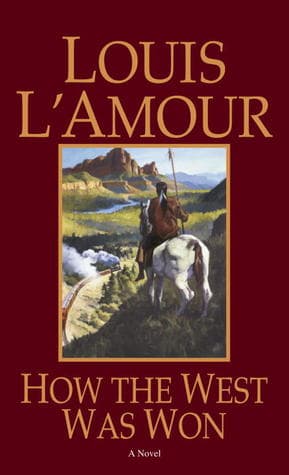
Louis L'Amour (1963)
Genre
Historical Fiction
Reading Time
540 min
Key Themes
See below
Sign in to track this book
Follow the interwoven destinies of resilient pioneers like the restless Linus Rawlings and spirited Lilith Prescott as they battle fierce enemies and nature's cruelty to forge a nation in the untamed American West.
In 1839, Zebulon Prescott, his wife Rebecca, and their four children—Lily, Lilith, Jeremiah, and Silas—join a wagon train heading west from upstate New York. Their journey is dangerous, including river crossings and the threat of Native American attacks. Meanwhile, Linus Rawlings, a frontiersman and trapper, decides to leave his solitary life in the wilderness and travel east to see the ocean. On his way, he encounters a family after a bear attack and helps them. His path is set to intersect with the westward expansion he is leaving behind.
The Prescott family's journey takes a tragic turn when their raft capsizes during a river crossing. Zebulon and Rebecca drown, leaving their children orphaned. The surviving children are separated, with Lily marrying a trapper, and Jeremiah and Silas continuing west. Lilith, strong-willed and independent, decides against marrying a man chosen for her and instead heads to a gold rush town in California. There, she hopes to find her fortune and carve out a life on her own terms.
After his journey east, Linus Rawlings is drawn back into the nation's drama. He enlists in the Union Army during the Civil War, serving as a scout and later participating in battles. His experiences in the war, witnessing the brutality and division, solidify his belief in the importance of the West as a place of renewal and opportunity. He fights bravely, his frontier skills proving valuable in military reconnaissance and survival. The war hardens him but also reinforces his desire for a peaceful, settled life, perhaps back in the territories.
In the gold rush town of Redemption, California, Lilith Prescott establishes herself as an independent woman, running a boarding house and saloon. She learns to navigate the world of prospectors, gamblers, and outlaws. She meets and falls in love with Cleve Van Valen, a charming but roguish gambler who often finds himself in trouble. Despite his flaws, Lilith sees a good heart in him and is drawn to his adventurous spirit. Their relationship is passionate but volatile, mirroring the unpredictable nature of the frontier itself.
Jeremiah Prescott, having survived the initial westward journey, grows into a determined and capable man. He becomes a foreman on the transcontinental railroad, overseeing a diverse crew of workers, including Irish immigrants and Chinese laborers. He faces challenges, from harsh weather conditions and dangerous terrain to labor disputes and Native American resistance. Jeremiah embodies the drive to connect the nation, pushing through obstacles to lay tracks across the wilderness. His work shows the industrialization and expansion that transformed the West.
After the Civil War, Linus Rawlings, having seen enough conflict, becomes a lawman in a frontier town, seeking to bring order to the chaotic West. His path eventually crosses with Lilith Prescott, who, after years in the gold fields, has established a more stable life. Though their backgrounds are different, they share an understanding of the hardships and allure of the West. Linus is drawn to Lilith's strength and independence, and she to his quiet integrity and experience. Their connection is a mature one, built on mutual respect and shared endurance.
Years later, a wagon train, including several descendants of the Prescott family, continues the westward migration. They encounter hostile Native American tribes, who view the encroaching settlers as a threat to their lands. Tensions escalate, leading to a confrontation where the wagon train is attacked. The settlers must band together, using their ingenuity and courage to defend themselves. This conflict shows the reality of Manifest Destiny and the violent clashes that shaped the American frontier, with both sides fighting for survival.
Silas Prescott, the youngest of the original Prescott children, grows up in the lawless West. Witnessing the crime and lack of order, he decides to become a sheriff, dedicated to upholding justice in a land where it is often scarce. He faces dangerous outlaws, corrupt officials, and the struggle to maintain peace. His story shows the efforts to establish law and order in the territories, a step in the West's transition from a wild frontier to a more settled society. Silas's commitment to justice reflects a growing desire for stability amidst the chaos.
As the decades pass, the stories of the Prescott, Rawlings, and Van Valen families intertwine and evolve. The original pioneers give way to their children and grandchildren, who continue to shape the West. The railroad is completed, towns flourish, and the open frontier begins to close. The descendants face new challenges, such as industrialization, land disputes, and the fading of the cowboy era. The narrative ends with a sense of the changes that have occurred, from the initial journeys to the establishment of communities, symbolizing the 'winning' of the West, though not without its lasting consequences.
The Supporting
Embarks on the arduous journey west with his family, only to tragically perish in a river accident.
The Supporting
Supports her family's journey west, only to die alongside her husband in a river tragedy.
The Protagonist
Starts as a solitary trapper, fights in the Civil War, and eventually becomes a respected lawman and settler.
The Protagonist
Transforms from an orphaned pioneer girl into an independent businesswoman and ultimately a respected settler.
The Supporting
Survives the initial journey, becomes a key figure in railroad construction, symbolizing progress and industry.
The Supporting
As a young man, he dedicates himself to establishing law and order in the burgeoning towns of the West.
The Supporting
A charming gambler who loves Lilith, he navigates the dangers of the gold rush, often in conflict with authority.
The Supporting
Marries a trapper and establishes a life in the less-settled parts of the West.
The novel portrays the West as a land of opportunity, a central idea of the American Dream. The Prescott family's initial journey is driven by the promise of fertile land and a fresh start. Lilith Prescott, after her parents' death, seeks her fortune in the California gold fields, showing the individual pursuit of wealth and independence. Jeremiah Prescott's involvement in the transcontinental railroad symbolizes the collective ambition to connect and develop the nation. This theme highlights the hope and determination that drew countless individuals westward, despite hardship.
““The West was a dream, a promise whispered on the wind, a place where a man could stand tall and carve his own destiny.””
The characters in 'How the West Was Won' consistently face challenges—natural disasters, Native American conflicts, lawlessness, and personal tragedies—yet they endure. The Prescott family's survival after the river accident, Lilith's ability to thrive in a rough gold rush town, and Linus's transition from trapper to soldier to lawman all show resilience. This theme highlights the grit and determination required to settle the frontier, showing the human spirit's capacity to overcome adversity and adapt to unforgiving circumstances. Their stories show strength found in continuous struggle.
““There was no giving up out here. The land wouldn't allow it. You either fought, or you died.””
The expansion westward led to conflict between incoming settlers and Native American tribes. The novel shows the impact of this clash, particularly in the scenes of wagon train attacks and the displacement of Native populations. It also touches upon the cultural differences and misunderstandings that fueled these conflicts. The arrival of diverse immigrant groups, like the Chinese and Irish laborers on the railroad, introduces another layer of cultural interaction and tension within the developing society of the West, showing the complex makeup of the burgeoning nation.
““The buffalo herds were dwindling, the hunting grounds shrinking. The white man’s iron horse brought change no arrow could stop.””
The early West is portrayed as a place largely without established law, where personal justice often reigned. Characters like Silas Prescott, who becomes a sheriff, and Linus Rawlings, who becomes a lawman, represent the effort to bring order to the chaos. The prevalence of gamblers, outlaws, and vigilante justice, as seen in the gold rush towns, shows the challenges of establishing a functional legal system. This theme explores the transition from a wild, unregulated frontier to a more structured society, emphasizing the role of individuals who stepped up to enforce justice.
““Where gold flowed, greed followed, and where greed was, law was a whisper against a shout.””
Traces the lives of multiple generations of interconnected families.
The novel spans several decades and follows the Prescott family and their descendants, as well as Linus Rawlings and Cleve Van Valen, across multiple generations. This allows the author to depict the vast sweep of westward expansion, from the early pioneers of the 1830s to the closing of the frontier in the late 19th century. By shifting focus between different family members, the narrative provides a comprehensive view of the changing West, showcasing how different eras and challenges impacted the same familial lines and their evolving roles in shaping the nation.
Separate character journeys converge and impact one another.
Initially, characters like Linus Rawlings and the Prescott family embark on separate journeys, often unaware of each other's existence. However, their paths inevitably cross, leading to significant interactions and relationships, such as Lilith Prescott's romantic entanglements with both Cleve Van Valen and Linus Rawlings. This device highlights the interconnectedness of lives on the frontier and emphasizes how individual choices and destinies were often shaped by chance encounters and the broader historical currents of westward migration, creating a rich tapestry of human experience.
Major historical events propel the narrative and shape character destinies.
Instead of being mere backdrops, key historical events such as the California Gold Rush, the American Civil War, and the construction of the Transcontinental Railroad serve as pivotal plot drivers. These milestones directly influence the characters' choices, fortunes, and even their survival. For instance, Lilith's journey to the gold fields, Linus's experiences in the Civil War, and Jeremiah's work on the railroad are not just events but define their character arcs and the direction of their lives, illustrating how personal stories are inextricably linked to grand historical movements.
Physical journeys represent personal growth and national expansion.
The literal journeys undertaken by characters—the Prescott family's wagon train, Linus Rawlings's travels east and west, Lilith's trek to California—are symbolic of larger themes of self-discovery, reinvention, and national expansion. Each arduous trip represents not just a physical movement across the landscape but also a transformation of character, a shedding of old lives, and an embrace of new identities. These journeys underscore the idea that the act of moving west was as much about internal change as it was about conquering new territory, shaping the individuals as much as the land.
“The wind was a constant companion, a reminder of the vast, untamed land.”
— Describing the journey across the prairies.
“Every sunrise brought new challenges, and every sunset, a quiet hope.”
— Reflecting on the daily struggles of the pioneers.
“A man's worth out here wasn't measured by his silver, but by his grit.”
— A character's observation about the values of the frontier.
“The land was a harsh mistress, but she offered a freedom no city ever could.”
— Pondering the allure and difficulty of the Western expansion.
“Fear was a cold hand, but courage was a fire that burned brighter.”
— Describing a character facing a dangerous situation.
“They built their homes with their own hands, and their futures with their dreams.”
— Narrating the efforts of settlers establishing new lives.
“The rifle was more than a weapon; it was a tool for survival, a voice for justice.”
— Discussing the importance of firearms on the frontier.
“There was a wild beauty to the West, a raw, untamed spirit that called to the restless heart.”
— General description of the appeal of the American West.
“A good horse, a true friend, and a steady hand were all a man truly needed.”
— A cowboy's philosophy on essential companions and skills.
“The trails they blazed were not just paths through the wilderness, but lines into history.”
— Reflecting on the historical significance of the pioneer trails.
“Every river crossed, every mountain climbed, was a testament to their unwavering will.”
— Highlighting the determination of the westward travelers.
“The land kept its secrets close, but yielded its bounty to those brave enough to ask.”
— Metaphorical description of the challenges and rewards of the West.
“He carried the weight of the past, but his eyes were always on the horizon.”
— Describing a character's forward-looking perspective despite past hardships.
“The West was a crucible, forging new men from old dreams.”
— Summary of the transformative power of the frontier experience.
Ready to see how well you understood this book? Take our interactive quiz with 10 questions.
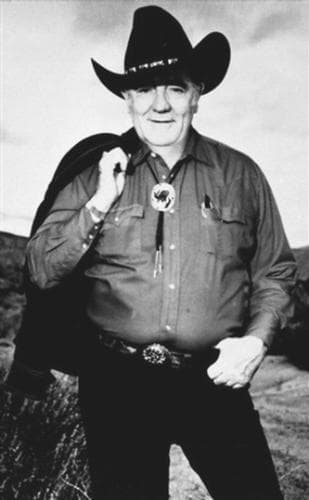
Biography coming soon.