“There was a young Wizard called William, who was not a good Wizard.”
— Introducing William and his magical ineptitude.

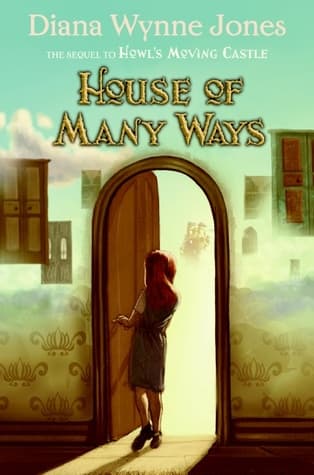
Diana Wynne Jones (2008)
Genre
Fantasy / Children's / Young Adult
Reading Time
400 min
Key Themes
See below
Sign in to track this book
When Charmain steps into her Great-Uncle's 'tiny cottage,' she tumbles into a whimsical, time-bending adventure filled with royal mysteries, magical creatures, and the chaotic charm of Wizard Howl's family.
Charmain Baker, a girl who prefers books to housework and has been sheltered by her overprotective mother, is reluctantly sent to look after her Great-Uncle William's house while he recovers from an illness in the Royal Palace. She expects a quiet, studious time, but quickly discovers the house is far from ordinary. The single door leads to countless places, including different rooms, the past, and even the Royal Mansion. Charmain struggles with simple tasks, like cooking and cleaning, and is bewildered by the house's unpredictable magic, which often leaves her disoriented and frustrated. Her initial attempts at domesticity are disastrous, highlighting her complete lack of practical experience.
Soon after her arrival, Charmain finds herself with unexpected company. A small, scruffy, magical dog appears and quickly adopts her. Then, Peter Regis, a young, earnest but very muddled apprentice wizard, arrives, sent by Great-Uncle William to study. Charmain also discovers a box containing the King's treasured and secret documents, which Great-Uncle William was meant to be deciphering. These new responsibilities overwhelm Charmain, who is already struggling with the house's eccentricities and her own inexperience. She feels increasingly out of her depth, especially with Peter's well-meaning but often unhelpful presence.
The Royal Family, including the King and his daughter Princess Hilda, are desperate to find the fabled Elfgift, a magical artifact important for the kingdom's prosperity. Great-Uncle William, as the Royal Wizard Norland, was tasked with this search, and his illness has halted progress. Charmain and Peter find themselves inadvertently involved, as the house's unpredictable doors sometimes lead directly to the Royal Palace. Charmain's attempts to deliver Great-Uncle William's deciphered documents lead her into royal circles, where she encounters the King's concern and Princess Hilda's more practical approach to the mystery. The urgency of the Elfgift's recovery becomes a central plot point.
One of the unpredictable doors of Great-Uncle William's house opens into a dangerous cave system. Here, Charmain encounters a terrifying magical beast known as a lubbock, a large, shadowy creature with glowing eyes. Her initial encounter is harrowing, and she narrowly escapes. This incident reveals the true extent of the dangers connected to the house and the surrounding magical world. The lubbock is not just a monster but a problem, as its presence is linked to unrest in the caves and potentially to the missing Elfgift. Peter, despite his muddled magic, tries to assist, but it is clear they are ill-equipped to handle such threats.
Due to the mounting difficulties and the Royal Family's desperation, Wizard Howl and his wife, Sorceress Sophie Hatter, are summoned to the Royal Palace to aid in the search for the Elfgift. Their arrival introduces a new dynamic, bringing a chaotic but highly effective magical force into the narrative. Howl, with his flamboyant personality and immense power, and Sophie, with her practical magic and sharp wit, begin to investigate the Elfgift mystery and the strange occurrences around the kingdom, including the lubbock. Their presence immediately signals that the stakes have been raised significantly.
Howl and Sophie, along with their fire demon Calcifer, quickly begin to piece together the various magical anomalies. They investigate the lubbock, realizing it is a creature of immense magical power that is causing widespread unrest in the caves and beyond. They also connect its presence to the strange magical fluctuations in Great-Uncle William's house and the difficulties Charmain and Peter are experiencing. Sophie, with her unique ability to talk life into objects, aids in understanding the house's peculiar nature. Their investigation reveals that the lubbock is not merely a beast but a symptom of a larger magical imbalance, and its presence is directly linked to the missing Elfgift.
Despite her initial protests about lacking magical aptitude, Charmain begins to exhibit a powerful, innate talent for healing magic. This manifests through her interactions with the injured lubbock and other creatures, as well as her unexpected ability to soothe and mend. This discovery is a significant turning point for Charmain, as it challenges her self-perception as merely a bookish, non-magical girl. Her healing abilities become crucial in understanding and eventually resolving the lubbock situation, revealing a deeper connection to the magical world than she ever imagined. This newfound power empowers her and gives her a vital role in the unfolding events.
Through the combined efforts of Howl, Sophie, and Charmain's healing magic, the terrifying lubbock is revealed to be a powerful, magically-bound dragon in distress. Its shadowy, monstrous form is not its natural state but a result of a magical curse or ailment. The dragon's suffering and its monstrous form are directly linked to the missing Elfgift. The Elfgift, it turns out, is not merely a treasure but a vital component for the dragon's well-being and the balance of magic in the kingdom. This revelation shifts the focus from finding a lost item to healing a powerful, ancient creature.
The Elfgift is discovered to be located inside the dragon itself, acting as its magical heart or life force. It was not 'lost' in the traditional sense but rather an integral part of the dragon's being. The search for the Elfgift was misguided; the true task was to understand the dragon's condition and restore it. Charmain's healing magic plays a crucial role in stabilizing the dragon and allowing Howl and Sophie to safely extract and then re-integrate the Elfgift, restoring the dragon to its true, benevolent form. This discovery redefines the entire quest and highlights the true nature of magic in the world.
In a climactic revelation, it is discovered that Great-Uncle William, the Royal Wizard Norland, is not just ill but is, in fact, the dragon. His human form is a magical guise, and the Elfgift is his true, magical heart. His 'illness' was a symptom of the Elfgift's distress and separation from him. This explains his peculiar house and his urgent need for someone to care for it, implicitly hoping they would help him. Charmain's presence and her healing magic were instrumental in his recovery. This twist recontextualizes the entire narrative, explaining many of the earlier mysteries and Great-Uncle William's seemingly inexplicable actions.
With Great-Uncle William (the dragon) restored and the Elfgift safely re-integrated, balance returns to the kingdom. The lubbock menace is gone, and the caves are pacified. Charmain, having discovered her own powerful healing magic and overcome her initial timidity, chooses to embrace her magical future. She decides to stay at Great-Uncle William's house, not just as a caretaker, but as an apprentice to him, learning to hone her abilities. Peter also finds his place, becoming a more confident and effective wizard. The story concludes with Charmain, no longer a sheltered girl, confidently embarking on a new, magical life, surrounded by friends and purpose.
The Protagonist
Charmain transforms from a passive, unworldly girl into a confident, capable young woman who embraces her powerful healing magic and finds her place in the magical world.
The Supporting/Antagonist (unwittingly)/Plot Device
His true identity as the dragon is revealed, and he is healed and restored to his full power, allowing him to guide Charmain.
The Supporting
Peter gains confidence in his magical abilities and becomes a more capable and less muddled wizard by the end of the story.
The Supporting
Howl continues to be a powerful and effective wizard, using his skills to solve the Elfgift mystery and aid Charmain's development.
The Supporting
Sophie utilizes her unique magic and wisdom to help unravel the central mystery and guide Charmain.
The Supporting
Calcifer continues to provide magical power and witty commentary, aiding in the resolution of the plot.
The Supporting
The King's anxieties are resolved with the discovery and restoration of the Elfgift and the dragon.
The Supporting
Princess Hilda maintains her practical approach, contributing to the search and overseeing the kingdom's affairs.
The Antagonist/Plot Device
The Lubbock is transformed from a terrifying monster back into its true form as a benevolent dragon, revealing its connection to Great-Uncle William.
This theme explores how Charmain, initially shying away from all responsibility, is forced to confront and embrace it. Her unexpected duties—caring for the house, Peter, the magical dog, and the King's documents—push her out of her comfort zone. Her growth is directly tied to her acceptance of these responsibilities, culminating in her taking charge of her own magical destiny. This is evident in her struggle to manage the house, her gradual acceptance of Peter's presence, and her eventual decision to apprentice under Great-Uncle William, showing a complete transformation from her earlier self.
“Charmain had always known she was not suited to real life. She was meant for books.”
The book highlights how characters, particularly Charmain, possess hidden talents and strengths they are unaware of or deny. Charmain believes herself to be non-magical and unsuited for practical tasks, yet she discovers a powerful innate healing ability. Similarly, Peter, despite his muddled magic, has a genuine aptitude for wizardry. Great-Uncle William's true identity as the dragon also serves this theme, revealing a deeper, more powerful being beneath his human facade. This theme emphasizes that true capabilities often lie beneath the surface, waiting for the right circumstances to emerge, as seen when Charmain heals the lubbock.
“It was as if some part of her had known all along, deep down, what she was capable of.”
This theme runs throughout the narrative, challenging initial perceptions. Great-Uncle William's 'illness' is not what it seems, nor is his house a simple cottage. The terrifying lubbock is revealed to be a powerful, suffering dragon, and the Elfgift is not a mere lost treasure but the dragon's magical heart. Even Charmain's initial perception of herself as weak and unmagical is proven false. The story constantly peels back layers of illusion and misconception, urging readers to look beyond the superficial to understand the true nature of things, most powerfully demonstrated by the dragon's reveal.
“Things were never quite what they seemed in Great-Uncle William's house.”
The narrative shows that magic is not an isolated force but deeply intertwined with the natural world, the kingdom's well-being, and individual lives. The distress of the dragon (Great-Uncle William) directly impacts the magical balance, leading to the lubbock's rampage and threatening the kingdom. The Elfgift is not just an artifact but a vital life force. This theme emphasizes that actions in one magical sphere have repercussions across others, and that true magical understanding involves recognizing these intricate connections, as shown by Howl and Sophie's deductions linking all the disparate magical elements.
“The balance of things, when it came to magic, was a delicate thing indeed.”
A magical, dimension-shifting house that serves as a central hub and plot catalyst.
Great-Uncle William's house is not a static dwelling but a dynamic, unpredictable magical entity. Its single door can lead to various locations across space and time, including different rooms, the Royal Palace, the past, and dangerous caves. This device propels Charmain into the plot, forces her to confront magical realities, and serves as a literal gateway to the story's various settings and conflicts. It also acts as a magical puzzle, its complexities mirroring the larger mysteries of the plot and Great-Uncle William's true nature.
A macguffin that is revealed to be a vital magical component and character's heart.
Initially presented as a lost, fabled treasure that the King desperately seeks, the Elfgift functions as a classic macguffin, driving much of the early plot. Its true nature is later revealed to be far more significant: it is the magical heart of the dragon (Great-Uncle William). This transformation from a simple object of desire to an integral part of a living being elevates its importance and redefines the entire quest, adding depth and personal stakes to the search. It's a key to understanding the book's central mystery.
Characters and creatures are not what they initially appear to be.
This device is central to the novel's revelations. Charmain initially sees herself as non-magical, but discovers powerful healing abilities. The terrifying lubbock is revealed to be a suffering dragon. Most significantly, Great-Uncle William, the ailing Royal Wizard, is ultimately revealed to be the very dragon they have been trying to heal. This device creates suspense, allows for dramatic reveals, and reinforces the theme of appearance versus reality, constantly challenging the reader's assumptions about characters and their roles.
A narrative framework for character development and world-building.
Charmain's reluctant 'apprenticeship' as a house-sitter, and later her formal apprenticeship to Great-Uncle William, provides a structured path for her character development. It allows her to gradually learn about magic, the world, and her own abilities. Peter's existing apprenticeship serves as a contrast and a parallel. This device allows for the natural introduction of magical concepts, challenges, and mentors (like Howl and Sophie), guiding Charmain's transformation from a sheltered girl to a capable magic-user.
“There was a young Wizard called William, who was not a good Wizard.”
— Introducing William and his magical ineptitude.
“Charmain was not good at housework. She was not good at anything that involved her hands, except reading.”
— Describing Charmain's preferred activities and lack of practical skills.
“It was much easier to read about things than to do them.”
— Charmain's internal thought about the difference between theory and practice.
“Being a Wizard was mostly about being very, very quick-witted.”
— Peter explaining the true nature of wizardry to Charmain.
“Libraries were the best places. In a library you could find out anything, whether it was true or not.”
— Charmain's profound love for libraries and the knowledge they contain.
“When you're trying to save the world, you don't have time for manners.”
— Sophie Hatter's practical advice during a crisis.
“It seemed to Charmain that every time she thought she was doing something sensible, it turned out to be something quite mad.”
— Charmain reflecting on the chaotic nature of her adventures.
“The House of Many Ways was like a living thing, always shifting and changing.”
— Describing the magical, unpredictable nature of the house itself.
“People were always going to be annoying, no matter how much magic was involved.”
— Charmain's resigned observation about human nature.
“You can't just wish for things to happen. You have to make them happen.”
— A lesson learned about agency and responsibility.
“There's a lot more to being a Royal Person than just looking grand.”
— Sophie Hatter imparting wisdom about the duties of royalty.
“Sometimes the most ordinary things were the most extraordinary.”
— Charmain's realization about finding wonder in everyday life.
“It was amazing how much trouble a little bit of magic could cause when it was in the wrong hands.”
— Reflecting on the consequences of misused magic.
“Being grown-up was much harder and more complicated than she had ever imagined.”
— Charmain's coming-of-age realization.
“You never knew what was going to happen next, and that was half the fun.”
— Embracing the unpredictable nature of adventure.
Ready to see how well you understood this book? Take our interactive quiz with 10 questions.
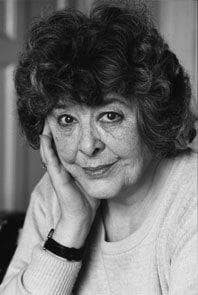
Diana Wynne Jones was a celebrated British author renowned for her witty and imaginative fantasy novels for children and young adults. Her most famous works include "Howl's Moving Castle," "Dark Lord of Derkholm," and "Chrestomanci" series. Jones's writing is characterized by its intricate plots, quirky characters, and clever use of magic, earning her critical acclaim and a dedicated readership.







