“The darkness was a living thing, a presence that pressed in on him from all sides.”
— When the protagonist first enters the ominous house.

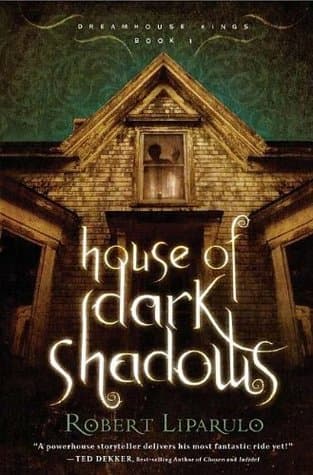
Robert Liparulo (2008)
Genre
Thriller / Fantasy / Mystery / Young Adult
Reading Time
295 min
Key Themes
See below
Sign in to track this book
A teenage filmmaker discovers his new Victorian home is a portal to terrifying pasts, turning his dream of adventure into a nightmare of survival.
The King family — Xander, his younger brother David, and their older sister Toria — moves from Los Angeles to the quiet town of Pinedale. Xander, an aspiring filmmaker, is initially bored by the lack of excitement. Their busy parents are happy with their new purchase: a large, old Victorian house that needs much work. The children are immediately struck by the house's unusual layout, its many rooms, and the dense woods around it. David enjoys exploring every corner, while Xander and Toria try to adjust to their new, seemingly dull lives.
Soon after moving in, the children notice strange things in the house. Sounds come from unexpected directions. Dust on the floors shows prints of giant, bare feet, too large for any of them. The most shocking event occurs when David, playing hide-and-seek, tries to hide in a linen closet but finds himself in locker 119 at his new school. This incident, at first dismissed as a prank or dream, deeply unnerves Xander and Toria, making them consider that their new home is not ordinary.
Driven by curiosity and unease, Xander, David, and Toria search for answers. Their investigation leads them to a hidden hallway behind a bookshelf. This hallway is unlike anything they have seen, lined with multiple doors—portals—that hum with an otherworldly energy. Each portal seems to lead to a different time and place. This discovery excites Xander, whose filmmaker's imagination sparks, but it also fills them with worry about the unknown dangers these portals might hold. They realize the house is not just old; it is a gateway.
Overcoming their initial fear, Xander and David carefully begin to explore the portals. Their first trips are short and experimental, showing glimpses into historical settings. They see a dinosaur, a medieval castle, and a busy marketplace from another era. These trips are thrilling, offering adventures and chances for Xander to 'film' history. However, they quickly learn these journeys are risky. They encounter primitive dangers and realize they need strict rules for their time-traveling, including a designated 'safe' portal for return.
One day, David, impulsive and curious, ventures through a portal alone and does not return. Panic sets in for Xander and Toria. They desperately try to remember which portal he might have used and, more importantly, how to bring him back. This event raises the stakes, turning their adventures into a desperate rescue mission. They realize the true seriousness of their situation and the great responsibility that comes with controlling such powerful, unpredictable gateways to other times.
Xander and Toria, now united in their mission, systematically enter portals, searching for David. Their journeys take them through various historical periods, each with unique challenges and dangers. During their search, they realize they are not alone in knowing about the portals. They sense unseen presences, 'Watchers,' who seem to monitor their movements and perhaps manipulate events. These encounters add mystery and paranoia, as they wonder about the house's true nature and purpose, and who else might be involved.
As their search intensifies, Xander and Toria begin to encounter menacing 'shadow figures'—dark, ethereal beings that seem determined to stop them from rescuing David. These figures are not just observers; they actively try to trap or harm the siblings, creating obstacles and attacking them during their portal jumps. The children realize these entities are a real, dangerous threat, adding terrifying combat and evasion to their quest. They must learn to outsmart and escape these creatures to survive.
Amidst their desperate search, Xander and Toria uncover parts of the house's past. They find old journals, cryptic symbols, and hidden compartments that hint at previous inhabitants who also knew about the portals. These discoveries suggest the house has been a time-travel nexus for centuries, and that the shadow figures might be guardians or prisoners of the house. They begin to piece together a larger, more sinister story about the house's purpose and the fate of those who have lived there, realizing they are part of an older conflict.
The shadow figures corner Xander and Toria in one of the past timelines. During this dangerous encounter, they learn a crucial, terrifying truth: the shadow figures are not just evil entities, but previous children trapped in the portals, their forms twisted over time. They are trying to lure or force other children into similar fates, perhaps out of a twisted desire for company or to continue their existence. This revelation increases the horror and urgency of their mission, as they realize David could suffer the same fate.
With this terrifying knowledge, Xander and Toria plan to rescue David, knowing they must directly confront the corrupted children. They navigate a treacherous timeline, using their wits and limited resources. The confrontation is intense and dangerous, requiring them to outmaneuver the shadow figures and avoid becoming trapped themselves. They race against time, not only to find David but also to prevent him from being consumed by the same darkness that transformed the other children, risking their own lives.
Through quick thinking, bravery, and some luck, Xander and Toria locate and extract David from the timeline where he was trapped, just as the shadow figures close in. They make a desperate dash back to their own time, barely escaping the corrupted entities. David is safe, but the experience leaves all three siblings deeply shaken. They return to the house, knowing that while they have won this battle, the portals and their dangers are still active within their home, leaving an unsettling sense of future peril.
After their harrowing ordeal, the King children are forever changed. They struggle to reconcile their ordinary lives with the terrifying reality of their house. They know the portals are still there, a constant temptation and threat. While they have rescued David, the house's ultimate purpose and the full extent of its dangers remain a mystery. They realize they are now bound to its secrets, forever watchful, and aware that their dream house is also a source of endless, dark shadows and potential future adventures or nightmares. The house remains an enigma, its power contained but not neutralized.
The Protagonist
Xander transforms from a somewhat self-absorbed teen into a courageous and resourceful leader, accepting the terrifying responsibilities thrust upon him by the house's secrets.
The Supporting
David learns the hard way about the dangers of unchecked curiosity, becoming more cautious but retaining his adventurous spirit.
The Supporting
Toria evolves from a skeptical older sister to a vital, courageous member of the time-traveling team, embracing the impossible.
The Antagonists
Their unchanging, tragic state serves as a constant threat and a warning of the perils of the house.
The Mentioned
Remains largely static, unaware of the supernatural events, serving as a contrast to the children's ordeal.
The Mentioned
Remains largely static, unaware of the supernatural events, serving as a contrast to the children's ordeal.
The most prominent theme is the double-edged nature of hidden wonders. The King children are initially thrilled by the portals, seeing them as adventure and a filmmaker's dream for Xander. However, this appeal quickly turns to terror as they face dangers in different timelines and from the malevolent Shadow Figures. This theme is clear when David's impulsive curiosity leads to his disappearance, changing an exciting discovery into a harrowing rescue mission. The house itself shows this theme, appearing as a dream home but hiding dark, perilous secrets.
“Xander is starting to wonder if this kind of travel is a teen's dream come true . . . or his worst nightmare.”
The story centers on the strong bond between the King siblings. Despite their initial arguments and different personalities, David's disappearance unites Xander and Toria in a common, desperate goal. Xander feels a strong responsibility to protect his younger brother and lead the rescue. Their loyalty to each other drives their courage and resilience in the face of great danger. This theme shows how extreme circumstances can strengthen family ties, pushing individuals to brave acts for their loved ones.
“He knew, with a certainty that chilled him to the bone, that he would do anything to get David back.”
The house's portals are literal gateways through time, making this a central theme. The story explores how time can preserve, transform, and corrupt. The ancient timelines the children visit show the vastness and indifference of history, while the tragic fate of the Shadow Figures reveals time's ability to twist and trap, turning victims into monsters. This theme is not just about historical eras but about time's irreversible impact on individuals and the environment, emphasizing that some things, once lost to time, cannot be fully recovered.
“They were not just shadows; they were the echoes of children, lost and corrupted by the relentless march of time.”
The novel constantly plays with what is seen versus what is truly real. The King parents see the Victorian house as a charming fixer-upper, unaware of its supernatural properties. The children initially dismiss strange sounds and giant footprints, trying to explain them, until the undeniable reality of the portals shatters their normal understanding. This theme explores the limits of human perception and the unsettling idea that hidden realities coexist with our own, just beyond our grasp. The discovery of locker 119 in place of a linen closet is a prime example of this theme.
“Sounds come from the wrong directions. Prints of giant, bare feet appear in the dust. And when David tries to hide in the linen closet, he winds up in locker 119 at his new school.”
Magical doorways that allow travel through different times and places.
The portals are the central plot device, serving as the catalyst for all major events. They introduce the element of fantasy and mystery into an otherwise grounded thriller. Each portal acts as a distinct setting, allowing for diverse historical and fantastical environments. Their unpredictable nature and the inability to precisely control their destinations create suspense and drive the characters' urgent need to understand and master them. The portals are not just means of transport; they are also sources of danger, leading to David's disappearance and encounters with the Shadow Figures.
An old, mysterious house that serves as the nexus for time travel.
The house itself is more than just a setting; it's a character and a key plot device. Its secluded location, unusual layout, and hidden features (like the secret hallway) create an atmosphere of mystery and foreboding. The house acts as the fixed point from which all time travel originates and returns, grounding the fantastical elements. It also holds the secrets of previous inhabitants and the true nature of the portals, slowly revealing its dark history through clues and discoveries made by the children. It's a 'dream house' that becomes a 'bad dream.'
Adults who are oblivious to the supernatural events, forcing the children to act independently.
The parents' ignorance of the house's true nature is a crucial plot device in young adult fiction. It isolates the children, forcing them to take responsibility for their discoveries and the subsequent crisis. This lack of adult intervention heightens the stakes and allows the children to be the sole protagonists, making their decisions and actions critical. Their parents' dismissiveness of strange occurrences pushes the siblings to rely solely on each other, strengthening their bond and emphasizing their maturity in the face of unbelievable circumstances.
A designated portal used for reliable return to the present time.
This device provides a crucial element of control and a perceived safety net within the unpredictable nature of time travel. The establishment of a 'safe' portal allows the characters to experiment and explore, knowing they *should* have a way back. However, its existence also creates a false sense of security, which is shattered when David disappears through an unsanctioned portal. It highlights the inherent dangers and the limitations of their control over the house's power, ultimately making their rescue mission even more terrifying.
“The darkness was a living thing, a presence that pressed in on him from all sides.”
— When the protagonist first enters the ominous house.
“Some secrets are better left buried, no matter how much you want to unearth them.”
— A warning given to the protagonist about the house's past.
“He felt a chill that had nothing to do with the temperature, a cold dread that seeped into his bones.”
— Experiencing a supernatural phenomenon within the house.
“The house itself seemed to breathe, a slow, deliberate inhale and exhale of ancient, musty air.”
— A description of the house's sentient-like quality.
“There are shadows that hide more than just the absence of light.”
— A cryptic thought by the protagonist regarding the house's secrets.
“Every creak, every groan of the old house, was a whisper from the past.”
— The protagonist's perception of the house's sounds.
“He was a trespasser in a place that had long ago claimed its own inhabitants.”
— Realization of the house's possessive nature.
“The truth, when it finally revealed itself, was far more terrifying than any ghost story.”
— The climax of the mystery being unveiled.
“Sometimes, the things you can't see are the most dangerous.”
— A reflection on the unseen threats within the house.
“He had walked into a nightmare, and the door had slammed shut behind him.”
— Feeling trapped within the house's influence.
“The house didn't just hold secrets; it guarded them with a jealous, ancient fury.”
— Understanding the house's protective nature over its mysteries.
“Hope was a flickering candle in a vast, encroaching darkness.”
— The protagonist's struggle to maintain optimism in a dire situation.
“He knew, with a certainty that chilled him to the core, that he was not alone.”
— A pivotal moment of realizing a presence in the house.
“The past wasn't dead; it was merely waiting, patiently, in the shadows.”
— A profound realization about the enduring nature of the house's history.
Ready to see how well you understood this book? Take our interactive quiz with 10 questions.

Biography coming soon.







