“There are things in this house, things that are not of this world. And they are not happy.”
— The initial realization of the supernatural presence within the house.

Genre
Thriller / Fantasy / Mystery
Reading Time
7 hours 30 minutes
Key Themes
See below
Sign in to track this book
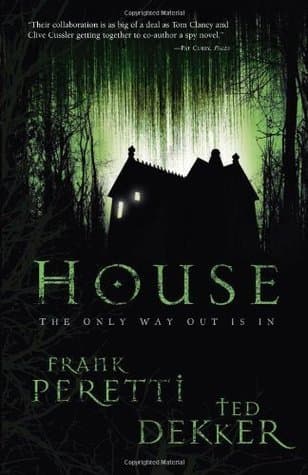
Seven strangers are trapped in a house where the walls whisper madness and a killer's game demands sacrifice. They must decipher illogical rules before dawn or lose their minds and lives to an unseen evil.
Jack and Stephanie, a couple with a strained marriage, crash their car during a severe storm. They seek shelter in an old, isolated mansion known as the 'House of Horrors.' Randy and Susan, another couple who crashed nearby, soon join them. The house has no modern amenities, only dusty, antique furnishings and a heavy atmosphere. The storm makes immediate escape impossible. As they try to understand their situation, strange noises and a growing sense that they are not alone confirm this is no ordinary shelter.
As the four initial occupants try to communicate, a young woman named Delilah mysteriously appears. She seems disoriented and claims to have no memory of how she got there, only a vague sense of being drawn to the house. Her sudden appearance increases tension among the group. Jack, a skeptic, tries to find a rational explanation, but Stephanie is increasingly unnerved. Delilah’s presence adds a new dynamic, stirring suspicion and fear, as the storm outside continues to trap them within the ominous walls.
A tin can is inexplicably thrown through a window. Inside, a piece of paper contains bizarre and terrifying rules for a 'game.' The rules state that 'Billy' is in the house and one of them is 'The Dealer.' To win, they must 'lose,' and to get out, they must go 'in.' The game ends at dawn, and if they don't play, everyone dies. This revelation causes panic. Jack initially dismisses it as a prank, but the others are deeply disturbed. This moment confirms they are not just seeking shelter, but are trapped in a deadly, supernatural contest orchestrated by an unseen entity.
Under the game's threat, the group reluctantly searches the house for 'Billy.' As they explore the decaying mansion, they encounter disturbing phenomena: disembodied voices, flickering lights, moving objects, and a pervasive sense of dread. The house itself seems alive and hostile, its layout shifting and distorting, trapping them in endless corridors and rooms that appear and disappear. Randy becomes agitated, while Susan tries to remain calm. Jack tries to find logical explanations, but even his resolve begins to crack under the relentless supernatural events.
The game takes a horrifying turn when Randy is brutally murdered. His body is discovered dismembered and displayed in a grotesque manner, confirming the threats are real. The remaining survivors are gripped by terror. The murder shatters any hope of a rational explanation or easy escape, forcing them to confront the supernatural nature of their predicament. Jack, Stephanie, Susan, and Delilah realize they are fighting for their lives against an unseen, malevolent force, and that 'Billy' is a very real and dangerous presence.
As the game continues and more people die, a shocking revelation occurs: one of the survivors is 'The Dealer,' unknowingly helping the killer. This discovery shatters any remaining trust, turning them against each other. Suspicion and paranoia spread as each person wonders who among them is unknowingly aiding their tormentor. The identity of 'The Dealer' is a twist that forces the characters to fear not only the unseen killer but also to question the intentions of their fellow captives, deepening the psychological terror.
Stephanie, struggling with her past and strained relationship with Jack, begins to have disturbing visions and flashbacks. These fragmented images offer glimpses into the house's dark history and the tragic story of a young boy named Billy. She sees scenes of abuse, neglect, and the evil entity that seems to have taken root in the house. These visions suggest Billy was a victim, and that his tormented spirit, or something exploiting it, is now the force behind the deadly game. The visions are disorienting but offer crucial clues to understanding their confinement and the entity they face.
Jack, initially pragmatic and skeptical, tries to find a logical way out, but all his efforts are thwarted by the house's supernatural manipulations. Doors disappear, corridors shift, and physics bend. As the horrors intensify, Jack must confront the undeniable supernatural reality of their predicament. He also faces his own internal demons and unresolved issues with Stephanie. His journey moves from disbelief to a terrifying acceptance of the spiritual warfare unfolding around him, realizing his scientific worldview cannot save them here.
As dawn approaches, Jack and Stephanie, the last survivors, face a final, harrowing confrontation with the entity known as Billy. They discover Billy is not merely a ghost, but a manifestation of pure evil, feeding on fear, guilt, and the unresolved emotional pain of those trapped within the house. The entity taunts them, forcing them to confront their deepest regrets and sins. The house itself becomes the stage for this psychological and spiritual battle, its rooms shifting and distorting to reflect their inner turmoil. They realize physical escape is impossible without first defeating the entity's spiritual hold.
Through their ordeal and Stephanie's visions, Jack and Stephanie understand the game's rules: to 'lose' means to surrender pride, selfishness, and past hurts, and to 'go in' means to confront inner demons and embrace forgiveness and self-sacrifice. They realize the entity feeds on their negativity. In a climactic moment, they choose to forgive each other and themselves, offering love and compassion even in the face of pure evil. This act of self-sacrifice and spiritual surrender weakens the entity, stripping it of its power, proving that true victory lies not in escaping physically but in overcoming spiritual bondage.
As Jack and Stephanie embrace forgiveness and love, the entity's hold over the house dissipates. The terrifying illusions fade, the oppressive atmosphere lifts, and the storm outside finally breaks. With the first rays of dawn, the house, once a prison, offers a path to freedom. They emerge from the house, transformed by their ordeal, their relationship healed and strengthened. They are physically free, but more importantly, they have achieved spiritual liberation, understanding that the game was a crucible designed to force them to confront their inner selves and choose redemption over despair.
The Protagonist
Jack transforms from a cynical rationalist to someone who accepts the supernatural and embraces faith and forgiveness, ultimately mending his relationship with Stephanie.
The Protagonist
Stephanie moves from a state of emotional vulnerability and marital despair to finding strength, forgiveness, and spiritual clarity, leading to the healing of her marriage.
The Supporting
Randy's arc is tragically cut short, serving as a brutal example of the game's deadly stakes and the consequences of succumbing to fear and distrust.
The Supporting
Susan's arc is one of increasing fear and desperation, ultimately ending in tragedy, showcasing the destructive power of the house.
The Supporting
Delilah's true nature is slowly revealed, showing her to be a victim of the entity, used as a pawn in the game, ultimately finding a form of release.
The Antagonist
Billy's influence is eventually weakened and defeated not by physical force, but by the spiritual choices of forgiveness and love made by the protagonists.
The novel highlights the power of forgiveness, both of oneself and others, as a path to redemption. Jack and Stephanie's strained marriage, burdened by past hurts, embodies this theme. Billy's 'game' forces them to confront these issues. Their eventual act of forgiving each other, and Jack facing his guilt over his family's past, weakens the entity and allows them to escape. The house acts as a spiritual crucible, where redemption is earned by confronting inner darkness and choosing love over bitterness.
“The only way to win is to lose... the only way out is in.”
The book explores evil not just as a physical threat but as a spiritual force that feeds on human fear, guilt, and unresolved trauma. Billy is not merely a ghost but a manifestation of pure evil that exploits the weaknesses and sins of its victims. The house itself becomes an extension of this evil, distorting reality and reflecting the characters' inner turmoil. The novel suggests that evil gains power when individuals succumb to despair, anger, and unforgiveness, and that true victory requires a spiritual battle rather than a physical one, showing its pervasive nature.
“He feeds on your fear, your guilt, your unforgiveness. That's his power.”
At its core, 'House' is a story about the breakdown and eventual healing of Jack and Stephanie's marriage. Their initial interactions show tension, unspoken resentments, and emotional distance from past tragedies and poor communication. The extreme pressure of being trapped in the House of Horrors forces them to confront these issues. Their survival depends not just on escaping the physical confines, but on repairing their emotional and spiritual bond. Their journey through terror becomes a crucible for their relationship, leading to reconciliation and a stronger, more honest connection.
“We've been trapped in our own house of horrors for years, haven't we?”
The house constantly blurs the line between what is real and what is an illusion, creating psychological terror. Rooms shift, doors disappear, and the environment itself seems alive and malevolent. This disorients the characters and undermines their sanity, making it difficult to distinguish between genuine threats and the entity's psychological manipulations. This theme emphasizes the power of perception and the fragility of the human mind when confronted with forces that defy logic. The characters must learn to look beyond surface illusions to understand the spiritual reality of their situation.
“Nothing here is as it seems. Everything is a lie designed to break you.”
Cryptic instructions that dictate the terms of the deadly ordeal.
The rules, delivered via a tin can, are a central plot device. They are deliberately vague and paradoxical ('to win, you must lose; to get out, you must go in'), forcing the characters, and the reader, to interpret their deeper, spiritual meaning. They set the stakes, establish the antagonist's control, and drive the narrative forward by dictating the characters' actions and reactions. The rules also serve as a ticking clock (game ends at dawn), adding urgency and suspense, and ultimately reveal the thematic core of the story as the characters decipher their true implications.
The physical structure of the house constantly changes, disorienting the characters.
The house itself is a character and a key plot device. Its ability to change its layout, make rooms disappear, and create endless corridors serves to disorient and trap the characters. This supernatural manipulation of space enhances the sense of helplessness and psychological terror. It symbolizes the characters' internal confusion and the way their own unresolved issues create mental 'prisons.' The shifting house ensures there is no logical escape and forces the characters to confront the spiritual nature of their predicament, as physical solutions are rendered useless.
Supernatural glimpses into the past and the entity's origins.
Stephanie's visions and flashbacks serve as a crucial exposition device. They provide fragmented but vital information about Billy's tragic past as an abused child and the origins of the malevolent entity haunting the house. These brief, disorienting glimpses allow the reader to piece together the backstory without resorting to lengthy explanations. They also deepen Stephanie's connection to the house and its victims, making her more attuned to the spiritual battle. The visions are a direct communication from the supernatural realm, guiding the protagonists toward understanding the true nature of their enemy.
A character unknowingly facilitating the killer's game.
The concept of 'The Dealer' is a powerful plot device that introduces an element of betrayal and paranoia among the survivors. The revelation that one of them is unknowingly aiding the antagonist shatters trust and forces the characters to question each other's motives and sanity. This device heightens the psychological tension, as the killer is not just an external force but potentially operating through one of their own. It also reflects the thematic idea that evil can exploit even unwitting participants, highlighting the insidious nature of the spiritual battle within the house.
“There are things in this house, things that are not of this world. And they are not happy.”
— The initial realization of the supernatural presence within the house.
“Fear is a powerful weapon, but it’s also a blindfold.”
— Characters grappling with terror and its effect on their judgment.
“The house isn't just old, it's ancient. And it remembers.”
— One of the characters describing the malevolent history and sentience of the house.
“Some doors, once opened, can never be truly closed.”
— A warning about the consequences of disturbing ancient evils.
“What if the monster isn't outside, but already inside, waiting?”
— A character's growing suspicion about the true nature of the threat.
“The greatest trick the devil ever pulled was convincing the world he didn't exist.”
— A classic quote used to highlight the deceptive nature of the evil in the house.
“Truth is a dangerous thing in a place built on lies.”
— Characters trying to uncover the secrets of the house amidst its illusions.
“Every creak, every shadow, every whisper… it’s all part of the game.”
— The sense of being manipulated and played by the house's entities.
“Sometimes, the only way out is through the very thing that terrifies you.”
— Characters facing their fears directly to find a solution.
“The house feeds on despair. Don't give it what it wants.”
— A crucial piece of advice on how to resist the psychological attacks of the house.
“There's a difference between believing in something and truly understanding it.”
— Characters struggling to comprehend the full scope of the supernatural forces.
“The past isn't dead; it's just sleeping, and this house is waking it up.”
— The house's power to resurrect past horrors and tragedies.
“We're not just fighting a house; we're fighting what lives in it, and what it represents.”
— The realization that the conflict is deeper than just a physical structure.
“Hope is the last thing to die, but in this place, it dies very, very slowly.”
— The struggle to maintain optimism in a relentlessly bleak situation.
Ready to see how well you understood this book? Take our interactive quiz with 10 questions.







