“The past is never dead. It's not even past.”
— Reflection on how history and secrets resurface in the investigation.

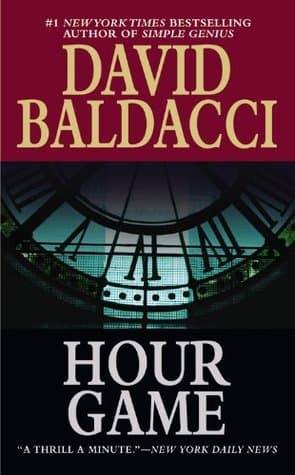
David Baldacci (2004)
Genre
Thriller / Mystery
Reading Time
10-12 hours
Key Themes
See below
Sign in to track this book
A chilling game of copycat serial murders terrorizes a community, drawing ex-Secret Service agents King and Maxwell into a frantic hunt that forces them to confront a terrifying truth hidden within an aristocratic family's secrets.
The novel opens with the discovery of Belinda Stone's body in the woods outside Wrightsburg, Virginia. She is murdered and posed to copy a victim of the Boston Strangler. At the same time, ex-Secret Service agents Sean King and Michelle Maxwell are hired by the wealthy Battle family to investigate a burglary at their estate, Battle Hall. Bobby Battle, the family's black sheep, is accused of stealing a valuable Civil War-era clock. King and Maxwell begin their investigations, unaware that these events will soon connect to a terrifying series of crimes. Michelle focuses on the Battle family dynamics, while Sean investigates Bobby's alibi and the clock's disappearance, finding many questions at the opulent estate.
As King and Maxwell pursue their burglary case, more bodies are found in Wrightsburg. A local woman, Mary Sue Weaver, is murdered, her death copying the methods of the Zodiac Killer. The local police, led by Sheriff Billy Bates, are overwhelmed, and the FBI, represented by Agent Frank Rigby, becomes involved. The pattern of the murders, each copying a notorious serial killer from history, points to an intelligent and disturbed individual. The media calls the killer the 'Hour Game' killer because of a cryptic note found at one of the scenes. King and Maxwell, while still working on the Battle case, are increasingly drawn into the murder investigation, sensing a dark connection to the powerful Battle family.
King and Maxwell look deeper into the Battle family's past, uncovering secrets, rivalries, and old grievances. Bobby Battle, the main suspect in the clock theft, is a troubled individual with a history of drug abuse and strained family relations. His father, Michael Battle, is a powerful and manipulative patriarch, while his sister, Monica, and brother, Sam, also have complex personalities. As the agents investigate, they find inconsistencies in the family's stories and tension within Battle Hall. Bobby says he is innocent in the theft, but his erratic behavior and the family's reluctance to fully cooperate make him an easy target for suspicion, especially as the murders continue and pressure on law enforcement grows.
The stolen Civil War-era clock, which is an astronomical clock, becomes an important piece of the puzzle. Michelle discovers its unique functions and possible meaning. Sean investigates the history of the Battle family and the local area, uncovering an old, defunct asylum nearby, known for its brutal treatments. A former patient, David Stone, who had connections to the Battle family, becomes a person of interest. The agents realize that the clock and the asylum might hold keys to understanding the killer's motives and the deep secrets of the Battle clan. The killer's careful planning suggests a vendetta, possibly from events decades ago.
Under intense pressure and after an interrogation, Bobby Battle confesses to the Hour Game murders, seemingly ending the spree. However, King and Maxwell are skeptical, sensing that Bobby is coerced or covering for someone. Their suspicions are confirmed when another victim is found shortly after Bobby's confession, copying the methods of another killer. This new murder proves Bobby's innocence in the serial killings, making the investigation chaotic again and showing the killer's cunning. The FBI, baffled, has to reconsider all previous assumptions, while King and Maxwell increase their efforts to find the real perpetrator, knowing time is short.
The agents focus more on the Battle family, realizing that the key to the Hour Game is in their past. They uncover a devastating secret: decades ago, a young girl named Jenny Battle, Michael Battle's daughter, disappeared from Battle Hall and was presumed dead. Her disappearance was a traumatic event that fractured the family. Further investigation reveals that Jenny was not only missing but had a special connection to the astronomical clock and the nearby asylum, where she was briefly institutionalized because of a perceived mental illness, likely made worse by a learning disability. This revelation provides a possible motive for a killer seeking revenge for a past injustice.
Through investigation, King and Maxwell discover that Jenny Battle was not dead but had been institutionalized and later escaped, living under a new identity. She is the Hour Game killer, carefully planning her revenge against those she held responsible for her childhood trauma and the years she lost. The astronomical clock was central to her childhood, and its theft was a personal insult. Her motive comes from the perceived abandonment and mistreatment by her family, especially her father, Michael, and others who ignored her plight or contributed to her suffering at the asylum. Each murder is a symbolic act of retribution, mirroring the 'games' played with her life.
The climax happens at Battle Hall, where King and Maxwell confront Jenny Battle. She reveals her suffering and her plan for revenge. She details how she faked her death, lived in the shadows, and planned her 'Hour Game' to punish those she deemed responsible for her lost life, including her own family and others connected to the asylum. The agents learn that Michael Battle orchestrated her institutionalization to protect the family's reputation and silence her about a secret related to the family's wealth. The confrontation is tense, with Jenny holding her family captive and threatening to kill them, forcing King and Maxwell to disarm her and save the remaining victims.
In a dramatic standoff, King and Maxwell incapacitate Jenny Battle, ending her terror. The remaining Battle family members are rescued, scarred by the ordeal and forced to confront the secrets they had buried for decades. The truth about Jenny's past, her institutionalization, and Michael Battle's involvement in her suffering is finally exposed. Bobby Battle is cleared of the murders and the clock theft. While the immediate threat is gone, the emotional scars on the Battle family and the community of Wrightsburg are deep. King and Maxwell reflect on the impact of hidden truths and the consequences of secrets kept too long.
The Protagonist
Sean grapples with his past trauma while his investigative skills are tested, ultimately reaffirming his commitment to his new career and partnership.
The Protagonist
Michelle confronts her own inner demons while her instincts prove invaluable in solving the complex case, strengthening her partnership with Sean.
The Antagonist
After decades of suffering and planning, Jenny executes her elaborate revenge, only to be ultimately stopped by King and Maxwell.
The Supporting
Michael's carefully constructed world of secrets unravels, forcing him to confront the devastating consequences of his past actions.
The Supporting
Bobby goes from being a prime suspect to being exonerated, his journey highlighting the injustices caused by his family's secrets.
The Supporting
Monica is forced to confront the dark truths of her family's past, leading to a reevaluation of her loyalties.
The Supporting
Bates is initially out of his depth but learns to cooperate with federal agents, growing in his understanding of complex crime.
The Supporting
Rigby shifts from dismissive skepticism to grudging respect and collaboration with King and Maxwell as the case unfolds.
The novel explores how family secrets can fester and erupt with devastating consequences. The Battle family's decision to institutionalize Jenny and hide her existence to protect their reputation leads directly to her vengeful 'Hour Game'. This theme is clear in Michael Battle's manipulations and the suffering of his children, showing that hiding uncomfortable truths leads to greater pain and destruction. The entire plot depends on the unraveling of these secrets, revealing how they warp relationships and drive extreme actions.
“"Secrets buried deep have a way of poisoning everything around them, even decades later."”
The difference between justice and revenge is a central theme. Jenny Battle believes she is enacting justice for the wrongs committed against her, while her actions are brutal revenge. The book makes readers consider the moral boundaries of retribution and the psychological toll of seeking vengeance. King and Maxwell, as agents of justice, must navigate this blurred line, understanding Jenny's pain while needing to stop her violent spree. Her careful planning and the symbolic nature of her kills show her distorted sense of what 'justice' is for her suffering.
“"What some call justice, others call the beginning of an endless cycle of revenge."”
Jenny Battle's identity is shaped by her childhood trauma and institutionalization. Stripped of her name and past, she becomes a killer, her actions a desperate attempt to reclaim a lost self and inflict her pain upon those who caused it. The theme also touches on Bobby Battle's struggle with his identity as the 'black sheep' of the family, overshadowed by his father's expectations and the family's secrets. The book shows how trauma can distort one's sense of self and lead to extreme behaviors in the pursuit of recognition or closure.
“"She wasn't just killing them; she was killing the memories of the person they made her."”
The past is an active, driving force that dictates the present in 'Hour Game.' The decades-old events surrounding Jenny Battle's disappearance and institutionalization are the direct cause of the current wave of murders. The book shows how historical injustices, if not addressed, can resurface with catastrophic force, impacting multiple generations. Battle Hall, an old estate full of history, symbolizes the weight of the past on its inhabitants, making it impossible to escape the consequences of earlier decisions.
“"The past never truly dies; it just waits for the opportune moment to strike again."”
A Civil War-era clock that serves as a symbolic and literal key to the mystery.
The antique astronomical clock, initially thought to be merely a stolen item in a burglary, evolves into a central plot device. Its unique functions and the specific time settings it can display are crucial to Jenny Battle's 'Hour Game.' It symbolizes her past connection to her family, her intelligence, and her meticulous planning. The clock's theft is not just a crime; it's a personal affront to Jenny and a trigger for her revenge, linking the seemingly separate burglary and murder investigations. It also represents the passage of time and the long-delayed reckoning of the Battle family's past.
The killer's method of mimicking famous serial killers' techniques.
This device creates immediate tension and confusion for law enforcement, making the killer seem unpredictable and highly dangerous. Each murder, by replicating a notorious killer like the Boston Strangler or the Zodiac Killer, adds layers of psychological complexity and misdirection. It forces investigators to look beyond a single profile and understand the killer's deeper, symbolic motives, which are eventually revealed to be tied to Jenny Battle's 'game' and her desire to highlight the 'games' played with her own life. It also serves to escalate the stakes and public fear, drawing national attention to Wrightsburg.
A former mental institution that holds the key to the killer's past.
The old, abandoned asylum near Battle Hall is a classic gothic plot device, embodying secrets, trauma, and injustice. It's where Jenny Battle was institutionalized and subjected to harsh treatments, providing the foundational motive for her revenge. The asylum represents the dark underbelly of the Battle family's past and the societal failures that allowed such institutions to exist. Its history and the records within it become crucial clues for King and Maxwell, leading them directly to Jenny's true identity and the full scope of her suffering, connecting past trauma to present violence.
A character whose perceived deviance serves to misdirect suspicion.
Bobby Battle, with his history of drug abuse and strained family relations, perfectly fits the 'black sheep' archetype. His family's discrediting of him and his own erratic behavior make him an ideal scapegoat for both the clock theft and, initially, the serial murders. This device effectively misdirects both the characters within the story and the reader, creating false leads and intensifying the mystery. Bobby's eventual exoneration highlights the manipulative nature of the true killer and the Battle family's willingness to sacrifice one of their own to protect deeper secrets, adding a layer of social commentary.
“The past is never dead. It's not even past.”
— Reflection on how history and secrets resurface in the investigation.
“Sometimes the only way to catch a monster is to think like one.”
— Sean King and Michelle Maxwell discussing their investigative approach.
“Justice isn't always found in a courtroom.”
— Comment on the extrajudicial elements of solving the case.
“Fear is a powerful motivator, but so is greed.”
— Analyzing the killer's possible motives.
“In a small town, everyone has something to hide.”
— Observation about the setting and its inhabitants.
“The clock is always ticking, and time is the one thing you can't get back.”
— Urgency in solving the serial killings before more victims.
“Trust is a fragile thing, easily broken and hard to repair.”
— Discussion between King and Maxwell about their partnership.
“Evil doesn't always wear a scary mask; sometimes it looks just like us.”
— Reflection on the killer's ordinary appearance hiding malevolence.
“Every murder tells a story, if you know how to read it.”
— Forensic analysis of the crime scenes.
“The truth has a way of coming out, no matter how deep you bury it.”
— Uncovering long-hidden secrets central to the plot.
“Courage isn't the absence of fear, but the will to act despite it.”
— Character moment during a dangerous confrontation.
“Revenge is a dish best served cold, but it leaves everyone hungry.”
— Comment on the cyclical nature of vengeance in the story.
“In the end, we're all just trying to make sense of the chaos.”
— Philosophical reflection on the investigation's purpose.
Ready to see how well you understood this book? Take our interactive quiz with 10 questions.

David Baldacci is a globally best-selling author known for his gripping thrillers. His prolific career includes numerous New York Times bestsellers such as 'The Escape,' 'Memory Man,' and 'Wish You Well.' Baldacci masterfully blends suspense, intricate plots, and compelling characters, making him a prominent figure in the fiction genre.







