“To be born a woman is to be in danger.”
— Ursula's reflection on the societal expectations and vulnerabilities of women.


Anita Brookner (1999)
Genre
Literary Fiction / Romance
Reading Time
240 min
Key Themes
See below
Sign in to track this book
Exiled to a serene Swiss hotel, a stubbornly single romance novelist confronts her ideals and a chance at escaping spinsterhood when a pragmatic suitor offers an unexpected path.
Edith Hope, a somewhat reclusive romance novelist, arrives at the elegant but slightly dated Hotel du Lac in Switzerland. Her friends and family sent her there as a form of exile or penance, following a scandal in London where she publicly embarrassed herself and her married lover, David Simmonds, by refusing to marry another man, Geoffrey Long, at the last minute. Edith feels deep shame and social inadequacy, finding comfort in watching the other guests, whom she categorizes and analyzes with a novelist's eye. The hotel itself, with its ordered routines and affluent, mostly female clientele, feels both a refuge and a gilded cage.
Edith spends her days observing the other guests at the Hotel du Lac, a pastime that feeds her novelist's imagination. She notices Mrs. Pusey and her daughter, Jennifer, an ostentatiously wealthy and somewhat vulgar pair who show off their designer clothes and possessions. There is also Monica, a beautiful but melancholic woman who struggles with an eating disorder and is recovering from a recent affair, and Madame de Bonneuil, an elderly, aristocratic Frenchwoman who represents a vanishing world of elegance and discretion. Edith is drawn to their stories, mentally creating their pasts and reasons, often projecting her own worries and desires onto them.
Throughout her stay, Edith regularly writes unsent letters to David Simmonds, the married man she loves and for whom she risked her social standing. These letters are a confession and a diary, detailing her observations of the hotel guests, her feelings of isolation, and her thoughts on the events that led to her exile. She recounts the disastrous engagement to Geoffrey Long, a kind but dull man, and her last-minute refusal at the altar, driven by her unwavering love for David, who, despite their connection, will not leave his wife. These letters show Edith's inner conflict and her struggle to balance her romantic ideals with the harsh realities of her life.
A new guest arrives at the hotel: Mr. Philip Neville, a wealthy and somewhat mysterious businessman. Unlike the other guests, who are mostly women, Mr. Neville is a solitary male figure, elegant and reserved. He quickly takes an interest in Edith, inviting her to dine with him and talking to her. Edith, at first wary and surprised by his attention, is intrigued. Mr. Neville is a stark contrast to her previous romantic entanglements and offers a potential way out of her current situation, though his motives and character remain somewhat unclear to her.
During one of their dinners, Mr. Neville makes a surprising proposal to Edith. He suggests a marriage of convenience, offering her financial security and a respectable position as his wife, without the expectation of genuine romantic love or intimacy. He explains that he wants a quiet, unassuming companion who will not interfere with his life, and he believes Edith, with her reserved nature and intellectual pursuits, would be a suitable match. This offer presents Edith with a dilemma: accept a life of comfort and stability without passion, or remain true to her romantic ideals, risking continued loneliness and social isolation.
Edith grapples with Mr. Neville's proposal, torn between the practical advantages it offers and her deep romantic aspirations. She observes the lives of the other women at the hotel, particularly Monica and Mrs. Pusey, and considers the societal pressures on single women of a certain age. The security and respectability offered by Mr. Neville are tempting, a stark contrast to the humiliation she experienced in London. However, her heart still longs for the passionate connection she shares with David, even if it is unrequited and impossible. She debates whether to sacrifice her ideals for a life of quiet comfort or to continue to hold out for a love that may never happen.
Edith learns more about Monica's past, discovering that Monica also had an affair with a married man, which ended unhappily and contributed to her current fragile state. Monica's story mirrors Edith's own situation, showing the emotional toll and societal judgment faced by women who defy conventional expectations for love. This shared experience creates a bond between them, and Edith finds herself empathizing deeply with Monica's quiet despair. The tragic aspects of Monica's life highlight the risks of pursuing illicit love and the potential for deep loneliness.
After much internal debate and considering the bleak alternatives, Edith decides to accept Mr. Neville's proposal of marriage. She believes that a life of quiet respectability and financial security is better than the uncertainty and social disgrace she currently faces. She thinks that perhaps a life without passionate love, but with stability, could offer a different kind of contentment. The decision is a practical one, a surrender of her romantic ideals for a more conventional and socially acceptable future, though not without a lingering sense of resignation.
Following her acceptance, Edith begins practical preparations for her marriage to Mr. Neville. She discusses arrangements with him, and a sense of the inevitable settles over her. Despite the impending change in her life, Edith feels a deep detachment from the process. She continues to write her unsent letters to David, revealing her true feelings and the lingering pain of their separation, even as she commits to a future with another man. The hotel guests, especially Mrs. Pusey and Jennifer, are intrigued by the engagement, seeing it as a social triumph for Edith.
On the eve of her departure from the Hotel du Lac, Edith has a final, revealing conversation with Mr. Neville. He repeats his expectations for their marriage – a life of separate but parallel existences, without emotional intimacy. He makes a subtly demeaning comment about her romantic novels, suggesting they are a form of escapism from her own unfulfilled life. This frankness, coupled with a sudden, vivid memory of David's touch and the genuine, though complicated, love they shared, sparks a deep realization in Edith. She understands that she cannot betray her true self and her capacity for deep feeling, even if it means continued loneliness.
In a sudden and decisive act, Edith tells Mr. Neville that she cannot marry him. She realizes that a life without love, even one of comfort and security, would be a betrayal of her own nature and her cherished romantic ideals. Despite the social consequences and the uncertainty of her future, she chooses to remain true to herself. She leaves the Hotel du Lac, returning to London and the life she had temporarily escaped. Her future remains uncertain, but she departs with a renewed sense of integrity and a quiet defiance, embracing the possibility of a different, more authentic path, even if it is a solitary one.
The Protagonist
Edith begins as a woman shamed and exiled, torn between societal expectations and her romantic ideals. She ultimately chooses integrity and self-truth over a pragmatic but passionless marriage.
The Antagonist/Supporting
He remains largely unchanged, serving as a catalyst for Edith's self-realization.
The Supporting/Mentioned
He does not appear directly in the narrative but remains a static symbol of unrequited love and romantic idealism for Edith.
The Supporting
Monica's story serves as a cautionary tale for Edith, highlighting the destructive potential of romantic entanglements and societal judgment.
The Supporting
She remains a static, observational character, representing a certain social type within the hotel's microcosm.
The Supporting
She remains a static, observational character, part of the hotel's social landscape.
The Supporting
She remains a static, symbolic character, a representation of enduring grace.
The Mentioned
He does not appear directly but represents a path Edith chose not to take, prompting her exile.
The novel explores the tension between Edith's belief in passionate, true love (as shown in her novels and her feelings for David) and the practical realities of societal expectations, loneliness, and the need for security. Her initial rejection of Geoffrey Long, her love for the unavailable David, and her consideration of Mr. Neville's marriage of convenience all highlight this central conflict. The Hotel du Lac, with its blend of genteel order and underlying emotional compromises, is a backdrop for Edith's internal struggle to balance these opposing forces.
“What she wanted was the impossible, and she knew it. She wanted the perfect union, the perfect understanding, the perfect love, and she wanted it without compromise, without concession, without the slightest diminution.”
The novel examines the limited roles and expectations placed upon women, especially single women of a certain age, in the mid-20th century. Edith's 'exile' for refusing a suitable marriage, Monica's despair after an affair, and Mrs. Pusey's focus on material wealth all show different aspects of female identity shaped by societal pressures. The hotel itself, largely populated by women, becomes a small example of these societal limits, showing how women are judged, categorized, and forced to make compromises to secure their place in the world.
“One did not make a fuss. One did not draw attention to oneself. One kept one's counsel. One was, above all, discreet.”
As a romantic novelist, Edith constantly observes and creates stories about the people around her. Her detailed descriptions of the hotel guests, their appearances, and her imagined backstories reveal her internal world and her coping mechanisms. This theme highlights the power of storytelling, both as a form of escapism and as a tool for understanding and making sense of reality. Edith's internal thoughts and her unsent letters to David are central to this, showing how she uses narrative to process her experiences and maintain a sense of self amidst her isolation.
“She was a novelist. She took notes. She observed. She made deductions. She invented motives. She was perpetually at work.”
A pervasive theme is the deep loneliness experienced by Edith and, to varying degrees, by many of the other guests at the Hotel du Lac. Edith's exile, her unrequited love for David, and her struggle to connect meaningfully with others underscore her isolation. Even when with others, she often feels detached. The hotel, despite being a gathering place, paradoxically reinforces this sense of aloneness, as many guests are there to escape or recover from personal disappointments, creating an atmosphere of shared but unspoken solitude.
“Loneliness was her companion, her familiar, her constant, faithful friend. It was not a bad friend.”
The hotel functions as a contained world reflecting broader societal issues and personal dilemmas.
The Hotel du Lac itself is a crucial plot device. It acts as a contained, almost theatrical, setting that isolates Edith from her usual life and forces her to confront her inner conflicts. The diverse, predominantly female clientele (Mrs. Pusey, Jennifer, Monica, Madame de Bonneuil) represents different facets of womanhood and societal expectations, allowing Edith to observe and project her own anxieties onto them. The hotel's ordered routines and slightly anachronistic atmosphere contribute to a sense of timelessness, emphasizing the enduring nature of the dilemmas Edith faces.
Edith's internal monologue and confessional outlet, revealing her true feelings and past.
The unsent letters Edith writes to her married lover, David Simmonds, serve as a primary device for revealing her inner thoughts, past experiences, and emotional landscape. These letters function as a confessional, a diary, and a stream of consciousness, allowing the reader direct access to Edith's most intimate reflections on her predicament, her observations of others, and her enduring love for David. They bridge the gap between her outward reserve and her rich internal life, making her a more complex and sympathetic character.
The narrative focuses solely on Edith's perceptions and internal world.
The novel is told from a third-person limited perspective, closely following Edith Hope's point of view. This device immerses the reader in Edith's subjective experience, her keen observations, and her introspective analyses of herself and others. It reinforces her sense of isolation and her role as an observer, while also highlighting her intelligence and sensitivity. The reader only knows what Edith knows and perceives, which creates a sense of intimacy and allows for subtle psychological exploration of her character and motivations.
Memories of past events inform Edith's present decisions and emotional state.
Throughout the narrative, Edith frequently delves into flashbacks and recollections of her life in London, particularly her affair with David and her disastrous engagement to Geoffrey Long. These memories are not presented chronologically but emerge organically, triggered by her observations or internal reflections. This device is crucial for providing context to her current exile and for illustrating the depth of her emotional attachments and the reasons behind her present dilemmas. They serve to flesh out her backstory and justify her internal struggles.
“To be born a woman is to be in danger.”
— Ursula's reflection on the societal expectations and vulnerabilities of women.
“Solitude is not a natural state for human beings.”
— Edith's observation on the human need for connection, despite her own chosen isolation.
“One did not want to be a woman who was always waiting.”
— Edith's internal thought about the passive role often assigned to women in relationships.
“Happiness, she had learned, was not a destination but a method.”
— Edith's evolving understanding of happiness, moving from a goal to a way of living.
“The past was a foreign country; they did things differently there.”
— A general reflection on the distance and change between past and present, particularly in relationships.
“Love was a matter of timing, and she had often been too early or too late.”
— Edith's lament about her romantic misfortunes and the unpredictable nature of love.
“One could not spend one's life in the company of others without some degree of self-abasement.”
— Edith's cynical view on the compromises required in social interactions.
“It was difficult to be a romantic when one was also a realist.”
— Edith's struggle to reconcile her romantic ideals with her pragmatic understanding of life.
“The most important thing was to be able to live with oneself.”
— A core tenet of Edith's philosophy on self-sufficiency and inner peace.
“Life had a way of surprising you, even when you thought you knew all its tricks.”
— Edith's realization that despite her experiences, life could still present unexpected turns.
“There was a certain luxury in being alone, if one could afford it.”
— Edith's appreciation for her solitude, recognizing it as a privilege not everyone can embrace.
“One always had to be careful with one's words; they had a habit of coming back to haunt you.”
— A warning about the lasting impact of spoken words, particularly in sensitive situations.
“The truth was not always a comfortable companion.”
— Edith's understanding that confronting reality can be painful and challenging.
Ready to see how well you understood this book? Take our interactive quiz with 10 questions.
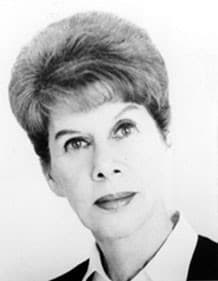
Anita Brookner was an English novelist and art historian. She was Slade Professor of Fine Art at the University of Cambridge from 1967 to 1968 and was the first woman to hold this visiting professorship. She was awarded the 1984 Booker–McConnell Prize for her novel Hotel du Lac.







