“The air in this place hums with a different kind of life, a parasitic one.”
— Dr. Aris observing the unusual atmosphere of the hospital for the first time.

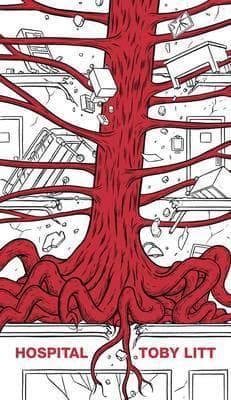
ToLitt (2006)
Genre
Thriller / Fantasy
Reading Time
10-12 hours
Key Themes
See below
Sign in to track this book
A hospital descends into sex, death, drugs, and dark magic, pulling staff and patients into a voodoo-infused, Satanic hell where salvation is a forgotten dream.
Dr. Andrew Blake starts his residency at St. Jude's Hospital, hoping for a fresh start after a personal loss. He immediately notices the hospital's old architecture and the clear feeling of unease in its halls. His first meetings with senior staff, especially Dr. Alistair Finch, Chief of Surgery, and Sister Agnes, Chief Nurse, are formal and cold. Andrew quickly becomes friends with other residents, Dr. Sarah Miller and Dr. Ben Carter, who share his worry about the hospital's oddities and the high death rate, especially in critical care. He sees strange symbols hidden in corners and hears whispers of odd rituals from older staff.
Andrew Blake grows more concerned by patient deaths that have no clear medical reason. Healthy patients suddenly get worse and die in mysterious ways, often with strange marks on their bodies or during power outages. He starts a secret log of these events, telling Sarah and Ben, who at first think he is just stressed. But as they see more strange things — medical equipment failing, odd chanting at night, and disturbing visions — they start to believe Andrew. One night, Andrew finds a hidden basement during an emergency, filled with old medical tools and occult symbols, suggesting a dark past for St. Jude's.
Andrew's suspicions focus more on Dr. Alistair Finch and Sister Agnes. Finch, with his charming but unsettling manner, seems to control much of the hospital staff, especially the senior nurses. Sister Agnes, always in her strict habit, is everywhere, her cold stare seeming to see Andrew's every thought. Andrew sees them having quiet, intense talks in private areas and notices their odd interest in certain patients who later die. He also finds that Finch is very interested in old texts and strange medical practices, hinting at a darker plan than just bad medical care. Their combined power makes it hard for Andrew to investigate without risking his job or worse.
Andrew, with Sarah and Ben's reluctant help, digs deeper into the hospital's past. They find old records and forgotten blueprints that show a secret network of tunnels and rooms under St. Jude's. Through a former, disgraced orderly, they learn about a cult that has secretly worked within the hospital for decades, mixing Satanism and voodoo, using patients as sacrifices or for their dark rituals. The orderly says the cult believes in taking life force and becoming immortal through these acts. Andrew realizes that the frequent power outages and sudden deaths are not random but planned rituals. The strange symbols he saw are sigils used in these practices, and the drugs given are not for healing but for preparing victims.
As Andrew, Sarah, and Ben gather more evidence, the cult notices them. One night, masked figures attack and take Sarah, who disappears. Andrew is upset and desperate to find her. He tells Ben, who seems equally distressed and promises to help Andrew save Sarah. But as they plan, Andrew sees holes in Ben's story and a subtle change in his manner. During a tense talk, Ben reveals his true loyalty: he is a long-time cult member, having joined Andrew's group to watch his investigations. Ben admits he was told to bring Andrew into the cult, seeing his intelligence as useful, but his recent resistance has made him a target. Ben’s betrayal leaves Andrew alone and in danger.
Alone after Ben's betrayal, Andrew finds an unexpected friend in an elderly patient named Mrs. Albright, who has been at St. Jude's for years and knows the hospital's secrets. Mrs. Albright, who has watched the cult from her window, says she knows about the hidden paths and the cult's schedule. She explains that the cult is getting ready for a big ritual, and Sarah is likely a main sacrifice. Together, they plan to move through the hospital, avoiding Sister Agnes and the cult members. Their escape attempts are dangerous, as they face traps, cult guards, and the hospital's eerie feel, which seems to work against them.
Following Mrs. Albright's directions, Andrew finds the cult's main area, a large, underground room deep under the hospital. He finds Sarah tied up on a stone altar, surrounded by robed figures, with Dr. Finch leading the ritual and Sister Agnes helping. Finch, now showing his evil nature, explains the cult's old beliefs: they want to move life force and get eternal youth through these sacrifices, having lived for centuries using the hospital as their hunting ground. He says Andrew was brought to St. Jude's because of his unique 'energy,' making him a good candidate for a powerful sacrifice. A desperate fight starts as Andrew tries to free Sarah, fighting Finch's surprising strength and the cultists' strong belief.
In the final fight, Andrew realizes he cannot beat Finch and the cultists. As Finch gets ready to stab Sarah with a ritual dagger, Andrew makes a quick choice. He creates a distraction, getting Finch's attention and then putting himself in the way, letting Finch stab him instead of Sarah. But Andrew does not die. Instead, using a hidden vial of a strong chemical he secretly made from the hospital's lab, he injects himself just as Finch's blade cuts him. The chemical, with the ritual's energy, causes a huge, uncontrolled burst of power, breaking the ritual's balance and starting a big reaction in the room, making the old building start to fall apart.
As the ritual room crumbles, Andrew, badly hurt but alive, tells Sarah to escape. The chemical he injected, while not killing him, has made his senses stronger and given him a temporary burst of power. He uses this to fight off the remaining cultists and make an opening for Sarah. Together, they move through the collapsing tunnels and stairs, the sounds of destruction all around them. They see Dr. Finch and Sister Agnes crushed by falling debris, their old rule finally ending. The entire hospital, built on the cult's foundation, starts to break apart, showing how corrupt it was. Andrew and Sarah come out into the pre-dawn light, hurt and shaken, but free from St. Jude's, leaving the fire behind.
Afterward, St. Jude's Hospital is destroyed, its collapse blamed on structural failure and a large fire. Andrew and Sarah are rescued and treated, but the mental scars are deep. They try to tell the authorities the truth, but their story is seen as too unbelievable, dismissed as trauma-induced visions. The cult's existence remains a secret, buried under the rubble. Andrew and Sarah find comfort in each other, forming a bond from shared horror. They leave the city for a fresh start, but the memory of St. Jude's and what they saw still bothers them. Andrew, especially, sometimes feels a strange connection to the power he met, wondering if some of the hospital's darkness now lives within him.
The Protagonist
Andrew transforms from a traumatized individual seeking escape to a courageous survivor who confronts and defeats a powerful evil, albeit at a great personal cost.
The Supporting
Sarah evolves from a cautious observer to an active participant in the fight against the cult, demonstrating immense courage and resilience.
The Antagonist
Finch is consistently portrayed as the primary antagonist, whose reign of terror is ultimately brought to an end by Andrew's sacrifice.
The Antagonist
Agnes remains a steadfast and terrifying antagonist throughout, ultimately meeting her demise with Finch.
The Supporting/Antagonist
Ben's arc shifts from a supportive friend to a revealed traitor, emphasizing the pervasive nature of the cult's influence.
The Supporting
Mrs. Albright serves as a wise mentor figure, whose hidden knowledge helps to turn the tide against the cult.
The novel shows how a place meant for healing, St. Jude's Hospital, can be completely ruined by hidden evil. The hospital's physical decay mirrors its moral rot, with the cult using its sacred spaces for bad rituals. This theme appears in the strange patient deaths, the purposeful equipment failures, and the manipulation of medical staff, turning a place of trust into a horror den. The main purpose of a hospital — to save lives — is reversed, as it becomes a place for sacrifices. This highlights how even trusted societal structures are open to hidden forces, as seen when Dr. Finch, the Chief of Surgery, leads the cult.
“This place isn't just sick, Andrew. It's been poisoned from the foundations up.”
The story looks at how evil can hide in plain sight, often dressed in respectability and charm. Dr. Finch, the charismatic Chief of Surgery, is an example of this, showing a kind face while planning terrible acts. The deception extends to Ben Carter, who pretends to be friends with Andrew and Sarah. This theme shows how hard it is to spot true evil when it is well-hidden, forcing the characters, and the reader, to question appearances and trust. The cult's ability to operate unseen for so long shows how easily people can be tricked or forced into being part of it, blurring the lines between good and evil.
“The devil doesn't always wear horns, Andrew. Sometimes, he wears a white coat and a smile.”
Andrew Blake comes to St. Jude's already carrying past pain, and the hospital's events cause more mental wounds for him and Sarah. The novel explores how people deal with terrible horror and find the strength to fight. Andrew's first wish for a new beginning is destroyed, replaced by a desperate fight to survive. Yet, through this trial, he finds a deep strength he did not know he had. The shared trauma between Andrew and Sarah ultimately creates a strong bond, showing that human connection and the will to live can emerge even from the darkest experiences, offering a bit of hope amid the despair.
“We've seen hell, Sarah. But we made it back. That has to count for something.”
A main conflict in the novel is the fight between science and supernatural events. Andrew, as a doctor, first looks for logical, medical reasons for the strange things happening. However, the evidence slowly forces him to face forces beyond science, challenging his whole view of the world. The cult's use of old voodoo and Satanic rituals directly goes against modern medicine, yet they have a terrifying, clear power. This theme explores the limits of human knowledge and the uncomfortable truth that some mysteries cannot be explained by science, pushing characters to accept the inexplicable to survive. The mix of a medical setting with fantasy elements highlights this conflict.
“Every instrument, every protocol, every scientific explanation... they meant nothing here. This was something else entirely.”
The hospital itself is a source of danger and deception.
St. Jude's Hospital is not merely a setting but an active antagonist. Its anachronistic architecture, hidden sub-basements, and labyrinthine corridors create a sense of claustrophobia and disorientation. The hospital's official function as a place of healing is a deliberate facade, concealing a cult that uses patients as sacrifices. This device subverts the expectation of safety and trust associated with hospitals, transforming it into a trap. The building's physical structure, with its secret passages and collapsing sections, plays a direct role in both the cult's operations and Andrew's escape, making the environment an integral part of the horror.
Characters Andrew trusts are revealed to be working for the antagonists.
This device is primarily embodied by Dr. Ben Carter, who initially acts as Andrew's friend and confidant, only to be revealed as a cult member and informant. This betrayal deeply impacts Andrew, isolating him and forcing him to question everyone around him. It heightens the sense of paranoia and danger, as it demonstrates the cult's pervasive reach and their ability to infiltrate and manipulate relationships. This device also extends to the hospital staff as a whole, many of whom are either complicit or under the cult's influence, shattering Andrew's trust in the medical profession itself.
The cult's motivation revolves around harnessing a mystical 'life force'.
The cult's entire purpose and the reason for the patient sacrifices is to harvest 'life force' to achieve immortality and power. This abstract concept serves as the primary motivation for Dr. Finch and his followers. While its exact nature is never fully scientifically defined, its effects are clearly demonstrated through the cult's longevity and their ritualistic practices. This 'life force' drives the plot, explaining the high mortality rate, the specific targets for sacrifice (like Andrew), and the cult's elaborate rituals, providing a clear, albeit supernatural, objective for the antagonists.
Subtle clues and an unsettling atmosphere hint at the darker truth.
From Andrew's initial arrival, the hospital's eerie atmosphere, the anachronistic architecture, the unusually high mortality rate, and the strange symbols he notices, all serve as subtle foreshadowing. These elements create a pervasive sense of unease and hint at a deeper, more sinister truth beneath the surface. Whispers among older staff, strange sounds at night, and unsettling visions experienced by patients and staff alike, build up the suspense and prepare the reader for the eventual reveal of the cult, making the supernatural elements feel less abrupt and more organically integrated into the narrative.
“The air in this place hums with a different kind of life, a parasitic one.”
— Dr. Aris observing the unusual atmosphere of the hospital for the first time.
“Some wounds never close, they just learn to bleed internally.”
— Nurse Elara reflecting on her past trauma while treating a particularly difficult patient.
“Hope is a fragile thing in these corridors, easily shattered by the next siren's wail.”
— A general observation about the daily grind and emotional toll of working in the hospital.
“The building itself is a living organism, and we are merely its sustenance.”
— Dr. Aris's growing realization about the sentient nature of the hospital.
“Fear has a smell, distinct and metallic, like old blood and ozone.”
— A character describing the palpable sense of terror within a specific section of the hospital.
“Every lock has a key, but some doors were never meant to be opened.”
— A cryptic warning given to Dr. Aris about investigating the hospital's secrets.
“The greatest monsters often wear the most sterile uniforms.”
— A cynical remark about the true villains hiding in plain sight within the hospital.
“Silence here is never truly empty; it's filled with the echoes of what's been lost.”
— A description of the unsettling quiet in the abandoned wings of the hospital.
“To save a life, sometimes you have to sacrifice a piece of your soul.”
— Dr. Aris grappling with a moral dilemma during a supernatural emergency.
“The line between healing and horror blurs in these halls.”
— A character's reflection on the duality of the hospital's purpose and its sinister reality.
“We are all patients here, just in different stages of our affliction.”
— A philosophical musing on the universal struggle against the hospital's influence.
“The pulse of this place isn't human; it's something ancient and hungry.”
— Dr. Aris identifying the true, malevolent force animating the hospital.
“Even miracles come with a price, and this hospital demands its pound of flesh.”
— A realization that the seemingly miraculous recoveries come at a dark cost.
“Some truths are better left buried, especially when they bleed into the living.”
— A character warning against uncovering the hospital's deepest, most dangerous secrets.
Ready to see how well you understood this book? Take our interactive quiz with 10 questions.

Biography coming soon.







