“I meant what I said and I said what I meant....An elephant's faithful, one hundred per cent!”
— Horton's unwavering commitment to the egg.

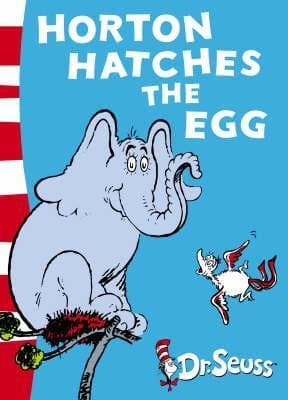
Dr. Seuss (2004)
Genre
Fantasy / Children's
Reading Time
15 min
Key Themes
See below
Sign in to track this book
An elephant's promise to a careless bird leads him through mockery, kidnapping, and circus life, ending in a reward that redefines fatherhood.
The story starts with Mayzie, a lazy bird, tired of sitting on her egg. She sees Horton the Elephant and, noting his kind nature, asks him for help. Mayzie claims she needs a short break and asks Horton if he would sit on her egg for 'just a few minutes.' Horton, despite his size and the impracticality, agrees, moved by Mayzie's request and his own desire to help. He promises to be faithful, saying, 'I'll stay on this egg and I won't stir a inch... A promise is a promise, dear bird, and I'll stick to it!'
Horton immediately takes his new role seriously, carefully climbing into Mayzie's nest. He finds it uncomfortable and cold, but his commitment keeps him there. Other jungle animals, including his elephant friends, mock him, laughing at the sight of a massive elephant on a tiny bird's nest. They call him 'Horton the faithful, he's never been known to be faithless!' Seasons change, bringing snow and bitter winds, yet Horton remains steadfast, shivering but determined, while Mayzie flies off to Palm Beach, forgetting her egg and Horton.
As winter turns to spring, two hunters, looking for exotic animals, find Horton. They are surprised to see an elephant sitting patiently in a tree, balancing a bird's nest. Seeing the potential for profit from such a unique sight, they decide to capture him. They approach carefully, watching his steady dedication to the egg. Horton, focused on his promise, does not notice them until it is too late. The hunters see him as a prize, not a creature keeping a vow.
The hunters use ropes and nets to capture Horton, lifting him and the nest, with the egg still inside, from the tree. Despite the shock and discomfort, Horton holds onto the nest, refusing to leave his charge. He is transported by ship across the sea and then by train to a distant city. The hunters sell him to a traveling circus, where he becomes a star attraction. The circus owner, seeing the novelty of an elephant on an egg, advertises him as 'Horton the Elephant, the world's most amazing sitter!'
Horton, along with the egg, becomes the circus's main draw. He is displayed in a prominent cage, still sitting diligently on the nest. Crowds gather daily to marvel at the unusual sight of an elephant doing such a delicate task. Despite the noise, travel, and constant spectacle, Horton remains committed. He endures the flashing lights, the roar of the crowd, and the constant movement of the circus, all for the egg. His faithfulness is unwavering, even in the most unnatural environment.
After a long vacation, Mayzie bird tires of Palm Beach. She decides to return home, but on her way, she sees a poster for the circus where Horton is performing. Intrigued, she visits, unaware that the star attraction is the elephant she abandoned. She walks through the circus tents, enjoying the sights, until she finds Horton's cage. She is momentarily surprised to see an elephant, but her memory of the egg is still hazy.
Mayzie finally recognizes Horton and the nest. Just as she approaches, a crack appears in the egg. The baby inside is about to hatch! Mayzie, seeing her chance to reclaim what she considers 'her' egg, suddenly remembers her maternal instincts. She loudly declares, 'That's MY egg! And I want it back!' Horton, having faithfully sat on it for months, is shocked by her sudden return and demand. The circus crowd watches, captivated by the drama.
As Mayzie continues to demand her egg, the shell finally breaks open. Out pops a creature unlike any other: a baby with an elephant's head and trunk, but with a bird's wings and feathery tail. The crowd gasps in amazement. This creature, a sign of Horton's dedication and the unusual incubation, is a perfect blend of its 'mother' (Horton) and biological parent (Mayzie). It is a miracle born of faithfulness.
The crowd, having seen Horton's months of faithful sitting and Mayzie's sudden, opportunistic return, immediately understands. They declare that the unique 'elephant-bird' rightfully belongs to Horton. Mayzie, shamed by the crowd's judgment and the clear evidence of Horton's dedication, flies away, leaving Horton with his new child. She receives no reward for her brief contribution, only the consequence of her laziness and abandonment.
Horton, filled with joy and pride, gently embraces his new child. The circus, recognizing the heartwarming story, decides to release Horton and his baby. They are celebrated as heroes, and Horton's faithfulness is praised by all. Horton and his unique elephant-bird child fly off into the sunset, ready to start their new life together. The story ends with the affirmation that Horton's kindness and unwavering commitment were rewarded with the most precious gift: a loving family.
The Protagonist
Horton begins as a kind but easily persuaded elephant and develops into a celebrated figure whose faithfulness is rewarded with an unconventional but loving family.
The Antagonist
Mayzie remains static in her selfish nature, ultimately shamed and receiving no reward for her brief, initial involvement.
The Supporting
Born at the climax, its appearance solidifies Horton's role as a parent and brings him his ultimate reward.
The Supporting
They serve as an initial obstacle to Horton's resolve, but their opinions become irrelevant as the story progresses.
The Mentioned
They briefly disrupt Horton's life, but their impact is purely functional to the plot.
The Supporting
The circus owner provides a stage for Horton's faithfulness, while the crowd evolves from spectators to arbitrators of justice.
This is the story's main theme, shown entirely by Horton. His strong commitment to his promise, 'I'll stay on this egg and I won't stir a inch... A promise is a promise, dear bird, and I'll stick to it!' drives the entire narrative. He endures ridicule, harsh weather, capture, and circus life, all because he gave his word. His faithfulness contrasts sharply with Mayzie's irresponsibility.
“But Horton the Elephant smiled. 'I meant what I said!' he said. 'I'll stick to my egg and I won't stir a inch! A promise is a promise, dear bird, and I'll stick to it!'”
The story explores the idea that true parenthood comes from love, dedication, and nurturing, not just biological connection. Horton, though not the biological parent, acts as the devoted mother, providing constant care and protection for the egg. Mayzie, the biological mother, completely gives up her responsibility. The hatching of the elephant-bird, a creature that physically shows Horton's influence, strongly illustrates that love and commitment are the true essence of parenthood.
“It was an elephant-bird! And it had an elephant's head and an elephant's trunk and an elephant's ears, but it had a bird's tail and wings and a bird's feet and a bird's beak.”
The clear difference between Horton's strong sense of responsibility and Mayzie's extreme selfishness is a key theme. Horton accepts a burden he never asked for and carries it out with integrity, putting the egg's well-being above his own comfort and reputation. Mayzie, conversely, is driven only by her desire for leisure, abandoning her responsibility without a second thought. Her attempt to reclaim the egg at the last moment highlights her opportunistic selfishness, which the story ultimately rejects.
“'My goodness!' gasped Mayzie. 'I've sat on that egg for two weeks now. I'm bored! I want a vacation! I want to fly south for a rest!'”
The story supports the idea that family can form in unexpected ways and that love goes beyond traditional biological definitions. Horton, a male elephant, becomes the devoted 'mother' to an egg that hatches into a unique elephant-bird. This unconventional family, formed out of faithfulness and love, is celebrated at the end, showing that what truly matters are the bonds of care and commitment, not genetics or species. Their happy ending validates non-traditional family structures.
“And the elephant-bird smiled, and it flew with its daddy, and the jungle was happy, and all were so glad.”
Giving human characteristics and behaviors to animal characters.
Dr. Seuss uses anthropomorphism to allow his animal characters to engage in complex moral dilemmas and social interactions that mirror human experiences. Horton's ability to make promises, feel duty, and endure ridicule, and Mayzie's capacity for boredom, selfishness, and deceit, are all human traits applied to animals. This device makes the abstract themes of faithfulness and responsibility accessible and relatable to young readers, allowing them to connect with the characters' emotional journeys.
The egg represents responsibility, promise, and new life.
The egg is the central symbolic object in the story. Initially, it represents the promise Horton makes to Mayzie and the responsibility he takes on. As Horton endures hardships, the egg symbolizes his unwavering commitment and the preciousness of his word. Its eventual hatching into the unique elephant-bird symbolizes the reward for his faithfulness, the creation of a new, unconventional family, and the triumph of nurturing love over abandonment. It is the tangible outcome of all Horton's efforts.
Characters who highlight each other's contrasting traits.
Mayzie bird serves as a direct foil to Horton the Elephant. Her laziness, selfishness, and irresponsibility are in stark contrast to Horton's diligent, selfless, and faithful nature. This juxtaposition accentuates Horton's virtues, making his commitment appear even more profound and admirable. By presenting such opposing characters, Dr. Seuss effectively clarifies the moral message of the story, demonstrating the consequences of both responsible and irresponsible behavior.
Use of recurring phrases and rhyming schemes for emphasis and memorability.
Dr. Seuss's signature use of repetition, particularly Horton's recurring declaration, 'A promise is a promise, dear bird, and I'll stick to it!', reinforces the central theme of faithfulness. The consistent AABB rhyme scheme and rhythmic cadence make the story engaging, memorable, and easy for young readers to follow and anticipate. This linguistic device enhances the story's charm while subtly embedding its moral lessons through familiar and comforting patterns.
“I meant what I said and I said what I meant....An elephant's faithful, one hundred per cent!”
— Horton's unwavering commitment to the egg.
“For forty-two days and for forty-two nights / Horton sat there on her nest in the heights.”
— Describing Horton's long vigil on the nest.
“I'm tired and I'm bored and I'm hungry and hot. / It's my turn to fly off. It's your turn to sit spot!”
— Mayzie the bird's selfish declaration to Horton.
“Poor Horton! He didn't know what to do! / The egg was so cold, and the nest was so new!”
— Horton's initial dilemma after Mayzie leaves.
“He tried to fly up. But his legs were too short. / He couldn't fly up! He was not that sort!”
— Horton's physical limitations in reaching the nest.
“And it looks like a bird! And it's got a bird's tongue! / And it's going to sing just the way birds have sung!”
— The crowd's reaction to the hatching of the 'elephant-bird'.
“An elephant's faithful, no matter how small! / His word is his bond, and he gives it his all!”
— Reinforcing Horton's core principle of faithfulness.
“And the elephant laughed, 'I'll be true to my trust. / I'll sit on this egg 'til the shell turns to dust!'”
— Horton's declaration to Mayzie before she leaves.
“And his friends all came 'round. And they said, 'Horton, why? / You're a Sucker! You're a sap! You're a fool to try!'”
— Horton's friends mocking his decision to sit on the egg.
“And the people came running from far and from near. / And they shouted, 'A circus! A circus is here!'”
— The crowd's reaction to seeing Horton on the nest.
“But the egg, with a crash, and a crack, and a splish, / Burst open! And out popped a something-or-otherish!”
— The dramatic hatching of the egg.
“With an elephant-trunk and an elephant-ears! / And it had a small tail...but it wasn't a tail of a bird!”
— Description of the newly hatched creature.
“And the elephant smiled. 'I am happy,' he said. / 'For the child of my care has a wonderful head!'”
— Horton's joy and acceptance of the unique creature.
Ready to see how well you understood this book? Take our interactive quiz with 10 questions.
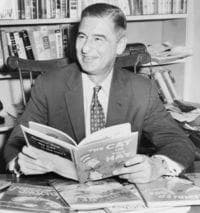
Dr. Seuss, born Theodor Seuss Geisel, was a beloved American children's author and illustrator. He is renowned for his imaginative tales and whimsical rhymes, including iconic works like 'The Cat in the Hat,' 'Green Eggs and Ham,' and 'Oh, the Places You'll Go!'. His unique style and memorable characters have made him a staple in children's literature for generations.







