“A river's got a mind of its own, and it don't always think like you do.”
— A character reflects on the unpredictable nature of the Mississippi River.

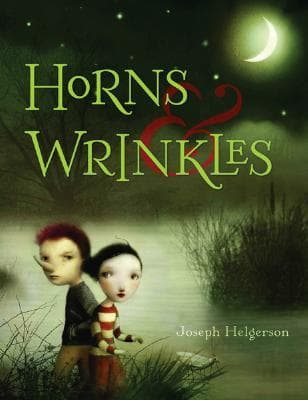
Joseph Helgerson (2006)
Genre
Fantasy / Children's / Young Adult
Reading Time
360 min
Key Themes
See below
Sign in to track this book
When her cousin sprouts a magnificent horn after a swim in the Mississippi, Claire must dive into a world of river trolls and blue-wing fairies to break the magical spell before his new appendage becomes permanent.
Claire, a practical and somewhat skeptical girl, lives by the Mississippi River. Her cousin, Duke, a boisterous and slightly reckless boy, goes for a swim in a stretch of the river known for local folklore about magical creatures. To Claire's shock and Duke's dismay, he emerges from the water with a long, golden horn from his forehead. This event makes Claire consider that the fantastical stories about their river might be true. Initially, they try normal solutions, but the horn remains. Claire, feeling responsible and determined to help her cousin, realizes they must find a magical remedy, starting an unexpected adventure into the hidden world of river magic.
Following a cryptic clue, Claire and Duke go deeper into the magical parts of the river. They soon meet a family of grumpy, mud-covered river trolls who live under a bridge. These trolls, initially hostile, are persuaded to share information. They say that the river is under a spell, cast by a powerful but unseen entity. The trolls explain that Duke's horn is a direct result of this enchantment and that a specific counter-spell or magical item is needed to remove it. They direct Claire and Duke towards the Whispering Willows, old trees rumored to hold ancient knowledge and perhaps a clue to the spell's origin or reversal.
At the Whispering Willows, Claire and Duke find that the trees communicate through rustling leaves, forming a cryptic riddle. Deciphering it points them towards the blue-wing fairies, known for their beauty and mischievous nature. After a search, they find a colony of these tiny, iridescent creatures. The fairies, led by their queen, are initially playful and evasive. Claire, using her wit and Duke's somewhat charming horn, manages to engage them. The queen, intrigued by Duke's unique predicament, says that the horn is a 'gift' from the River King, a powerful, ancient being who is displeased with something in the human world.
The blue-wing fairy queen explains the River King's nature. She says that he is the ancient guardian spirit of the Mississippi, connected to its health and flow. The horn on Duke's head is not a random enchantment but a direct sign of the River King's displeasure. The fairies say that the drought plaguing the region is another, more widespread symptom of his anger. They hint that the King is upset about humanity's disregard for the river, particularly a recent pollution incident. To remove the horn and end the drought, Claire and Duke must appease the River King.
In their quest to understand the River King's anger and find a way to appease him, Claire and Duke are led to the domain of the rock trolls. These trolls are different from their river-dwelling cousins; they are larger, more stoic, and protective of their rocky, underwater territory. They guard a specific section of the river where, according to legend, a powerful magical object lies submerged. After a tense negotiation, involving clever bartering and a display of Duke's horn, the rock trolls allow Claire and Duke access to the area. They discover an ancient artifact, glowing faintly beneath the murky water, which the trolls claim is connected to the River King's power.
Guided by the artifact and the hints from the rock trolls, Claire and Duke find the River King's hidden lair, a magnificent but somber grotto deep beneath the river's surface. The lair is filled with ancient river magic, but also with signs of pollution – discarded human trash and an oily sheen on some of the surfaces. They finally meet the River King, a majestic, ancient being with a mournful expression. He says that his anger comes from the increasing pollution and disrespect shown to his river by humans, specifically a recent major oil spill from a nearby industrial plant that has deeply wounded him and his domain, causing the drought and Duke's horn.
The River King explains that his power, and the river's health, is tied to a magical artifact known as his Heartstone. This stone was dislodged and lost during the oil spill, causing his weakness and the drought and magical imbalance. He tasks Claire and Duke with retrieving it, saying that only a pure heart and a strong will can find and restore it to him. He explains that the Heartstone is now likely in a polluted and dangerous section of the river, guarded by corrupted river spirits. This quest is the only way to heal the river, lift the drought, and remove Duke's horn.
Claire and Duke, now more determined, go into the most polluted and treacherous part of the river. Here, the river spirits, once benevolent, have been twisted and made aggressive by the pollution, becoming obstacles. Claire uses her intelligence and Duke, surprisingly, uses his horn, which seems to resonate with the river's magic, to navigate the dangers. They face trials, battling through the dark, oily waters and evading the corrupted spirits. After a struggle, they find the Heartstone, a dull, tarnished gem, nestled among human refuse at the riverbed. They carefully retrieve it, feeling its faint pulse of magic.
With the Heartstone in hand, Claire and Duke rush back to the River King's grotto. They present the tarnished stone to the ancient being. As they place it back into its rightful place, the Heartstone begins to glow, its light spreading throughout the grotto and into the river itself. The murky waters clear, the oily sheen disappears, and the River King regains his strength. As the river magic surges, Duke's horn shimmers and then, with a soft pop, vanishes completely, leaving no trace. The River King expresses his gratitude, and a sense of peace returns to his domain and, by extension, to the entire Mississippi River.
Soon after the Heartstone is restored, the rain begins to fall, gentle at first, then steadily, breaking the drought. The Mississippi River swells with clean, fresh water, and the surrounding land begins to recover. Claire and Duke, back in their own world, are changed by their adventure. Duke is relieved to be horn-free, but now respects the natural world more. Claire, once a skeptic, now sees the magic in the everyday and understands the balance between humanity and nature. They carry the secret of the River King, knowing that their actions helped save their beloved river, and they continue to watch over it with new reverence.
The Protagonist
Claire evolves from a pragmatic disbeliever in magic to a wise and respectful guardian of the river's hidden world.
The Supporting
Duke transforms from a carefree boy who takes the river for granted to one who deeply respects its power and magic.
The Antagonist/Supporting
From an unseen, angry force causing magical affliction, he becomes a mentor figure who reveals the true nature of the river's plight.
The Supporting
They remain largely static, serving as initial guides and sources of information.
The Supporting
They serve as a crucial source of information, revealing the direct cause of the River King's anger and Duke's horn.
The Supporting
They act as a significant obstacle that the protagonists must overcome to advance their quest.
The Supporting
They offer a key piece of information through a riddle, directing the protagonists to the next stage of their journey.
The Antagonist
They represent the direct challenge Claire and Duke must face to heal the river, transforming from a threat back to their natural state once the Heartstone is restored.
This is the main theme of the book. The River King's anger, the drought, and Duke's horn are all consequences of human pollution and disregard for the Mississippi River. Claire and Duke's quest is about healing the river by retrieving the Heartstone, which was lost due to an oil spill. The story shows how nature is connected and the severe results of environmental neglect, asking readers to consider their impact on the natural world. The polluted sections of the river and the corrupted spirits show this theme.
“''The river is not just water, child. It is a living, breathing being, and you humans are slowly suffocating it.'”
Claire begins the story as a practical skeptic, dismissing local legends. Duke's horn makes her confront the reality of a hidden magical world. The journey challenges her rational worldview, opening her eyes to the magic that coexists with the mundane. This theme explores the idea that there is more to the world than what meets the eye, and that sometimes, belief is necessary to see and interact with these unseen forces. It encourages readers to be open-minded and to look beyond surface appearances.
“'She'd always thought the tales were just that: tales. But a golden horn on your cousin's head tended to change one's perspective on what was possible.'”
The bond between Claire and Duke is a core part of the story. Claire's determination to help Duke, despite her initial skepticism and the dangers, drives the entire plot. Their shared adventure strengthens their relationship, as they rely on each other's strengths – Claire's intellect and Duke's connection to the river's magic. Their support for one another through fear, frustration, and triumph shows the importance of familial love and loyal companionship in overcoming challenges.
“'No matter how strange things got, or how much trouble Duke seemed to attract, Claire knew she couldn't leave him to face it alone.'”
Both Claire and Duke grow personally throughout their adventure. Claire learns to trust her instincts, embrace the unknown, and take on leadership. Duke, initially a bit of a nuisance, learns responsibility, humility, and develops a deeper understanding of his connection to nature. The circumstances make them mature, confront their fears, and discover hidden strengths. The quest for the horn becomes a journey of self-discovery, transforming them into more capable and empathetic individuals.
“'The river had shown them not just its secrets, but parts of themselves they never knew existed.'”
A magical, physical manifestation of the River King's displeasure.
Duke's horn is the central inciting incident and a key magical artifact. It serves as a constant visual reminder of the river's enchantment and the River King's anger. More than just a quirky affliction, the horn is directly tied to the river's magical health; its removal is contingent on healing the river itself. It also occasionally serves a practical purpose, sometimes resonating with other magical elements or intriguing other creatures, making Duke's 'curse' a surprising asset at times, and symbolizing the direct impact of nature's magical response to human actions.
A widespread environmental consequence of the River King's anger.
The drought plaguing the region is a significant plot device, serving as a broader, more impactful manifestation of the River King's displeasure, mirroring Duke's personal affliction. It raises the stakes of the quest beyond just Duke's horn, making the healing of the river a matter of regional ecological survival. The drought provides a clear, tangible environmental problem that needs solving, linking the magical quest directly to real-world environmental concerns and emphasizing the widespread consequences of disrespecting nature.
A lost magical artifact essential for the River King's power and the river's health.
The Heartstone is a classic magical MacGuffin, but with deep thematic resonance. It is the physical embodiment of the River King's power and the river's life force, lost due to human pollution. The quest to retrieve it forms the core of the latter half of the plot. Its tarnished state reflects the river's suffering, and its restoration directly leads to the healing of the river, the end of the drought, and the removal of Duke's horn. It symbolizes the delicate balance of nature and the necessity of its protection.
Narrative devices used by magical beings to guide the protagonists.
Throughout their journey, Claire and Duke are guided by a series of riddles and cryptic clues provided by various magical creatures, such as the Whispering Willows and the River Trolls. This device not only drives the plot forward but also highlights Claire's intelligence and problem-solving skills. It immerses the reader in the magical world's unique logic and adds an element of intellectual challenge to the adventure, making the protagonists actively work to uncover the next step rather than simply being told what to do.
“A river's got a mind of its own, and it don't always think like you do.”
— A character reflects on the unpredictable nature of the Mississippi River.
“Sometimes the best way to get somewhere is to let the river take you there.”
— Advice given about navigating challenges by going with the flow.
“Wrinkles aren't just for old folks; they're for stories that have been around a while.”
— A whimsical explanation of the magical wrinkles in the story.
“Horns might make you look tough, but it's what's inside that counts.”
— A lesson about character and inner strength versus appearances.
“You can't judge a river by its surface; there's always more going on underneath.”
— A metaphor for looking deeper into people and situations.
“Magic has a way of finding those who need it most, even if they don't know it yet.”
— A comment on the unexpected arrival of magical elements in the story.
“Every bend in the river holds a new surprise, if you're brave enough to follow it.”
— Encouragement to embrace adventure and the unknown.
“Friends come in all shapes and sizes, even with horns and wrinkles.”
— A reflection on the diverse and magical friendships formed.
“The river doesn't care if you're young or old; it treats everyone the same.”
— An observation about the impartial and powerful nature of the river.
“Sometimes the biggest changes start with the smallest ripples.”
— A lesson about the impact of small actions on larger events.
“You don't need a map to find magic; it finds you when you least expect it.”
— A whimsical take on the unpredictability of magical encounters.
“Horns can be a curse or a blessing, depending on how you use them.”
— A moral about the dual nature of power and responsibility.
“The best stories are the ones that leave a few wrinkles behind.”
— A nod to the lasting impression of memorable tales.
“Even in the wildest river, there's a current that knows where it's going.”
— A metaphor for finding direction amidst chaos.
Ready to see how well you understood this book? Take our interactive quiz with 10 questions.







