“How does one get to the top? By climbing.”
— Yellow's initial simple understanding of the journey up the pile.

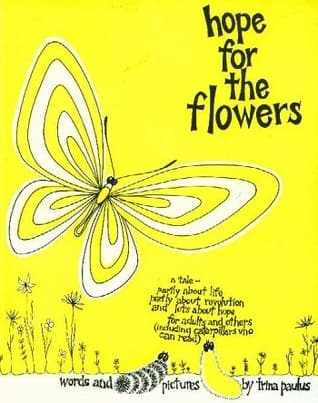
Trina Paulus (1972)
Genre
Children's / Spirituality / Philosophy / Young Adult
Reading Time
60 min
Key Themes
See below
Sign in to track this book
Two ambitious caterpillars, Stripe and Yellow, climb a dangerous pile of peers. They learn their destiny is not found in climbing, but in letting go and learning to fly.
Yellow, a young caterpillar, feels restless despite having many leaves to eat. She senses there is more to life. One day, she sees other caterpillars crawling towards a distant, tall pile of caterpillars. Curious, and feeling an inner pull, she leaves her comfortable leaf and joins the procession. She believes that reaching the top of this pile will answer her yearning and show her what she is meant to do, driven by a vague but strong hope for something better.
As Yellow begins her climb towards the tall pile, she meets Stripe, another caterpillar who wants to reach the top. Stripe is more practical and focused on climbing, while Yellow is driven by a more abstract hope. They bond and decide to climb together, finding comfort and encouragement. The climb is hard and competitive, with many other caterpillars pushing, all aiming for the same goal. Yellow and Stripe learn to manage the chaotic environment, sometimes helping each other, sometimes getting separated.
The journey up the caterpillar pile is much harder and more brutal than Yellow first thought. The pile is a chaotic mass of bodies, with caterpillars constantly crawling over each other; some fall, some are pushed down. Yellow sees the desperation and ruthlessness of others, and she herself feels fear, exhaustion, and despair. She starts to question the climb's purpose, noticing that many caterpillars seem to have forgotten why they started, driven only by the crowd's momentum. Despite her growing doubts, the collective ambition keeps her moving up, alongside Stripe.
As they climb higher, Stripe becomes more determined and ruthless, pushing harder to keep his place. Yellow, increasingly bothered by the violence and lack of kindness, finds she cannot continue in the same way. The climb's competitive nature conflicts with her inner sense of peace and purpose. Overwhelmed by the ugliness and meaninglessness she sees in the struggle, Yellow decides to leave the pile, breaking away from Stripe and the constant upward push. She descends, seeking solitude and a different way to understand her existence, leaving a confused Stripe behind.
After leaving the pile, Yellow finds a quiet leaf to rest and think. Alone, she watches other caterpillars, some still climbing, some just eating. She starts to notice something strange: some caterpillars disappear, only to reappear later as beautiful butterflies. This observation leads to a realization. She learns that caterpillars are not meant to climb piles forever, but to change. This new understanding begins to fill the void she felt, showing a deeper purpose than simply reaching the 'top' of a physical structure.
Curious to learn more about butterflies, Yellow seeks out an old, wise butterfly. The butterfly explains metamorphosis, saying that caterpillars must first eat and grow, then enter a chrysalis – a time of quiet change – before becoming butterflies. The old butterfly says that a caterpillar's purpose is to become, not to climb. This conversation greatly affects Yellow, confirming her instincts and giving her a clear path. She now understands that her restlessness was a yearning for this change, not for the illusion of the pile's 'top.'
Meanwhile, Stripe, not deterred by Yellow's departure, continues his climb, eventually reaching what he thinks is the very top of the massive caterpillar pile. His victory is brief. He finds no glory, no answers, no meaning at the summit. The 'top' is just a risky, crowded platform, as empty and unsatisfying as the climb itself. He looks down at the struggling mass below, feeling a deep sense of emptiness and disappointment. All his effort and ambition led to a hollow victory, leaving him more despairing than before.
Overwhelmed by his empty win, Stripe begins to descend the pile, feeling lost and defeated. Yellow, who has learned about metamorphosis, feels drawn to return to the pile and find Stripe. She finds him sad and broken. With kindness, Yellow shares her new understanding of transformation, explaining that a caterpillar's true purpose is to become a butterfly, not to climb a pile. Stripe is at first doubtful and resistant, his mind still focused on the competitive struggle he has known.
Despite Stripe's initial reluctance and fear, Yellow gently guides him. She encourages him to eat, grow, and prepare for the change. Stripe is scared of the unknown, of letting go of his old identity and the familiar struggle of climbing. Yellow reassures him, explaining that the process is natural and beautiful. Slowly, Stripe begins to trust Yellow and the promise of transformation. He lets go of his old ways of thinking, beginning the internal preparation for the chrysalis, a journey he must take alone but with Yellow's support.
Yellow, having already prepared, enters her chrysalis first, emerging as a magnificent butterfly. She experiences the freedom of flight, soaring above the pile she once struggled to climb. Stripe, inspired by Yellow's example and her encouragement, eventually finds the courage to enter his own chrysalis. After a time of quiet change, he too emerges as a beautiful butterfly. Together, they fly above the world, feeling peace, joy, and purpose, having realized their destiny and understanding that their struggles were part of a larger, more beautiful plan.
The Protagonist
Yellow transforms from a restless, searching caterpillar to a wise, compassionate butterfly who understands and embraces her true destiny.
The Protagonist/Foil
Stripe evolves from a ruthlessly ambitious and disillusioned climber to a butterfly who learns to embrace a different kind of purpose and transformation.
The Supporting
The Old Butterfly's arc is complete; he serves as a source of wisdom and guidance for Yellow.
The Supporting/Collective
The collective remains largely unchanged, serving as a backdrop against which the protagonists' transformations are highlighted.
The main theme is Yellow and Stripe's journey to understand their true nature and purpose beyond what society expects. Yellow's initial restlessness and her leaving the pile show a search for her real self. The metamorphosis is the ultimate act of self-discovery, showing that their caterpillar identity was only temporary, and their true self is a butterfly. The book says that true identity is found not in external achievement but in inner change.
“How does one become a butterfly? You must want to fly so much that you are willing to give up being a caterpillar.”
The story questions the common idea of success, shown by 'climbing to the top' of the caterpillar pile. Stripe's empty victory at the summit shows how meaningless externally defined achievements are when they lack inner purpose. In contrast, Yellow's change into a butterfly represents a different kind of success: one based on inner growth, purpose, and reaching one's full potential, rather than competitive dominance. The book suggests that true success is about becoming, not just achieving.
“He got to the top. And when he got to the top, he looked out. And there was nothing.”
The many caterpillars endlessly climbing the pile without questioning their purpose represent the dangers of conformity and blindly following the crowd. Yellow's decision to leave the pile is an act of individuality and courage, choosing to listen to her inner voice instead of societal pressure. Her journey shows the importance of breaking free from group delusion to find a personal path. Stripe's initial conformity and later disappointment also show this theme, illustrating a path many take but few find fulfilling.
“It was impossible to see what was at the top, but everyone said it was worth it. So they pushed on.”
Metamorphosis is the central symbol for personal and spiritual growth. The journey from caterpillar to butterfly shows a deep change in perspective, purpose, and being. It requires letting go of the old self (the caterpillar) and accepting a time of vulnerability (the chrysalis) to become a new, more developed being (the butterfly). The theme emphasizes that growth is often uncomfortable and needs courage, but it leads to a higher state of existence and freedom.
“To fly, you have to give up being a caterpillar.”
Beyond just physical change, the transformation in the book has strong spiritual meanings. Yellow's initial restlessness is a spiritual longing, and her discovery of metamorphosis is an awakening to a higher truth about existence. Becoming a butterfly represents rising above earthly struggles and connecting to a more expansive, joyful reality. The story suggests that true fulfillment comes from aligning with one's spiritual purpose, which often involves a 'death' of the old self and a 'rebirth' into a new awareness.
“He saw that he had been created to fly.”
The entire story functions as a symbolic narrative for human life and spiritual journey.
The entire narrative of 'Hope for the Flowers' is an allegory. The caterpillars represent humans, the pile represents societal rat races and competitive ambitions, and the metamorphosis into a butterfly symbolizes spiritual awakening, self-realization, and achieving one's true potential. Every element of the story, from the characters' names (Yellow for vibrancy, Stripe for conventional markings) to their actions, serves a symbolic purpose, conveying deeper philosophical and spiritual messages about life's meaning.
Represents competitive, externally-driven societal goals and the illusion of success.
The towering 'pile' of caterpillars is a potent symbol. It represents the endless, often meaningless, climb for external success, status, or wealth that many humans pursue. It embodies the competitive nature of society, where individuals push each other down to get ahead, driven by an unexamined belief that 'the top' holds the answers. The pile's ultimate emptiness for Stripe reveals the hollowness of such pursuits when disconnected from inner purpose and true identity.
The central metaphor for profound personal and spiritual transformation.
Metamorphosis is the core plot device and central metaphor of the book. It is the literal biological process of a caterpillar becoming a butterfly, but it serves as a powerful symbol for human spiritual awakening and self-actualization. It signifies the shedding of an old, limited identity and embracing a new, expanded state of being. The chrysalis represents a period of quiet introspection and internal work necessary for this profound transformation, emphasizing that true growth often requires letting go and surrendering to a higher process.
Two protagonists representing contrasting approaches to life's challenges.
Yellow and Stripe serve as narrative foils to each other, highlighting different ways of approaching life's questions and challenges. Yellow represents intuition, introspection, and a willingness to question the status quo, eventually leading her to spiritual truth. Stripe, on the other hand, embodies ambition, pragmatism, and a focus on external achievement. Their contrasting journeys and eventual shared transformation illustrate that while paths may differ, the ultimate destination of self-realization is available to all who are willing to change.
“How does one get to the top? By climbing.”
— Yellow's initial simple understanding of the journey up the pile.
“If you really want to fly, you have to let go of the things that weigh you down.”
— Stripe's realization about the true nature of flying, contrasting with the climbing method.
“The caterpillar does not question its transformation. It simply becomes.”
— A reflection on the natural process of change and acceptance.
“It was not enough to be on the pile; he wanted to be at the top.”
— Yellow's driving ambition early in his journey.
“Just when the caterpillar thought the world was over, it became a butterfly.”
— A central theme of the book, highlighting hope and unexpected transformation.
“What if the pile isn't the only way up?”
— Stripe's dawning realization and questioning of the established path.
“Sometimes, the only way to get to the top is to be willing to fall.”
— A paradoxical insight into the nature of true ascent.
“There are greater journeys than just climbing up a pile of other caterpillars.”
— Stripe's growing understanding of a different kind of fulfillment.
“The struggle itself is the lesson.”
— A philosophical point about the value of challenges.
“To be truly free, one must first be truly oneself.”
— An underlying message about authenticity and self-discovery.
“Hope is not a dream, but a way of making dreams a reality.”
— A deeper understanding of hope as an active force.
“The most beautiful flight begins with the humblest crawl.”
— Connecting the origins of transformation to its magnificent outcome.
“It's not about reaching the top, but about what you become on the way.”
— A shift in perspective from external achievement to internal growth.
“The world needs more butterflies, not just caterpillars climbing a pile.”
— An overarching message about individual transformation benefiting the collective.
Ready to see how well you understood this book? Take our interactive quiz with 10 questions.

Dan Gemeinhart
4.5

Kate O'Hearn
4.4

Jeanne Birdsall
4.4

Jen Wang
4.4

Wendelin Van Draanen
4.3

John Marsden
4.3

Chris Van Allsburg
4.3
Jennifer A. Nielsen
4.2