“Hope was the most dangerous word in the English language.”
— Abbi's internal reflection on the impact of the word 'hope' after her father's death.

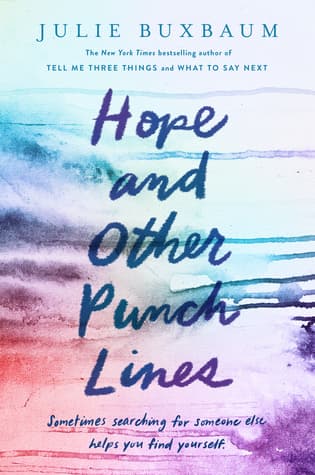
Julie Buxbaum (2019)
Genre
Historical Fiction / Young Adult / Romance
Reading Time
6-8 hours
Key Themes
See below
Sign in to track this book
Fifteen years after an iconic 9/11 photo made her a symbol of hope, a teenager seeking anonymity at summer camp collides with a boy whose family was shattered by the same tragedy, forcing them to confront the shared, painful history that binds them.
Abbi Hope Goldstein, known as 'Baby Hope' from an iconic 9/11 photograph, is tired of being recognized and carrying the weight of public grief. The photo, taken on her first birthday, shows her with a red balloon and a party hat, with the South Tower collapsing in the background. Now almost seventeen, Abbi decides to escape her fame by working as a junior counselor at Knights Day Camp in a nearby town. She hopes to blend in and have a normal summer. She is assigned to the 'Bumblebees,' a group of four-year-olds, none of whom she expects to recognize her. Her goal is to put aside the 'Baby Hope' identity, even for a few months, and focus on her own life.
Abbi's plan for anonymity is immediately complicated when she meets Noah Stern, another junior counselor. Noah, an aspiring photographer, not only recognizes Abbi from the famous 'Baby Hope' photo but is deeply moved by it. His own father died on 9/11, and the photo means a lot to him, a symbol of hope amid tragedy. He believes their meeting at camp is fate, a sign they are meant to connect over their shared, though different, experiences of that day. Abbi, however, sees his recognition as a threat to her carefully built summer persona.
As Abbi and Noah spend more time together, Noah reveals that his connection to the 'Baby Hope' photo is more than general public awareness. His father, a photojournalist, was at the World Trade Center that day and took the iconic picture. This news deeply affects Abbi, linking her personal history directly to Noah's tragic past. The photograph, which has shaped much of Abbi's life, suddenly becomes a new, more personal, and emotional object shared between them.
Noah's revelations and Abbi's own curiosity lead them to look deeper into the 'Baby Hope' photograph. They begin to research the photo's origins, seeking information about Noah's father's work and the events of that morning. Their joint investigation helps them process their individual traumas and understand how 9/11 affected their lives. This search for answers becomes the main focus of their summer, bringing them closer as they learn more about the day that changed both their families' futures.
Abbi and Noah start by contacting people who knew Noah's father, a dedicated photojournalist. They speak with his former colleagues and friends, piecing together his movements and intentions on September 11th. They learn about his passion for capturing truth, even in danger. They discover he went to the World Trade Center not just as a journalist, but out of duty. Each new detail about his final hours helps them understand the context in which the 'Baby Hope' photo was taken, adding meaning to the image that has shaped Abbi's identity.
As Abbi and Noah continue their investigation, Abbi deals with her public identity. She sees how strangers project their own grief and hope onto her, often overshadowing her personal feelings. She struggles with feeling like a symbol, not a person, to many. This internal struggle is made worse by her wish for a normal life, which the 'Baby Hope' identity constantly undermines. Her talks with Noah help her express these frustrations and begin to process the burden of being a public figure tied to a national tragedy.
Through their intense and emotional shared search, Abbi and Noah form a deep connection that goes beyond their first hesitations. They find comfort and understanding in each other, as both have felt the lasting impact of 9/11. Their shared vulnerability and support lead to a budding romance. This relationship is complicated by the circumstances that brought them together — the tragedy of 9/11 and the iconic photo — yet it also creates a unique bond. Their feelings grow as they navigate the difficult truths they uncover, finding comfort and strength in their shared journey.
Abbi and Noah eventually uncover the full story behind the 'Baby Hope' photograph. They learn that Noah's father, in the chaos and fear of that morning, took the picture of Abbi, a small sign of innocence amid the unfolding disaster. The photo was taken just moments before the South Tower collapsed, making it a powerful symbol of fleeting normalcy before irreversible change. They discover the specific street corner, the time, and the emotional context of the shot. This revelation brings both closure and a deeper understanding of the photo's lasting power, for them personally and for the nation.
With the full truth of the 'Baby Hope' photograph revealed, Abbi and Noah must face what it means for their own lives. Abbi begins to understand that the photo, while a burden, also shows resilience and hope, not just tragedy. Noah finds a deeper connection to his father's legacy, seeing his final act not just as a journalist, but as someone who captured a moment of humanity. They both deal with the weight of memory, grief, and the unexpected ways hope can come from devastation. This understanding helps them begin healing and moving forward.
By the end of the summer, Abbi has changed a lot. She no longer tries to completely escape the 'Baby Hope' identity but instead tries to make it part of who she is. She understands that while the photo is part of her, it does not define her entirely. With Noah's help, she finds a way to acknowledge the public's connection to her story while also being herself. She learns to accept the hope the photo represents, not just the tragedy, and looks toward her future with a new sense of self-acceptance and purpose, ready to handle the complexities of her unique past.
The Protagonist
Abbi transforms from a girl trying to outrun her past into one who integrates her public identity with her personal self, finding strength and hope in her unique story.
The Supporting/Love Interest
Noah moves from viewing Abbi's photo as a symbol of hope to understanding the complex human story behind it, finding a deeper connection to his father and a new sense of purpose.
The Supporting
They learn to trust Abbi's process of self-discovery, allowing her more agency in understanding and accepting her unique history.
The Mentioned/Catalyst
His legacy is reinterpreted and understood more fully through Abbi and Noah's investigation, providing closure for Noah.
The novel shows how Abbi's identity is shaped by a public image she didn't choose. She struggles with being 'Baby Hope' — a national symbol of hope — while wanting to be seen as an individual. Strangers project their grief and expectations onto her, making it hard for her to define herself. This theme is clear when she tries to escape her fame at camp, only to be recognized by Noah, forcing her to confront her public persona. The story shows her learning to combine this public identity with her private self, rather than trying to get rid of it.
“What if the thing that defines you is something you didn't even do?”
The lasting impact of the 9/11 attacks on individuals and families is a main theme. Both Abbi and Noah, in different ways, carry the weight of that day. Noah's direct loss of his father drives his search for understanding, while Abbi's accidental fame makes her a vessel for public grief. The novel shows how memory, both personal and shared, shapes their present. Their investigation into the photograph becomes a shared way to process trauma and find a path toward healing, showing that understanding the past is important for moving forward.
“Sometimes looking to the past helps you find your future.”
The novel directly addresses hope in the face of great tragedy. The 'Baby Hope' photograph itself is a strong symbol of this, capturing innocence and resilience against the backdrop of collapse. For Noah, the photo is a beacon of hope after his father's death. Abbi at first dislikes this label, feeling the burden of carrying a nation's hope. However, through her journey, she comes to understand hope — not as simple optimism, but as quiet endurance and the chance to find light even in the darkest times.
“Hope isn't about ignoring the bad stuff. It's about finding the good, even when it's buried deep.”
Photography is an important theme, showing its power to capture, preserve, and interpret moments. The 'Baby Hope' photo is more than a picture; it is a historical object, a symbol, and a deeply personal link for Abbi and Noah. The novel explores how one image can shape stories, influence public opinion, and connect generations. Noah's own photography goals highlight the idea that images can communicate deep truths and help people process terrible events, making the unseen visible.
“A photograph can be a window, or it can be a mirror.”
A central visual motif and catalyst for the entire plot.
The 'Baby Hope' photograph serves as the primary plot device, both literally and symbolically. It is the catalyst that brings Abbi and Noah together, the mystery they seek to unravel, and the physical manifestation of their intertwined pasts. The photo represents Abbi's public identity and the national memory of 9/11, while for Noah, it's a direct link to his deceased father. Its existence drives the narrative forward, forcing the characters to confront difficult truths and explore the lasting impact of a single, devastating moment in history.
A temporary escape that paradoxically forces confrontation with the past.
The Knights Day Camp provides a contained and initially anonymous setting for Abbi, allowing her to believe she can escape her 'Baby Hope' identity. This 'bubble' of normalcy is quickly burst by Noah's presence, turning the camp into a crucible where their shared past is forced to the surface. The camp setting, with its youthful innocence and distance from their regular lives, creates a space for vulnerability and the development of their relationship, while also highlighting the contrast between their personal burdens and the lightheartedness of summer.
A collaborative quest for truth that deepens the characters' bond.
Abbi and Noah's joint investigation into the origins of the 'Baby Hope' photograph is a crucial plot device. It provides the narrative structure, giving them a common goal and forcing them to interact, communicate, and rely on each other. This shared quest allows them to process their individual traumas collectively, fosters their burgeoning romance, and ultimately leads to the discovery of pivotal information. The investigation is not just about finding answers, but about the journey of self-discovery and connection it facilitates for both characters.
Brief glimpses into the past that illuminate character motivations and context.
While not extensively used, the novel incorporates subtle flashbacks and character recollections to provide context for the characters' emotional states and the historical significance of 9/11. These brief moments, whether Abbi's fragmented memories of her childhood or Noah's memories of his father, serve to deepen the emotional impact of the main narrative. They help to illustrate the long-term effects of trauma and how past events continue to shape present experiences, adding depth to their personal journeys of discovery and healing.
“Hope was the most dangerous word in the English language.”
— Abbi's internal reflection on the impact of the word 'hope' after her father's death.
“Maybe being a hero isn't about being brave all the time, but about being brave when it counts.”
— Abbi's evolving understanding of heroism, particularly in the context of her father's actions.
“Sometimes the things that break you are also the things that make you.”
— Abbi contemplating her experiences and how they've shaped her.
“The past is never really gone. It just changes its shape.”
— Abbi reflecting on how past events, especially 9/11, continue to influence the present.
“It's funny how you can think you know someone your whole life, and then suddenly, you realize you don't know them at all.”
— Abbi's realization about her father's secret life and the complexities of his identity.
“Grief is a tricky thing. It doesn't just go away. It just… changes its address.”
— Abbi's ongoing struggle with the aftermath of her father's death.
“Maybe the point isn't to forget, but to remember differently.”
— Abbi considering how to process and integrate her memories of her father and the tragedy.
“We all have our own versions of that day, don't we? Our own stories.”
— Abbi's interaction with others who were impacted by 9/11, highlighting subjective experiences.
“It’s hard to be a legend when you’re just trying to be a person.”
— Abbi feeling the pressure of her father's heroic legacy.
“Sometimes the greatest acts of bravery are the quietest ones.”
— Abbi's internal thoughts about what truly constitutes bravery, beyond grand gestures.
“You can't erase history, but you can learn from it.”
— Abbi's understanding of the importance of acknowledging and processing historical events.
“Love isn't always easy. Sometimes it's messy and complicated and makes you want to pull your hair out. But it's still love.”
— Abbi's reflections on her romantic feelings and the complexities of relationships.
“Maybe that's what hope is. Not a guarantee, but a possibility.”
— Abbi's revised understanding of hope, moving from a negative to a more nuanced view.
“The world keeps spinning, even when yours feels like it's stopped.”
— Abbi's observation of life continuing around her despite her personal grief.
Ready to see how well you understood this book? Take our interactive quiz with 10 questions.







