“Sometimes you're going to be faced with situations where the line isn't clear between what's right and what's wrong. Your heart will tell you. Listen to it.”
— Roy's mother gives him advice about standing up for what he believes in.

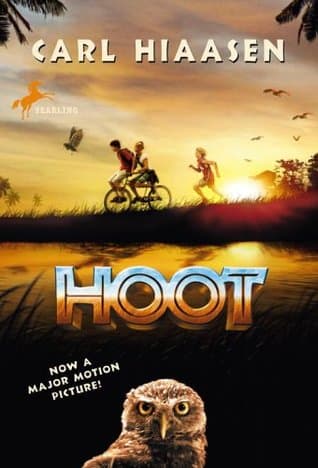
Carl Hiaasen (2002)
Genre
Children's / Mystery / Young Adult
Reading Time
290 min
Key Themes
See below
Sign in to track this book
When a new kid in Florida crosses paths with a shoeless, running boy, he's pulled into a quirky, eco-mystery involving burrowing owls, a pancake-house conspiracy, and a cast of eccentric characters determined to save their natural habitat.
Roy Eberhardt, a new seventh-grader in Coconut Cove, Florida, has trouble getting used to his latest move. On the school bus, Dana Matherson, the school bully, targets him. While Dana presses Roy's face against the window, Roy sees a shoeless, blond boy running fast beside the bus. Intrigued, Roy tries to get off the bus to find out more, but Dana stops him. Roy later learns the barefoot boy is called 'Mullet Fingers' and is known for being hard to catch around Trace Middle School. This first sighting makes Roy curious and starts his journey to learn who the boy is and what he is doing.
Curiosity leads Roy to investigate the area where he saw the barefoot boy. He finds a construction site for a new 'Mother Paula's All-American Pancake House.' After seeing the running boy a second time, Roy chases him into the woods, but the boy gets away. During his chase, Roy falls into a pit with alligators and is saved by Beatrice Leep, a tough, athletic girl. Beatrice warns Roy to stay away from the running boy. Despite her warning, Roy suspects Beatrice is connected to the mysterious boy, which makes him even more determined to find the truth.
The construction site for Mother Paula's All-American Pancake House starts having strange problems. First, the survey stakes are removed, delaying the groundbreaking. Then, alligators are put in the seats of construction vehicles, causing panic. Later, venomous cottonmouth snakes with glitter-painted tails are released into the portable toilets. Officer Delinko, the police officer on the case, struggles to find the person responsible. Roy, who now knows the running boy is Mullet Fingers and Beatrice's stepbrother, realizes these acts are Mullet Fingers' doing, an attempt to stop construction.
Roy continues to be bullied by Dana Matherson, but he also forms an alliance with Beatrice. He eventually meets Mullet Fingers, who explains why he is sabotaging the construction: the land has a colony of burrowing owls, an endangered species, and the pancake house will destroy their home. Mullet Fingers is dedicated to protecting the owls and has been living off the land, avoiding capture, and planning the pranks. Roy is moved by Mullet Fingers' dedication and the owls' situation, so he decides to help with their environmental activism. Beatrice also fully supports her stepbrother's cause.
Officer Delinko, needing to solve the vandalism case, makes little progress. His attempts to catch the person responsible are often funny and don't work. Meanwhile, Chuck Muckle, the Vice President of Corporate Relations for Mother Paula's All-American Pancake Houses, arrives in Coconut Cove. Muckle is a businessman focused on profit and wants to push the construction forward, ignoring environmental concerns. He dismisses the owl claims and pressures the construction foreman, Curly, and Officer Delinko to fix the issue quickly, which increases the conflict between the developers and the young environmentalists.
During an attempt to sabotage the construction, Mullet Fingers is bitten by a guard dog and hurt. Beatrice takes him to a veterinary clinic for treatment, careful to avoid official channels that would lead to his capture. This event shows the danger of Mullet Fingers' solo fight. Seeing his friend's sacrifice, Roy realizes that more public action is needed. He plans to show the environmental injustice at the groundbreaking ceremony, hoping to use media and public attention to save the burrowing owls. He understands that direct action might be the only way to get through to the adults.
The groundbreaking ceremony day arrives, with local officials, Mother Paula (an actress), Chuck Muckle, and reporters present. Roy, with Beatrice's help, organizes a public protest. He brings a copy of the Environmental Impact Statement, which does not mention the burrowing owls on the site. As the ceremony begins, Mullet Fingers comes out of an owl burrow, holding an owl, proving they are there. Other children, inspired by Roy, also appear, each holding an owl. This creates a powerful sight that gets media attention.
The children's protest, especially Mullet Fingers' appearance with an owl, reveals the truth about the endangered burrowing owls living on the construction site. The media quickly covers the story, reporting Mother Paula's environmental neglect. Chuck Muckle tries to say the owls are common pigeons, but his lies are easily disproven. Public outrage and bad publicity force Mother Paula's corporation to stop construction. The scandal threatens the company's image, leading to a scramble for damage control and a new look at their development plans.
After the public outcry, Mother Paula's All-American Pancake House must give up its plans for the Coconut Cove site. The land becomes a protected habitat for the burrowing owls, keeping them safe. Mullet Fingers, who had been a runaway, finally gets a stable home. His mother, who had left him, lets him live with Beatrice and her father, Lonna Leep, giving him a sense of family he had lacked. Roy feels a sense of accomplishment and belonging, having found a cause and friends in Florida.
Afterward, Officer Delinko, still a bit clumsy, earns respect from his coworkers. Chuck Muckle faces consequences for his deceit. Roy, no longer just the new kid, has found true friendship with Beatrice and Mullet Fingers. He has learned to stand up for what is right, even against big corporations. The experience affects all the children, strengthening their bonds and giving them a sense of environmental responsibility. The burrowing owls continue to do well, a result of their efforts, and Mullet Fingers finally has a place to call home.
The Protagonist
Roy transforms from an alienated new kid to a courageous environmental activist and a loyal friend, finding his place by fighting for a cause.
The Supporting/Protagonist
Mullet Fingers, a lonely runaway fighting a solitary battle, finds allies and a sense of belonging through his environmental efforts and a stable home.
The Supporting/Protagonist
Beatrice evolves from a solitary protector of her stepbrother to a key member of a team, finding strength in shared purpose and friendship.
The Supporting
Delinko grows from a naive and ineffective officer to one who, while still bumbling, gains a clearer sense of justice and moral clarity.
The Antagonist
Muckle's unwavering pursuit of corporate profit ultimately leads to his public humiliation and professional downfall.
The Supporting
Curly remains largely unchanged, serving as a reactive character to the escalating chaos at the construction site.
The Supporting
Dana continues his bullying until he is finally put in his place by Roy and later faces consequences for his actions.
The Supporting
Mr. Eberhardt remains a consistent source of support and wisdom for Roy, demonstrating parental trust and guidance.
The Supporting
Mrs. Eberhardt remains a consistent source of comfort and support for Roy.
The Mentioned
Mother Paula's image is tarnished by the actions of her company, highlighting the disconnect between corporate branding and reality.
A main theme of 'Hoot' is the need to protect endangered species and their homes from human building. Mullet Fingers' constant work to save the burrowing owls, and Roy's choice to help him, show how one person can act against corporate greed. The book says that even children can make a big difference in environmental issues. It asks readers to be aware of and fight for their local ecosystems. The owls show how easily nature can be hurt by unchecked development.
““Every time you screw up something like this, you lose a little bit of yourself.””
The story puts the moral need to protect nature against the profit goals of a large company. Chuck Muckle and Mother Paula's show the cold, money-focused side of business that puts money over ethics and ecological care. The children, especially Roy and Mullet Fingers, embody the fight for justice and doing what is right, even when it means challenging powerful adults and risking personal problems. The book criticizes the unchecked power of companies and calls for accountability.
““It was the nature of the world, Roy thought. You had to fight for the things that you cared about.””
Roy's story includes making new friends. His initial loneliness changes into strong bonds with Beatrice and Mullet Fingers. These friendships are built on a shared goal, respect, and loyalty. Beatrice protects Mullet Fingers, and both she and Mullet Fingers eventually accept Roy as a friend. Their strong friendship helps them overcome problems and stand together against adult opponents, showing the power of unity.
““He realized that he would do whatever it took to help Mullet Fingers, no matter what the consequences.””
Roy's time in Florida is a coming-of-age journey. He starts as a quiet 'new kid' but becomes an active part of a cause bigger than himself. Helping Mullet Fingers and Beatrice teaches Roy to stand up to bullies, question authority, and support his beliefs. He finds his voice and courage, discovering his own strength and moral compass. The story shows how challenging experiences can shape character and lead to self-discovery.
““Roy knew that he couldn't stay quiet any longer. It was time to speak up.””
The story supports the idea that even small or seemingly weak people can bring about big change when they are united and determined. A group of children, a runaway, and a police officer succeed against a powerful company with many resources. This theme gives hope and shows that courage, cleverness, and strong moral belief can win over difficult odds. It highlights the impact of local activism.
““It wasn't fair, but Roy was learning that fair had nothing to do with it. You had to make fair happen.””
A mysterious figure who acts as a catalyst for Roy's investigation and the central environmental conflict.
Mullet Fingers, the barefoot running boy, serves as a significant plot device by immediately piquing Roy's curiosity and drawing him into the central mystery. His elusive nature and acts of vandalism drive the initial plot, introducing the environmental conflict and forcing Roy to investigate. He also functions as a symbol of wildness and unadulterated connection to nature, representing the spirit of resistance against development. His presence continuously pushes the narrative forward, escalating the stakes and revealing the core conflict.
The endangered species whose habitat is threatened, serving as the central MacGuffin and symbol.
The burrowing owls are the literal and symbolic heart of the story. They are the endangered species whose habitat is directly threatened by the Mother Paula's pancake house, making them the central 'MacGuffin' around which the entire plot revolves. Beyond their plot function, they symbolize the vulnerability of nature, the beauty of the natural world, and the importance of environmental preservation. Their existence validates Mullet Fingers' actions and galvanizes Roy and Beatrice into action, becoming the concrete reason for the children's activism.
A series of escalating, non-violent acts of sabotage used to delay construction and draw attention.
The escalating acts of vandalism—removing survey stakes, putting alligators in toilets, releasing glitter-tailed snakes—are key plot devices that create suspense, introduce humor, and propel the story forward. These pranks are Mullet Fingers' primary method of resistance, designed to delay construction without causing serious harm. They force Officer Delinko to investigate, bring Chuck Muckle into the picture, and ultimately set the stage for the public confrontation. They highlight the ingenuity of the children and the absurdity of the situation.
A climactic event serving as the stage for the public revelation and resolution of the conflict.
The groundbreaking ceremony functions as the climactic plot device where all the narrative threads converge. It is the designated moment when the construction is meant to officially begin, providing a clear deadline and a public forum for the children's protest. By staging their demonstration during this event, Roy and his friends maximize media attention and public awareness, ensuring their message is heard. It serves as the ultimate showdown between corporate power and environmental activism, leading directly to the resolution of the main conflict.
“Sometimes you're going to be faced with situations where the line isn't clear between what's right and what's wrong. Your heart will tell you. Listen to it.”
— Roy's mother gives him advice about standing up for what he believes in.
“A person's character isn't determined by how he or she enjoys victory, but rather how he or she endures defeat.”
— Roy reflects on his own experiences and the actions of others.
“The owls are more important than some pancake house.”
— Mullet Fingers explains his mission to protect the burrowing owls from construction.
“You have to stand up for what you believe in, even if you're standing alone.”
— Roy decides to help Mullet Fingers despite the risks.
“Sometimes the right thing is the hardest thing to do.”
— Roy grapples with the decision to defy authority to save the owls.
“Nature doesn't need people. People need nature.”
— A theme emphasized through the conflict over the construction site.
“Just because something's legal doesn't make it right.”
— Roy questions the morality of the pancake house construction.
“You can't just sit back and watch bad things happen.”
— Roy motivates himself to take action against the construction.
“It's not about being a hero. It's about doing what's right.”
— Roy explains his motivations to a friend.
“The world is full of bullies, but it's also full of people who stand up to them.”
— Roy observes the dynamics at school and in the community.
“Sometimes the smallest creatures teach us the biggest lessons.”
— Reflecting on the impact of the burrowing owls on the characters.
“Change starts with one person who's willing to make a difference.”
— The novel's message about individual action leading to collective impact.
“You don't have to be big to be brave.”
— Inspired by the small but resilient burrowing owls.
“The truth has a way of coming out, no matter how hard you try to bury it.”
— Referring to the secrets about the construction and the owls.
Ready to see how well you understood this book? Take our interactive quiz with 10 questions.

Carl Hiaasen is a celebrated American author known for his satirical crime novels often set in Florida. His works, including "Stormy Weather," "Hoot," "Scat," and "Flush," are characterized by their sharp wit, environmental themes, and eccentric characters. Hiaasen's distinctive voice has earned him a significant following and critical acclaim for his unique brand of Florida noir.
Dan Gemeinhart
4.5
Kate O'Hearn
4.4

Jeanne Birdsall
4.4

Jen Wang
4.4
Wendelin Van Draanen
4.3

John Marsden
4.3

Chris Van Allsburg
4.3
Jennifer A. Nielsen
4.2