“The sari was lovely, but I knew it was not meant for me.”
— Faizul's family brings Lali a beautiful sari, but it's not for her wedding.

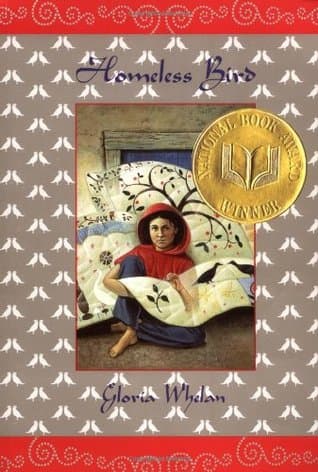
Gloria Whelan (2000)
Genre
Children's / Historical Fiction / Young Adult
Reading Time
240 min
Key Themes
See below
Sign in to track this book
After a deceptive arranged marriage leaves her abandoned, thirteen-year-old Koly, an Indian bride, bravely reshapes her future.
Thirteen-year-old Koly lives in her village with her parents and younger brother. Her parents, following custom, arrange her marriage to Hari, a boy from a village a few days away. Koly feels both nervous and excited, imagining her new life as a wife. Her father, a schoolteacher, carefully reads letters from Hari's family, the Mehtas. Despite some initial concerns about the dowry, they agree to the match. Koly prepares for her wedding, receiving a red sari and jewelry, and experiences the traditional ceremonies, full of a young bride's innocent hopes.
Koly's wedding day arrives. She travels a long distance in a bullock cart to Hari's village. She is overwhelmed by the new sights and sounds and the grand wedding ceremony, though her in-laws seem less welcoming than she hoped. When she meets Hari, she notices his frail appearance and sickly cough, unlike the healthy boy her parents were told she was marrying. Despite her growing worry, the wedding continues. Koly moves into the small, crowded Mehta home, where her new mother-in-law, Sass, immediately gives her household chores.
Life in the Mehta household is hard for Koly. Sass overworks and often criticizes her. Hari, her husband, continues to get weaker, his cough worsening and his body thinning. Koly soon understands the real reason the Mehtas were so eager for the marriage: they wanted a dowry to pay for his medical care and someone to look after him in his final days. Koly spends her days caring for Hari, feeding him and trying to make him comfortable, developing a quiet fondness for him despite their arranged marriage. Sadly, Hari eventually dies from tuberculosis, leaving Koly a child widow.
After Hari's death, Koly's life becomes even worse. As a child widow, people see her as a burden and bad luck. Sass makes her wear a plain white sari and shaves her head, taking away her identity. She gets only the hardest chores and small amounts of food. Hari's younger brother, Gopal, is openly cruel, while his sister, Mala, offers no comfort. Koly finds peace only in the small, hidden poems she writes and in memories of her own family. She endures this harsh life, hoping for some change or escape.
Desperate to get rid of Koly, Sass and her husband, the Headmaster, announce they are taking Koly on a pilgrimage to Vrindavan, the City of Widows. Koly, at first hopeful this might lead to a new life or even a return to her parents, agrees to go. However, once they arrive in the busy, poor city, Sass takes Koly to a temple, gives her a small amount of money, and tells her to wait. Koly soon realizes with a heavy heart that she has been deliberately abandoned, left alone and penniless in a city full of other widows, far from anyone she knows.
Alone in Vrindavan, Koly feels deep fear and loneliness. She quickly learns the harsh realities of street life, begging for food and shelter. She sees the despair of other widows, many much older and abandoned for years. Her small amount of money is quickly gone, and she faces hunger and constant danger. She sleeps in doorways and tries to avoid notice, her first hope replaced by a desperate fight to survive. She longs for her family's comfort and the simple life she once had.
Just as Koly reaches her lowest point, starving and wondering what to do, Maa Kamala finds her. Maa Kamala is a kind, elderly woman who runs a small home for widows. She offers Koly food, shelter, and a chance to work. Koly begins to learn the art of sari embroidery at a cooperative run by the kind Mr. Govind. She finds purpose and a sense of belonging among the other widows, who become her new family. This work allows her to earn her own money and regain some independence and respect.
At the cooperative, Koly becomes close friends with Chandra, a lively and smart widow. Chandra encourages Koly's poetry, and Koly starts to share her verses. Koly also meets Raji, a young rickshaw driver who delivers supplies to the cooperative. Raji, who also wants to be a writer, shares his books and helps Koly improve her reading and writing. Their shared love for books and learning creates a growing bond between them. Koly's world expands beyond her past suffering, now filled with new friendships and intellectual growth.
Raji, impressed by Koly's intelligence and spirit, eventually asks her to marry him. Koly is surprised and unsure. Her past as a child bride and widow has made her cautious about marriage, and she values her new independence and the community she has built in Vrindavan. She thinks about leaving her friends and her work. Raji is patient and understanding, giving her time to decide. Koly discusses her situation with Maa Kamala and Chandra, seeking their advice and thinking deeply about what she truly wants for her future.
After much thought, Koly decides to accept Raji's proposal. She understands that Raji offers a partnership based on mutual respect and shared interests, not the forced service of her first marriage. She also knows she can continue her embroidery and writing, keeping her independence within the marriage. Koly and Raji have a simple, loving ceremony. Koly, now a young woman who has overcome great difficulty, looks forward to a future where she can follow her passions and build a life of her own choosing, breaking free from the traditional limits that once held her.
The Protagonist
Koly transforms from a naive child bride into an independent, self-reliant woman who finds her voice and chooses her own future.
The Antagonist
Sass remains largely unchanged, serving as a static representation of societal cruelty and the challenges Koly must overcome.
The Supporting
Hari's brief life and death serve as a tragic catalyst for Koly's journey, highlighting the harsh realities of the time.
The Supporting
Maa Kamala serves as a consistent source of wisdom and support for Koly, helping her find stability and direction.
The Supporting
Chandra's friendship helps Koly open up and discover her own intellectual and creative strengths.
The Supporting
Raji develops from a supportive friend into a loving and respectful partner, offering Koly a chance at a new, empowering marriage.
The Supporting
Koly's father is a static character who represents the loving but sometimes limited protection of her birth family.
The Supporting
Koly's mother represents the traditional female role and the heartbreak of a mother who cannot protect her child from societal harshness.
The novel shows Koly's strength when facing great hardship. From the moment she becomes a child widow and is abandoned, Koly does not give in to despair. She learns to survive on the streets, then to earn her living through embroidery, and finally to choose her own path. Her journey from a helpless victim to an independent woman who makes her own choices, like accepting Raji's proposal on her own terms, is a main part of the story. This theme is clear in her quiet resolve to learn and write poetry even in hardship, and her eventual decision to build a life where she can follow her passions.
“I was a bird, a homeless bird, but I had found a nest.”
A main theme is the difficult reality and social exclusion faced by widows, especially child widows, in traditional Indian society. Koly's experience of losing her identity, being forced into hard work, and then abandoned in Vrindavan, the 'City of Widows,' clearly shows this struggle. The story highlights how widows were often seen as bad luck, economic burdens, and were denied basic rights. The cooperative in Vrindavan, where Koly finds help, represents a small hope and a group effort to ease this suffering, showing that community and financial independence can offer an alternative to traditional oppression.
“A widow was a bad omen. She had brought bad luck to her husband. She had no place in the world.”
Education and art help Koly survive, grow, and discover herself. Her father, a schoolteacher, teaches her to love learning. Even when she is a neglected widow, Koly secretly writes poetry, finding a way to express her feelings and keep her inner world alive. Later, Raji encourages her reading and writing, and the embroidery cooperative gives her a skill and a way to earn money. These things allow Koly to rise above her situation, gain confidence, and build a life that is intellectually and creatively fulfilling, showing how knowledge and creativity can lead to freedom.
“The words were like jewels, shining in my mind.”
The novel explores the struggle against strict social traditions, especially those about women's roles, arranged marriages, and the fate of widows. Koly's journey defies these limits. Her first marriage is a traditional arrangement that brings suffering, but her second marriage to Raji is based on choice and mutual respect, showing a move away from tradition. By becoming self-sufficient, getting an education, and finally choosing her own husband and lifestyle, Koly actively breaks free from the expectations placed on her as a woman and a widow in her society, creating her own modern path.
“I would not be bound by what others thought was my fate.”
Koly's journey is mirrored by the imagery of a bird seeking a nest.
The title itself, 'Homeless Bird,' is a central symbol for Koly. Initially, she is a young girl leaving her home for an arranged marriage, like a bird leaving its nest. After Hari's death and her abandonment, she truly becomes 'homeless,' wandering in Vrindavan with no family or place. Her eventual finding of Maa Kamala's home and the cooperative, and then her marriage to Raji, represent her finding a new 'nest' or a place of belonging and safety. This symbolism underscores her journey of displacement and her search for a secure and fulfilling life.
The story is told from Koly's intimate perspective, allowing insight into her thoughts and feelings.
The novel is narrated entirely from Koly's first-person perspective. This allows readers to experience her innocence, fear, despair, and eventual triumph directly through her eyes. It fosters deep empathy for her struggles and her inner strength. We understand her confusion during her first marriage, her horror at abandonment, and her growing sense of self-worth. This narrative choice makes her journey intensely personal and highlights her internal resilience and development as she navigates a challenging world.
Characters like Sass and Maa Kamala highlight Koly's journey through contrast.
The novel uses foil characters to emphasize Koly's experiences and the contrasting paths available to women. Sass, Koly's cruel mother-in-law, serves as a direct foil to Maa Kamala. Sass represents the oppressive, traditional, and unfeeling side of society that exploits and abandons widows. In stark contrast, Maa Kamala embodies kindness, community, and empowerment, offering a haven and a path to independence. These contrasting figures highlight the extreme challenges Koly faces and the crucial role of compassion and support in her survival and growth.
Koly's secret writing of poetry serves as a recurring symbol of her inner life and resilience.
Throughout her hardships, Koly secretly writes poems in her notebook. This motif symbolizes her inner world, her capacity for beauty and reflection, and her intellectual spirit that cannot be suppressed by external suffering. The poems are a private solace and a form of self-expression when she has no other voice. Later, sharing her poetry with Chandra and Raji becomes a way to connect with others and validates her inner self, signifying her growing confidence and the power of art to transcend hardship.
“The sari was lovely, but I knew it was not meant for me.”
— Faizul's family brings Lali a beautiful sari, but it's not for her wedding.
“A good wife is like a river, flowing where she is told.”
— Lali is told this by an older woman, reflecting traditional expectations for women.
“I was a homeless bird, flying from branch to branch, never knowing where I would land.”
— Lali reflects on her uncertain future after her husband's death and her family's rejection.
“The world outside my village was so different, so full of possibilities I had never imagined.”
— Lali experiences life in the city of Vrindavan for the first time.
“Even a small lamp can light a great darkness.”
— A wise woman in Vrindavan offers Lali comfort and hope.
“My dowry had been too small, my face not pretty enough.”
— Lali reflects on the reasons she believes she was rejected by her husband's family.
“It was strange to think that my own family, who had loved me, now saw me as a burden.”
— Lali realizes her family views her as bad luck after her husband's death.
“The colors of the saris were like a rainbow, each one telling a story.”
— Lali observes the vibrant saris worn by the widows in Vrindavan.
“I had learned to read, to write, to speak my own mind. These were gifts more precious than any jewelry.”
— Lali reflects on the education and independence she gains in Vrindavan.
“Sometimes, the hardest journeys lead to the most beautiful destinations.”
— A philosophical thought Lali has as she finds new purpose in life.
“The river Yamuna held so many secrets, so many prayers.”
— Lali spends time by the sacred river, reflecting on its significance.
“To be a widow was to be invisible, to be a shadow in the bright sun.”
— Lali describes the societal status of widows in traditional India.
“My voice, once so timid, was now strong enough to sing.”
— Lali finds her voice and confidence through singing bhajans.
Ready to see how well you understood this book? Take our interactive quiz with 10 questions.

Dan Gemeinhart
4.5

Kate O'Hearn
4.4

Jeanne Birdsall
4.4

Jen Wang
4.4

Wendelin Van Draanen
4.3

John Marsden
4.3

Chris Van Allsburg
4.3
Jennifer A. Nielsen
4.2