“We are like the sun and the moon, you and I. Always close, always there, but never together.”
— Effia's longing for her mother Maame, who is effectively absent from her life.

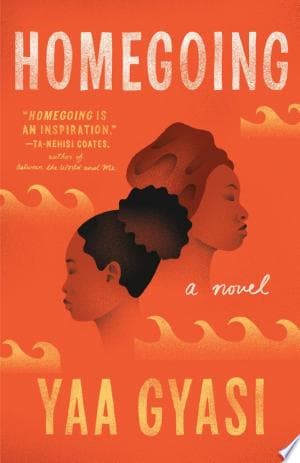
Yaa Gyasi (2016)
Genre
Literary Fiction / Historical Fiction
Reading Time
360 min
Key Themes
See below
Sign in to track this book
From 18th-century Ghanaian castles to Mississippi plantations, "Homegoing" traces two half-sisters' diverging paths and their descendants across eight generations, showing slavery's lasting impact.
Effia Otcher is born in Fanteland, a territory often at war with the Asante. Despite her mother Maame's mysterious past and her stepmother Abronoma's harsh treatment, Effia grows into a beautiful young woman. Her father, Big Man, promises her in marriage to a British governor, James Collins. Effia accepts her fate. She moves into the luxurious Cape Coast Castle, unaware that her true mother, Maame, was from an Asante village. Maame had escaped a fire that killed her previous family, leaving a baby girl behind, before marrying Effia's father. Effia's marriage begins her privileged, yet isolated, life inside the slave-trading fort.
Esi Asare, born in an Asante village, is the daughter of Maame and an Asante warrior. She has a peaceful childhood until Fante warriors allied with the British raid her village. Esi is captured with many others. During the brutal march to the coast, she endures hardship and witnesses atrocities. She is brought to Cape Coast Castle and imprisoned in the dungeon, directly beneath the living quarters of the British officers and their wives, including her half-sister Effia. Neither knows the other is there. Esi's time in the dungeon is a terrifying experience of dehumanization, fear, and uncertainty before her forced journey across the Middle Passage.
Quey, Effia's son with James Collins, grows up in Cape Coast Castle, caught between his Fante heritage and British upbringing. His father sends him to England for education, further separating him from his African roots. When he returns, Quey is expected to join the slave trade, which he finds wrong. He develops a close friendship with his childhood friend, an African man named Yaw. This is complicated by society's expectations and Quey's inner conflict. Quey marries a Fante woman, Nana Yaa, as his father dictates. He continues to struggle with his family's role in the slave trade, feeling guilt and displacement.
Ness, Esi's daughter, is born into slavery on a plantation in America. She is a strong, resilient woman who dreams of freedom despite the terrible conditions. She marries Sam, another enslaved man, and they have a son, Kojo. Ness tries to escape multiple times, leading to severe beatings and permanent scars, especially on her back. Her final, desperate escape attempt with Sam and Kojo fails, leading to Sam's death and Kojo being sold away. Ness remains on the plantation, broken but not entirely defeated, her body and spirit marked by slavery's violence and the pain of losing her family. Her story shows the physical and emotional scars of the enslaved.
James, Quey's grandson through his son Fiifi, is a Fante man who, unlike his ancestors, rejects the slave trade. He falls in love with Abena, a beautiful woman from an Asante village. Their love is complicated by historical animosity between their tribes and the changing political climate as the British begin to abolish slavery. James struggles to reconcile his family's past with his desire for a different future. He and Abena face many problems, including Abena's father's disapproval and James's inability to provide a traditional bride price. Their story is about love trying to grow in a world still marked by centuries of conflict and exploitation, ending in tragedy.
Kojo, Ness's son, is sold away from his mother as a young boy. He eventually finds freedom in Baltimore, Maryland. He becomes a devout Christian and marries Anna, a free Black woman, with whom he has eight children. Kojo works as a blacksmith and builds a stable, loving family life, but he is constantly haunted by his mother's memory and the fear she might still be alive and looking for him. He struggles with the guilt of his survival and the uncertainty of his past, never fully losing the psychological burden of slavery. His story shows the challenges faced by free Black people in America, balancing hope for the future with the ever-present shadow of the past.
H, Kojo's grandson, is born after the Emancipation Proclamation but quickly learns that freedom does not mean equality or opportunity. He is wrongly accused of a crime and sentenced to forced labor in the Alabama coal mines through the convict leasing system, a brutal form of post-slavery exploitation. H endures terrible conditions, violence, and dehumanization, like his enslaved ancestors. He forms a bond with other prisoners, finding solidarity in their shared suffering. His time in the mines scars him deeply, but he eventually survives, carrying the weight of this new oppression and the ongoing struggle for true freedom.
Willie, H's daughter, moves to Harlem during the Great Migration, drawn by the promise of opportunity and the jazz scene. She dreams of becoming a professional singer and works in a club, performing with her husband, Robert, a talented pianist. However, Willie struggles with colorism within the Black community; her darker skin is seen as a disadvantage compared to lighter-skinned performers. Her marriage to Robert has tension and infidelity, and she faces racism and poverty despite the Harlem Renaissance's appeal. Willie's story explores identity, ambition, and the lasting effects of historical prejudice in a new urban setting.
Carson, known as Sonny, is Willie's son. He grows up in Harlem amid the growing drug culture. He becomes addicted to heroin, which ruins his life and his relationship with his mother. Sonny's addiction shows the deep-seated trauma and systemic issues in his community, a legacy of historical oppression. He deals with his family's past and the hopelessness of his present. Despite his struggles, Sonny has clear moments and wants a better life, but addiction's grip is strong, showing the destructive cycle that can affect individuals and families when faced with societal neglect and historical trauma.
Marjorie, Sonny's daughter, grows up in Alabama but spends summers in Ghana, visiting her mother's family. She feels caught between two worlds: her American upbringing and her deep connection to her Ghanaian heritage. Marjorie struggles to fully belong in either place, feeling like an outsider in both. She is a talented student and writer, using her experiences to process her complex identity. Her story shows the challenge of bringing the past and present together, and the search for belonging across continents and cultures. Marjorie represents the diaspora's ongoing legacy, seeking to understand her roots and make her own path while honoring her ancestors' journeys.
Marcus, Marjorie's cousin and Sonny's grandson (through his other child, Robert), is a sociology graduate student at Stanford University. He is interested in 'historical trauma' and its genetic transmission, studying slavery's intergenerational effects on African Americans. Marcus struggles with his own identity and his family's history, often feeling disconnected from his academic work despite his curiosity. He deals with pressure to succeed and the emotional cost of his research. His character represents the modern effort to understand the scientific and social aspects of historical injustice and its impact on contemporary life.
Marjorie and Marcus, descendants of the two half-sisters, travel to Ghana together. Marcus is researching his thesis, and Marjorie is visiting her mother's family. Their journey ends with a visit to Cape Coast Castle, where their ancestors, Effia and Esi, were unknowingly separated. As they walk through the dungeons and the governor's quarters, they feel a strong connection to their shared history and the slave trade's deep impact. Marjorie, able to understand the local language, acts as a bridge, while Marcus grapples with his academic theories' tangible reality. Their shared experience at the castle brings their separate family lines together, offering a moment of understanding and closure, and emphasizing the past's lasting legacy.
The Protagonist (Effia's lineage)
Effia moves from a life of Fante village uncertainty to the gilded cage of Cape Coast Castle, forever separated from her true family and the full truth of her circumstances.
The Protagonist (Esi's lineage)
Esi is tragically torn from her home and family, forced into slavery, and becomes the matriarch of a lineage marked by the enduring trauma of the Middle Passage.
The Supporting (Effia's lineage)
Quey attempts to reconcile his mixed heritage and the moral implications of his family's involvement in the slave trade, ultimately succumbing to societal expectations but leaving a legacy of questioning.
The Supporting (Esi's lineage)
Ness's life is a testament to the unyielding human desire for freedom, marked by constant struggle, physical torment, and the profound grief of family separation.
The Supporting (Esi's lineage)
Kojo transitions from a childhood of enslavement to a life of hard-won freedom and family, always burdened by the search for his mother and the weight of his past.
The Supporting (Esi's lineage)
H endures the 'new slavery' of convict leasing, surviving its brutality and emerging as a symbol of the continued struggle for Black liberation in post-Reconstruction America.
The Supporting (Esi's lineage)
Willie pursues her dream of singing in Harlem, confronting colorism and personal struggles, finding both moments of artistic expression and deep personal pain.
The Supporting (Esi's lineage)
Marjorie journeys from feeling split between two cultures to embracing her dual identity, finding a sense of belonging in understanding her ancestors' intertwined stories.
The Supporting (Effia's lineage)
Marcus attempts to scientifically analyze the trauma of his ancestors, eventually finding a more profound, personal understanding through his journey to Ghana and the Cape Coast Castle.
The novel shows how the transatlantic slave trade and its aftermath shaped generations in Africa and America. For Esi's descendants, slavery means intergenerational trauma, poverty, systemic racism, and addiction, seen in Ness's scars, H's convict leasing, and Sonny's heroin use. For Effia's descendants, the legacy is complicity, guilt, and lost cultural identity, seen in Quey's inner conflict and James's struggle to escape his family's past. The story shows that freedom from chains did not mean freedom from enslavement's consequences; its effects echo through every character's life.
“The world was a place that had been created to separate, to force a wedge between those who belonged to the light and those who would forever be in the darkness.”
Each character deals with a complex identity, often feeling caught between worlds. Quey struggles with his Fante and British heritage. Willie faces colorism within the Black community. Marjorie, living in America but connected to Ghana, shows the diaspora's search for belonging. The theme highlights how ancestry, race, place, and history shape identity, making the search for a clear self a main struggle. Characters often reconcile their past with their present and try to understand where they belong.
“She was a woman split in two, a woman living in a world that was always trying to pull her apart.”
Gyasi shows how trauma passes down through generations, appearing in different forms: physical scars, psychological burdens, addiction, and a sense of loss. Ness's literal scars represent the historical trauma carried by her descendants. Kojo's constant fear of his past, H's experience with convict leasing, and Sonny's addiction are direct results of ancestral suffering. Yet, with this trauma, the novel also shows resilience, a persistent will to survive, love, and seek a better future, as seen in each generation's endurance despite great challenges.
“Every time he had heard that story, he had felt the weight of it, the way it had shaped his life, even though he had never been enslaved himself.”
Telling and remembering stories is important for characters to understand themselves and their heritage. From Ghana's oral traditions to the enslaved's fragmented memories, stories link to the past. Many characters, like Marjorie and Marcus, actively seek and piece together their family histories, realizing that understanding their ancestors' experiences helps them understand their own lives. The novel itself shows this theme, reconstructing a large family tree, bringing forgotten histories to light, and showing how memory shapes the present.
“We are all tied to our past, and the only way to move forward is to understand where you come from.”
Alternating chapters follow the descendants of two half-sisters.
The novel is structured with alternating chapters, each focusing on a descendant from either Effia's or Esi's lineage. This device allows Gyasi to explore the diverging experiences of those who remained in Africa and those who were forcibly brought to America. It highlights the profound impact of a single historical event (the slave trade) on two related but distinct branches of a family, illustrating both the shared humanity and the divergent destinies shaped by geography and circumstance. This parallel structure ultimately converges in the final chapters, bringing the two lines together.
The physical structure embodies the novel's central themes.
Cape Coast Castle serves as a powerful symbol throughout the novel. It is the literal point of separation for Effia and Esi, representing the origin of the diaspora. Its dual nature—luxurious living quarters above brutal dungeons—symbolizes the stark contrast between the lives of the colonizers and the enslaved, and the complicity of some Africans. The castle is a constant reminder of the historical trauma and the intertwined destinies of the two family lines, ultimately becoming a site of symbolic reunion and understanding for the final generation.
A recurring motif representing trauma, escape, and rebirth.
The 'fire stone' or the 'fire woman' (Maame) is a recurring motif that links the very first generation to subsequent ones. Maame, who escapes a fire and leaves a baby (Effia) behind, eventually has another child (Esi). Fire symbolizes destruction and trauma, but also escape, survival, and a kind of fierce rebirth. This motif underscores the cyclical nature of trauma and the resilience of those who escape or survive devastating events, connecting the initial act of displacement to the ongoing struggles of the descendants.
The passing down of family stories and histories.
The importance of oral tradition and storytelling is a key device. Many characters learn about their ancestors through fragmented stories, songs, and overheard conversations, particularly in the Ghanaian lineage. In the American lineage, the stories are often suppressed or forgotten due to the trauma of slavery, but the desire to know one's history remains strong. This device emphasizes the power of narrative in preserving identity, culture, and memory, and how the absence or presence of these stories shapes a character's understanding of their place in the world.
“We are like the sun and the moon, you and I. Always close, always there, but never together.”
— Effia's longing for her mother Maame, who is effectively absent from her life.
“The world was a place that would take from you, and it would take from you again and again, but it would never give back.”
— Esi's bleak outlook on life after her capture and experience in the slave castle.
“They had forgotten the past, but the past had not forgotten them.”
— Reflecting on the enduring impact of slavery and historical trauma on descendants.
“Fire, water, earth, air. We are all made of these things. We are all connected.”
— Maame's wisdom, passed down through generations, emphasizing elemental connection.
“A man will come and make you a wife, and he will tell you that you are his. But you are not his. You are your own.”
— Maame's advice to Effia about maintaining her autonomy within marriage.
“How could a man be happy when he was not free?”
— Quey's internal struggle with his identity and the constraints placed upon him by his heritage.
“The past is a ghost that follows you everywhere. It whispers in your ear, reminding you of what you've lost.”
— Kojo's reflections on the lingering presence of his family's history of enslavement.
“Some things, once you've seen them, you can never unsee.”
— James's realization about the indelible mark of the slave trade and its brutality.
“We were not meant to be broken. We were meant to be whole.”
— H's resilience and determination to survive despite the harsh realities of convict leasing.
“There was a kind of sadness that was so deep, it felt like joy.”
— Willie's complex emotions as she navigates her life and heritage in Harlem.
“The things that we think we know about ourselves, about our families, about our history, are often just stories.”
— Marjorie's contemplation of the fluid and often incomplete nature of personal and historical narratives.
“Black stone, white stone. Each one a life, each one a death.”
— Akua's recurring dream imagery, symbolizing the interconnectedness of her family's fates.
“It was impossible to forget a thing you had never seen.”
— Marcus's reflection on the inherited memory of trauma, even without direct experience.
“We are all tied to the past, whether we like it or not. The past is not dead. It is not even past.”
— A central theme of the novel, reflecting on the inescapable influence of history.
Ready to see how well you understood this book? Take our interactive quiz with 10 questions.
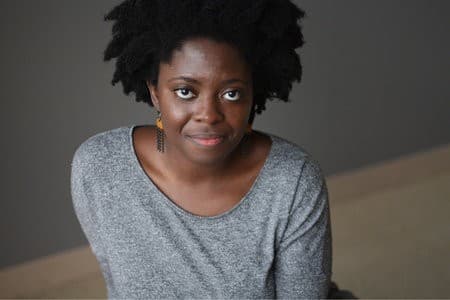
Yaa Gyasi is a Ghanaian-American novelist. Her debut novel Homegoing, published in 2016, won her, at the age of 26, the National Book Critics Circle's John Leonard Award for best first book, the PEN/Hemingway Award for a first book of fiction, the National Book Foundation's "5 under 35" honors for 2016 and the American Book Award. She was awarded a Vilcek Prize for Creative Promise in Literature in 2020.







