“Sometimes the world is too big. And sometimes it is too small.”
— Kek reflects on his feelings of displacement and loneliness in America.

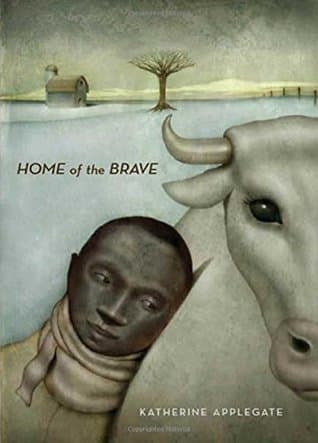
Katherine Applegate (2007)
Genre
Children's / Historical Fiction / Young Adult
Reading Time
250 min
Key Themes
See below
Sign in to track this book
Orphaned and alone, a young African refugee navigates the Minnesota winter and the newness of America, finding warmth and family amidst the snow and a cow named 'family'.
Kek, a young boy from Sudan, arrives in Minnesota during a harsh winter, having survived the war that claimed his father and brother. He meets his uncle, Abdi, who is already settled in America. Kek immediately notices the unfamiliar cold, the snow, and the vast, impersonal airport. He struggles with English, relying heavily on Abdi to translate the confusing new world. His first impressions are a mixture of awe and fear, as he deals with the loss of his family and the contrast between his African village and this modern country. Abdi tries to explain 'refugee' and the complexities of their new life, but Kek's mind is still processing the trauma and the foreignness of everything.
Kek begins to adjust to his new life, which includes attending an American school. He meets Hannah, a girl from Liberia who lives in the same foster home as his cousin, Ganwar. Hannah is at first cautious but becomes a supportive friend, helping Kek with school and language barriers. Kek struggles with English, feeling isolated and misunderstood by his teachers and classmates. He tries to communicate his experiences and feelings, often using metaphors from his past life, which confuses those around him. The school bus, cafeteria, and classroom are all new to him, making him feel his displacement and loneliness, despite Abdi's help.
While exploring, Kek finds a rundown farm on the edge of town. There, he sees an old, neglected cow, which brings back memories from his past in Sudan, where cattle were central to his family's life. He names the cow 'Goliat,' which means 'family' in his language. The farm is owned by an elderly woman named Lou, who is struggling to maintain it and is thinking of selling Goliat. Kek feels a connection to Goliat, seeing in her a reflection of his lost home and family. He begins to secretly visit the farm, caring for the cow and finding comfort in her presence, a small piece of his old world in the new.
Wanting to save Goliat, Kek asks Lou if he can work on her farm. Lou, at first hesitant, agrees, and Kek begins doing various chores, despite his inexperience with American farm equipment. He works hard, cleaning the barn, feeding Goliat, and helping with other tasks, all while learning new words and customs. His efforts are not just about the cow; they are also a way for him to feel useful and connected in a world where he often feels helpless. He earns a small wage, which he saves, believing that if he earns enough money, he can prevent Goliat from being sold, thus keeping a piece of his cultural heritage and emotional comfort.
Throughout his adjustment, Kek's main concern remains his missing mother. Abdi often visits the refugee agency, making calls and inquiries, but news is slow and often discouraging. Kek holds onto a strong hope that his mother is alive and will join him. He often draws pictures of her, keeping her image in his mind. The uncertainty of her fate is a constant ache, underlying all his new experiences. Abdi tries to prepare Kek for the possibility of bad news, but Kek's resilience and belief in his mother's survival remain strong, fueled by memories and a child's optimism.
As winter gets colder, the snow becomes a major problem. Kek sees Lou struggling with an old, broken snow plow. Using his natural mechanical ability and a desire to help, Kek tries to fix it. With some guidance from Lou and much trial and error, he gets the plow working. This experience is a turning point for Kek. It not only helps Lou but also gives Kek a sense of accomplishment and a useful skill in his new environment. It shows his ability to adapt and contribute, bridging the gap between his old life and the demands of his new one.
Kek's cousin, Ganwar, at first seems distant and angry, dealing with his own trauma of losing his hand in the war and seeing his family die. Over time, as Kek shares his hopes and fears, Ganwar begins to open up. He tells Kek about the violence he endured and the constant struggle to find peace in America. This shared vulnerability creates a stronger bond between the cousins. Ganwar, who has been in America longer, offers Kek insights into the challenges of assimilation and the lasting pain of their past, helping Kek feel less alone in his grief and confusion. They find common ground in their shared refugee experience and the longing for their lost home.
Despite Kek's efforts and the money he has earned, Lou tells him she has no choice but to sell Goliat. The farm is too much for her to manage, and she can no longer afford the cow. This news devastates Kek, who sees Goliat as his last link to his homeland and his family. He feels a deep sense of powerlessness and loss, like the forced separations he experienced in Sudan. Lou, seeing Kek's distress, tries to explain the practicalities, but for Kek, it's another painful lesson in the impermanence of things and the realities of his new life.
Upon hearing about Goliat's impending sale, Hannah, Ganwar, Abdi, and Lou recognize the deep emotional meaning the cow holds for Kek. They decide to work together to find a suitable new home for Goliat, one where she won't be slaughtered. Hannah uses her connections to find a local sanctuary farm that takes in animals. This collective effort shows the growing community and support system Kek has built around himself. It's a moment of hope and shared humanity, showing Kek that even in this new, often cold world, there are people who care and are willing to help.
After months of uncertainty, Abdi receives the news: Kek's mother has been found alive in a refugee camp and will come to America. The joy and relief are immense, but also mixed with the understanding that she, too, will carry the scars of their past. Kek, now more confident in his English and his ability to navigate his new world, is ready to welcome her. The book ends with Kek and his family, including Hannah, Ganwar, and Lou, watching the snow melt, symbolizing the end of winter and the start of a new chapter for Kek and his mother in their new home, filled with memories and new possibilities.
The Protagonist
From a bewildered, grieving refugee, Kek gradually learns to adapt to American culture, builds new friendships, and finds hope for his future.
The Supporting
Abdi's initial burden of responsibility for Kek evolves into a shared journey of hope and community building.
The Supporting
Hannah evolves from a cautious observer to a steadfast, empathetic friend and advocate for Kek.
The Supporting
Lou's initial isolation and practicality soften as she comes to appreciate Kek's unique spirit and the connection he forms with her farm.
The Supporting
Ganwar's initial bitterness and isolation gradually give way to a deeper connection with Kek and a glimmer of hope.
The Mentioned
Goliat's fate parallels Kek's journey, from being lost and neglected to finding a new, safe home.
The Supporting
Her unknown status creates the central tension, culminating in her discovery and the promise of reunion.
The book explores the loss experienced by refugees. Kek grieves for his father, brother, and the life he knew in Sudan. This grief appears in his confusion, his longing for his mother, and his connection to the cow, Goliat, as a symbol of his lost past. Ganwar's anger and withdrawal also come from his own traumatic losses. The story shows that while life moves on, the effects of loss remain, shaping characters' identities and their search for comfort. The constant uncertainty about Kek's mother's fate is a central part of this theme, showing how unresolved grief can affect every part of a new life.
“How can I be brave in a world so new and strange?”
Kek's journey is about finding a new identity and belonging in a foreign land. He struggles with language, customs, and feeling like an outsider. His efforts to care for Goliat and work on Lou's farm are attempts to create purpose and connection, like his past. The friendships he forms with Hannah and Ganwar, who share similar experiences, help him feel less alone. Finding his place involves adapting to America and integrating his past experiences and cultural heritage into his new self, ending with the reunion with his mother and the acceptance of his new community.
“I will learn these new words. I will learn this new world.”
Despite great hardship and loss, hope drives Kek. His belief that his mother is alive fuels his determination to adapt and find strength. His resilience is clear in his willingness to learn English, work on the farm, and build new relationships. The book shows the human ability to endure trauma and still look towards a brighter future. The eventual discovery of Kek's mother and the community's efforts to save Goliat show hope winning over despair, demonstrating that new beginnings are possible even after devastation.
“Hope is a thing with feathers. It sits in my heart.”
The novel portrays the challenges of the immigrant and refugee experience. From culture shock and language barriers to the bureaucratic difficulties of resettlement, Kek's story offers a look into the difficulties faced by those forced to leave their homes. It also shows the generosity and compassion of host communities, as seen in the kindness of Lou, Hannah, and Abdi's dedication. The book explores cultural assimilation versus preservation, the longing for home, and the process of building a new life while honoring one's past.
“This new world is a puzzle. I try to fit the pieces.”
The idea of family goes beyond blood relatives in the novel. While Kek longs for his immediate family, he gradually builds a new community that offers him support and belonging. Abdi, Ganwar, Hannah, and Lou all become part of Kek's extended 'family.' The efforts to save Goliat, which means 'family' in Kek's language, symbolize this broader understanding of community and the idea that family can be found in unexpected places. The reunion with his mother reinforces the importance of biological family, but the journey also emphasizes the role of chosen family and supportive networks in healing and thriving.
“Goliat. It means family. It means everything.”
Narrative told from Kek's perspective using free verse poetry.
The entire novel is written in free verse poetry, narrated by Kek in the first person. This stylistic choice allows readers to experience Kek's thoughts, feelings, and cultural perspective directly and intimately. The poetic form, with its sparse language and evocative imagery, effectively conveys Kek's struggle with English, his profound sense of loss, and his unique way of seeing the world. It provides a window into his internal world, making his confusion, hope, and resilience deeply personal and accessible, while also mirroring the fragmented nature of his new experiences and memories.
The cow represents Kek's lost home, family, and cultural heritage.
Goliat, the neglected cow Kek finds on Lou's farm, is a powerful symbol throughout the narrative. In Kek's Sudanese culture, cattle are central to life, representing wealth, status, and family. For Kek, Goliat becomes a living link to his past, a tangible piece of his lost world. His dedication to caring for her and his desperate attempts to save her from being sold symbolize his efforts to hold onto his identity, heal from his trauma, and find a sense of purpose and belonging in America. Her eventual rehoming signifies the possibility of finding new 'family' and a safe place in his new life.
The harsh Minnesota winter mirrors Kek's internal state and external challenges.
The brutal Minnesota winter serves as a pervasive metaphor for Kek's initial experience in America. The cold, snow, and ice represent the harshness, unfamiliarity, and emotional chill he feels as a refugee. The struggle against the elements—learning to navigate snow, dealing with frozen landscapes—parallels his struggle to adapt to a new culture and overcome his grief. As the story progresses and Kek begins to find warmth in friendships and hope for his mother's arrival, the melting of the snow and the arrival of spring metaphorically represent his own thawing, healing, and the promise of new beginnings.
Kek's struggle with English highlights his isolation and the challenges of assimilation.
The language barrier is a central plot device, emphasizing Kek's isolation and the immense challenges faced by immigrants. His internal narration, though in English for the reader, constantly references his difficulty understanding and being understood. This device creates moments of confusion, humor, and pathos. It highlights how language is not just about words, but about culture, connection, and identity. Kek's gradual acquisition of English words and phrases marks his slow but steady progress in adapting to his new home and building bridges with those around him, symbolizing his journey towards integration.
“Sometimes the world is too big. And sometimes it is too small.”
— Kek reflects on his feelings of displacement and loneliness in America.
“I am a boy from Africa. I am a boy who has seen too much.”
— Kek introduces himself, hinting at his traumatic past in Sudan.
“A cow is a cow, but a cow is also a friend.”
— Kek finds comfort and connection with a cow on a farm, reminiscent of his past life.
“In America, there is too much of everything and not enough of nothing.”
— Kek observes the overwhelming abundance and pace of American life.
“Hope is a fragile thing, like a bird's egg in your hand.”
— Kek reflects on maintaining hope despite his difficult circumstances.
“Words are like birds. They can fly away before you catch them.”
— Kek struggles with learning English and expressing himself.
“Home is not a place on a map. Home is a place in your heart.”
— Kek realizes that home is more about emotional connection than geography.
“The sky in America is the same sky as in Africa. That is a comfort.”
— Kek finds a small piece of familiarity in the vastness of the sky.
“Bravery is not the absence of fear. It is doing what you must despite it.”
— Kek reflects on the true meaning of courage as he faces new challenges.
“A smile can be a bridge between two worlds.”
— Kek learns the power of simple human connections in bridging cultural gaps.
“Memories are like shadows. They follow you everywhere.”
— Kek acknowledges how his past experiences continue to shape his present.
“In the silence, I hear the voices of those I left behind.”
— Kek feels the weight of loss and separation from his family and homeland.
“Every day is a new page in a book you are writing with your life.”
— Kek embraces the idea of starting anew and shaping his own future.
“The heart is a stubborn thing. It hopes even when the mind knows better.”
— Kek describes the conflict between his rational thoughts and emotional hopes.
Ready to see how well you understood this book? Take our interactive quiz with 10 questions.
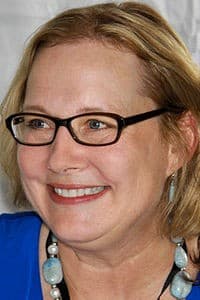
Biography coming soon.

Dan Gemeinhart
4.5

Kate O'Hearn
4.4

Jeanne Birdsall
4.4

Jen Wang
4.4

Wendelin Van Draanen
4.3

John Marsden
4.3

Chris Van Allsburg
4.3

Jennifer A. Nielsen
4.2