“Isma was free. To be. To do.”
— Isma reflecting on her newfound independence after years of caring for her siblings.


Kamila Shamsie (2018)
Genre
Literary Fiction
Reading Time
360 min
Key Themes
See below
Sign in to track this book
Two British Muslim sisters face devastating choices about love and loyalty after their brother joins ISIS and the son of a powerful politician enters their lives, linking two families forever.
Isma Pasha, the oldest of three siblings, finally escapes the burden of raising her younger sister, Aneeka, and brother, Parvaiz, after their mother's death. She accepts a scholarship to study sociology in Amherst, Massachusetts, a long-held dream. Before leaving London, British intelligence interrogates Isma, a result of her family's past: their father, Adil Pasha, was a jihadist. This questioning, about her brother Parvaiz's recent disappearance, hints at the danger and suspicion that will follow the Pasha siblings, despite Isma's efforts to start a new life in America.
While in Amherst, Isma meets Eamonn Lone, a charming and wealthy young man. He is the son of Karamat Lone, a British Home Secretary who has strong views on terrorism and is Muslim. Their first meeting is awkward, as Eamonn mistakenly thinks Isma is a waitress. However, they soon connect, bonding over their shared British-Pakistani background, though from very different social levels. Eamonn likes Isma's intelligence and strength, while Isma finds herself captivated by his easy confidence and kindness, a contrast to her years of worry.
Eamonn returns to London after his time in America. Isma, hoping to keep their new connection, gives him Aneeka's contact information. Eamonn and Aneeka, a striking and independent law student, quickly begin an intense romantic relationship. Their affair is physical and emotionally consuming, becoming the main part of Aneeka's life. Eamonn does not know that Aneeka has a hidden reason for being with him: she thinks he can help find her missing brother, Parvaiz, who she suspects has gone to Syria to join a jihadi group, following their father.
Parvaiz, feeling lost and wanting a sense of belonging and purpose, is influenced by Farooq, an extremist recruiter. Farooq uses Parvaiz's insecurities and his desire to connect with the past of his deceased jihadi father, Adil Pasha, whom Parvaiz never knew. Believing he is going to Turkey for a sound engineering job, Parvaiz is tricked into crossing the border into Syria, where he finds himself in Raqqa, the main city of ISIS. He quickly understands the harsh reality of his situation, far from the ideal of brotherhood and purpose he was promised.
Aneeka, desperate to save Parvaiz, tells Eamonn's father, Karamat Lone, about her relationship with Eamonn and her brother's situation during a televised interview. She publicly asks for help, using her closeness with Eamonn to pressure the Home Secretary. However, Karamat Lone, unwilling to risk his political career and tough-on-terror image, publicly denies any connection to the Pasha family and refuses to help. This effectively dooms Parvaiz and destroys Aneeka's hopes and her relationship with Eamonn, who feels used.
Eamonn is deeply hurt and angered by Aneeka's manipulation, feeling used and betrayed. He ends their relationship, unable to accept her actions with his feelings for her. Meanwhile, Parvaiz, now very disappointed with ISIS and scared for his life, makes a desperate attempt to escape Raqqa. He records a video message for his sisters, expressing his regret and love, and tries to reach the Turkish border, helped by a contact. His escape is dangerous, and he is always aware of the severe results if ISIS catches him.
Despite his efforts, ISIS fighters catch Parvaiz while he tries to escape Raqqa. They accuse him of treason. In a public event, Parvaiz is beheaded, an act filmed and shared online as propaganda. This brutal event reaches the Pasha sisters, devastating them and confirming their worst fears. The news solidifies the family's tragic connection to extremism and shatters any remaining hope of Parvaiz's return, leaving Aneeka and Isma to deal with grief and public scrutiny.
After Parvaiz's execution, Aneeka begins a public act of mourning. She travels to Turkey, determined to get her brother's body and bring him home for burial, believing it is a basic human right. However, the British government, led by Karamat Lone, refuses to return Parvaiz's remains, calling him a terrorist. This refusal increases Aneeka's anger and sense of injustice, turning her personal grief into a political statement and bringing international media attention to her situation. Isma, though critical of Aneeka's methods, supports her sister.
Feeling guilty about his part in Aneeka's public humiliation and Parvaiz's fate, Eamonn travels to Turkey. He needs to make amends and reconcile. He finds Aneeka, who is on a hunger strike outside the British embassy, demanding the return of Parvaiz's body. Eamonn, now estranged from his father, tries to close the gap between them, offering support and renewed devotion. He hopes to convince Aneeka to end her hunger strike and to find a way to honor Parvaiz's memory, even as the political stalemate continues.
In a shocking ending, Eamonn, trying to show his love and support for Aneeka, is killed. While walking with Aneeka in a public park in Istanbul, a car bomb targets and kills him. A radicalized person, possibly linked to the same extremist groups that drew in Parvaiz, carried out the attack. The explosion is a horrific end to the intertwined fates of the Pasha and Lone families, leaving Aneeka devastated and Karamat Lone in deep grief and political ruin, as violence and extremism claim another life.
The Protagonist/Supporting
From a responsible caretaker seeking escape, Isma evolves into a witness and survivor, forced to confront her family's tragic destiny and her own complicity in their narrative.
The Protagonist/Supporting
Aneeka transforms from a student in love to a grieving sister consumed by defiant protest, ultimately becoming a tragic figure of loss and resistance.
The Supporting
Parvaiz's arc is one of naive aspiration leading to disillusionment and a desperate, ultimately failed, attempt at redemption.
The Protagonist/Supporting
Eamonn's journey moves from privileged detachment to deep emotional entanglement, culminating in a selfless act of love and a tragic sacrifice.
The Antagonist/Supporting
Karamat's arc depicts a man whose political ambition ultimately leads to profound personal loss and public humiliation, shattering his carefully constructed image.
The Mentioned
His legacy, though static in the past, actively shapes the present and future of his children, leading to their tragic fates.
The Supporting
Farooq serves as the catalyst for Parvaiz's tragic journey, embodying the destructive force of extremist ideology.
The Supporting
Her arc is static, serving as a witness to the unfolding tragedy and the unraveling of her family.
The novel explores the struggle for identity, especially for second-generation immigrants caught between cultures and pasts. The Pasha siblings deal with their father's jihadi history, which affects their present and future. Parvaiz seeks belonging in extremism, Aneeka in defiant love and protest, and Isma in academic study and a new life in America. Eamonn also struggles with his identity as a British Muslim and the son of a powerful politician. The characters constantly figure out who they are based on their family history, religion, and national loyalty, often feeling alienated or misunderstood.
“What is the point of a family if you don't stand by them?”
A main theme is the conflict between personal love and family loyalty, and the demands of political ideas or national security. Aneeka's strong love for Parvaiz leads her to manipulate Eamonn, pitting her personal loyalty against Eamonn's family and political goals. Karamat Lone's political ambition and his 'tough on terror' stance make him disown Parvaiz, sacrificing human kindness for public image. The novel shows how these forces meet, leading to severe outcomes and revealing the moral compromises made when love and loyalty are against larger, often harsh, political stories.
“There are people who will always be on the side of justice, and people who will always be on the side of their own.”
The novel shows the destructive effects of Islamic extremism and radicalization. Parvaiz's trip to Raqqa, driven by a misguided search for identity and a connection to his father's past, is a clear warning. The initial appeal of brotherhood quickly gives way to the harsh reality of ISIS, leading to his disappointment and death. The novel also shows how the fear of extremism affects innocent lives, leading to surveillance, suspicion, and the dehumanization of those connected to it, like the Pasha family, showing the wide-reaching effects of such ideas.
“He'd wanted to be part of something, and now he was part of nothing.”
Kamila Shamsie looks at the strong and often misleading role of media in shaping public opinion and stories. Aneeka's public hunger strike and her televised plea for Parvaiz's body turn her personal grief into a political spectacle. Karamat Lone's carefully built public image and his use of media to criticize the Pasha family show how politicians use communication for their own purposes. The novel reveals how personal tragedies can be exaggerated, misunderstood, and used by the media, taking away people's humanity and simplifying complex situations into biased headlines.
“The camera loved her. It loved her grief, her defiance, her beauty.”
The novel examines how trauma passes through generations, specifically how the controversial history of Adil Pasha, the jihadi father, continues to affect his children's lives. Isma, Aneeka, and Parvaiz are constantly judged and watched because of their father's actions, even though they were children when he left. Parvaiz's tragic decision to follow his father is a direct result of this history and his desire to understand it. The story shows how one generation's choices can place heavy burdens and unavoidable destinies on the next, creating a cycle of pain and suspicion.
“It was impossible to escape the shadow of a man you had never known.”
The lives of the Pasha and Lone families become inextricably linked, reflecting each other's struggles.
The novel masterfully intertwines the destinies of the Pasha siblings and the Lone family. Both families are British Muslims, but represent vastly different social and political positions. The relationship between Isma and Eamonn, and then Aneeka and Eamonn, directly connects these worlds. The mirroring is evident in the fathers: Adil Pasha, the jihadi, and Karamat Lone, the anti-terror Home Secretary, both powerful figures who profoundly impact their children. This device highlights the universal human struggles of identity, love, and loyalty, regardless of political affiliation or social standing, and underscores how personal choices can have far-reaching political consequences.
Parvaiz's video message serves as a crucial emotional and plot device.
Before his capture and execution, Parvaiz records a video message for his sisters. This video serves as a poignant and direct window into his regret, fear, and enduring love for his family. It humanizes him, contrasting sharply with the dehumanizing propaganda videos later released by ISIS. The video also functions as a plot device, offering his sisters, and the reader, a final, intimate connection to Parvaiz and confirming his disillusionment with extremism. It underscores the theme of communication and miscommunication, and the powerful impact of personal testimony versus public narrative.
Key events are amplified and distorted by public and media attention, driving the narrative.
Shamsie frequently uses public spectacles and media coverage as a driving force in the plot. Aneeka's televised interview and public hunger strike, Karamat Lone's press conferences, and the circulation of Parvaiz's execution video are all instances where personal tragedies are thrust into the public eye. This device highlights how individuals become symbols in larger political narratives, how personal grief can be politicized, and how media can both expose injustice and contribute to its perpetuation. It underscores the theme of public perception versus private reality.
The narrative structure and themes echo Sophocles' 'Antigone'.
The novel explicitly draws parallels to Sophocles' ancient Greek tragedy 'Antigone', particularly through Isma's studies. This allusion frames the central conflict: Aneeka's defiant insistence on burying her brother, Parvaiz, despite the state's prohibition (mirroring Antigone's defiance of Creon's decree). Karamat Lone embodies the inflexible state authority, prioritizing law and order over familial and religious rites. This intertextual device elevates the personal story to a universal exploration of civil disobedience, moral law versus state law, and the tragic consequences when these forces collide, giving the narrative a timeless and mythic resonance.
The deceased jihadi father, Adil Pasha, is a powerful, unseen presence.
Adil Pasha, the absent and deceased father of the three siblings, is a crucial plot device despite never appearing directly. His legacy is the inciting incident for many of the family's struggles: the constant surveillance, Parvaiz's radicalization, and the public's judgment of the family. His ghost looms over every decision and interaction, symbolizing the enduring impact of a controversial past on the present. This device effectively conveys themes of intergenerational trauma and the inescapable nature of one's origins, even when those origins are deeply problematic.
“Isma was free. To be. To do.”
— Isma reflecting on her newfound independence after years of caring for her siblings.
“He was a moth drawn to the flame of her.”
— Describing Aneeka's intense attraction to Eamonn.
“Loyalty to blood or loyalty to country—that was the choice.”
— Parvaiz grappling with his divided allegiances between family and nation.
“The world was full of doors, and he had chosen the wrong one to walk through.”
— Parvaiz realizing the consequences of his decision to join ISIS.
“She was a woman who had learned to build her own walls.”
— Isma's resilience and self-protection after hardships.
“Grief is not a line, carrying you infinitely further from loss. It is a circle, surrounding you at all times.”
— Aneeka mourning her brother Parvaiz's death.
“To be British is to be a part of something, but to be Muslim is to be apart from something.”
— Exploring the dual identity and alienation felt by British Muslims.
“He wanted to be a hero in a story, but he had become a villain.”
— Parvaiz's disillusionment with his path and self-perception.
“Love makes you do things you never thought yourself capable of.”
— Aneeka's extreme actions to save her brother Parvaiz.
“The state sees only what it wants to see, and hears only what it wants to hear.”
— Critique of government surveillance and bias against Muslims.
“Home is not a place, but the people you cannot live without.”
— Reflecting on the meaning of home for the displaced family.
“In the end, we are all stories. Tell yours well.”
— A message about controlling one's narrative in the face of stereotypes.
“Fear is a country. We are all its citizens.”
— Commenting on the pervasive atmosphere of fear in modern society.
“She wore her loneliness like a crown.”
— Describing Isma's dignified but isolated existence.
Ready to see how well you understood this book? Take our interactive quiz with 10 questions.
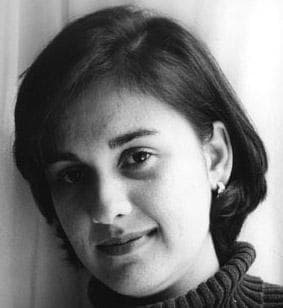
Kamila Shamsie FRSL is a Pakistani and British writer and novelist who is best known for her award-winning novel Home Fire (2017). Named on Granta magazine's list of 20 best young British writers, Shamsie has been described by The New Indian Express as "a novelist to reckon with and to look forward to." She also writes for publications including The Guardian, New Statesman, Index on Censorship and Prospect, and broadcasts on radio.







