“Human beings make life so interesting. Do you know, that in a universe so full of wonders, they have managed to invent boredom.”
— Death observing humanity.

Terry Pratchett (1996)
Genre
Fantasy
Reading Time
9-10 hours
Key Themes
See below
Sign in to track this book
When Death takes an unexpected holiday, his granddaughter Susan must step into the sleigh to save Hogswatch and reality itself from the consequences of humanity losing its belief.
The Auditors, cosmic beings who dislike humanity's messy, illogical nature, decide that the Hogfather, Discworld's Santa Claus, is an irrational concept that must be eliminated. They contract the Guild of Assassins, specifically the assassin Mr. Teatime, to undertake the task. Teatime, a meticulous and disturbing man, begins to orchestrate the Hogfather's demise, starting with the removal of his Tooth Fairies. Meanwhile, Death, sensing an imbalance, finds himself unable to locate the Hogfather on Hogswatch Eve, prompting him to take on the role himself to ensure the sun rises the next day.
With the Hogfather missing and belief in him fading, Death is forced to wear a red suit, a fake beard, and a cushion to play the part. Accompanied by his steed Binky and his raven, Quoth, Death delivers presents, attempting to mimic the Hogfather's jolly persona, though his deliveries are often met with confusion or terror. His granddaughter, Susan Sto Helit, a governess with a practical view of the world despite her supernatural heritage, senses that something is deeply wrong. She notices the growing presence of 'monsters under the bed' and other childhood fears becoming more tangible.
Susan, inheriting her grandfather Death's common sense and ability to see things others cannot, becomes disturbed by the growing reality of childhood fears. She confronts her grandfather, who admits to his temporary role as the Hogfather and explains the situation: if belief in the Hogfather dies, the sun may not rise. Susan, initially skeptical, agrees to investigate. Her journey takes her to the Unseen University, where she seeks help from the wizards, particularly the Librarian and Hex, the sentient computer, to understand belief and the fading of anthropomorphic personifications.
Mr. Teatime's plan goes beyond simply eliminating the Hogfather. He aims to replace him with new, more 'rational' entities. He uses a twisted form of magic, involving stolen teeth from the Tooth Fairy's castle, to create new personifications of mundane concepts like the 'Oh God of Hangovers' and the 'Cheerfulness of the World.' His ultimate goal is to create a 'God of Bloody Assassination,' a being born from the collective belief in his own genius and the fear he instills. He manipulates the Tooth Fairy's domain, transforming it into his base of operations, and captures the actual Tooth Fairy to further his scheme.
Susan, guided by her instincts and the strange manifestations of childhood fears, tracks the source of the disturbance to the Tooth Fairy's castle. She is joined by Albert, Death's manservant, who possesses unexpected combat skills from his past life. They navigate the labyrinthine corridors of the castle, which is now corrupted by Teatime's influence. They encounter animated nightmares and the remnants of stolen teeth, each containing a fragment of a child's belief. Susan realizes the extent of Teatime's power and the danger he poses to reality itself.
As Teatime's plan progresses, the Auditors, previously only orchestrators, begin to manifest more directly. They communicate with Teatime, guiding his actions and reinforcing his belief in their shared goal of a 'rational' universe. They are the ultimate beneficiaries of the Hogfather's demise, hoping to replace the messy, belief-driven reality with one governed purely by logic and numbers. This revelation solidifies the cosmic scale of the threat, showing that Teatime is not merely a rogue assassin but a tool in a much larger, existential conflict.
Within the corrupted Tooth Fairy's castle, Teatime successfully performs the rituals to bring his new, conceptual gods into existence. These include the 'Oh God of Hangovers,' a perpetually miserable entity, and the 'God of Indigestion.' More disturbingly, he attempts to create the 'God of Bloody Assassination,' a being of pure, logical destruction, born from his own twisted genius and the collective fear of assassins. The castle becomes a nexus of dangerous personifications, threatening to unravel the established order of belief and reality on Discworld.
Susan, armed with a poker and her common sense, confronts Mr. Teatime in the Tooth Fairy's castle. She finds him in the midst of his dark rituals, surrounded by his creations. A fierce and chaotic battle ensues, with Susan using her unique abilities to manipulate reality and perception against Teatime's calculated cruelty and magical prowess. She sees through his illusions and challenges his twisted logic, demonstrating that even cold rationality is vulnerable to the messy, unpredictable power of human belief and the determination of a governess protecting the world.
While impersonating the Hogfather, Death grapples with belief and its necessity. He witnesses the impact of the Hogfather on children and the subtle ways their belief shapes reality. He realizes that the Hogfather is a vital anthropomorphic personification, like himself, representing a fundamental concept. His interaction with a little girl who asks if 'he's really real' forces Death to articulate the importance of believing in things that aren't strictly true, because without them, there would be no reason to believe in things that are. He understands that belief underpins the entire Discworld.
Following Susan's defeat of Teatime, the Hogfather is freed from his ethereal prison. The disruption caused by Teatime's plan and the Auditors' interference begins to recede. The Hogfather, though weakened, is able to resume his duties just in time for Hogswatch. His return signifies the triumph of belief and imagination over cold, sterile logic. The children's belief, though temporarily wavering, is restored, ensuring the continuation of Hogswatch and the stability of Discworld's anthropomorphic personifications. The world is safe, for another year at least, from the encroaching rationality of the Auditors.
In the aftermath, Susan and Death discuss the events and the implications of belief. Death explains to Susan that belief in things like the Hogfather, the Tooth Fairy, and even himself, is essential because it allows humanity to believe in larger, abstract concepts like justice, mercy, and hope. Without the 'little lies,' people cannot learn to believe in the 'big lies' that make society function. The experience solidifies Susan's understanding of her role in the world, caught between the mundane and the metaphysical, and her responsibility to protect the essential fictions that underpin reality.
Although the Auditors' immediate plan to eliminate the Hogfather and impose their logic on Discworld is foiled, they are not completely defeated. Their influence recedes, but they remain a persistent, unseen threat, ever watchful for opportunities to strip away the messy, illogical beliefs that define humanity. Their retreat is a temporary setback, highlighting the ongoing struggle between chaos and order, imagination and pure rationality, that constantly plays out on Discworld. The events of Hogswatch Eve serve as a reminder of their continued presence and the vigilance required to keep them at bay.
The Protagonist
Susan evolves from a reluctant participant who denies her heritage to embracing her unique abilities to protect the fabric of reality.
The Protagonist/Supporting
Death gains a deeper understanding of the vital role of 'little lies' in sustaining 'big lies' and the importance of human belief.
The Antagonist
Teatime remains unredeemed, a force of pure, twisted logic, ultimately defeated but not changed.
The Supporting
The Hogfather's arc is one of near-extinction and eventual restoration, highlighting the fragility and resilience of belief.
The Supporting
Albert's arc shows his unwavering loyalty and unexpected competence when Death or the world is threatened.
The Antagonist
The Auditors remain static in their malevolent intent, serving as a persistent, existential threat to Discworld's vibrant chaos.
The Supporting/Mentioned
The Tooth Fairy is initially a victim, but her existence is ultimately preserved by the heroes' actions.
The Supporting
Hex consistently provides essential, if sometimes obscure, information that aids the protagonists in their quest.
This is the central theme of 'Hogfather.' The novel explores how human belief, even in 'little lies' like the Hogfather, creates and sustains reality on Discworld. Without belief, anthropomorphic personifications like the Hogfather (and even Death) cease to exist, leading to a breakdown of fundamental concepts like the sun rising or justice prevailing. The Auditors represent the opposite extreme: a universe devoid of the messy, irrational, but ultimately essential power of belief. Death's realization that 'if you don't believe in the little lies, you can't believe in the big ones' encapsulates this idea, showing how belief in Santa figures leads to belief in justice and mercy. The entire plot hinges on the idea that belief is a tangible, creative force.
“And you think there's no meaning to it all? You think it's all just a random accident? Then you have to believe in the little lies. Because if you don't believe in the little lies, you can't believe in the big ones. Like 'justice' or 'mercy' or 'duty.'”
'Hogfather' looks at the Discworld concept of anthropomorphic personifications – abstract ideas made real by collective human belief. Characters like Death, the Hogfather, and the Tooth Fairy are not just metaphors; they are actual beings whose existence and powers are directly tied to how much people believe in them. The story highlights the fragility of this reality, as the Auditors attempt to dismantle it by eradicating belief. Teatime's plot to create new, darker personifications (like the 'Oh God of Hangovers') further illustrates this theme, showing that belief can create both benevolent and malevolent entities. The novel suggests that reality is not fixed but is constantly shaped by collective consciousness.
“Humans need fantasy to be human. To be the place where the falling angel meets the rising ape.”
The conflict between the Auditors and humanity (represented by Susan and Death) is a battle between pure, sterile logic and the often chaotic power of imagination and belief. The Auditors seek a universe of absolute order, where everything is quantifiable and predictable, without emotions and irrationality. In contrast, Discworld thrives on its illogical quirks, its myths, and its capacity for wonder. Mr. Teatime, with his disturbing, cold logic, is the perfect human agent for the Auditors, attempting to systematize the impossible. The narrative champions the necessity of imagination, even if it leads to 'untrue' things, as vital for human experience and the functioning of the world.
“A world that was safe was a world that was ordered. A world that was ordered was a world that was dead.”
This theme explores the idea that seemingly trivial, comforting fictions – the 'little lies' like Santa Claus or the Tooth Fairy – are not just harmless fantasies, but important steps for understanding and believing in larger, more abstract concepts. Death explicitly states that believing in the Hogfather is a prerequisite for believing in 'justice' or 'mercy' or 'duty.' These small acts of faith teach humanity how to conceptualize and uphold societal values. The story argues that stripping away these 'little lies' would leave a void where the 'big lies' (the foundations of civilization) once stood, leading to a morally bankrupt and meaningless existence.
“You need to believe in things that aren't true. How else can they become?”
Childhood innocence and the way children perceive the world play a role. The belief of children is the primary fuel for anthropomorphic personifications like the Hogfather and the Tooth Fairy. The story shows how Mr. Teatime's methods corrupt this innocence, turning childhood fears into tangible monsters and manipulating youthful belief. Susan, as a governess, is a protector of children, and her fight against Teatime is a fight to preserve the magic and wonder of childhood against cynical, destructive rationality. The novel celebrates the importance of allowing children to believe in magic and wonder, as it shapes their capacity for empathy and broader belief.
“There are no monsters under the bed, Susan. Just a few little bits of old fluff, and the odd lost sock. And perhaps a few small fears, but they're not monsters. Not really. They're just… things that might happen.”
Abstract concepts given physical form and agency.
This is a core Discworld conceit. In 'Hogfather,' the existence and power of characters like Death, the Hogfather, and the Tooth Fairy are entirely dependent on collective human belief. They are not merely symbolic but are actual beings that maintain the fabric of reality. The device allows Pratchett to explore philosophical concepts (like belief, justice, and the nature of reality) through tangible, relatable characters, making abstract ideas concrete and giving them a direct stake in the story's conflict.
The direct consequence of diminishing belief is the disappearance of personifications and societal concepts.
The central conflict is driven by the threat of the Hogfather's disappearance due to waning belief. This plot device establishes a direct, cause-and-effect relationship between human belief and the stability of reality. It creates urgency and stakes, as the characters understand that if the Hogfather vanishes, other, more crucial concepts like the sun rising or justice itself could follow. It transforms an abstract philosophical idea into a concrete, world-ending danger, forcing the protagonists into action.
A source of magical knowledge, ancient lore, and unexpected solutions.
The Unseen University serves as a repository of magical and metaphysical knowledge, often providing the 'how-to' or 'why' behind Discworld's fantastical elements. When Susan needs to understand the nature of belief and anthropomorphic personifications, it's to the wizards and Hex that she turns. The University, despite its often-inept faculty, functions as a plot device for exposition, revealing crucial lore and occasionally offering magical solutions or insights that advance the narrative, bridging the gap between the mundane and the magical investigations.
A magical location that stores memories and beliefs, crucial to the antagonist's plan.
The Tooth Fairy's castle acts as both a setting and a critical plot device. It's not just a dwelling; it's a vast repository of children's teeth, which are revealed to contain fragments of their memories and beliefs. This makes it a powerful magical nexus, essential for Mr. Teatime's plan to create new personifications by manipulating these stored beliefs. The castle's labyrinthine nature and its corruption by Teatime's magic provide a suspenseful, dangerous environment for Susan's investigation and the final confrontation, showcasing the tangible power of belief.
Death temporarily filling the role of the Hogfather.
This device serves multiple purposes. Firstly, it provides much of the novel's humor, as Death struggles to emulate human jollity and festive behavior. Secondly, it allows Death, a character typically detached from human emotion, to experience firsthand the importance of the Hogfather and the impact of belief on children. This direct experience deepens his understanding of humanity and the crucial role of 'little lies,' which is vital for the story's thematic resolution. It also ensures the continuation of Hogswatch, preventing immediate catastrophic consequences.
“Human beings make life so interesting. Do you know, that in a universe so full of wonders, they have managed to invent boredom.”
— Death observing humanity.
“All right, I'm not stupid. I know it's not a *real* Hogfather. But... what if we stopped believing in him?”
— Susan Sto Helit considering the implications of belief.
“And anyway, if you stopped telling people it was a set of rules, they'd just think it was a lot of magic.”
— Death explaining the nature of rules and reality.
“You can't give her a doll that's already got a soul. It's just... wrong.”
— Susan reacting to the idea of giving a gifted doll to a child.
“Light thinks it travels faster than anything but it is wrong. No matter how fast light travels, it finds the darkness has always got there first, and is waiting for it.”
— Death pondering the nature of light and darkness.
“He just wanted to be... a normal person. With all the normal problems. Not a god. Not a king. Just a man.”
— Mr. Teatime's motivation.
“The Hogfather isn't a person. He's a belief. And if you don't believe, then he isn't.”
— Susan explaining the nature of the Hogfather to her grandfather.
“WHERE IS THE JUSTICE IN THAT? Death is not just. Death is merely... inevitable.”
— Death's response to the concept of justice in his role.
“And what would humans be without love? GULLIBLE, said Death. Death had a point.”
— A conversation about humanity's core emotions.
“If you don't turn them into a story, they're just a lot of facts.”
— Death explaining the importance of narrative.
“It's not a question of believing. It's a question of making people believe.”
— Mr. Teatime discussing the power of belief.
“Children, of course, are the ultimate arbiters of reality. They see things as they are, not as they should be.”
— Narration on the perspective of children.
“You need to believe in things that aren't true. How else can they become?”
— Susan's conversation with Death about the nature of belief and reality.
“The universe doesn't have a plan. It just... does.”
— Death reflecting on the nature of existence.
“A lie can go halfway around the world before the truth can even get its boots on.”
— A general observation on the spread of misinformation.
Ready to see how well you understood this book? Take our interactive quiz with 10 questions.
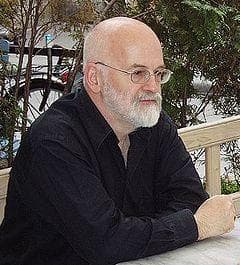
Sir Terence David John Pratchett was an English humorist, satirist, and author of fantasy novels, especially comical works. He is best known for his Discworld series of 41 novels.







