“I’m not a monster. I’m a human being. And I’m in love. How many times do I have to say it before you believe me?”
— Joe's internal monologue, justifying his actions and perception of love.

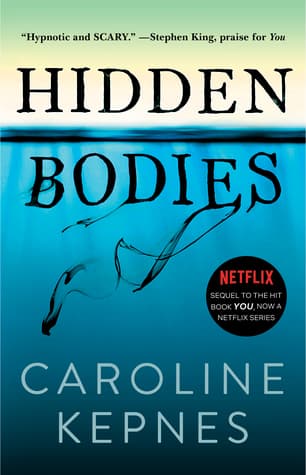
Caroline Kepnes (2016)
Genre
Thriller / Mystery
Reading Time
9-10 hours
Key Themes
See below
Sign in to track this book
Joe Goldberg flees his bloody past to Los Angeles, only to find his new life and pursuit of 'true love' threatened by the very bodies he thought he'd left buried.
After believing he had murdered Candace Stone, Joe Goldberg is shocked when she reappears, very much alive, at a party in New York. Panicked and fearing exposure for his past crimes, particularly the murder of Guinevere Beck, Joe hastily decides to flee the East Coast. He sells his bookstore, Mooney's, and packs up his life, leaving behind the constant reminders of his past obsessions and violent acts. His destination is Los Angeles, a city he perceives as a place of reinvention and anonymity, where he hopes to escape his murderous tendencies and find a fresh start, free from the ghosts of Beck and Candace.
In Los Angeles, Joe finds a job at a quirky independent bookstore called The Fiction Annex. He rents a small apartment and tries to immerse himself in the L.A. lifestyle, including attempting to write a screenplay. He quickly becomes fixated on his neighbor, Delilah Alves, an aspiring journalist and a single mother. Joe begins to stalk Delilah, learning about her routines, her work, and her personal life, all while convincing himself that his intentions are pure and that this time, he will be different. He sees Delilah as intelligent and grounded, a stark contrast to his past romantic interests, and believes she could be the one to truly understand him.
Joe attends a party at the exclusive Soho House, a place he initially scoffs at for its superficiality. There, he meets Love Quinn, an aspiring chef and a free-spirited woman from a wealthy Hollywood family. Love is intelligent, beautiful, and shares Joe's love for books, quickly captivating him. Their connection is immediate and intense, and Joe feels an overwhelming sense of destiny, believing he has finally found his soulmate. He quickly shifts his focus from Delilah to Love, convinced that this relationship is his true shot at redemption and a normal life, despite the lingering shadows of his past.
Joe is quickly integrated into the wealthy and eccentric Quinn family. He meets Love's parents, who are indulgent but detached, and her twin brother, Forty Quinn, a struggling screenwriter and recovering addict with a volatile personality. Forty is immediately suspicious of Joe, viewing him as a threat to Love and their family's fragile dynamic. Joe finds himself constantly trying to impress Love's family while simultaneously managing Forty's erratic behavior and veiled threats. He sees their wealth and privilege as a stark contrast to his own humble beginnings, adding another layer of complexity to his efforts to fit in and be accepted.
Just as Joe believes he is building a perfect life with Love, his past literally walks back into his life: Candace Stone, who has tracked him to Los Angeles. Candace is no longer a victim; she is determined to expose Joe for the murderer he is and protect Love from his manipulative clutches. She infiltrates Joe's social circle, befriending Love and subtly planting seeds of doubt about Joe. Candace's presence throws Joe into a spiral of paranoia and fear, forcing him to consider desperate measures to keep his secrets buried and maintain his facade of normalcy for Love.
Joe, in an attempt to protect Love from a predatory celebrity, Henderson, ends up killing him. Later, Delilah, fueled by her journalistic ambition, begins to investigate Henderson's disappearance, sensing foul play. She starts to piece together clues, drawing closer to Joe's involvement. Her probing questions and keen observations make Joe nervous, as she lives right next door and has access to his life. Joe knows that Delilah is intelligent and persistent, making her a significant threat to his new identity and his relationship with Love.
As Delilah's investigation into Henderson's disappearance intensifies, she uncovers incriminating evidence linking Joe to the crime. Feeling cornered and desperate to protect his relationship with Love, Joe resorts to his familiar method of containment. He lures Delilah into a soundproof glass cage he has secretly built in a storage unit, intending to keep her there until he can figure out a permanent solution. This act marks a significant regression for Joe, demonstrating that despite his desires for a fresh start, his violent tendencies remain, and he is willing to commit heinous acts to preserve his perceived happiness.
While Delilah is trapped, Joe leaves her to go on a trip with Love. During this time, Candace confronts Joe, revealing her plan to expose him. In a shocking turn of events, Love intervenes, killing Candace to protect Joe. Love then confesses her own dark past, revealing that she murdered her childhood au pair, Sophia, and later killed her and Forty's previous nanny, Calvin, to protect Forty. She admits to having known about Joe's secrets all along, having researched him extensively. This revelation shatters Joe's perception of Love as an innocent angel, exposing her as equally, if not more, disturbed than himself.
Upon returning to Los Angeles, Joe and Love find Delilah still alive in the cage. Love, fearing Delilah will expose them both, murders Delilah to ensure their secret is kept. Shortly after, Forty, who has been piecing together clues and is now convinced Joe is a murderer, confronts Joe at The Fiction Annex. Forty, armed with a gun, is determined to expose Joe and save Love from him. He reveals his knowledge of Joe's past, including Beck's murder, and threatens to tell Love everything he knows, putting Joe in an impossible situation.
As Forty confronts Joe, Love arrives at The Fiction Annex. The situation escalates into a tense standoff. Forty, distraught and enraged, is about to expose Joe when a private investigator hired by the Quinn family, who has been tracking Forty, bursts in and shoots Forty, killing him instantly. The investigator, believing he is protecting Love from Forty's erratic behavior, inadvertently saves Joe. Joe and Love quickly concoct a story to cover up the events, framing Forty's death as a tragic accident or self-defense. They manage to manipulate the narrative, once again escaping justice for their crimes.
Following the chaotic events, Love reveals she is pregnant with Joe's child. They decide to leave Los Angeles behind and move to a quiet, affluent suburb, seeking a fresh start and a semblance of normalcy for their growing family. Joe tries to embrace the suburban dad role, but he quickly finds himself restless and unfulfilled. Despite having a seemingly perfect life with Love and their unborn child, Joe's need for obsession and control resurfaces. He spots a new neighbor through a fence, already beginning to fixate on her, signaling that his dark cycle of obsession and violence is far from over.
The Protagonist/Antagonist
Joe attempts to reinvent himself in L.A., but his inherent nature and past catch up to him, culminating in his acceptance of a partner equally disturbed as himself, rather than true change.
The Supporting/Antagonist
Love transforms from Joe's idealized vision of innocence into his equally dark and complicit partner, revealing her own murderous past.
The Supporting/Antagonist
Candace evolves from a past victim into an active, vengeful force seeking to expose Joe, only to become a victim of Love's protection.
The Supporting
Delilah transforms from a background character into a determined investigator, ultimately becoming a victim of Joe and Love's combined efforts to protect their secrets.
The Supporting
Forty initially acts as an unpredictable obstacle for Joe, but gradually uncovers Joe's true nature, leading to a fatal confrontation.
The Mentioned/Antagonist
Henderson serves as an initial target for Joe's 'justice', and his disappearance triggers a chain of events that exposes Joe's crimes.
The Supporting
Dottie remains largely oblivious to the true extent of her children's dark natures, serving as a symbol of the superficiality of the L.A. elite.
The novel explores the idea that one cannot truly escape their past or inherent nature, especially when it comes to deeply ingrained psychological patterns. Joe moves to Los Angeles, a city synonymous with reinvention, hoping to shed his murderous tendencies and become a 'good' man for Love. However, his old habits of stalking, obsession, and violence quickly re-emerge, culminating in him building another cage and committing more murders. The return of Candace and the discovery of Love's own dark past further solidify that Joe's attempts at a fresh start are ultimately futile, as he's drawn to, and creates, the same toxic dynamics.
“The problem with hidden bodies is that they don’t always stay that way. They re-emerge, like dark thoughts, multiplying and threatening to destroy what Joe wants most: true love.”
Central to the novel is Joe's twisted understanding of love, which is extreme obsession, stalking, and ultimately, murder. He idealizes his romantic interests, projecting onto them qualities he desires, and then becomes dangerously possessive. This theme is amplified by the revelation of Love Quinn's own similar pathology. Their relationship is not one of healthy love, but a shared, co-dependent madness where they enable each other's darkest impulses, justifying violence in the name of 'protecting' their love. It highlights how the pursuit of an idealized romantic fantasy can lead to horrific actions.
“You are the one. The person I have been waiting for my whole life. The one who understands.”
Los Angeles, particularly the affluent and celebrity-obsessed circles Joe encounters, is a superficial world where appearances are everything and genuine connection is rare. Joe frequently critiques the vapidness of L.A. culture, from the influencer lifestyle to the self-help gurus and aspiring screenwriters. The Quinn family, despite their wealth and social standing, embodies this superficiality, with their detached parenting and focus on image. This environment ironically allows Joe to blend in and hide his true nature, as people are often too self-absorbed to notice the darkness beneath the surface, making it fertile ground for his manipulations.
“L.A. is full of people who want to be someone else. I can hide here. I can be anyone.”
The novel explores how individuals rationalize and justify their evil actions. Joe constantly narrates his internal monologue, presenting himself as a hero who is merely eliminating obstacles to his happiness or protecting the women he loves from 'bad' people. The shocking twist of Love's own murderous past further complicates this theme, showing that evil can exist in seemingly innocent people, and that justification can become a shared delusion. Both Joe and Love believe they are acting out of love, blurring the lines between right and wrong, and suggesting that evil is often born from a distorted sense of righteousness.
“I am not a bad person. I am a good man who does bad things to protect the people I love.”
Joe Goldberg's first-person perspective shapes and distorts the reader's understanding of events.
The entire novel is narrated through Joe Goldberg's internal monologue, providing a biased and self-serving account of his actions and motivations. Joe constantly rationalizes his stalking, manipulation, and murders, portraying himself as a romantic hero rather than a serial killer. This device forces the reader into Joe's disturbed mindset, making them privy to his justifications and skewed perceptions, which creates a disturbing intimacy and suspense. The unreliability deepens when Love's true nature is revealed, highlighting how much Joe's own narrative has been a delusion, even to himself.
A physical manifestation of Joe's need for control and containment.
The soundproof glass cage, first introduced in 'You' and repurposed in 'Hidden Bodies' for Delilah, is a recurring symbolic and literal plot device. It represents Joe's ultimate tool for control, allowing him to imprison and silence those who threaten his carefully constructed reality. It physically isolates his victims, mirroring his psychological isolation and his inability to truly connect with others. The presence of the cage signifies Joe's regression to his most violent tendencies, even as he attempts to start anew, proving that he cannot escape his past methods.
Candace Stone's unexpected reappearance shakes Joe's world and reveals his past crimes.
The shocking return of Candace Stone, whom Joe believed he had murdered, serves as a major catalyst for the plot. This device immediately establishes that Joe's past is not truly buried and that his attempts at a fresh start are doomed. Candace acts as a direct threat to Joe's new life, forcing him to confront his previous crimes and adding immense pressure and paranoia. Her reappearance also sets up the dramatic reveal of Love's true nature, as Love ultimately kills Candace to protect Joe, demonstrating a shared pathology.
The reader is aware of Joe's true nature while other characters remain oblivious.
Dramatic irony is prevalent throughout the novel, as the reader is privy to Joe's murderous thoughts and actions, while most characters around him, particularly Love in the initial stages, perceive him as charming and harmless. This creates tension and suspense, as the reader anticipates when and how Joe's true nature will be revealed, or how he will manage to evade detection. The irony is compounded by Joe's internal judgments of others' superficiality, while he himself is the most dangerous manipulator, hiding in plain sight.
“I’m not a monster. I’m a human being. And I’m in love. How many times do I have to say it before you believe me?”
— Joe's internal monologue, justifying his actions and perception of love.
“The problem with meeting new people is that they're not you.”
— Joe's cynical view on human connection and his own uniqueness.
“You can be whoever you want to be in Los Angeles. Unless you're already someone.”
— Joe's observation about the transient and superficial nature of identity in L.A.
“I’m a good person. I know it. And I’m going to prove it to you.”
— Joe's internal declaration, a recurring theme of self-justification.
“Every time I think I’m done with love, it pulls me back in.”
— Joe's internal struggle with his obsessive nature and the concept of love.
“The internet is a beautiful thing. It’s a mirror. It shows you exactly what you want to see.”
— Joe reflecting on how he uses the internet to gather information and manipulate perceptions.
“You don't just fall in love. You climb. You claw your way up.”
— Joe's intense and aggressive view on the pursuit of love.
“I’m not a stalker. I’m a romantic.”
— Joe's common self-rebranding of his disturbing behaviors.
“There are two kinds of people in the world: those who understand and those who judge.”
— Joe's internal categorization, placing himself among those who 'understand' his actions.
“Some people are just meant to be together. And some people are just meant to be alone.”
— Joe's fatalistic outlook on relationships and destiny.
“You think you know a person. Then you see them on Instagram.”
— Joe's cynical view of social media revealing or distorting true identities.
“The past is never really past. It’s a ghost that follows you.”
— Joe's realization about the inescapable nature of his history and actions.
“I don't want to be happy. I want to be with you.”
— Joe's twisted prioritization, equating love with possession over genuine well-being.
“Everyone has secrets. It's just a matter of how well they hide them.”
— Joe's general belief about human nature and the hidden aspects of people's lives.
Ready to see how well you understood this book? Take our interactive quiz with 10 questions.

Caroline Kepnes is the author of the critically acclaimed novels "You" and "Hidden Bodies," which explore dark psychological themes and obsessive relationships. Her work is known for its sharp, suspenseful prose and unflinching look at the complexities of human desire. Kepnes's writing has been lauded for its originality and has been adapted into a popular television series.







