“If I am out of my mind, it's all right with me.”
— Early in the novel, Herzog's internal monologue reflecting on his mental state.


Saul Bellow (1961)
Genre
Literary Fiction
Reading Time
540 min
Key Themes
See below
Sign in to track this book
Plagued by academic and marital ruin, Moses Herzog desperately scribbles unsent letters, a modern Job wrestling with his own spectacular failures and the absurdities of the age, all while clinging to a defiant, if crumbling, sense of self.
Moses E. Herzog, a middle-aged intellectual and former professor, is in a state of mental and emotional disarray at his dilapidated country home in Ludeyville, Massachusetts. He is consumed by writing unsent letters to friends, enemies, historical figures, and even God, trying to make sense of his recent personal catastrophes. His second marriage to Madeleine has ended disastrously; she has taken their daughter, June, and is now living with his former best friend, Valentine Gersbach. Herzog's academic career has stalled, his finances are in ruins, and he feels a deep sense of betrayal and intellectual inadequacy. He reflects on his past and present, oscillating between self-pity, anger, and philosophical musings, all while grappling with the overwhelming urge to justify his existence and explain his suffering.
Driven by his restless mind and a need for connection, Herzog travels to New York City. He stays with his current mistress, Ramona Donsell, a warm and sensual flower shop owner who offers him solace and practical support. Despite her affection, Herzog remains emotionally distant, his mind preoccupied with Madeleine and Gersbach. He revisits old haunts, including his former apartment, which triggers memories about his tumultuous relationship with Madeleine, her theatrical ambitions, and the intellectual circles they once moved in. He also meets with his brother, Willie, who expresses concern about Moses's mental state and financial stability, urging him to take legal action regarding his divorce.
In New York, Herzog engages with his lawyers, Simkin and Himmelstein, who are advising him on the divorce proceedings. He finds their legalistic approach frustrating and feels misunderstood, believing they cannot grasp the nuanced intellectual and emotional complexities of his situation. He then visits his aging father, who is suffering from dementia, in a nursing home. This visit is deeply moving for Herzog, confronting him with the fragility of life and the inevitability of decay. He reflects on his childhood, his immigrant parents' struggles, and his own failures as a son, husband, and father, intensifying his feelings of guilt and inadequacy, and fueling his existential crisis.
Herzog travels to Chicago, partly to see his children, June and Marco, but also driven by an escalating sense of paranoia and a nascent desire for revenge against Madeleine and Gersbach. He buys a pistol, contemplating using it, but his intellectual and moral sensibilities war with his violent impulses. While in Chicago, he is struck by the urban landscape and the diverse characters he encounters, which further fuel his philosophical observations. He visits the apartment where Madeleine and Gersbach live and, peering through a window, witnesses Gersbach bathing June, a scene that fills him with a complex mixture of tenderness, rage, and jealousy, causing him to drop the pistol.
After the disturbing encounter in Chicago, Herzog drives erratically, his mind racing with conflicting thoughts and emotions. He gets into a minor car accident, which, combined with his increasingly erratic behavior and the pistol found in his car, leads to his apprehension by the police. He is subsequently hospitalized in a mental institution, though he is not formally committed. During his time there, he continues his internal monologues and letter-writing in his mind, struggling to reconcile his intellectual convictions with his emotional turmoil. This period is a critical moment of forced introspection, pushing him further into his own psyche.
Following his release from the hospital, Herzog returns to Ludeyville, seeking refuge and clarity at his country estate. The quiet solitude of the decaying house and overgrown grounds offers a stark contrast to the chaotic urban environments he has recently inhabited. He continues to grapple with his past, his failures, and the philosophical questions that plague him. However, there's a subtle shift in his mental state; the intensity of his suffering begins to wane, and he starts to find a degree of peace in his isolation. He reflects on his intellectual pursuits, his relationships, and the nature of human existence, slowly moving towards a more accepting perspective.
Herzog's siblings, Shura and Willie, visit him in Ludeyville, concerned about his well-being and the state of his affairs. Shura, ever the practical and nurturing sister, tries to organize his chaotic life and encourages him to eat properly and take care of himself. Willie, despite his own business troubles, offers financial assistance and practical advice. Their visit highlights Herzog's deep-seated family ties and the enduring love and concern they hold for him, even as they struggle to understand his unique intellectual and emotional struggles. Their presence is a grounding force, reminding Herzog of his place in the world beyond his own internal dramas.
Madeleine visits Herzog in Ludeyville, ostensibly to discuss their daughter, June, but the encounter quickly devolves into a tense and emotionally charged confrontation. Herzog confronts her about her betrayal with Gersbach and her manipulation, while Madeleine, in turn, accuses him of being a bad husband and an impractical intellectual. The conversation is a painful airing of grievances, revealing the deep-seated resentments and misunderstandings that characterized their marriage. Despite the bitterness, the encounter also brings a sense of closure for Herzog, as he finally articulates his feelings and begins to detach himself emotionally from her.
Ramona Donsell, Herzog's mistress, visits him in Ludeyville. Her presence brings a welcome warmth and sensuality to his otherwise solitary existence. She understands his eccentricities and offers him companionship without demanding emotional intensity. Her practical nature and genuine affection provide a contrast to the intellectual and emotional turmoil Herzog has experienced with Madeleine. While Herzog is still deeply immersed in his thoughts, Ramona's visit represents a glimmer of hope for a more stable and fulfilling future, suggesting the possibility of a different kind of relationship built on mutual affection and understanding, rather than intellectual sparring or destructive passion.
As the novel concludes, Herzog remains in Ludeyville, the pace of his internal monologue slowing, the urgency of his letter-writing diminishing. He no longer feels the pressing need to explain himself to the world or to his tormentors. He has begun to accept his past, his failures, and his own complex nature. The philosophical questions that once plagued him still linger, but they no longer overwhelm him. He finds a quiet contentment in the simple acts of daily life, observing nature, and reflecting on the beauty and absurdity of existence. He has not found definitive answers, but he has found a measure of peace, a quiet acceptance of his own suffering and the human condition.
The Protagonist
Herzog moves from a state of acute mental and emotional collapse, consumed by rage and self-pity, towards a fragile but significant acceptance of his circumstances and a quieter, more observant engagement with life.
The Antagonist/Supporting
Madeleine remains largely static, a force of chaos and betrayal in Herzog's life, though her final confrontation with him offers a form of mutual, albeit bitter, reckoning.
The Antagonist/Supporting
Gersbach serves primarily as a catalyst for Herzog's suffering and a symbol of betrayal, his character remaining largely a fixed point of antagonism.
The Supporting
Ramona consistently offers stability and affection, representing a potential future for Herzog, though his ability to fully embrace it remains uncertain.
The Supporting
June remains a static symbol of innocence and parental love, her presence serving to highlight Herzog's emotional vulnerabilities.
The Supporting
Willie consistently provides practical and emotional support, serving as a stable, concerned family member.
The Supporting
Shura remains a consistently nurturing and practical presence, offering unwavering familial support.
The Supporting/Mentioned
These characters serve as a static representation of the legal system, embodying a practical, unfeeling approach to Herzog's complex emotional turmoil.
Herzog grapples with the relevance and utility of intellectualism in a chaotic modern world. He is a man of vast knowledge, constantly seeking to understand and explain, yet his intellect fails to prevent his personal catastrophes or provide solace. His unsent letters are a sign of this struggle, an attempt to engage with the great minds of history while his own life crumbles. This theme is evident in his frustration with his lawyers, who cannot comprehend his 'higher' concerns, and his own self-doubt about the value of his academic pursuits in the face of raw human suffering and betrayal.
“What does it take to be a man? To be a man, you must be a man. What does it take to be a human being? To be a human being, you must be a human being.”
The novel is deeply rooted in Herzog's sense of betrayal by his wife, Madeleine, and his best friend, Valentine Gersbach. This betrayal is not merely a domestic drama but a catalyst for his existential crisis, forcing him to re-evaluate his understanding of friendship, love, and loyalty. His rage and resentment fuel much of his letter-writing and his erratic behavior, particularly his contemplation of violence in Chicago. The memory of Gersbach bathing June encapsulates the depth of this betrayal, fusing sexual jealousy with paternal protectiveness, and highlighting the devastating impact it has had on his psyche.
“A good man in a bad time, or a bad man in a good time? The terms were too simple.”
Herzog's frantic letter-writing and philosophical inquiries are a desperate attempt to find meaning in his suffering and to connect with others, both living and dead. He grapples with questions about existence, God, and the human condition. Despite his intellectual prowess, he yearns for genuine human connection, whether it's the sensual comfort of Ramona, the practical concern of his siblings, or the imagined dialogue with historical figures. His journey from isolated despair in Ludeyville to a fragile acceptance reflects his ongoing, if often clumsy, search for a way to belong and to understand his place in the universe.
“But what is the philosophy of this generation? No philosophy. Only feeling. Only suffering.”
The line between Herzog's intellectual intensity and genuine mental instability is constantly blurred. His erratic behavior, the volume of his unsent letters, and his brief hospitalization raise questions about his sanity. However, Bellow suggests that Herzog's 'madness' is also a form of intense sensitivity and a refusal to accept conventional reality. His internal monologues, while chaotic, are often insightful, challenging the reader to consider whether his suffering is a pathology or a heightened awareness of human absurdity. His eventual return to a quieter, more accepting state suggests a reconciliation rather than a cure.
“If I am out of my mind, it's all right with me.”
Herzog explores the complexities and failures of love and marriage through Moses's two failed unions. His first marriage, though less detailed, is marked by his initial scholarly focus. His second, with Madeleine, is a passionate but ultimately destructive intellectual and emotional battleground. The novel dissects the power dynamics, intellectual sparring, and ultimate resentments that can destroy a relationship. Herzog's reflections on love are often cynical, yet his longing for genuine connection, evident in his relationship with Ramona and his deep love for June, persists, suggesting a nuanced view of love's potential for both devastation and salvation.
“Love, that's the one thing that makes us human. And the one thing that can destroy us.”
Herzog's primary mode of internal monologue and external engagement.
The unsent letters are the central structural and thematic device of the novel. They serve as Herzog's stream of consciousness, allowing the reader direct access to his intellectual musings, emotional turmoil, and attempts to explain his suffering to an imagined audience of friends, enemies, historical figures, and even God. These letters are not meant to be read by their recipients; rather, they are a therapeutic outpouring, a way for Herzog to process his experiences, justify his actions, and engage in a continuous philosophical debate with himself and the world. They reveal his erudition, his neuroses, and his desperate search for meaning.
A narrative technique mirroring Herzog's chaotic and associative thought process.
The narrative employs a stream of consciousness technique, reflecting Herzog's fragmented, associative, and often overwhelming thought process. The reader is immersed directly in Herzog's mind, experiencing his rapid shifts between past and present, philosophical abstraction and mundane detail, self-pity and intellectual grandeur. This device is inextricably linked to the unsent letters, as the letters themselves are manifestations of this internal flow. It creates an intimate, if sometimes disorienting, portrait of a man on the verge of a breakdown, allowing Bellow to explore the depths of Herzog's psyche and the complexities of his intellectual and emotional life without strict chronological or logical constraints.
A narrative perspective that stays close to Herzog's thoughts but maintains a slight distance.
While heavily relying on stream of consciousness, the novel is told from a third-person limited omniscient perspective, primarily focusing on Herzog's inner world. This allows the narrative to delve deeply into his thoughts, feelings, and memories, giving the reader a rich understanding of his subjective experience. However, the 'third-person' aspect also maintains a subtle distance, preventing the reader from being completely subsumed by Herzog's potentially unreliable perspective. This slight detachment allows for a more nuanced portrayal of Herzog, enabling the reader to observe his flaws and follies even as they empathize with his suffering, and to question the validity of some of his self-justifications.
The physical environments mirror Herzog's mental and emotional landscapes.
The various settings in the novel—Herzog's dilapidated country house in Ludeyville, the bustling and chaotic New York City, and the grimy, threatening Chicago—serve as external reflections of Herzog's internal state. Ludeyville, with its decay and isolation, mirrors his mental disarray and withdrawal. New York represents his intellectual past and his attempts to reconnect, while Chicago, with its urban harshness and the scene with Gersbach, embodies his rage and the threat of violence. As Herzog moves towards a more integrated self, the Ludeyville house, though still dilapidated, begins to offer a sense of quietude and acceptance, reflecting his internal shift.
“If I am out of my mind, it's all right with me.”
— Early in the novel, Herzog's internal monologue reflecting on his mental state.
“What do you want, Herzog? For God's sake, what do you want?”
— A recurring question Herzog asks himself, representing his internal struggle and lack of direction.
“I am a prisoner of the past, in a way.”
— Herzog reflecting on how past relationships and failures continue to haunt him.
“Truth, when you look for it, is often a thing you can't get your hands on.”
— Herzog's musings on the elusive nature of truth and understanding.
“A man's character is his fate.”
— Herzog's internal reflection on the relationship between personality and destiny.
“The world is too much with us, late and soon.”
— A direct allusion to Wordsworth, used by Herzog to express his feeling of being overwhelmed by modern life.
“I am a Jew, I am a Jew, I am a Jew.”
— Herzog's internal affirmation of his identity, often in moments of crisis or reflection.
“Reality is a dirty word.”
— Herzog's cynical view of the harshness and unpleasantness of objective reality.
“Suffering is the only experience that cannot be shared.”
— Herzog contemplating the isolation inherent in personal pain.
“He was a man who had lost his capacity for astonishment.”
— Herzog's self-assessment of his own jadedness and weariness.
“The world, the civilized world, has been filled with people who were, in a manner of speaking, dead.”
— Herzog's observation on the spiritual emptiness he perceives in modern society.
“You can't just be an individual anymore, you have to be part of a movement.”
— Herzog's lament about the pressure to conform to group identities in contemporary society.
“I must get back to my work. My work. What work? I have no work. I am a free man.”
— Herzog's internal struggle with purpose and the meaning of his academic career after his personal collapse.
“The human heart is a factory of idols.”
— Herzog's philosophical reflection on humanity's tendency to create false gods or ideals.
Ready to see how well you understood this book? Take our interactive quiz with 10 questions.
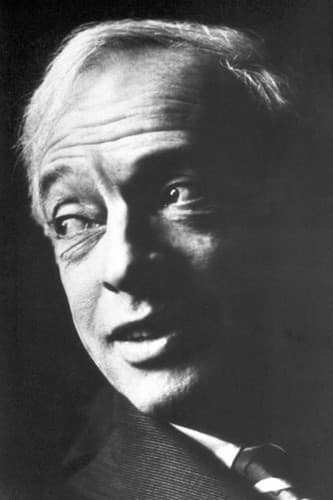
Saul Bellow was a Canadian–American writer. For his literary work, Bellow was awarded the Pulitzer Prize, the Nobel Prize for Literature, and the National Medal of Arts. He is the only writer to win the National Book Award for Fiction three times, and he received the National Book Foundation's lifetime Medal for Distinguished Contribution to American Letters in 1990.







