“Sometimes the greatest heroes are the ones no one remembers.”
— Francis reflecting on the nature of heroism and his own actions during the war.

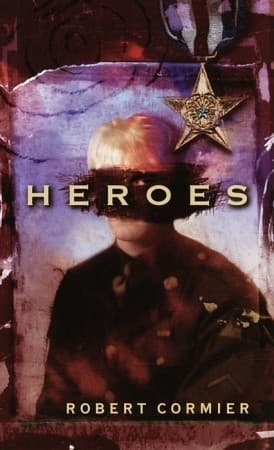
Robert Cormier (1998)
Genre
Thriller / Historical Fiction / Young Adult
Reading Time
180 min
Key Themes
See below
Sign in to track this book
A disfigured war hero returns home, not for glory, but for revenge against the man who ruined his life before the war began.
Eighteen-year-old Francis Joseph Cassavant, his face almost destroyed by a grenade, returns to Frenchtown. He carries a .45 caliber pistol and a clear goal: to kill Larry LaSalle. Francis, who received a Silver Star for his supposed heroism, feels no pride in the medal. He is a changed man, unrecognizable even to himself, and hides his disfigurement with bandages. He takes refuge in the desolate St. Jude's Church, once a comfort, now a symbol of his lost faith. His memories of Frenchtown are vivid, especially those of the Wreck Center and the charismatic Larry LaSalle, who once seemed good and admirable. Now, LaSalle is the target of his revenge.
Francis's mind goes back to his childhood in Frenchtown, specifically to the Wreck Center, a busy place for local kids. Larry LaSalle, a local hero and former boxing champion, ran the center. Larry was charismatic, kind, and a mentor for many, including Francis and his best friend, Joey LeBlanc. The Wreck Center was a place of innocence, where children learned to box, play games, and felt a sense of belonging under Larry's kind guidance. Francis remembers Larry teaching him to box, encouraging him, and seeming almost perfect in his young eyes. This contrast between past and present fuels his inner conflict.
Francis remembers when Nicole Renard arrived in Frenchtown, a beautiful and quiet girl who immediately drew him in. He was shy and awkward around her, but their bond grew through shared moments and a developing affection. Nicole was often at the Wreck Center, and Francis found himself drawn to her innocence and gentle nature. Their relationship was pure and uncertain, marked by simple gestures and unspoken understanding. He recalls walking her home, sharing secrets, and the growing hope that she might return his deep feelings. Nicole represented a future of possibility and happiness, a stark contrast to the darkness that now consumes Francis.
As the war grew, Francis, like many other young men from Frenchtown, felt a pull toward patriotism and a desire to escape their ordinary lives. Larry LaSalle, already a decorated war hero, was a strong inspiration. Francis, still dealing with his feelings for Nicole and a growing sense of not being good enough, saw enlisting as a way to prove himself, to become a hero like Larry, and perhaps to impress Nicole. He lied about his age to join the Marines, believing that bravery in battle would turn him into the man he wanted to be. His decision came from naive idealism and a need for approval.
The story moves to a key event: a dance at the Wreck Center just before Francis's deployment. This night, meant for celebration, becomes a nightmare. Francis, full of nervous excitement, hopes to tell Nicole how he feels. However, he finds her upset and quiet. Later, he discovers that Larry LaSalle, the man he admired most, raped Nicole in the Wreck Center office where he once offered guidance. This news shatters Francis's world, destroying his faith in Larry and forever changing his view of heroism and goodness. The innocence of his youth is lost in that single, terrible act.
The aftermath of the rape leaves Francis stunned. He feels a mix of shock, anger, and deep sadness for Nicole. He watches her retreat into herself, her spirit broken, and she eventually leaves Frenchtown. Francis feels immense guilt for not protecting her, and his admiration for Larry LaSalle turns into bitter hatred. The betrayal is not just against Nicole, but against every ideal Francis held dear. His decision to enlist, once driven by a desire for heroism, now becomes a desperate escape from the unbearable reality of what happened and his own perceived failure. The weight of this secret becomes a heavy burden.
Francis's war experience in the Pacific is brutal. He describes constant fear, violence, and the dehumanizing parts of combat. He no longer seeks glory but only survival. The worst part of his war journey happens during a battle where he deliberately falls on a grenade, not to save comrades, but to end his own life. The physical disfigurement he suffers is a direct result of this suicide attempt, leaving him with a destroyed face and a Silver Star for an act he sees as cowardly, not brave. The irony of his 'heroism' is clear to him.
Back in Frenchtown, Francis waits in St. Jude's Church, the .45 pistol in his lap. He knows Larry LaSalle still lives in town and that they will meet. The church, a place of childhood comfort, now sets the stage for his final act of revenge. He is a ghost, both physically and emotionally, and believes that only by confronting Larry can he find some peace or justice. He carefully plans his encounter, replaying past events and preparing himself to face the man who shattered his world. The weight of his past and the certainty of his mission press down on him.
Larry LaSalle eventually comes to the church, drawn by an unspoken understanding. To Francis's surprise, Larry also has a disfigurement: a leg wound from the war that has left him unable to walk properly and with a broken sense of self. Larry, at first appearing cheerful, quickly shows deep despair. He confesses to raping Nicole, but offers a twisted reason: he claims he wanted to 'spoil' her, to take away her innocence, because he believed innocence was fragile and led to heartbreak in a cruel world. He saw himself as a 'weeder,' removing beautiful, innocent flowers before life could crush them, a perversion of his earlier role as a protector.
After Larry's chilling confession, Francis, with his bandages still covering his face, raises the .45 pistol and shoots Larry LaSalle. The act is quick and final, completing the mission he came home to do. There is no struggle, no last plea from Larry. The gunshot echoes in the empty church, a sharp end to years of simmering hatred and pain. Francis feels a moment of grim satisfaction, but it is quickly overshadowed by the realization that revenge does not bring the peace or restoration he hoped for. The weight of his own actions now adds to his burden.
After Larry's death, Francis leaves the church, his mission complete but his heart still heavy. He does not try to escape or hide his actions. The story suggests he is ready to face the consequences. He reflects on the futility of his revenge, realizing that killing Larry did not restore Nicole's innocence or heal his own wounds. He is left with the same disfigured face and the same broken past, now with the added burden of murder. The story ends with Francis walking away, his future uncertain, but perhaps with a faint understanding of true heroism and the lasting impact of trauma.
The Protagonist
Francis transforms from an innocent boy into a vengeful, disfigured man, ultimately committing murder but finding no true peace, only a deeper understanding of the futility of revenge.
The Antagonist
Larry is revealed to be a false hero whose charm masks a predatory nature, ultimately confessing his dark philosophy before being killed.
The Supporting
Nicole's arc is one of shattered innocence and forced disappearance, her story serving as the catalyst for Francis's vengeance.
The Supporting
Joey's character remains largely static, serving as a reminder of Francis's lost innocence.
The Mentioned
Enzo's arc is not developed, serving as a minor character who highlights Francis's isolation.
The novel questions what heroism truly means. Larry LaSalle is a celebrated war hero, yet he commits a terrible act, showing his heroism to be false. Francis, on the other hand, receives the Silver Star for an act he saw as an attempted suicide. The story asks if heroism is an inner quality, a selfless act, or just a perception. It suggests that true heroism might be found in enduring suffering and seeking justice, rather than in medals or public praise, as seen in Francis's inner struggle and his final, imperfect act of revenge.
“I was a hero, but I was also a killer. And the world was full of heroes who were also killers.”
The theme of lost innocence runs through the entire story. Francis and Nicole, along with the Frenchtown community, start in a state of relative innocence, shown by the Wreck Center and the idealized Larry LaSalle. The rape of Nicole shatters this innocence, not just for her, but for Francis, who sees his hero corrupted and the girl he loves destroyed. The war further strips Francis of any remaining innocence, leaving him scarred physically and emotionally. The novel suggests that lost innocence can never truly be regained, leading to cynicism and a desire for payback.
“The innocence of the world was gone. It had been taken away, stolen, and I was left with the emptiness.”
Francis's entire journey is driven by a desire for revenge against Larry LaSalle. He believes that killing Larry will bring him peace, justice, or a sense of closure for Nicole's suffering and his own. However, after committing the act, he finds it offers no real comfort. Revenge does not restore what was lost, nor does it heal his wounds. Instead, it adds another layer of trauma and moral complexity to his already burdened life. The novel suggests that while revenge might be a strong motivator, it is ultimately an empty pursuit, unable to truly fix past wrongs.
“I thought that killing him would make me feel better, would make everything right. But it didn't. It just left me emptier than before.”
The physical and psychological scars of war are central to the novel. Francis's disfigured face is a literal sign of war's impact, but it also stands for his inner wounds and broken identity. Larry LaSalle also has a war wound, which he uses to justify his negative view of the world. The war is not praised but shown as a brutal, dehumanizing force that strips people of their innocence and forces them to face the darker parts of humanity. Both characters' combat experiences contribute to their brokenness and their later actions.
“The war had taken my face, but it had also taken something else, something inside me that I could never get back.”
The novel explores how easily people can be misled by appearances and charismatic personalities. Larry LaSalle is first seen as a perfect hero, a symbol of goodness in Frenchtown. His war medals, athletic skill, and mentorship create an illusion of moral uprightness. Francis, along with the entire community, falls for this. The breaking of this illusion when Larry's true, predatory nature is revealed highlights the danger of blind admiration and the ability of evil to hide behind a respectable front. It forces Francis to confront the complexity and hypocrisy of human nature.
“He was a hero. Everybody said so. But heroes can be monsters too.”
The story is told from Francis's perspective, alternating between past and present.
The novel uses a first-person retrospective narration, allowing Francis to recount his past experiences and memories while simultaneously detailing his present-day quest for revenge. This device provides deep insight into Francis's emotional state, his internal conflicts, and his distorted perception of events. The non-linear structure, constantly shifting between his innocent past and his scarred present, heightens the dramatic tension and emphasizes the profound impact of trauma and betrayal on his psyche. It allows the reader to understand the 'why' behind his actions.
Francis's destroyed face symbolizes his lost innocence and identity.
Francis's physically disfigured face is a powerful symbol throughout the novel. It represents his lost innocence, the trauma of war, and his shattered identity. The bandages he wears hide not only his physical wounds but also his emotional scars and his desire to remain anonymous. It also serves as a constant reminder of his attempted suicide, making his 'hero' status ironic. The disfigurement forces him to confront his true self, stripped of any superficial appearance, and highlights the internal brokenness that mirrors his external damage.
A place of childhood innocence that becomes a site of betrayal.
The Wreck Center initially symbolizes childhood innocence, community, and the benevolent influence of Larry LaSalle. It is a place of games, mentorship, and simple joys for the children of Frenchtown. However, it is within the walls of this very center, specifically Larry's office, that Nicole is raped. This transforms the Wreck Center into a symbol of corrupted innocence and profound betrayal, forever tainting Francis's memories of his youth and representing the shattering of his idealized world.
A physical manifestation of Francis's singular purpose for revenge.
The .45 caliber pistol is a potent symbol of Francis's unwavering commitment to revenge. It is introduced early in the novel as he returns to Frenchtown, immediately establishing his grim purpose. The pistol is not just a weapon but a physical manifestation of his hatred, his trauma, and his desperate need for retribution. Its presence creates a constant sense of impending violence and underscores the irreversible path Francis has chosen, leading directly to the novel's climactic act.
“Sometimes the greatest heroes are the ones no one remembers.”
— Francis reflecting on the nature of heroism and his own actions during the war.
“We were all just boys, really. And then the war came.”
— Francis reminiscing about his youth before he enlisted and the impact of WWII.
“Revenge is a dish best served cold, they say. But sometimes it just freezes you solid.”
— Francis contemplating his long-held desire for revenge against Larry LaSalle.
“The truth is a funny thing. Sometimes it's the last thing you want to hear.”
— Francis grappling with the painful truths he uncovers about Larry and himself.
“You can't go home again, not really. Because home changes, and so do you.”
— Francis's realization upon returning to Frenchtown after the war, finding it altered.
“Some wounds never heal. They just scar over, and you learn to live with the ache.”
— Francis's internal struggle with his physical and emotional scars from the war and the assault.
“A hero isn't someone who never makes mistakes. It's someone who tries to make things right.”
— Francis's evolving understanding of what it means to be a hero, particularly regarding his own actions.
“Silence can be a weapon, too. Just as deadly as any bullet.”
— Francis's observation about the secrets and unspoken truths that festered in Frenchtown.
“The past is never really past. It's always there, breathing down your neck.”
— Francis's constant struggle with the memories and events that shaped his life.
“Hope is a dangerous thing. It can make you believe in miracles that never happen.”
— Francis's cynical view of hope after experiencing so much pain and betrayal.
“We all wear masks, don't we? To hide who we really are, or who we think we are.”
— Francis reflecting on the public personas versus the private realities of himself and others.
“Sometimes, the greatest act of courage is simply to keep living.”
— Francis's quiet determination to survive and confront his past, despite his despair.
“You can't erase what's been done. But maybe you can change what happens next.”
— Francis contemplating the possibility of moving forward and finding some form of peace.
Ready to see how well you understood this book? Take our interactive quiz with 10 questions.
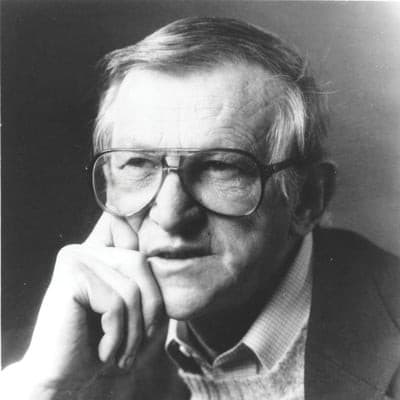
Biography coming soon.







