“The women of Herland were not content to merely exist; they were builders, thinkers, and creators.”
— A general observation about the society of Herland.

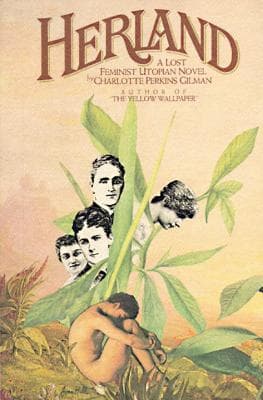
Charlotte Perkins Gilman (1915)
Genre
Fantasy / Science Fiction
Reading Time
147 min
Key Themes
See below
Sign in to track this book
Three male explorers find an isolated, all-female society, which challenges their ideas about gender, power, and civilization.
Vandyck Jennings, Terry Nicholson, and Jeff Margrave, three American men with different views on women, start an expedition into an unknown, mountainous region. Vandyck, the narrator, studies societies and is interested in a world without men. Terry is a rich, very masculine adventurer who thinks women are weaker and need male protection. Jeff is a kind, romantic idealist who admires women. They are driven by rumors of a hidden land populated only by women. Terry strongly dismisses this idea, while Jeff finds it intriguing. Their journey is dangerous, involving difficult land and an airship to cross the mountains, showing their strong desire to confirm the extraordinary legend.
After successfully crossing the mountain range, the three men see a highly cultivated, park-like land below. They parachute down, landing near a group of women who initially scatter. However, the women quickly regroup and, with surprising efficiency and strength, surround and capture the explorers. The men, despite their initial arrogance, find themselves completely outmatched. They are disarmed, their airship secured, and gently but firmly led away. This immediate capture challenges their old ideas about female weakness, setting a clear tone for their time in Herland.
The men are taken to a comfortable home, given food, clothing, and excellent care, but they are watched constantly and gently. They cannot speak due to a language barrier, so their 'hostesses' begin to teach them the Herland language using gestures, object lessons, and patient repetition. The women, especially Somel, Alima, and Ellador, are intelligent and observant, studying the men with scientific curiosity. The men, particularly Terry, struggle with losing their freedom and the reversal of traditional gender roles, feeling treated more like interesting children than conquerors.
As the men learn the language, they start to understand Herland's unique history. About 2,000 years ago, a volcanic eruption cut off their country from the rest of the world. At the same time, a war killed most of their male population, leaving only women. Through parthenogenesis, a virgin birth process, they managed to reproduce, ensuring their race survived. This history explains their deep respect for motherhood, their focus on collective well-being, and their lack of understanding of traditional male-female dynamics, including romantic love and warfare. The men are shocked by this, especially the idea of reproduction without men.
The men learn that Herland is a well-organized society focused on shared good, education, and raising children. There is no private property, no crime, and no government as they understand it. Instead, collective decisions are made for everyone's benefit. Children are raised together by expert 'mothers' and educators, ensuring every child receives the best care and training. The Herlanders value intelligence, cooperation, and efficiency. Their entire culture aims for continuous improvement and nurturing life. This is very different from the competitive, individualistic, and male-dominated societies the men come from.
After several months, the men propose marriage to three Herlander women: Vandyck to Ellador, Jeff to Celis, and Terry to Alima. Their attempts at traditional courtship are met with confusion and amusement by the women, who do not understand flirtation, jealousy, or romantic possessiveness. Jeff's gentle admiration somewhat resonates with Celis, but Terry's aggressive approach deeply offends Alima, who sees it as rude. Vandyck finds Ellador intellectually stimulating but struggles with her lack of traditional emotional responses and her scientific interest in his 'maleness.' The cultural gap between them regarding love and relationships is significant.
The Herlanders agree to the marriages, seeing them as a chance for further study and possible genetic diversity. Jeff and Celis find some happiness, with Celis appreciating Jeff's devotion, though she remains puzzled by his strong emotions. Vandyck and Ellador have deep intellectual discussions, with Ellador particularly interested in the 'outside world.' Terry's marriage to Alima, however, is a failure. His attempts to assert dominance and treat Alima as subordinate are met with her firm resistance. He sees her strength as a rejection of his masculinity, leading to increasing frustration.
Terry's inability to adapt to Herland's ways and his continued attempts to dominate Alima lead to a violent event. After Alima refuses his sexual advances, Terry tries to force himself on her, believing it is his right as a husband. Alima, strong and unaccustomed to such aggression, easily defends herself and alerts the community. The Herlanders, who do not understand sexual assault and see it as a serious break in their peaceful society, quickly decide Terry is a danger. He is gently but firmly escorted out of Herland, a clear consequence of his inability to change his patriarchal mindset.
After Terry's expulsion and the general realization that the men's presence is causing significant disruption, the Herlanders decide it is best for the remaining two men to leave. However, Ellador, driven by strong intellectual curiosity about the outside world and a desire to understand 'maleness' and the societies Vandyck describes, asks to go with him. The Herlanders, after careful thought, agree, seeing it as an opportunity for Ellador to learn and possibly bring back valuable knowledge. Vandyck and Ellador leave Herland, leaving Jeff and Celis behind, to begin a journey of mutual discovery in the wider world.
As Vandyck and Ellador travel, Vandyck reflects on how much Herland has changed him. He realizes how deeply ingrained his patriarchal assumptions were and how Herland's society, built on cooperation and intelligent design, offers a powerful alternative to the competitive and often destructive male-dominated world he knows. He begins to see the strengths of women that his own society often suppresses and the potential for a more harmonious existence. Ellador, in turn, offers a fresh, unbiased view of the 'outside world,' challenging Vandyck to rethink everything he once took for granted. Their journey together is a symbol of the potential for intellectual and social growth.
The Protagonist/Narrator
Van starts with intellectual curiosity but gradually undergoes a profound shift in his understanding of gender and society, becoming more egalitarian and appreciative of female strength.
The Antagonist/Foil
Terry remains largely unchanged, his rigid patriarchal views clashing irreconcilably with Herland's matriarchal values, leading to his rejection.
The Supporting Character
Jeff's idealized view of women is challenged and refined in Herland, leading to a more grounded, though still loving, relationship.
The Supporting Character
Somel remains a consistent representation of Herland's wisdom and stability, guiding the men's understanding without undergoing significant personal change.
The Supporting Character
Ellador's initial curiosity about the outside world evolves into a deeper understanding of human nature, leading her to leave Herland for further exploration.
The Supporting Character
Alima remains steadfast in her Herland values, successfully resisting Terry's attempts at domination and ultimately contributing to his expulsion.
The Supporting Character
Celis adapts to Jeff's gentleness, forming a stable, if culturally distinct, relationship, without abandoning her Herland values.
This theme explores how gender roles are shaped by society rather than being natural. Herland shows a society where traditional 'masculine' and 'feminine' traits, as understood by the explorers, are either missing, redefined, or shared by everyone. The Herlanders demonstrate that traits like strength, intelligence, and leadership are not specific to one gender, and that a society without male aggression or competition can be very advanced and peaceful. This challenges the men's traditional assumptions, making them rethink what men and women 'should' be. For example, the Herlanders' physical strength and logical problem-solving directly contradict Terry's belief in female weakness.
“What they were was women—women, all women, only women—but such women!”
Herland is a society built around the idea of motherhood, not just having children but also the broader concept of nurturing and shared child-rearing. The Herlanders view motherhood as the highest calling and organize their entire social structure around the best development of children. This focus on nurturing, education, and communal care creates a society without crime, poverty, or war. The 'mother-sense' is elevated to a collective guiding principle, showing how a society that values life and well-being can achieve great peace and progress. The efficient system of shared child-rearing is a good example of this theme.
“We are mothers, we are a nation of mothers. We have put all our motherhood into our culture.”
Through its contrasting societies, Gilman strongly criticizes patriarchal structures and the negative effects of male aggression and dominance. Terry Nicholson is the main example of this criticism; his possessiveness, jealousy, and eventual attempt at sexual assault highlight the destructive potential of unchecked male power and traditional views of female submission. Herland, with its peaceful, cooperative, and equal nature, is a direct opposite, suggesting that many societal problems come from patriarchal competition and the subjugation of women. The Herlanders' confusion about the men's ideas of war and crime further emphasizes this criticism.
“The greatest danger we have to face is not from famine or disease, but from the uncontrolled male.”
Herland acts as a feminist utopian ideal, carefully designed for social harmony and progress. The novel explores the possibilities of a society created from scratch, free from old patriarchal influences. The Herlanders' control over reproduction (parthenogenesis), their shared child-rearing, universal education, and lack of private property are all elements of deliberate social planning aimed at creating the best environment for human flourishing. The society's efficiency, cleanliness, and intellectual advancement show the potential for a planned, cooperative society, sharply contrasting with the chaotic and often unfair 'outside world.'
“Here was a whole nation, a country full of women, who were Mothers, and nothing else, but who were, in that perfect devotion to the child, far beyond any men's conception of a mother.”
The novel suggests that societies can change and improve, both biologically and socially. The Herlanders' development of parthenogenesis is a biological change that allows their society to continue. More importantly, their social development, driven by collective intelligence and a focus on nurturing, has led to a highly advanced and peaceful civilization. The contrast with the 'outside world,' which Vandyck admits has stagnated in many ways due to outdated gender roles and conflict, highlights the potential for ongoing improvement when social structures are re-evaluated and optimized for human potential. Ellador's desire to learn about the outside world marks a further step in this process.
“We have been developing for two thousand years. You have been developing for two thousand years, too. But the lines of development are different.”
A hidden, idealized society used to critique existing social norms.
Herland itself functions as a utopian setting. By creating an isolated, all-female society that has developed independently, Gilman establishes a contrast to the patriarchal world of the explorers. This allows her to present an alternative social structure, free from the perceived flaws of male-dominated societies (war, crime, poverty, gender inequality), and to highlight the potential for human flourishing when different values are prioritized. The utopian setting is not merely a backdrop but an active participant in the story, forcing the characters and the reader to question their own societal assumptions.
The story is told through the eyes of the most open-minded male explorer.
Vandyck's first-person narration is crucial. As a sociologist, he is positioned as an observer who attempts to be objective, yet his initial biases are evident. This perspective allows the author to gradually reveal the wonders and complexities of Herland through a process of discovery and re-education, mirroring the reader's own journey. His internal reflections and struggles to reconcile Herland's reality with his preconceived notions make the critique of patriarchal society more impactful, as it comes from a character who is actively undergoing a transformation.
Contrasting male characters used to represent different patriarchal attitudes.
Terry Nicholson and Jeff Margrave serve as foils to Vandyck and to each other. Terry embodies aggressive, dominant masculinity, representing the most extreme and destructive aspects of patriarchy. Jeff, on the other hand, represents a gentler, romanticized, but still ultimately patriarchal view of women. By presenting these two contrasting figures alongside the more analytical Vandyck, Gilman showcases the spectrum of male attitudes towards women and effectively demonstrates how even seemingly benign idealization (Jeff) can be problematic, while overt dominance (Terry) is irreconcilable with a truly egalitarian society.
The initial inability to communicate serves as a metaphor for cultural understanding.
The initial language barrier between the men and the Herlanders is a significant plot device. It forces the men to be passive recipients of information and to learn the Herland culture from the ground up, much like children. This process of re-education is not just about language acquisition but about a fundamental shift in worldview. The Herlanders' patient, pedagogical approach to teaching their language and customs reflects their societal values of education and nurturing, while simultaneously highlighting the profound cultural chasm the men must bridge.
“The women of Herland were not content to merely exist; they were builders, thinkers, and creators.”
— A general observation about the society of Herland.
“Motherhood, to them, was not a burden but a sacred trust, a continuous act of creation.”
— Reflecting on the Herlanders' view of reproduction and child-rearing.
“For a country to have no men! And for the women to be so strong, so capable, so utterly sufficient!”
— One of the male explorers expresses his astonishment at Herland's existence.
“They had no need of competition, for they had no need of power over one another.”
— Explaining the lack of conflict and hierarchy in Herland.
“Their education was a continuous unfolding, a natural growth, not a forced imposition.”
— Describing the Herland system of learning and development.
“We had assumed that civilization meant men and women together. Here was a civilization of women alone.”
— One of the male protagonists re-evaluating his preconceived notions.
“The very air of Herland seemed to hum with a quiet, efficient energy, a sense of purposeful peace.”
— An atmospheric description of the land and its inhabitants.
“Their religion was simply the worship of life, the celebration of growth, the service of the future.”
— Characterizing the spiritual beliefs of the Herlanders.
“They had no sense of private property, only of common wealth, to be nurtured and shared.”
— Highlighting the communal economic system of Herland.
“Beauty, to them, was not an adornment but an expression of health, utility, and joy.”
— Discussing the Herlanders' practical and integrated view of aesthetics.
“We were three men, accustomed to dominate, to lead, to explain. Here, we were merely guests, observers.”
— The male explorers confronting their loss of assumed authority.
“To them, a child was not 'mine' but 'ours,' a precious trust for the entire community.”
— Further emphasizing the communal aspect of child-rearing in Herland.
“The greatest danger for Herland, they explained, was not external invasion, but internal stagnation.”
— Revealing the Herlanders' own understanding of their societal challenges.
“They had perfected the art of living without men, not through hatred, but through sheer self-sufficiency.”
— A summary of Herland's unique social experiment.
Ready to see how well you understood this book? Take our interactive quiz with 10 questions.
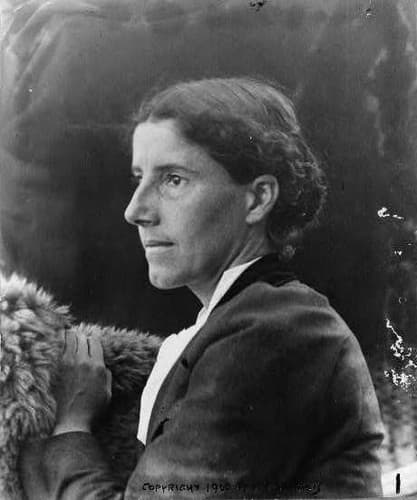
Charlotte Perkins Gilman, also known by her first married name Charlotte Perkins Stetson, was an American humanist, novelist, writer, lecturer, advocate for social reform, and eugenicist. She was a utopian feminist and served as a role model for future generations of feminists because of her unorthodox concepts and lifestyle. She has been inducted into the National Women's Hall of Fame. Her best remembered work today is her semi-autobiographical short story "The Yellow Wallpaper", which she wrote after a severe bout of postpartum psychosis.







