“Ribsy was a dog of many enthusiasms, and one of his greatest was chasing cats.”
— Describing Ribsy's character at the beginning of the book.

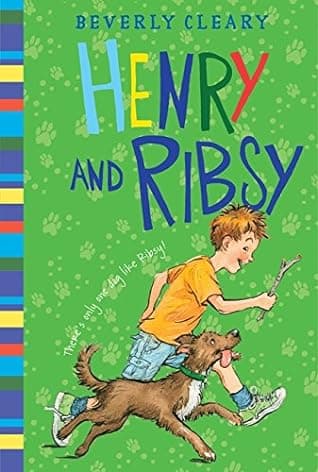
Beverly Cleary (1923)
Genre
Children's / Young Adult
Reading Time
120 min
Key Themes
See below
Sign in to track this book
A young boy's dream of salmon fishing with his dad hangs by a thread, constantly threatened by his mischievous dog Ribsy and the unpredictable antics of the neighborhood's most imaginative, and troublesome, girl, Ramona.
Henry Huggins wants to go salmon fishing with his father, Mr. Huggins. His dog, Ribsy, often gets into trouble. After Ribsy chases a cat and causes a commotion, Mr. Huggins makes a deal: if Henry can keep Ribsy out of trouble for a month, they will go salmon fishing. Henry wants to succeed and imagines catching a huge salmon. He starts planning how to manage Ribsy, trying to teach him tricks and keeping him on a tighter leash. Ribsy and the neighborhood are not always happy about this.
Henry decides Ribsy needs a bath, thinking a clean dog might cause less trouble. He tries to bathe Ribsy in the backyard, but Ribsy hates baths and struggles. Soapy water, mud, and dog hair fly everywhere. Ribsy escapes the tub and runs through the neighborhood, leaving a trail of suds and getting tangled in a garden hose. Henry, with his friends Beezus and Ramona Quimby, chases the dog. The chase ends with Ribsy rolling in leaves and dirt, making the bath useless and adding to his reputation as a difficult dog.
Henry takes Ribsy to the local meat market to teach him good public behavior. While Henry is not looking, Ribsy, drawn by the smell of meat, takes a large roast off the counter. A chase begins through the market, with the butcher, Mr. Penny, and Henry trying to get the roast back from Ribsy. Ribsy thinks it is a game and runs out of the store with the roast, causing a scene. Henry is embarrassed and has to pay for the damaged roast, adding another mark against Ribsy's challenge.
Henry spends an afternoon gathering earthworms for his fishing trip, storing them in a can. Ramona Quimby, Beezus's younger sister, finds Henry's worm can. Without Henry knowing, Ramona plays with the worms, using them as 'pets' and trying to feed them to her dolls. When Henry finds out, he is angry because many of his worms are gone or hurt. This incident, while not Ribsy's fault, adds to Henry's stress and the overall chaos around his fishing goal.
One afternoon, a fire truck stops near Henry's house. Ribsy, curious, goes to it. He climbs into the truck and gets stuck. The firemen, amused but a little annoyed, try to get him out. A crowd gathers, including Henry, who is embarrassed by Ribsy's latest problem. After some effort, the firemen free Ribsy, who looks sheepish but is unharmed. This public display of Ribsy's actions further puts Henry's fishing trip at risk, making it seem impossible to keep him out of trouble.
Henry takes Ribsy to the park, hoping the open space will tire him out and keep him from trouble. However, Ribsy quickly sees squirrels and chases them. He chases them up trees and through flowerbeds, disturbing picnickers and other park visitors. Henry tries hard to control his dog, but Ribsy is enjoying himself, not noticing the chaos he is creating. The incident shows Henry's struggle to control Ribsy's natural instincts and the difficulty of his month-long challenge.
One day, Ribsy disappears. Henry searches frantically throughout the neighborhood, calling his name and asking everyone if they have seen his dog. He is worried and sad, imagining bad things that could have happened to Ribsy. His friends, Beezus and Ramona, help search. The neighborhood helps, and posters are made. Henry feels a deep sense of loss, realizing how much he loves Ribsy despite all the trouble. Ribsy's absence threatens the fishing trip promise.
After a sad and anxious search, Henry gets a call that Ribsy has been found. He is at a local school carnival, where he had wandered off and, surprisingly, won a prize in a dog contest! Ribsy, charming when he wants to be, had apparently done a trick (probably by accident) that impressed the judges. Henry is very happy to be reunited with his dog, relieved that Ribsy is safe. The incident is a mixed moment, as Ribsy's 'good behavior' was unintentional and not Henry's doing, but it brings him back.
With only a few days left, Henry is very determined to keep Ribsy out of trouble. He keeps Ribsy on a very short leash, both literally and figuratively, limiting his freedom. Ribsy, sensing the tension, seems to behave well, perhaps tired of Henry's constant watching. Henry watches him closely, avoiding all possible problems. The pressure builds, and Henry feels every minute of the remaining time, hoping no last-minute disaster will ruin his chances for the salmon fishing trip.
On the very last day of the month, Ribsy has one final close call, chasing a cat up a tree and almost causing a big problem. Henry steps in just in time. Despite the many problems during the month, Henry's father recognizes Henry's great effort and determination to control Ribsy. He sees how hard Henry tried and understands that some things are beyond a boy's control with a dog like Ribsy. Mr. Huggins, impressed by Henry's persistence, decides Henry has earned his reward. He tells Henry they will go salmon fishing after all, which makes Henry very happy and Ribsy wag his tail.
The Protagonist
Henry learns patience and the true meaning of responsibility, realizing that love for a pet sometimes means accepting their flaws.
The Supporting
Ribsy remains true to his nature, a constant source of chaos and affection, highlighting that some aspects of personality are unchangeable.
The Supporting
Mr. Huggins demonstrates understanding and flexibility, rewarding Henry's genuine effort rather than strict adherence to rules.
The Supporting
Her character remains consistent as a loving and supportive parental figure.
The Supporting
Beezus remains a steady and reliable friend, observing the unfolding events.
The Supporting
Ramona's character remains consistent as a spirited and often chaotic child.
The Supporting
Mr. Penny's character is static, serving as a plot device to highlight Ribsy's mischievousness.
The Mentioned
Scooter's arc is not developed in this story.
The main theme is Henry's journey to understand and manage pet ownership. His father's challenge makes him actively control Ribsy's behavior, showing the difficulties and rewards of caring for an animal. Henry learns that responsibility means more than feeding a pet. It means understanding their nature, predicting their actions, and dealing with outcomes. The story shows the constant watchfulness and effort needed to keep a mischievous dog out of trouble, and how this effort shapes Henry.
“If you want to go salmon fishing, you'll have to keep that dog out of trouble for a whole month.”
Henry's month-long challenge requires patience and persistence. Despite many problems—Ribsy's bath escape, the meat market incident, the fire truck adventure—Henry does not give up. He always tries new ways and tries to stay in control, even when it seems impossible. His strong desire to earn the fishing trip, despite constant frustration, shows how important perseverance is for reaching a goal, especially with unpredictable things like a dog's instincts.
“Henry sighed. One thing about Ribsy, life was never dull.”
The book explores the nature of dogs, especially their strong instincts and independent wills. Ribsy, though loved and trained by Henry, often gives in to his impulses, whether chasing squirrels, smelling out a roast, or exploring. This theme suggests that while owners can guide and train pets, their basic nature remains, and sometimes, accepting their wilder side is necessary. Ribsy's character reminds us that animals are not small humans and act for different reasons.
“Ribsy, a large dog of doubtful ancestry, had only one fault, if it could be called a fault. He was a great explorer.”
Henry's quest to control Ribsy is like the challenges children face as they grow and learn. He feels frustration, disappointment, joy, and eventually, accomplishment. The story captures the seriousness of childhood efforts and the small victories and defeats that help a child develop. Henry's interactions with his parents, friends, and the neighborhood also show the social dynamics and learning experiences common in growing up.
“He loved Ribsy no matter what, even if he did get into more trouble than any other dog in the world.”
A specific time-bound goal that drives the entire plot.
This is the primary plot device, serving as the central conflict and motivation for Henry. By setting a clear goal (keeping Ribsy out of trouble for a month) with a tangible reward (salmon fishing), the author creates a framework for episodic adventures and escalating tension. Each incident with Ribsy directly impacts Henry's progress towards this challenge, allowing for a series of humorous and frustrating events that build towards the climax and resolution.
A series of distinct, self-contained incidents that showcase the central conflict.
The book is structured as a collection of short, interconnected episodes, each detailing a new predicament caused by Ribsy. This episodic nature allows the author to highlight Ribsy's diverse troublemaking capabilities and Henry's varied attempts to control him without relying on a single, overarching complex plot. Each 'adventure' serves to further emphasize the central theme of responsibility and the challenge of managing a mischievous pet.
Hints and setups that suggest Ribsy will inevitably cause trouble.
From the very beginning, Ribsy's reputation for mischief is established, and throughout the story, subtle cues or Henry's own anxieties foreshadow that Ribsy is unlikely to remain well-behaved. For example, Henry's elaborate plans to keep Ribsy safe often immediately precede Ribsy getting into a new, unexpected scrape. This creates a humorous tension as the reader anticipates Ribsy's next blunder, often just as Henry thinks he has things under control.
Contrasting characters that highlight each other's traits.
Ramona Quimby acts as a foil to Henry, particularly in the context of responsibility. While Henry is earnestly trying to be responsible and control his dog, Ramona is often a source of unbridled, impulsive mischief (e.g., with the worms). This contrast emphasizes Henry's mature efforts and the external challenges he faces, not just from Ribsy, but also from the unpredictable nature of other children in his world.
“Ribsy was a dog of many enthusiasms, and one of his greatest was chasing cats.”
— Describing Ribsy's character at the beginning of the book.
“He knew that having a dog meant responsibility, but it also meant fun.”
— Henry's reflection on owning Ribsy and the balance of duties and enjoyment.
“The hardest thing about having a dog was trying to keep him out of trouble.”
— Henry's constant struggle with Ribsy's mischievous nature.
“Ribsy, with his tail wagging, always managed to look innocent, even when he wasn't.”
— Henry's observation of Ribsy's ability to avoid blame.
“A boy and his dog. What could be better?”
— Henry's simple joy in his companionship with Ribsy.
“The aroma of freshly baked cookies drifted from Mrs. MacLeod's kitchen, a scent Ribsy knew well.”
— Ribsy's keen sense of smell leading him to potential treats.
“Sometimes Henry wished Ribsy would just sit still for five minutes.”
— Henry's exasperation with Ribsy's boundless energy.
“Hunting was a serious business to Ribsy, especially when the prey was a squirrel.”
— Ribsy's focused determination during his chases.
“It was impossible to stay mad at Ribsy for very long.”
— Henry's recurring experience of forgiving Ribsy's antics.
“The world was full of interesting smells, and Ribsy was determined to investigate every single one.”
— Highlighting Ribsy's inquisitive nature and love for exploration.
“Ribsy had a way of getting into trouble without really meaning to.”
— Henry's understanding of Ribsy's accidental mischief.
“Even a short walk was an adventure with Ribsy.”
— Everyday activities become exciting with Ribsy's presence.
“He knew Ribsy wasn't perfect, but he was Henry's dog, and that was all that mattered.”
— Henry's unconditional love and acceptance of Ribsy.
Ready to see how well you understood this book? Take our interactive quiz with 10 questions.

Beverly Cleary was a beloved American children's author, celebrated for her realistic and humorous portrayal of childhood. Her iconic characters, including Ramona Quimby and Henry Huggins, resonated with generations of readers. Cleary's extensive body of work, featuring titles like 'The Mouse and the Motorcycle' and 'Ramona the Brave,' earned her numerous accolades, including the Newbery Medal and the National Medal of Arts.
Dan Gemeinhart
4.5
Kate O'Hearn
4.4

Jeanne Birdsall
4.4

Jen Wang
4.4
Wendelin Van Draanen
4.3

John Marsden
4.3

Chris Van Allsburg
4.3
Jennifer A. Nielsen
4.2