“The house was a place of darkness and despair. It was a place where evil resided, a place where the innocent were corrupted and the strong were broken.”
— Early description of the Belasco House, setting the tone.


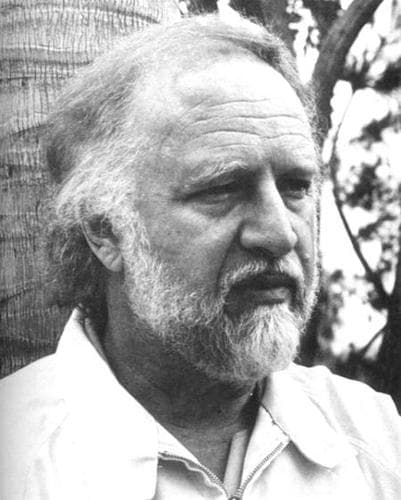
Richard Matheson (1971)
Genre
Thriller / Fantasy / Mystery
Reading Time
240 min
Key Themes
See below
Sign in to track this book
Four strangers, each with their own problems, enter the notorious Belasco House, a mansion known for its horror, which offers either answers or destruction to anyone who dares to go inside.
The novel starts with Dr. Lionel Barrett, a physicist, being asked by the dying millionaire, Rolf Rudolph Deutsch, to investigate Belasco House for one week. Deutsch offers Barrett a lot of money. Barrett, a strong materialist, thinks spiritualism is a false belief and wants to prove that the house's events are just electromagnetic problems. He agrees to the trip, bringing his wife, Edith, a medium named Florence Tanner, and a physical medium, Benjamin Franklin Fischer, who was the only survivor of a previous trip to the house decades ago. Their goal is to find out if there is life after death before Deutsch dies.
When they arrive at Belasco House, the team is immediately struck by its heavy and decaying size. Florence, sensitive to the house's energies, feels a strong, evil presence right away, experiencing intense sickness and psychic stress. Edith, more open than her husband, also feels more uneasy. Barrett, however, remains doubtful, carefully setting up his scientific equipment to measure electromagnetic fields, temperature changes, and other physical events. Fischer, quiet and withdrawn, seems to be fighting his own inner problems, reliving past horrors while giving unclear warnings. The house itself seems to watch them, its quiet broken by unsettling creaks and groans.
Florence becomes the main target of the house's evil forces. She sees visions of bad deeds and violence, hears voices without bodies, and is physically attacked, including being scratched and having things thrown at her. She believes the house is full of the spirits of its former owner, Emeric Belasco, and the many victims of his cruel parties. Florence tries to talk to the spirits, especially the troubled child Daniel, hoping to bring them peace. Her increasingly frantic attempts to interact with the beings conflict with Barrett's strict scientific approach, causing tension in the group as her health and mind quickly worsen under the house's constant attack.
As Florence endures direct attacks, Edith experiences a more hidden corruption. The house starts to use her hidden desires and fears. She feels more drawn to the house's dark past, having clear sexual fantasies and developing an unhealthy interest in Belasco's bad past. The beings use her hidden sexuality and marriage problems, subtly affecting her thoughts and actions. She starts to act out of character, becoming more aggressive and tempting. This manipulation ends in a scary experience where she is possessed, doing disturbing sexual acts in a trance-like state, much to her horror and Barrett's growing worry.
Dr. Barrett, despite the growing supernatural events, holds onto his scientific explanations. He blames Florence's experiences on hysteria and Edith's behavior on psychological stress, all while carefully recording electromagnetic changes and temperature drops. However, the strong and personal nature of the attacks starts to break down his logical front. His equipment, while showing some strange things, cannot explain the targeted evil. He struggles to stay in control, often ignoring Florence's pleas and warnings. His scientific tools seem not enough against the strong, intelligent evil of the house, forcing him to face the limits of his way of thinking when faced with clear supernatural events.
Benjamin Fischer, at first a quiet and troubled observer, slowly speaks more as the week goes on. He shares his own horrifying experiences from the previous trip, where he saw murder, madness, and suicide. He warns Florence against directly interacting with the beings, knowing their tricky and destructive nature. Fischer believes the house is not just haunted by spirits but by a strong, single evil being, possibly Belasco himself, that grows on human suffering. He understands the house's psychological methods and tries to guide the others, but his past trauma and unclear nature make him hard for Barrett to trust, further isolating him in the group.
Florence's condition quickly worsens under the house's constant attack. She is tormented by more violent visions and physical abuse. In a desperate attempt to free the trapped spirits, she performs a final, strong seance. During this ritual, the house shows its full power. Florence is brutally attacked, her body twisted and broken, and she dies in a horrifying display of supernatural violence. Her death breaks the remaining calm of Edith and deeply disturbs Barrett, forcing him to face the clear reality of the house's evil power. Her death is a grim warning of the house's ultimate destructive ability.
Florence's terrible death deeply affects Dr. Barrett, shaking his scientific belief. He can no longer dismiss the events as just psychological problems. Driven by a desperate need to understand and fight the evil, he becomes obsessed with finding a scientific explanation for the house's power. He theorizes about a 'negative energy field' or some form of psychic control, but his tools offer no clear answers. He searches the house for hidden machines or devices that could explain the events, convinced there is a logical, though complex, explanation. His search leads him to the chapel, Belasco's former safe place, believing it holds a key.
Barrett's desperate search ends with the discovery of a hidden room in the chapel. There, he finds the mummified body of Emeric Belasco, seated in a chair, with a metal fake leg. This discovery at first seems to confirm his belief that Belasco was a trickster, using hidden devices to create illusions. However, as he examines the body, he realizes the fake leg is not a device, but a tool for torture. He also finds a hidden area containing Belasco's diary, which shows how bad he was and his true nature as a strong, evil psychic who caused the house's evil, not through tricks, but through sheer force of will.
Overwhelmed by the horrifying truth in Belasco's diary, Barrett faces the mummified body, realizing how much psychic power Belasco had and his continued influence over the house. In a moment of terror and confusion, a heavy cross from the chapel wall falls, stabbing Barrett and killing him. Edith, seeing her husband die, falls into sadness. Fischer, now the last conscious investigator, understands that Belasco's spirit is indeed the source of the house's evil, an evil force that thrives on human suffering. He realizes the house itself is a product of Belasco's will, made to corrupt and destroy.
Fischer, having survived Belasco House before, now fully understands its true nature. He explains to Edith that Belasco was not just a cruel man but a powerful psychic who, even after death, projects his evil onto the house, making it a living part of his bad will. He shares that Belasco wanted to prove there is no God, only human badness, and designed the house to break people. Fischer then finds a final, terrible secret: the house has been subtly controlling them, not just with spirits, but by physically changing the environment, creating illusions, and feeding on their fears and desires, making the very building an active part in their torment.
With Barrett dead and Florence gone, Fischer, using his past experience and new understanding, guides a traumatized Edith out of the house. They manage to escape the falling building and the house's final, desperate attempts to keep them. As they run, the house seems to finally let go, its evil presence fading. They are the only survivors of the trip, forever marked by the horrors they saw. The experience changes them deeply, with Fischer's belief in the supernatural confirmed and Edith forever haunted by the bad things she went through. Belasco House, its secrets finally known, is left to its lasting evil.
The Protagonist/Investigator
Barrett's arc is one of tragic disillusionment, as his scientific certainty is shattered by the undeniable supernatural evil of Belasco House, leading to his demise.
The Supporting/Victim
Edith's arc is a descent into psychological and sexual corruption, from a rational observer to a traumatized survivor, forever scarred by the house's violation.
The Supporting/Medium
Florence's arc is one of escalating spiritual and physical torment, culminating in her heroic but ultimately fatal attempt to confront the house's evil.
The Supporting/Physical Medium
Fischer's arc is one of confronting past trauma and using his painful experience to help others survive, ultimately becoming the one who understands Belasco's true nature.
The Antagonist
Belasco's arc is essentially a static one, as his malevolence is fully established from the outset and continues to exert its influence, even beyond death.
The Mentioned
Deutsch's arc is off-screen; he sets the events in motion and presumably dies by the end of the narrative, his question about the afterlife answered by the expedition's horrific outcome.
The Mentioned/Supporting (spirit)
Daniel's arc is unresolved; his ultimate fate, whether freed or remaining trapped, is not explicitly stated, symbolizing the enduring mystery and tragedy of the house.
A main theme is the clash between scientific reason and spiritual belief when dealing with the supernatural. Dr. Barrett represents the strict scientific view, trying to explain all events with physics, while Florence Tanner shows the spiritual view, trying to talk to and understand the house's beings. The house's evil systematically breaks down Barrett's scientific explanations, showing the limits of pure reason when faced with an intelligent, non-physical evil. On the other hand, Florence's spiritual approach, though kind, also proves not enough against the house's strong power, suggesting that neither alone is enough to fully understand or fight such forces.
“"He had come to prove that there was no life after death, only electro-magnetic forces. And the house had killed him."”
The novel looks closely at the nature of evil, shown by Emeric Belasco and his house. Belasco's past includes extreme cruelty, sexual perversion, and psychological torture, all meant to prove that humanity is naturally bad and that God does not exist. The house itself becomes part of his evil will, continuing to corrupt and destroy long after his death. The story explores how evil can be both openly violent (Florence's death) and subtly harmful (Edith's corruption), using weaknesses and desires. It suggests that true evil is not just a lack of good, but an active, intelligent, and corrupting force.
“"He was a man who wanted to prove there was no God. He sought to demonstrate that man was nothing but a beast, capable of unimaginable depravity."”
The house uses the psychological weaknesses of its inhabitants, especially Edith. It uses her hidden sexuality, marriage problems, and subconscious desires, leading to her slow corruption and possession. Florence's kindness and understanding are also used against her, as the house uses the idea of troubled spirits to draw her in and destroy her. Even Barrett's scientific certainty becomes a weakness, making him blind to the real danger. The novel explores how an outside evil can control inner weaknesses, breaking down sanity and morals from within, suggesting that real horror is in the corruption of oneself.
“"The house knew their fears, their weaknesses, their unspoken desires. It fed on them."”
Rolf Rudolph Deutsch commissions the entire trip to answer a basic question: Is there life after death? Each character deals with this question in their own way: Barrett seeks a scientific 'no,' Florence seeks a spiritual 'yes' through talking, and Fischer has already experienced its terrifying reality. The events of Belasco House give a horrifying, but clear, answer, showing the continued evil influence of Belasco's spirit. The novel suggests that while life after death may exist, it is not always a comforting or good existence, but one that can be full of lasting evil and torment.
“"He wanted to know if there was anything beyond the grave. He got his answer."”
The primary setting and an active, malevolent character in itself.
Belasco House is not merely a backdrop; it functions as a primary antagonist and a living, breathing character. It is infused with the malevolent psychic energy of Emeric Belasco, actively manipulating the environment, creating illusions, and preying on the psychological vulnerabilities of its inhabitants. Its architecture, decay, and hidden rooms all contribute to its oppressive atmosphere and serve as instruments of its torment. The house's ability to 'think' and target individuals makes it a uniquely terrifying and powerful plot device, embodying the pervasive evil of its former owner and blurring the lines between setting and character.
A mechanism for direct interaction with the supernatural and a source of conflict.
The inclusion of Florence Tanner and Benjamin Fischer as psychic and physical mediums, respectively, serves as a crucial plot device. Their abilities allow for direct interaction with the house's entities, providing information (albeit often terrifying) about the nature of the hauntings. Florence's mediumship creates a direct channel for the house's malevolence to manifest, leading to her attacks and eventual death. Fischer's physical mediumship, combined with his past experience, allows him to understand the house's true nature more deeply than Barrett. This device highlights the limitations of purely scientific investigation and validates the existence of supernatural phenomena within the narrative.
A symbol of rationalism and a tool for false comfort.
Dr. Barrett's array of scientific equipment (electromagnetic sensors, temperature gauges, etc.) acts as a plot device to underscore the theme of the clash between science and the supernatural. Initially, these instruments provide a sense of control and rational explanation for Barrett. However, as the house's phenomena escalate beyond any scientific explanation, the equipment becomes increasingly useless, highlighting the limitations of materialism. It serves to build suspense as Barrett clings to his failing methods, ultimately symbolizing his tragic hubris and the inadequacy of pure science in the face of profound, intelligent evil.
A reveal mechanism for the antagonist's true nature and motivation.
The discovery of Emeric Belasco's mummified body and his diary serves as a pivotal plot device for revealing the antagonist's true nature and the depth of his depravity. The body, initially thought to be a prop for trickery, instead confirms Belasco's twisted, enduring presence. The diary provides the ultimate exposition, detailing his motivations, his psychic abilities, and the horrific events he orchestrated, explaining why the house is so profoundly evil. This device shifts the narrative from ambiguous haunting to a clear understanding of a powerful, malevolent force, providing the crucial information needed for Fischer's final understanding.
“The house was a place of darkness and despair. It was a place where evil resided, a place where the innocent were corrupted and the strong were broken.”
— Early description of the Belasco House, setting the tone.
“There are no ghosts. Only the living, who are afraid.”
— Florence Tanner's initial, more scientific, stance on the supernatural.
“It was not a house, but a living, breathing entity, full of malice and hunger.”
— A character's growing realization about the true nature of the Belasco House.
“You can't fight a house. You can only survive it.”
— Lionel Barrett's pragmatic, yet grim, assessment of their situation.
“Sickness. That's all it is. A sickness of the mind, a sickness of the soul.”
— Dr. Barrett attempting to rationalize the events with a scientific explanation.
“The house was a mirror, reflecting their own fears and desires back at them, distorted and grotesque.”
— A moment of introspection regarding how the house manipulates its occupants.
“Some places are just evil. They don't need a reason, they just are.”
— Ben Fischer's more mystical and resigned view of the house's malevolence.
“I will break you. Every one of you. I will show you what true fear is.”
— Implied threat from the entity within the house, often felt rather than spoken.
“The only way to defeat the darkness is to embrace it, to understand its language.”
— Florence Tanner's evolving, and dangerous, approach to communicating with the spirits.
“It feeds on suffering. The more you resist, the stronger it gets.”
— A realization by one of the characters about the house's parasitic nature.
“There are more things in heaven and earth, Horatio, than are dreamt of in your philosophy.”
— A literary allusion used by a character to challenge scientific reductionism.
“The house was a tomb, and they were already dead, they just didn't know it yet.”
— A sense of impending doom and hopelessness felt by one of the investigators.
“God save us from what we don't understand.”
— A prayer-like utterance reflecting the overwhelming and inexplicable horror.
“The house laughs. Can you hear it? It's laughing at us.”
— A character's descent into madness, perceiving the house's malevolent amusement.
Ready to see how well you understood this book? Take our interactive quiz with 10 questions.
Biography coming soon.







