“The mountains are so majestic, so beautiful, that they make one's heart ache.”
— Heidi expresses her love for the Swiss Alps to her grandfather.

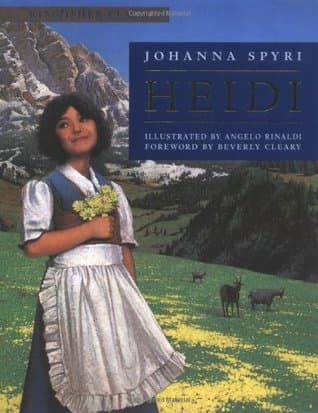
Johanna Spyri (1980)
Genre
Children's / Historical Fiction / Young Adult
Reading Time
350 min
Key Themes
See below
Sign in to track this book
A spirited orphan transforms the lives around her, from her reclusive grandfather in the Swiss Alps to a lonely invalid in bustling Frankfurt, all while yearning for the freedom of her mountain home.
Eight-year-old Heidi, an orphan, is brought by her Aunt Dete to live with her paternal grandfather, Alm-Uncle, high in the Swiss Alps. Dete, having found a good position in Frankfurt, wants to be rid of the responsibility. The villagers are wary of Alm-Uncle, a gruff and solitary man who lives in a small hut and rarely descends into the village. They predict Heidi will not last long with him. However, Heidi is immediately captivated by the beauty of the mountains and her grandfather's stern but not unkind demeanor. She quickly adapts to her new life, sleeping on a hay bed, drinking goat's milk, and accompanying Peter, the goat-herd, and his flock up the alm.
Heidi's innocent joy and loving nature gradually soften the Alm-Uncle's hardened heart. She helps him with chores and her cheerful presence changes his isolated existence. She spends her days exploring the mountains, observing nature, and making friends with the goats. Her closest companion becomes Peter, the goat-herd boy, who is initially somewhat surly but grows to adore Heidi. She shares her grandfather's meals and learns to appreciate the simple, healthful life. The Alm-Uncle, who had long avoided church and village life, even begins to mend his relationships with others, prompted by Heidi's pure influence.
After three idyllic years, Aunt Dete returns to take Heidi away. Despite the Alm-Uncle's strong objections and Heidi's heartbroken pleas, Dete insists that Heidi must go to Frankfurt to be a companion for Clara Sesemann, a wealthy, invalid girl. Dete believes this is a great opportunity for Heidi to be educated and live a better life. Heidi is devastated to leave her beloved grandfather, Peter, and the mountains. The Alm-Uncle is furious and retreats further into his isolation, heartbroken by Heidi's departure. Heidi's journey to the city is filled with anxiety and longing for her mountain home.
In Frankfurt, Heidi finds herself in the grand but stifling Sesemann household. She is introduced to Clara, a kind but frail girl confined to a wheelchair, and to Fraulein Rottenmeier, the strict and overbearing housekeeper who disapproves of Heidi's rustic ways and attempts to impose rigid discipline. Heidi struggles with the formal etiquette, the lack of fresh air, and the constant lessons from the tutor, Herr Candidate. She misses her grandfather, Peter, and the freedom of the Alps terribly, often breaking rules unknowingly and causing minor chaos, much to Fraulein Rottenmeier's dismay.
Despite the challenges, Heidi quickly forms a deep and loving friendship with Clara. Heidi's simple, joyful stories about the Alps captivate Clara, bringing color and happiness into her often monotonous life. Clara's kind and understanding grandmother, Frau Sesemann, visits and immediately takes a liking to Heidi. Grandmamma encourages Heidi to learn to read by telling her stories and showing her pictures, recognizing Heidi's longing for home. Under Grandmamma's gentle guidance, Heidi learns to read, discovering the joy of books, particularly a hymn book given to her by Grandmamma, which reminds her of home.
Despite the comfort of Clara's friendship and Grandmamma's kindness, Heidi's longing for the Alps grows unbearable. The enclosed city life, the constant noise, and the lack of natural beauty weigh heavily on her spirit. She becomes increasingly pale and thin. Her homesickness reaches a critical point, manifesting as sleepwalking. The servants report seeing a white figure wandering the house at night, leading to alarm and the belief that the house is haunted. Herr Sesemann, Clara's father, is called home to investigate the mysterious occurrences.
Herr Sesemann and the family doctor, Dr. Classen, investigate the 'ghost.' They discover it is Heidi, who, in her sleep, has opened the front door and is standing outside, still dreaming of the mountains. Dr. Classen immediately diagnoses her condition as severe homesickness, warning that she will become seriously ill if she doesn't return to the Alps at once. Although Clara is saddened by the prospect of losing her friend, Herr Sesemann agrees that Heidi must go home for her health. Heidi is overjoyed at the news and prepares for her return journey, promising Clara she will visit.
Heidi returns to the Alm, much to the immense joy and relief of her grandfather. The Alm-Uncle, who had grown even more withdrawn after her departure, is changed by her return. He embraces her warmly, his eyes filled with tears. Peter is also ecstatic to have his friend back. Heidi's health immediately improves in the fresh mountain air, and she resumes her simple, happy life, accompanying Peter with the goats and helping her grandfather. Her experiences in Frankfurt have also matured her, making her more responsible and appreciative of her home.
True to her promise, Clara, accompanied by Dr. Classen and later by Grandmamma, visits Heidi in the Alps. The mountain air, the sunshine, and Heidi's cheerful companionship have a strong effect on Clara's health. She begins to gain strength and color, and with Heidi and Peter's encouragement, and the Alm-Uncle's gentle support, she attempts to walk. Initially hesitant, Clara eventually manages to stand and take a few steps, a miracle that brings immense joy to everyone, especially her father, Herr Sesemann, who arrives to witness her progress.
Clara's ability to walk again is seen as a miracle, attributed to the wholesome mountain environment and Heidi's steadfast friendship. Peter, initially jealous of Clara, eventually warms to her, especially after Grandmamma gives him some money. Herr Sesemann is overwhelmed with gratitude towards Heidi and the Alm-Uncle. The Sesemann family promises to provide for Heidi's future education and well-being, ensuring she never has to leave the mountains again unless by choice. The story concludes with Heidi remaining on the Alm, surrounded by her loved ones, a beacon of joy and simple goodness, with lasting friendships forged between the city and mountain dwellers.
The Protagonist
Heidi transforms from a bewildered orphan into a confident and compassionate young girl, whose unwavering spirit brings healing and joy to those around her, while she herself learns the value of education and enduring friendship.
The Supporting
From a bitter and isolated hermit, the Alm-Uncle is transformed by Heidi's innocent love into a loving and reintegrated member of the community, finding renewed purpose and happiness.
The Supporting
Peter grows from a somewhat selfish and jealous boy to a more understanding and responsible friend, learning to share Heidi's affection and appreciate the broader world she brings.
The Supporting
Clara transforms from a frail and confined invalid into a physically and emotionally stronger girl, finding the courage to walk and a deeper connection to life through her friendship with Heidi and the Alps.
The Antagonist
Fraülein Rottenmeier remains largely unchanged, serving as a foil to Heidi's natural spirit and representing the constraints of city life, though she is ultimately forced to concede to Heidi's needs.
The Supporting
Grandmamma Sesemann serves as a consistent source of wisdom and comfort, helping both Heidi and Clara navigate their challenges and fostering their personal growth.
The Supporting
Herr Sesemann, initially a distant figure, becomes more deeply involved in his daughter's life and more appreciative of Heidi's influence, recognizing the true value of health and happiness over material wealth.
The Supporting
Dr. Classen acts as a compassionate and insightful observer, facilitating Heidi's return home and witnessing Clara's miraculous recovery, affirming the power of natural healing.
The Supporting
Aunt Dete's actions initiate key plot points, but she remains largely static, driven by her own practical and social ambitions.
The Swiss Alps are a source of physical and spiritual healing throughout the novel. Heidi thrives in the fresh air, sunshine, and freedom of the mountains, recovering from homesickness and regaining her health. Similarly, Clara's frail condition dramatically improves during her visit to the Alm, leading to her ability to walk. The natural environment is shown as essential for well-being, contrasting sharply with the stifling, unhealthy atmosphere of city life in Frankfurt. The Alm-Uncle's own redemption is tied to his connection with nature and his eventual reintegration into a more natural, community-oriented life.
“For the first time in her life, Clara breathed in the fresh, pure air of the mountains, which seemed to fill her with a new, invigorating strength.”
Love and compassion are central to the changes several characters experience. Heidi's unconditional love and innocent joy soften the Alm-Uncle's hardened heart, bringing him back to society. Her deep affection for Clara provides the invalid girl with much-needed companionship and emotional support, eventually motivating Clara to walk. Grandmamma Sesemann's compassionate understanding of Heidi's homesickness and her gentle encouragement to read also show the strong impact of kindness. The novel emphasizes that real human connection, rooted in love, can overcome isolation, illness, and prejudice.
“Heidi's love for her grandfather was like a warm sunbeam that melted the ice around his heart.”
The novel shows a strong contrast between the simple, natural life in the Alps and the materialistic, complex life in Frankfurt. Heidi finds true happiness and health in the modest hut on the Alm, valuing fresh air, goat's milk, and her relationships over luxury. The Sesemann household, despite its wealth and comforts, is portrayed as stifling and bad for Heidi's spirit, and initially for Clara's health. The book suggests that real contentment and well-being are found not in material possessions or social status, but in a simple life, close to nature and real human connections.
“She had never felt so happy in Frankfurt, even with all the fine things, as she did now in the little hut on the Alm.”
Heidi's intense homesickness for the Alps is a central conflict in the story. It shows the deep human need for belonging and connection to one's home and roots. Her physical and emotional decline in Frankfurt happens because she is separated from her beloved mountains and grandfather. This theme shows that a true home is not just a physical place but a feeling of security, love, and spiritual connection. Her eventual return and the subsequent visits from Clara and Dr. Classen emphasize the Alm as a place of true belonging and healing.
“The longing for the mountains, for her grandfather, and for Peter grew into an unbearable ache in her heart.”
While initially resistant to formal education in Frankfurt, Heidi eventually embraces learning, particularly reading, under Grandmamma Sesemann's gentle guidance. This theme is not about the superiority of formal education, but rather the importance of knowledge and personal growth when pursued with real interest and in a supportive environment. Heidi uses her new literacy to read hymns to Peter's blind grandmother, showing how education can be applied to bring comfort and joy to others. The novel suggests that true education helps one live a fulfilling life and contribute positively to the community.
“Now she could read, and she felt as if a new world had opened up for her.”
The stark comparison between the Swiss Alps and Frankfurt.
The novel heavily relies on the contrasting settings of the idyllic, natural Swiss Alps and the bustling, confined city of Frankfurt. The Alps represent freedom, health, simplicity, and spiritual well-being, while Frankfurt symbolizes constraint, illness, materialism, and social rigidity. This device highlights the novel's central themes, particularly the healing power of nature and the detrimental effects of an unnatural environment on the human spirit. Heidi's well-being directly correlates with her location, making the settings almost characters in themselves that influence the plot and character development.
Fraülein Rottenmeier as a foil to Heidi's natural spirit.
Fraülein Rottenmeier serves as a perfect character foil to Heidi. While Heidi embodies natural innocence, freedom, and an intuitive connection to life, Fraülein Rottenmeier represents rigid adherence to social conventions, strict discipline, and a lack of emotional warmth. Her attempts to impose order on Heidi's free spirit highlight Heidi's unique qualities and underscore the suffocating nature of the Frankfurt household. This contrast emphasizes the novel's thematic celebration of naturalness and the critique of artificial societal norms.
The Alps as a symbol of freedom, health, and spiritual purity.
The Swiss Alps are more than just a setting; they are a powerful symbol throughout the book. They represent freedom from societal constraints, physical and spiritual health, and a connection to God and nature. Heidi's longing for the mountains symbolizes her yearning for her true self and well-being. Clara's physical recovery in the Alps symbolizes the mountains' restorative power. The Alm-Uncle's redemption is tied to his re-engagement with the mountain community. The mountains stand for an ideal, wholesome way of life that contrasts with the artificiality of the city.
Heidi's and Clara's journeys mirroring each other's needs.
The narrative uses thematic parallelism between Heidi and Clara's experiences. Heidi, though physically healthy, is spiritually ill with homesickness in Frankfurt, while Clara, physically ill, is spiritually uplifted by Heidi's presence. Both girls are confined and yearn for freedom – Heidi for the Alps, Clara for the ability to walk. Their individual needs are met through their friendship and the healing power of the Alps, demonstrating that true well-being encompasses both physical and emotional health, and that their healing journeys are intertwined and mutually beneficial.
“The mountains are so majestic, so beautiful, that they make one's heart ache.”
— Heidi expresses her love for the Swiss Alps to her grandfather.
“If you have something you love, you must never let it go.”
— Heidi advises Clara about holding onto cherished things and memories.
“God certainly knows of some joy for us which He is going to bring out of the trouble.”
— Grandmamma comforts Heidi during a difficult time in Frankfurt.
“The happiest of all things is when an old friend comes and greets us as in former times.”
— Heidi reflects on the joy of reuniting with Peter the goatherd.
“Everything is so beautiful here, and when one is happy, everything is beautiful.”
— Heidi describes her simple, contented life in the mountains.
“One must have something to look forward to in life.”
— Grandfather encourages Heidi to maintain hope and anticipation.
“It is the sunshine and the fresh air that make the flowers grow.”
— Heidi explains to Clara the natural elements that help things thrive.
“If you can read, you can learn all sorts of things.”
— Grandmamma emphasizes the importance of education to Heidi.
“The good Lord has not given you your legs for nothing.”
— Heidi encourages Clara to believe in her ability to walk again.
“When one is up there, one feels so near to heaven.”
— Heidi describes the feeling of being high in the mountains.
“A little bird told me that you were coming.”
— Grandfather playfully greets Heidi upon her return from Frankfurt.
“It is not good for anyone to live alone.”
— Heidi reflects on the importance of companionship and community.
“The wind is the breath of the mountains.”
— Heidi poetically describes the natural environment to Clara.
“One can get used to anything in time, even to being happy.”
— Heidi adapts to her new life and finds joy in simplicity.
Ready to see how well you understood this book? Take our interactive quiz with 10 questions.
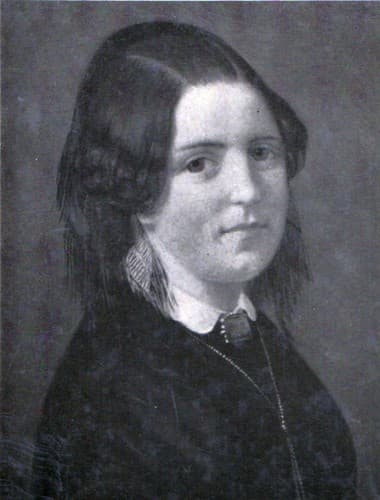
Biography coming soon.

Dan Gemeinhart
4.5

Kate O'Hearn
4.4

Jeanne Birdsall
4.4

Jen Wang
4.4

Wendelin Van Draanen
4.3

John Marsden
4.3

Chris Van Allsburg
4.3

Jennifer A. Nielsen
4.2