“The thing about secrets is that they don't stay buried forever. Eventually, they rise to the surface, sometimes with devastating consequences.”
— Nikki Heat reflecting on the nature of secrets as she investigates a murder.

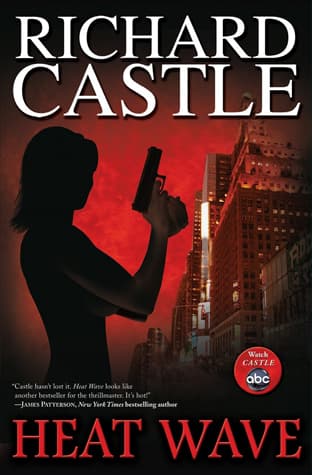
Richard Castle (2009)
Genre
Thriller / Mystery / Romance
Reading Time
198 min
Key Themes
See below
Sign in to track this book
During a New York City heatwave, an NYPD detective investigates a real estate tycoon's suspicious death among Manhattan's elite, all while dealing with a ride-along journalist.
The novel begins with the death of Matthew Starr, a New York real estate developer, who falls from his penthouse. Officers first call it a suicide, but Detective Nikki Heat of the NYPD Homicide squad is doubtful. Her suspicions grow when she arrives at the scene, noticing the lack of debris and the strange behavior of Starr's widow, Clara Starr. Heat's boss, Captain Boudreau, gives her the case, but also tells her that Pulitzer Prize-winning journalist Jameson Rook will shadow her for an article on the NYPD, which annoys Heat. Rook immediately offers his own theories, clashing with Heat's careful approach.
Nikki and her team, Detectives Raley and Ochoa, start investigating Matthew Starr's business. Rook's questions reveal Clara Starr's mysterious past, including a previous marriage and living under a different name. During the investigation, Clara Starr is attacked in her home, barely escaping a masked person. This event confirms Heat's belief that Matthew Starr's death was murder and that Clara is either a witness or a target, not just a grieving widow. The attack also forces Heat and Rook to work more closely, despite their initial dislike, as Rook's presence accidentally saves Clara.
As the investigation continues, Nikki and her team look into Matthew Starr's competitive real estate world. They interview several of Starr's business rivals, including the determined Richard Reynolds, who had strong competition with Starr over a major development project. They also find possible connections between Starr and local mob figures, specifically a loan shark named Joey 'The Shark' Moretti, who had lent money to Starr's failing construction projects. The reason for Starr's death seems to broaden, including both professional jealousy and organized crime, making the list of suspects grow.
The case takes a surprising turn when Jonathan Tisdale, Matthew Starr's personal lawyer and close friend, is found dead in his office, seemingly from a botched robbery. Nikki Heat, however, immediately suspects a link to Starr's murder. Tisdale handled Starr's more illegal dealings and knew many of his secrets. His death suggests that someone is systematically getting rid of anyone who could expose the truth about Starr's death. Finding a coded message or a hidden file in Tisdale's office becomes a priority, as Heat believes it holds the key to both murders.
Jameson Rook, despite being annoying, has a sharp mind and an unusual ability to connect different pieces of information. He often sees angles that Nikki first misses, frustrating her but ultimately helping. For example, Rook's comment about a specific type of rare orchid found at both crime scenes, or his understanding of high-stakes financial dealings, provides important breakthroughs. As they spend more time together, the work tension between Nikki and Rook slowly gives way to a growing attraction, complicated by the intense investigation and their different personalities.
Nikki's hunches about Clara Starr prove right. Through careful investigation, she finds evidence that Clara was not as innocent as she seemed. Clara had been secretly taking money from Matthew Starr's accounts and had her own reasons for wanting him dead. Heat also discovers a hidden ledger or encrypted files that Tisdale was protecting, detailing Starr's illegal financial transactions and his blackmail schemes against several powerful people. This ledger becomes the main piece of evidence, pointing to a larger conspiracy.
The hidden ledger's contents are explosive. It details Matthew Starr's elaborate blackmail scheme, where he extorted money and favors from many influential people in New York's elite, including politicians, judges, and other real estate developers, using their darkest secrets against them. The list of possible suspects grows significantly, as many powerful people had strong reasons to silence Starr. Nikki realizes she is dealing with a case that reaches the highest levels of society, making the investigation dangerous and politically sensitive.
Following the trail of the blackmail victims and the movements of key players, Nikki and Rook piece together the motive and the killer's identity. They realize that the murderer was not just a business rival or a mobster, but someone much closer to Starr, acting out of a desperate need to protect their own secrets and reputation from his blackmail. In a tense confrontation, the killer is revealed to be Richard Reynolds, Starr's business rival, who was also a victim of his blackmail. Reynolds murdered Starr to keep his secrets from being exposed and then killed Tisdale to cover his tracks and get the incriminating ledger.
During the confrontation, Richard Reynolds, cornered by Nikki's clear evidence, admits to both murders. He explains how Matthew Starr had been blackmailing him for years, threatening to expose a devastating secret about Reynolds' past that would ruin his career and reputation. The pressure became too much, leading him to push Starr from his balcony. He then killed Tisdale to destroy the evidence. With the confession, Nikki Heat, with Rook by her side, successfully arrests Reynolds, closing the complex double homicide investigation.
With Richard Reynolds in custody and the case closed, the city feels relief, and Nikki Heat receives praise for her persistent detective work. Jameson Rook's article is a great success, highlighting the details of the investigation and the dedication of the NYPD. Despite their initial conflicts and very different methods, Nikki and Rook have developed mutual respect and a clear, unresolved attraction. As Rook prepares to leave, there is an understanding that their paths, both professional and personal, will likely cross again, leaving the door open for future encounters.
The Protagonist
Nikki learns to grudgingly accept collaboration and opens herself up to the possibility of a personal connection, softening her rigid professional exterior.
The Supporting/Romantic Interest
Rook evolves from an irritating tag-along to a valuable, respected partner, earning Nikki's trust and affection.
The Victim
As the investigation unfolds, Starr's character is revealed through flashbacks and testimonies, transforming from a simple victim into a manipulative blackmailer.
The Supporting
Clara's facade of innocence crumbles as Nikki uncovers her secrets, revealing her as a manipulative and self-serving individual.
The Antagonist
Reynolds's initial portrayal as a legitimate businessman slowly unravels, revealing him as a desperate man driven to murder by blackmail.
The Victim/Supporting
Tisdale's death transforms him from a background character into a crucial, silent witness whose hidden legacy drives the investigation forward.
The Supporting
Boudreau maintains his role as a consistent, supportive authority figure, his belief in Heat strengthening throughout the challenging case.
The Supporting
Raley remains a steadfast and reliable member of Nikki's team, his character providing consistent support and levity.
The Supporting
Ochoa consistently demonstrates her technical prowess, proving invaluable to the team's investigative efforts.
This theme explores the tension between legal rules and seeking true justice. Nikki Heat often navigates this line, especially when dealing with powerful people who think they are above the law. Matthew Starr's blackmail, while wrong, was often just short of illegal, showing how the wealthy manipulate systems. Nikki's determination to bring Starr's killer to justice, regardless of the victim's own flaws, shows her commitment to a higher form of justice.
““The law is a blunt instrument, Rook. Justice… justice is a scalpel.””
The novel constantly plays with the idea that things are not what they seem. Matthew Starr appears to be a successful, if harsh, businessman, but is revealed to be a blackmailer. Clara Starr presents herself as a grieving widow, but is a manipulative schemer with a hidden past. Even Jameson Rook's initial persona as a charming but annoying journalist hides a sharp mind and real dedication. This theme is central to the mystery, as Nikki Heat must remove layers of deception to find the truth behind the polished appearances of New York's elite.
““Everyone has secrets, Detective. Especially the ones with the brightest smiles.””
The story shows how great power and wealth can corrupt people and create a feeling of immunity. Matthew Starr used his position to blackmail others, exploiting their weaknesses for his own gain. The various blackmail victims, including prominent politicians and businessmen, went to great lengths, including murder, to protect their reputations and status. This theme highlights how seeking and keeping power can lead to moral decay and illegal actions, creating a dangerous environment where secrets are deadly.
““In this city, the only thing thicker than the heat is the wall of money protecting the guilty.””
This theme is mainly explored through the developing relationship between Nikki Heat and Jameson Rook. Nikki, a professional and disciplined detective, first sees Rook as an unwanted distraction. However, as they work together, their professional boundaries blur, and a strong personal and romantic connection begins to form. This challenges Nikki's strict adherence to professionalism and forces her to face her own emotional barriers, showing that even the most dedicated professionals can find their personal lives mixing with their work.
““He was a complication she hadn’t asked for, and yet, one she found herself increasingly unable to resist.””
A journalist shadows a detective, providing an outside perspective and challenging the protagonist.
This device introduces Jameson Rook, a non-police character, into the tightly controlled world of a homicide investigation. Rook's presence serves multiple functions: he provides an 'everyman' perspective for the reader, asks questions that the police might overlook, and acts as a foil to Nikki Heat's rigid professionalism. His journalistic skills, particularly in research and connecting seemingly disparate facts, often provide crucial breakthroughs, while his personal dynamic with Heat drives a significant subplot of the novel.
A secret document containing incriminating information that drives the central mystery.
The hidden ledger, initially hinted at through Jonathan Tisdale's knowledge, becomes the MacGuffin of the story. It contains Matthew Starr's meticulously documented blackmail schemes, holding the key to understanding his murder and the subsequent cover-up. The search for and eventual discovery of this ledger intensifies the plot, as multiple characters have a vested interest in either finding or destroying it. It serves as the ultimate reveal, exposing the true motive and the killer's identity.
A second murder occurs during the investigation of the first, complicating the case and raising the stakes.
The murder of Jonathan Tisdale, Matthew Starr's lawyer, elevates the initial homicide from a singular event to a more complex conspiracy. This device signals that the killer is actively trying to cover their tracks and eliminate witnesses, making the investigation more dangerous and urgent. It indicates that the stakes are higher than initially perceived and that the killer is ruthless, further narrowing the pool of suspects to those with significant secrets to protect.
Clues or characters designed to mislead the reader and the detective.
Throughout the investigation, several characters and pieces of evidence serve as red herrings. Clara Starr's suspicious behavior, her hidden past, and her narrow escape from an attack initially point towards her as a potential suspect or a key player in the conspiracy. Various business rivals and mob figures also present compelling motives. These diversions are crucial for building suspense and making the true killer's reveal more impactful, forcing Nikki Heat and the reader to constantly re-evaluate their theories.
“The thing about secrets is that they don't stay buried forever. Eventually, they rise to the surface, sometimes with devastating consequences.”
— Nikki Heat reflecting on the nature of secrets as she investigates a murder.
“Every murder tells a story. Our job is to listen carefully enough to hear it.”
— Captain Ritts giving advice to Nikki Heat during a briefing.
“There's a fine line between curiosity and obsession. Sometimes, in our line of work, we cross it without even realizing.”
— Nikki Heat discussing her drive to solve the case with Jameson Rook.
“You never really know someone until you see them under pressure. That's when their true colors show.”
— Jameson Rook observing Nikki Heat's intense focus during the investigation.
“The city has a million stories, and most of them are heartbreaking. But every now and then, you find one that gives you hope.”
— Nikki Heat looking out over New York City after a long day.
“Sometimes the smallest details hold the biggest clues. You just have to be patient enough to find them.”
— Detective Ochoa advising Nikki Heat on meticulous crime scene analysis.
“There's a certain kind of person who is drawn to the darkness, not to embrace it, but to fight against it.”
— Jameson Rook describing Nikki Heat's dedication to justice.
“Trust is a fragile thing. Once broken, it's almost impossible to put back together perfectly.”
— Nikki Heat reflecting on a betrayal encountered during the case.
“The truth is rarely simple, and it's almost never what you expect.”
— Nikki Heat discussing the complexities of the murder investigation.
“Some people collect art; others collect enemies. It all depends on your chosen profession, I suppose.”
— Jameson Rook making a sardonic comment about the victim's past.
“You can run from your past, but you can never truly escape it. It always finds a way to catch up.”
— Nikki Heat considering the victim's attempts to hide their previous life.
“The greatest mysteries aren't about who did it, but why they did it.”
— Jameson Rook pondering the motivations behind the crime.
“Love, like a good mystery, often reveals itself in layers, each one more surprising than the last.”
— Nikki Heat's internal thought about her developing feelings for Jameson Rook.
“Sometimes, the only way to find the light is to walk directly into the darkness.”
— Nikki Heat making a difficult decision to pursue a dangerous lead.
Ready to see how well you understood this book? Take our interactive quiz with 10 questions.

Biography coming soon.







