
Biography coming soon.

Rachel Caine (2004)
Genre
Fantasy / Science Fiction / Romance
Reading Time
12 Minutes
Key Themes
See below
Sign in to track this book
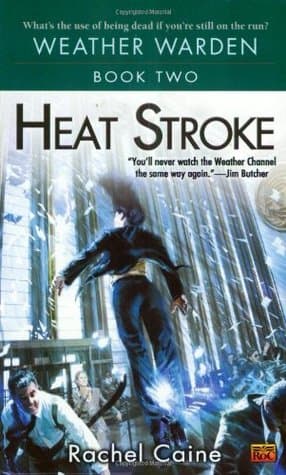
A disgraced Weather Warden, reborn as a Djinn, must master her new powers and save humanity from an atmospheric threat, all while evading those who want to claim her soul.
Five days after her funeral, Joanne Baldwin awakens as a Djinn. Her human life is over, but her consciousness and memories remain. She is now immensely powerful, able to manipulate weather on a grander scale than before. Yet, she is also bound by new limits and weaknesses, especially the risk of being 'claimed' by a human. Her former mentor, David, and her Djinn lover, Lewis, help her understand this change. However, her adjustment is cut short when she senses a new, dangerous threat in Earth's atmosphere – a 'dead zone' that human Wardens cannot detect. It poses a risk to the planet. She struggles to explain the danger because of her altered state and the general disbelief from human authorities.
Joanne and Lewis travel to the Djinn Council, hoping to get their help with the atmospheric problem. The Council, made up of old and powerful Djinn, cares little about human affairs. They view Joanne with suspicion because of her recent change and her strong ties to humanity. They care more about keeping their power and avoiding direct involvement. Lewis, though powerful, is also bound by their rules. Joanne's attempts to explain the dead zone's urgency are met with doubt and resistance, forcing her to consider more extreme measures to protect the world she still cares about.
Despite Joanne's warnings, the 'dead zone' grows and shows its effects. It does not cause immediate, violent weather like typical Warden threats, but a slow, hidden draining of atmospheric energy. This leads to widespread tiredness, illness, and a breakdown of weather systems. Crops fail, animals sicken, and the air itself feels wrong. Human Wardens are confused; their usual detection and manipulation methods do not work against this new danger. This growing crisis forces even the most doubtful human authorities to admit that something new is happening, though they still struggle to understand what it is or where it came from.
With the dead zone worsening, Joanne realizes she cannot fight this alone. She seeks out a powerful and dangerous Djinn, one who has been an enemy in the past, but who has unique knowledge and abilities that might be necessary. This alliance is full of tension and distrust, as their past conflicts are not easily forgotten. However, the sheer size of the threat forces them to put aside their differences, for now. This uneasy partnership shows the desperate situation and the need for unusual actions, even if it means working with former enemies.
Through her improved Djinn senses and her allies' combined efforts, Joanne begins to solve the dead zone's mystery. It is not a natural event, nor a simple weather problem. It is a parasitic entity or force, feeding on the atmosphere's essence and life force, slowly draining the planet. It comes from outside Earth or another dimension, something entirely new to both human Wardens and many Djinn. This discovery raises the stakes; it is not just about controlling weather, but about expelling an alien invader that threatens all life on Earth.
Even with her understanding of the dead zone, Joanne finds it very hard to explain the threat to those who can help. Human Wardens, limited by their senses and understanding, cannot grasp the idea of an atmospheric parasite not based on weather. The Djinn Council largely stays out of it, seeing it as a human problem or minor compared to their old concerns. Joanne feels very alone, holding important knowledge but lacking the means to get others to act. Her Djinn abilities, while powerful, also make her seem strange to human understanding, making her pleas sound like madness to some.
As the dead zone expands and life on Earth declines, Joanne realizes that normal methods will not work. The parasitic entity is too deeply set, too alien for standard weather manipulation or Djinn actions. She considers a drastic and possibly self-destructive solution. It might require her to channel a vast amount of power, risking her own existence or her new Djinn nature. This decision weighs heavily on her, forcing her to face the ultimate cost of her commitment to humanity and the planet, even as her Djinn form makes her more separate from human concerns.
With time running out, Joanne, Lewis, and their uneasy allies launch a coordinated attack against the core of the parasitic dead zone. This is not a battle of physical force but of elemental energy and will. Joanne must use her full Djinn power, pushing her limits to manipulate the atmosphere itself and channel immense energy to expel the entity. The fight is dangerous and unpredictable, threatening to consume her and her allies. Their mission's success depends on their ability to work together despite their differences and to defeat an enemy unlike any they have faced.
The parasitic dead zone is successfully removed from Earth's atmosphere, but the victory has a cost. The planet is marked, its weather systems disrupted, and its population deeply affected. Joanne and her allies are exhausted, and her Djinn form has been tested to its limits. While the immediate danger is over, the event has shown Earth's weakness to extra-dimensional threats and the limits of both human and Djinn understanding. New questions arise about the long-term effects on the planet and the chance of similar threats in the future, leaving a sense of unease.
Afterward, Joanne deals with what it means to be a Djinn. She is powerful, almost immortal, yet her heart remains tied to humanity. The battle has strengthened her resolve to protect Earth, but it has also shown her the deep loneliness and responsibility of her new role. Her relationship with Lewis grows stronger, but the gap between Djinn and human understanding remains. She must learn to balance her great power with her human empathy, living in a world where she is both a guardian and an outsider, forever changed by her rebirth and the trials she has faced.
The Protagonist
Joanne transforms from a powerful human Warden into an even more powerful Djinn, learning to master her new abilities while retaining her essential humanity and commitment to Earth.
The Supporting
Lewis continues to support and guide Joanne, deepening their bond while grappling with the challenges her unique existence poses to Djinn society and their relationship.
The Supporting
David continues to act as Joanne's human confidant and ally, adapting to her new form and helping bridge the gap between human and Djinn understanding.
The Antagonist/Supporting
The Council remains largely static, representing ancient power and resistance to change, forcing Joanne to work around or against their established order.
The Antagonist
The entity grows in power and scope throughout the narrative until it is confronted and ultimately expelled.
The Supporting
Temporarily allies with Joanne out of self-preservation, demonstrating that even ancient enemies can unite against a greater threat.
The Supporting
The human population experiences the devastating effects of the 'dead zone' and is ultimately saved by the intervention of Joanne and her allies.
Joanne's change into a Djinn gives her great power, but it also brings responsibilities and moral problems. She struggles with knowing about a threat that others cannot see or believe, and the pressure to act when others cannot or will not. This theme explores the isolation that often comes with great power and the sacrifices needed to use it for good, especially when one's nature changes completely. It asks if power truly makes things easier or simply changes the nature of the struggle.
“"Being all-powerful was not going to be easy. It was just going to be different, and infinitely more lonely."”
The heart of Joanne's journey is her change from human to Djinn. This theme explores losing her old self, the struggle to adapt to a new life with changed perceptions and weaknesses, and the challenge of combining her human memories and empathy with her new, more separate Djinn nature. It looks at how identity is shaped by big changes, and if a person's core can last beyond their body and species. Joanne constantly balances her human heart and her Djinn abilities.
“"Her human life was over, but she had been reborn into Djinnhood. The world looked different, felt different, but her heart still beat for the same people."”
The novel shows the great difficulties in communication and trust between different species – humans (Wardens) and Djinn. Joanne, living between both worlds, struggles to explain the alien threat to humans who lack the senses to perceive it, and to Djinn who care little about human affairs. This theme explores the barriers created by different perceptions, priorities, and distrust. It also shows the need to bridge these gaps when facing a common, huge enemy. It asks if true understanding is possible across such divides.
“"How could she make them see what she saw, feel what she felt, when their very natures prevented it?"”
At its core, the story is a fight to save Earth's atmosphere and ecosystem from a hidden, alien parasite. This theme highlights how fragile our planet is and its openness to threats beyond human understanding. It explores the idea of the atmosphere as a living, vital thing that can get sick or be drained. The 'dead zone' is a symbol for unseen environmental dangers, showing the urgent need for awareness and action, even against threats that are not immediately obvious or commonly understood. It reinforces the idea that the planet itself needs protection.
“"It wasn't a storm, it was a sickness, a slow, silent death infecting the very air they breathed."”
An atmospheric anomaly that defies conventional understanding and detection.
The 'dead zone' is a crucial plot device, serving as the central antagonist and driving force of the narrative. Its nature as an alien, parasitic entity that cannot be detected by human Warden senses or understood by their science creates immediate tension and highlights Joanne's unique Djinn abilities. This incomprehensibility forces Joanne to act as the sole interpreter of the threat, isolating her and increasing the stakes. It also forces characters to confront something entirely new, pushing the boundaries of their understanding and forcing unlikely alliances.
The protagonist's transformation into a powerful, yet vulnerable, new form.
Joanne's rebirth as a Djinn is the foundational plot device, fundamentally altering her character and capabilities. It grants her the power necessary to perceive and combat the 'dead zone,' but also introduces new challenges: the risk of being 'claimed,' the struggle with Djinn detachment, and the difficulty of relating to humans. This transformation serves to elevate the stakes, provide unique solutions, and explore themes of identity and responsibility, making her the only one capable of facing the novel's central threat.
An ancient, powerful governing body that acts as an obstacle to immediate action.
The Djinn Council serves as a significant plot device by creating external conflict and highlighting the political complexities of the Djinn world. Their ancient laws, detachment from human affairs, and skepticism towards Joanne's warnings force her to seek alternative solutions and rely on her own initiative. This indifference amplifies the sense of urgency and isolation Joanne feels, preventing an easy resolution and forcing her to build alliances outside of established power structures, thereby showcasing her unique leadership and determination.
Ready to see how well you understood this book? Take our interactive quiz with 10 questions.
Biography coming soon.







