“There are no tryouts, there are only games.”
— Michael's philosophy about baseball and life.

Mike Lupica (2006)
Genre
Thriller / Mystery
Reading Time
275 min
Key Themes
See below
Sign in to track this book
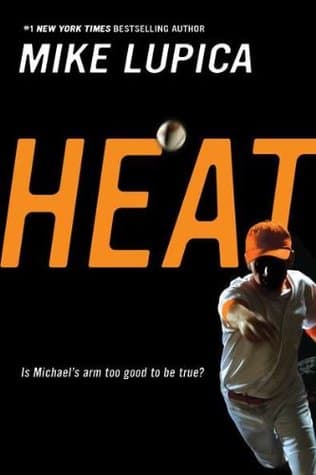
Orphaned Cuban refugee Michael Arroyo, a twelve-year-old pitching star, must hide his age and work to keep his family together while leading his team towards the Little League World Series, all while avoiding authorities who threaten to separate him from his brother.
Twelve-year-old Michael Arroyo is the star pitcher for the South Bronx All-Stars, a Little League team that wants to go to the Little League World Series. His fastball, called 'Heat,' is well-known. But Michael has a secret: he and his seventeen-year-old brother, Carlos, are orphans. Their father died a few months ago, and their mother passed away years ago in Cuba. They live alone in their apartment, with Carlos working to support them and pretending their father is still alive. They fear Social Services would separate them or send them back to Cuba if their situation was known. Michael focuses on baseball, but the constant risk of being found out hangs over their lives.
During a game against the Hamptons team, Michael pitches very well, striking out many batters. The opposing coach, Mr. Minaya, suspects Michael's strong arm and says he looks older than twelve. He formally questions Michael's age, asking for a birth certificate. This challenge puts Michael and Carlos in a difficult spot. Without a birth certificate, which was lost during their journey from Cuba, and no legal guardian, Michael's eligibility to play Little League is in danger. The coach's accusation creates a public scene and brings unwanted attention to Michael's life.
The age challenge makes Michael and Carlos search harder for any document to prove Michael's birth date. They have no birth certificate, only a baptismal certificate from Cuba that is hard to confirm. Michael meets and quickly becomes friends with Ellie, who lives in the same building and also plays baseball well. Ellie, at first quiet, becomes a friend and supporter for Michael, often giving advice. She understands baseball and helps Michael with the stress of the age challenge, though she keeps parts of her own life private.
The Little League board cannot solve the age problem, so they involve Social Services. A social worker, Mrs. Cora, starts looking into Michael's living situation. This is what the brothers feared most. Mrs. Cora asks direct questions about their parents, their living arrangements, and their money. Carlos tries to protect Michael and their secret, but the pressure grows. The threat of being separated and placed in foster care, or even sent back to Cuba, becomes a real and scary possibility for the two brothers, overshadowing Michael's baseball dreams.
As the investigation continues, Michael learns that Ellie is the granddaughter of Ramon Garcia, a former New York Yankees scout known as 'El Grande.' El Grande, a Cuban immigrant, lives in the same building and has been watching Michael, recognizing his talent and his trouble. Ellie tells Michael about her connection to El Grande, and it becomes clear that El Grande cares about Michael's future. He starts to offer quiet support and advice, using his contacts to help the boys. His involvement stays mostly hidden, like a quiet helper for Michael.
Overwhelmed by the pressure from Social Services and the Little League, Carlos finally tells their coach, Mr. Gibbons, the truth about being orphans and their father's death. Mr. Gibbons, surprised but understanding, promises to help. News of Michael's situation spreads, and the South Bronx All-Stars team, their families, and even some unexpected friends support Michael. They get a petition signed, gather statements, and offer help, showing the strong community ties in their neighborhood and their commitment to seeing Michael play.
El Grande, moved by Michael's situation and his own memories, shares a connection to Michael's family. He explains that he knew Michael's father, Papi, in Cuba. Papi was a talented baseball player whom El Grande had scouted decades ago. He tells stories of Papi's skill and character, and importantly, remembers when Michael was born. El Grande's statement, based on his long relationship with the Arroyo family, becomes key evidence. It gives a believable, independent account of Michael's age and background that no official document could. This confirms El Grande's role as Michael's protector and advocate.
The Little League board holds a hearing to decide if Michael can play. Mr. Minaya, the opposing coach, presents his case, pointing out the lack of official papers. El Grande steps forward and gives a powerful, emotional statement, recalling his history with Michael's father and confirming Michael's age. He speaks of the challenges of Cuban immigrants and the importance of faith and community. The support from the South Bronx community, including letters and people attending, also influences the board. After thinking it over, the board decides in Michael's favor, letting him continue to play.
After the Little League hearing, Mrs. Cora from Social Services, seeing the community's support and understanding the brothers' circumstances, changes her approach. Instead of separating them, she works with Carlos and the community to find a legal way for Carlos to become Michael's official guardian. This means navigating the legal system and making sure the boys have a stable home. Her efforts, with help from Mr. Gibbons and El Grande, allow Carlos to legally care for Michael, giving them the stability and security they need, keeping them together as a family.
With the age challenge resolved and Carlos legally recognized as his guardian, Michael can fully focus on baseball. The South Bronx All-Stars, motivated by their shared experience and new determination, continue winning. Michael's 'Heat' on the mound is stronger than ever, showing his peace of mind and the strength he gets from his family and community. The team moves through the playoffs, with the Little League World Series now a real goal. Michael, once a lonely boy with a secret, now stands tall, surrounded by love and support, ready to pursue his dream with his team.
The Protagonist
Michael transforms from an isolated boy burdened by a secret to a confident young man who embraces his community and finds a new, stable family.
The Supporting
Carlos evolves from a burdened older brother to Michael's legal guardian, finding strength in vulnerability and accepting help from his community.
The Supporting
Ellie sheds her initial guardedness, revealing her connection to El Grande and becoming an open, supportive friend to Michael.
The Supporting
El Grande transitions from a quiet observer to an active advocate, using his past connections and wisdom to secure Michael's future.
The Supporting
Mr. Gibbons deepens his role from a baseball coach to a vital community leader and guardian figure for Michael and Carlos.
The Supporting
Mrs. Cora evolves from a potential threat to Michael and Carlos's separation to a compassionate facilitator of their family's legal stability.
The Antagonist
Mr. Minaya remains an antagonist throughout, serving as the catalyst for Michael's challenges and the external force he must overcome.
The Mentioned
Though deceased, Papi's memory and past actions continue to shape Michael and Carlos's journey, influencing key plot developments.
The story of 'Heat' focuses on the strong connection between Michael and Carlos. Being orphans means they must rely only on each other, creating loyalty and a desire to protect. Carlos gives up his own youth and future to care for Michael, working jobs and keeping a dangerous secret to stay together. Michael, in turn, trusts and depends on Carlos. This theme also includes the 'found family' in their community—Coach Gibbons, Ellie, and El Grande—who provide the support and care the brothers lack, showing that family is more than just blood relatives.
“'We got us, Michael,' Carlos said. 'That's all we need.'”
The novel quietly looks at the difficulties immigrants face, especially those from Cuba. Michael and Carlos's journey to the U.S. and their father's death leave them without official documents, which becomes a main plot point when Michael's age is questioned. Their fear of being sent away or separated by Social Services shows how uncertain their situation is as undocumented orphans. The story touches on losing identity and roots, and the struggle to build a new life while honoring their background, especially through El Grande's shared history with Michael's father.
“'You forget what it's like to be from somewhere else, to lose everything to get here.'”
A main theme is Michael's fight for fairness. His talent is met with doubt, leading to an unfair age challenge based on how he looks rather than facts. The complex rules and lack of official papers put him at a disadvantage. The novel questions if a system is fair when it judges based on paperwork instead of character or talent. The community's support for Michael, and El Grande's emotional testimony, show a group effort to ensure justice and that a deserving child is not denied his dream because of things he cannot control.
“'He's a kid, just a kid who wants to play baseball. Isn't that what Little League is all about?'”
The South Bronx community helps Michael and Carlos in important ways. When their secret is out, their coach, teammates' families, and even new friends like Ellie and El Grande support them. They organize petitions, give statements, and offer emotional help, showing strong solidarity and shared responsibility. This theme shows how, during hard times, a supportive community can be a lifeline, offering a sense of belonging and protection that helps overcome individual problems and system obstacles.
“'This kid is ours. He's family. And we're not letting you take him away.'”
A crucial MacGuffin driving the central conflict and revealing Michael's backstory.
The absence of Michael's birth certificate is the primary plot device that propels the entire narrative. It acts as a MacGuffin, a seemingly essential item that the characters must obtain, which in turn creates the central conflict of the age challenge. Its absence forces Michael and Carlos to confront their precarious living situation, draws in Social Services, and ultimately leads to the unraveling of their secrets. It symbolizes the difficulties faced by immigrants in proving their identity and the bureaucratic hurdles that can derail lives, while also allowing for the introduction of characters like El Grande who can provide alternative forms of proof.
A symbol of Michael's exceptional talent and the catalyst for suspicion.
Michael's signature 'Heat' fastball is not just a baseball skill; it's a symbolic plot device. It represents his extraordinary talent and passion for the game, but also ironically becomes the catalyst for his troubles. The power and speed of his pitch are so unusual for a twelve-year-old that they trigger the opposing coach's suspicion and the subsequent age challenge. Thus, his greatest asset becomes the source of his greatest vulnerability, highlighting the double-edged sword of exceptionalism and drawing immediate attention to his hidden circumstances.
A deus ex machina that provides a resolution to the age dispute.
El Grande's revelation that he knew Michael's father in Cuba and had scouted him decades ago serves as a form of deus ex machina. While not entirely out of the blue, as El Grande is introduced earlier, his specific, timely, and pivotal testimony about Michael's birth and family history provides the crucial, non-documentary evidence needed to resolve the age challenge. This device allows for an emotional and community-based resolution to a problem that seemed insurmountable through official channels, emphasizing the power of personal testimony and shared history over bureaucratic paperwork.
A core narrative suspense element driving character motivation and fear.
The secret that Michael and Carlos are orphaned and living alone is a foundational plot device that generates continuous suspense and drives much of the characters' actions and fears. This secret dictates their cautious behavior, their reluctance to engage with authority figures, and Carlos's immense burden of responsibility. The constant threat of exposure provides tension throughout the narrative, making every interaction with outsiders potentially dangerous. It is the underlying cause for their lack of official documentation and fuels the emotional stakes of the entire story, ultimately leading to their growth and the expansion of their 'family'.
“There are no tryouts, there are only games.”
— Michael's philosophy about baseball and life.
“The ball doesn't know how old you are.”
— Michael's internal thought when facing older, bigger players.
“You can't steal second base with one foot on first.”
— Mr. Gibbs' advice to Michael about taking chances.
“Sometimes the biggest heroes are the ones no one ever sees.”
— Michael reflecting on his brother Carlos and his sacrifices.
“Baseball is a game of inches, and life is too.”
— Michael's observation about the small margins that make a difference.
“A lie always has a way of catching up to you.”
— Michael contemplating the consequences of his secret.
“You don't need a uniform to be a team.”
— Michael realizing the support he has from his friends and family.
“Some things, you just gotta believe in, even if they don't make sense.”
— Michael talking about hope and his dreams.
“The hardest part isn't getting to the top; it's staying there.”
— Mr. Gibbs' warning about the challenges after success.
“Every pitch is a new beginning.”
— Michael's mindset when he's on the mound, facing adversity.
“You can't outrun your past, but you can choose your future.”
— Michael considering his situation and the choices he has.
“Sometimes, the best play is the one you don't make.”
— Mr. Gibbs advising Michael on patience and strategy.
“It's not about how hard you hit, it's about how hard you can get hit and keep moving forward.”
— A variation of a famous quote, applied to Michael's struggles.
“Family isn't always blood. It's the people who stand by you.”
— Michael's realization about his support system.
Ready to see how well you understood this book? Take our interactive quiz with 10 questions.







