“The heart is not a stone; it is a muscle that beats with the rhythm of our choices.”
— Protagonist Lara Jansen reflects on her own emotional resilience.

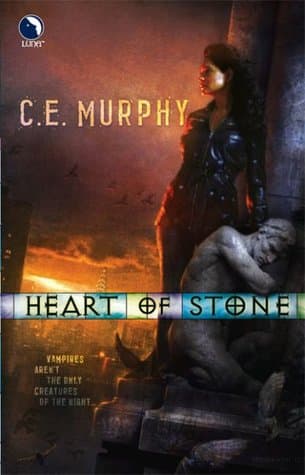
C.E. Murphy (2007)
Genre
Fantasy / Mystery / Romance
Reading Time
9-10 hours
Key Themes
See below
Sign in to track this book
A lawyer's late-night jog through Central Park shatters her reality, pulling her into a hidden world of ancient gargoyles, deadly magic, and a murder mystery where her only hope for survival and justice lies with a stone-skinned suspect.
Margrit Knight, a lawyer, jogs through Central Park late one night and finds a dying woman and a powerful man with blood on his hands. The woman, a banshee named Maeve, dies after warning about a 'heart of stone.' The man, Alban, is a gargoyle, one of the Old Races that have secretly lived alongside humans for centuries. Margrit's rational mind struggles to accept the supernatural. Alban, realizing she is a witness, needs her help to clear his name. He is the main suspect in Maeve's murder, and the Old Races' strict laws say he must prove his innocence or face severe punishment from their ruling council.
Alban takes Margrit to his home, a hidden gargoyle place in the city. There, she starts to understand the complex, ancient society of the Old Races. She meets his fellow gargoyles, including the traditional Roric, and learns about their Council, their magic, and their strict laws, especially about murder. Alban explains that Maeve, the banshee, was known for her death-predicting wails. Her death is important, and the Council is already investigating. Margrit, at first doubtful, uses her legal skills to ask Alban for details, realizing that human law will not apply here. She agrees to help him, driven by a growing sense of responsibility and an attraction to the gargoyle.
As Margrit and Alban start their investigation, another Old Races member, a goblin named Finn, is found murdered. This second death makes the situation more urgent and Alban's position more difficult. The Council, led by the powerful sorceress Elara, watches Alban more closely. Margrit realizes that the killer is targeting specific Old Races members, and the murders seem linked to a deeper, older secret. She and Alban must work quickly, dealing with the politics and old biases within the Old Races' community, as the human police, led by Detective Miller, also begin their own, confused investigation into the strange deaths.
Margrit and Alban follow different leads, questioning other Old Races members, including a gnome named Silas and a dryad. Their questions uncover a web of old complaints, grudges, and secrets. They learn that Maeve, the banshee, had been investigating something important before her death, possibly related to a powerful artifact or an ancient prophecy. During their investigation, unknown attackers assault them, confirming that the killer knows about their progress and is trying to stop them. Margrit, without magic, is resourceful and brave, using her intelligence and quick thinking to help them escape danger. The attacks strengthen her commitment to Alban and the case.
Through their efforts, Margrit and Alban start to solve the puzzle. They learn that the 'heart of stone' Maeve mentioned is a legendary, powerful artifact that gives great power to its user, possibly able to control or destroy the Old Races. The killer is systematically removing those who knew about the artifact or were close to finding its location. Margrit realizes the killer is not just targeting random people but is methodically removing obstacles to their goal. The motive appears to be power, and the killer will sacrifice many to get it, threatening the balance between the Old Races and their hidden existence.
The investigation ends with a shocking revelation: the killer is Elara, the sorceress and a powerful Council member. She has been secretly manipulating events, using her position to remove rivals and get the 'heart of stone' for herself. Her motive is to gain ultimate power over all the Old Races. Margrit and Alban confront Elara, who shows her true, ruthless nature and her dark magic. A fierce magical battle happens, with Alban's strength and Margrit's quick thinking against Elara's sorcery. The fate of the Old Races, and possibly the exposure of their existence to humans, is at stake as they fight to stop her.
In a final struggle, Margrit distracts Elara, letting Alban land a decisive blow. He defeats the sorceress and stops her from fully using the 'heart of stone.' The artifact is safe, and the immediate threat to the Old Races is gone. With Elara exposed as the killer, Alban is officially cleared by the Council. The Old Races move to cover up the events, keeping their existence hidden from humanity. Margrit, having seen the full supernatural world, finds her rational view of the world changed. She has not only helped Alban clear his name but has also played a part in stopping a disaster for an entire hidden society.
After things settle, Margrit's life cannot return to normal. Her understanding of reality has grown beyond anything she imagined. Her experience with the Old Races, and especially with Alban, has changed her. The initial attraction between them has become a powerful bond. Alban, in turn, has found in Margrit not just an ally, but a partner who understands and accepts his true nature. While the immediate crisis is over, Margrit knows her connection to Alban and the Old Races is now permanent. She must live her human life with the knowledge of a hidden, magical world, forever linked to the gargoyle who captured her heart.
The Protagonist
Transforms from a purely rational individual into someone who accepts and thrives within the supernatural world, finding love and purpose beyond her previous understanding.
The Protagonist/Love Interest
Learns to trust and rely on a human outsider, finding a partner who bridges the gap between his world and hers.
The Antagonist
Her ambition and lust for power are exposed, leading to her downfall.
The Supporting
Overcomes his initial distrust of humans to accept Margrit as an ally and friend.
The Mentioned/Catalyst
Her death serves as the inciting incident, revealing the hidden dangers of the supernatural world.
The Supporting
Remains largely oblivious to the true supernatural nature of the crimes, highlighting the hidden aspect of the Old Races.
The Supporting
Helps guide the protagonists with his ancient knowledge, even if reluctantly.
The Mentioned/Victim
His death confirms the pattern of the killer and heightens the stakes for Alban.
This theme explores how both Margrit and Alban deal with their identities and accepting themselves and each other. Margrit, a lawyer, must accept the existence of a magical world and her place in it, challenging her rational identity. Alban, a gargoyle, must accept relying on a human and the possibility of a relationship that crosses species lines. The Old Races themselves struggle with keeping their hidden identity while facing internal problems. The story shows how embracing one's true nature, even if it is unusual, leads to strength and connection.
“She was a lawyer, for heaven's sake. She dealt in facts, in evidence, in the cold, hard logic of the law. And now she was dealing with gargoyles and banshees and ancient magic. The world she thought she knew had just been shattered.”
The novel explores different ideas of justice and law – human law versus the ancient laws of the Old Races. Margrit, trained in human law, struggles to apply her understanding to a society where magic and old traditions decide justice. Alban faces judgment from his Council, where trial by combat or quick execution are possibilities. The main mystery is about finding the 'true' killer, not just proving Alban's innocence. This highlights a universal desire for justice, even across different legal systems. The conflict between these systems drives much of the story.
“'Our laws are ancient, human. They are not like yours. There is no appeal, no clever argument. Only truth, or consequences.'”
Prejudice is a main theme, shown in the Old Races' distrust of humans and internal biases among the different magical species. Margrit faces doubt and hostility from some Old Races members just because she is human. Also, there are tensions and rivalries between species like gargoyles, banshees, and sorcerers. This theme shows the challenges of understanding and living with those who are different, whether due to species, culture, or magic. The story suggests that overcoming these prejudices is needed for survival and real connection.
“'Humans are weak, short-lived, and prone to panic. They are not to be trusted with our secrets, or our lives.'”
The 'heart of stone' artifact directly shows the theme of power and how it can corrupt. The killer wants ultimate power over the Old Races, showing how ambition can lead to violence and betrayal. The different magical abilities of the Old Races also show various forms of power. The story explores the responsibility that comes with having power, whether it is magical, political, or the power of knowledge. It questions whether power should be concentrated or spread out and the moral effects of seeking it at any cost.
“'The Heart of Stone… it grants power beyond imagining. Enough to rule all the Old Races, or to shatter them.'”
A legendary magical artifact that serves as the story's MacGuffin
The 'Heart of Stone' is a mythical, immensely powerful artifact whose existence and potential control drive the entire murder plot. It is the object the killer seeks, and its legendary status provides the motive for the escalating violence. It functions as a MacGuffin, a plot device that sets the story in motion and provides a tangible goal for both the antagonist and the protagonists, even though its exact nature and powers are only gradually revealed. Its pursuit unravels ancient secrets and exposes the true villain.
The supernatural world existing secretly alongside the human world
This device establishes a parallel reality where various Old Races (gargoyles, banshees, goblins, sorcerers, etc.) live covertly among humans. Margrit's abrupt entry into this hidden world serves to introduce the reader to its rules, politics, and dangers. It creates inherent tension as the Old Races constantly strive to maintain their secrecy from humanity, adding an extra layer of stakes to the investigation. The contrast between Margrit's mundane human life and the magical reality she discovers is a core element of the narrative.
The pairing of a rational human lawyer and a stoic gargoyle
The pairing of Margrit Knight, a pragmatic human lawyer, and Alban, an ancient, mystical gargoyle, is a classic 'unlikely duo' trope. Their contrasting backgrounds, skills, and perspectives create both narrative tension and opportunities for growth. Margrit's logical mind and legal expertise complement Alban's supernatural strength and ancient knowledge. Their initial skepticism of each other gradually evolves into trust, respect, and ultimately, romance, making their collaboration essential to solving the mystery.
The governing body of the Old Races that dictates justice
The Council is the ruling authority of the Old Races, responsible for maintaining order, enforcing ancient laws, and judging those accused of crimes within their society. It serves as a source of external pressure on Alban, as he must prove his innocence to them or face severe consequences. The Council's rigid traditions and political machinations (especially those of Elara) highlight the differences between human and supernatural justice systems and complicate Margrit and Alban's investigation, making it more than just a simple murder mystery.
“The heart is not a stone; it is a muscle that beats with the rhythm of our choices.”
— Protagonist Lara Jansen reflects on her own emotional resilience.
“In a world of magic, the greatest mystery is always the human soul.”
— Lara contemplates the intersection of her magical abilities and detective work.
“Love does not soften the edges of truth; it sharpens them.”
— Lara discusses her complicated relationship with Detective Michael Morrison.
“A stone may weather the storm, but it is the cracks that let in the light.”
— Lara learns to embrace vulnerability after a personal loss.
“Magic is not a gift; it is a responsibility that weighs heavier than any stone.”
— Lara grapples with the ethical use of her magical powers.
“The past is a ghost that haunts, but the present is a choice we must live with.”
— Lara confronts her own history while solving a case.
“In the heart of every mystery lies a truth waiting to be unearthed.”
— Lara explains her detective philosophy to a colleague.
“Strength is not in being unbreakable, but in knowing how to mend the breaks.”
— Lara offers advice to a friend facing adversity.
“Romance is the alchemy that turns ordinary moments into gold.”
— Lara reflects on her growing feelings for Michael.
“Fear is a stone in the shoe; it slows you down but does not stop the journey.”
— Lara pushes through her fears during a dangerous investigation.
“The world is full of magic for those who dare to see beyond the surface.”
— Lara teaches a young character about perceiving magic.
“Trust is the bridge between two hearts, built stone by stone.”
— Lara and Michael work on building their relationship.
“Justice is not a destination but a path we walk every day.”
— Lara discusses the ongoing nature of her work as a detective.
“In the silence between heartbeats, we find the courage to change.”
— Lara makes a pivotal decision in her personal life.
Ready to see how well you understood this book? Take our interactive quiz with 10 questions.

C.E. Murphy is a speculative fiction author known for the "Urban Shaman" series, including "Heart of Stone" and "House of Cards." Her work often blends elements of fantasy, mystery, and the supernatural, creating intricate worlds and compelling characters. Murphy's writing has garnered a dedicated following within the genre.







