“It was not easy to be a modern girl, but it was even harder to be a traditional one.”
— Reflecting on Shanta's internal conflict between new and old ways.

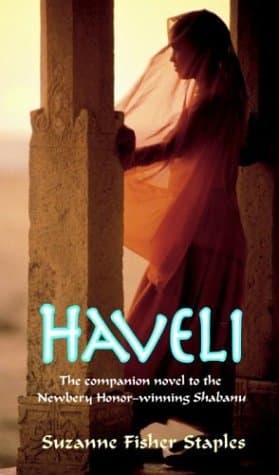
Suzanne Fisher Staples (1993)
Genre
Children's / Historical Fiction / Young Adult / Romance
Reading Time
360 min
Key Themes
See below
Sign in to track this book
Eighteen-year-old Shabanu, already a mother and battling the rigid customs of her husband's household for her daughter's future, finds her world further upended by an illicit love affair within the ancient walls of a Lahore haveli.
Eighteen-year-old Shabanu, having given birth to her husband Rahim's daughter, Mumtaz, returns to her family's encampment in the Cholistan Desert after a time in Lahore. She is a woman now, with the responsibilities of motherhood and a place, though still uncertain, within Rahim's household. Her sister Phulan, also married to Rahim's brother Murad, greets her. Despite the joy of being back in the familiar desert, Shabanu feels the weight of her new status and the constant threat of being replaced by a younger wife, a common worry for women in their society. She wants a better future for Mumtaz, one that ideally includes an education, a radical idea for girls in their community.
Shabanu's uncertain position becomes clear when Rahim, saying he needs more sons to secure his lineage and the family's future, considers taking a second wife. This news upsets Shabanu, as it would lessen her status and possibly threaten Mumtaz's inheritance and standing in the family. She confronts Rahim, showing her pain and fear, but he remains bound by custom and the expectations placed on him as an influential man. The possibility of a co-wife creates tension and anxiety for Shabanu, who tries to balance her love for Rahim with the harsh realities of their traditions.
Rahim decides to take Shabanu and Mumtaz to Lahore, the city where his extended family lives in a grand haveli, a traditional mansion. This trip is important, as Shabanu has spent most of her life in the desert. The city contrasts sharply with the open spaces of the Cholistan, with its crowded markets, old buildings, and different social customs. Shabanu is both fascinated and overwhelmed by the city. The haveli itself is a world apart, filled with many relatives, servants, and complex social rules, presenting new challenges and observations for Shabanu.
Life in the haveli is a constant learning experience for Shabanu. She watches the women of Rahim's family, their secluded lives, their gossip, and their subtle power struggles. She feels out of place with her desert upbringing, often clashing with the more refined and restrictive customs of city life. Her outspoken nature, a strength in the desert, is seen as a weakness here. She learns about the web of relationships and the importance of keeping up appearances. Despite the comforts of the haveli, Shabanu feels confined and longs for the freedom of her desert home, even as she tries to adapt for Mumtaz's sake.
During her time in Lahore, Shabanu meets Omar, a distant relative of Rahim's who studies medicine. Omar is different from the men Shabanu has known; he is educated, speaks English, and has more modern views. Their conversations, at first brief and formal, quickly become deeper. Shabanu is drawn to his intelligence, his kindness, and his respect for her opinions. Omar, in turn, is captivated by Shabanu's spirit, her unconventional beauty, and her strength. A forbidden connection begins to form between them, an unspoken understanding that goes beyond social barriers and the fact that Shabanu is married.
As days pass, Shabanu and Omar's connection grows into a deep and forbidden love. They find ways to meet in secret, stealing moments in the haveli's courtyards or during visits to the city, exchanging books and sharing their dreams. Shabanu, who always accepted her arranged marriage with Rahim, experiences a love she never thought possible, a love that challenges everything she learned about duty and tradition. Omar offers her a glimpse into a world where women have choices and intellectual companionship, making her question her own future and Mumtaz's even more. Their secret relationship is full of danger and the constant fear of discovery.
Shabanu is torn between her growing love for Omar and her loyalty and duty to Rahim and, most importantly, to Mumtaz. She knows that an affair would bring great shame upon her family and could lead to severe consequences, including disinheritance or worse for Mumtaz. The guilt weighs heavily on her, as she still cares for Rahim and values the security he provides. She struggles with the moral dilemma, understanding the societal impact of her actions while being unable to deny the strong emotions Omar brings out in her. Her inner conflict intensifies as the time for their return to the desert nears.
The secret affair between Shabanu and Omar is eventually discovered, likely through the many watchful eyes in the haveli. The revelation shocks Rahim's family, bringing great dishonor and outrage. Shabanu is confronted by Rahim and other family elders, facing their anger, disappointment, and judgment. The confrontation is a terrifying experience, as Shabanu must defend herself and her choices in a society where a woman's honor is most important. The consequences of her actions threaten to destroy her life and Mumtaz's future, showing the severe penalties for defying tradition.
After the discovery, Rahim, deeply hurt and conflicted, must decide Shabanu's fate. He is torn between his love for her, his duty to his family's honor, and the societal pressures to punish her severely. After much thought and likely advice from family elders, Rahim makes a decision that, while harsh, tries to balance tradition with some mercy. He does not divorce her, which would leave her poor, but his trust is broken, and the future of their marriage is changed forever. The terms of her continued presence in his household likely depend on strict adherence to tradition and an end to ties with Omar.
Shabanu, her spirit bruised but not broken, returns to the Cholistan Desert with Mumtaz. The desert, once a symbol of freedom, now feels different, touched by the memories of Lahore and the love she lost. She is a changed woman, having experienced a different kind of love and a glimpse of another life. While the affair with Omar is over, it has shaped her understanding of herself and her desires. She rededicates herself to Mumtaz, more determined than ever to secure her daughter's future and to teach her the strength to navigate their world. Shabanu must now live with her choices and create a new path within her traditional life.
The Protagonist
Shabanu transforms from a young woman accepting her fate to one who questions tradition and experiences a forbidden love, ultimately returning to her roots with a renewed sense of purpose and a deeper understanding of her own strength and limitations.
The Supporting
Rahim begins as a traditional husband, but is forced to confront the emotional fallout of his wife's actions, leading him to make a difficult decision that balances custom with a degree of personal understanding.
The Supporting
Mumtaz remains a child throughout the narrative, serving primarily as a catalyst for Shabanu's hopes and fears for the future.
The Supporting
Omar represents an alternative path for Shabanu, offering her intellectual and emotional connection, only to be separated by the unyielding force of tradition.
The Supporting
Phulan remains a steadfast, traditional figure, offering support and perspective from within the established cultural framework.
The Supporting
Dadi remains a static but powerful figure, representing the immutable force of tradition and family legacy.
The Supporting
Murad remains a consistent character, embodying the traditional male role within the family structure.
This theme is central to Shabanu's journey. She is constantly torn between her society's deeply ingrained customs, which dictate a woman's role, marriage, and obedience, and her own desire for personal freedom, intellectual growth, and self-determination. Her love for Omar is the ultimate example of this conflict, as it directly challenges the traditional arranged marriage and family honor. The novel explores the suffocating weight of tradition, especially for women, and the courage needed to even question, let alone defy, established norms. Shabanu's desire for Mumtaz's education also highlights this struggle, as she imagines a future for her daughter that differs from her own.
““A woman’s heart is like a garden, but the walls around it are built by men.””
The book explores the interplay between love, duty, and obligation in an arranged marriage. Shabanu initially accepts her marriage to Rahim out of duty and affection, but her meeting with Omar introduces her to a different, more passionate and intellectually stimulating love. This makes her question whether love can be commanded or if it must grow naturally. The theme explores the pain of choosing between what one feels and what one is expected to do, and the consequences when these two forces clash. Rahim's own struggle to balance his feelings for Shabanu with his societal duties also reflects this theme.
““How could a heart be commanded to love one man, when another had captured it so completely?””
Despite the restrictive patriarchal society, the novel shows the strength, resourcefulness, and resilience of its female characters, especially Shabanu. She is not a passive victim but actively seeks ways to assert herself, whether by planning for Mumtaz's education, expressing her opinions to Rahim, or pursuing a forbidden love. Even after the consequences of her actions, Shabanu's spirit is not broken; she finds renewed purpose in her daughter and in her own inner strength. The women of the haveli, though seemingly confined, also show subtle forms of power and influence within their sphere, navigating complex social dynamics with their own forms of resilience.
““My spirit would not be chained, even if my body were.””
The contrast between the traditional, free-spirited life in the Cholistan Desert and the more refined, restrictive, and complex urban environment of Lahore is an important theme. The desert represents Shabanu's roots, freedom, and a simpler, though harsh, way of life, where strength and self-reliance are most important. The city, with its grand haveli, complex social rules, and exposure to modern ideas (like Omar's education), represents both opportunity and confinement. Shabanu's discomfort and fascination with city life highlight the cultural differences and the challenges of adapting to new environments while keeping one's identity. This clash shows the broader tension between tradition and modernity.
““The desert offered freedom, but the city whispered of other possibilities, other cages.””
A romantic relationship that defies societal norms and expectations.
The forbidden love between Shabanu and Omar serves as the primary catalyst for conflict and character development. It directly challenges the established social order, Shabanu's arranged marriage, and the concept of family honor. This device heightens the stakes, creating immense tension and moral dilemmas for Shabanu. It forces her to confront her deepest desires against her ingrained sense of duty and tradition, ultimately leading to significant consequences and shaping her understanding of herself and her place in the world. The danger of discovery and the tragic inevitability of their separation underscore the power of societal constraints.
The physical environments profoundly influence characters and plot.
Both the Cholistan Desert and the haveli in Lahore function as more than mere backdrops; they are almost characters themselves, shaping the lives and perspectives of the protagonists. The desert embodies freedom, harsh beauty, and traditional values, while the haveli represents confinement, intricate social structures, and the clash between old and new. The contrast between these settings highlights Shabanu's internal conflicts and the cultural dichotomies she navigates. The oppressive atmosphere of the haveli, with its many watchful eyes, directly contributes to the tension of the forbidden romance, while the openness of the desert symbolizes Shabanu's yearning for liberation.
The potential for Rahim to take another wife creates tension and insecurity for Shabanu.
The recurring threat of Rahim taking a second wife is a significant plot device that establishes Shabanu's precarious position within her marriage and society. It underscores the patriarchal nature of their culture, where a woman's value and security can be easily diminished. This threat creates initial tension and insecurity for Shabanu, making her more vulnerable and driving her desire to secure Mumtaz's future. It also provides a stark contrast to the emotional fulfillment she finds with Omar, highlighting the transactional nature of her arranged marriage and the lack of choice afforded to women in her society.
“It was not easy to be a modern girl, but it was even harder to be a traditional one.”
— Reflecting on Shanta's internal conflict between new and old ways.
“The wind carried the scent of spices and jasmine, a smell that was India itself.”
— Describing the sensory experience of India for Shanta.
“A girl's heart was a delicate thing, easily broken, but also capable of great strength.”
— Shanta's grandmother offering wisdom about love and resilience.
“Sometimes the greatest freedom was found in accepting one's destiny, rather than fighting it.”
— Shanta grappling with her arranged marriage and the concept of fate.
“The past was a shadow that always followed, no matter how far one ran.”
— Shanta's thoughts on the lingering influence of her family's history and expectations.
“Love was not a sudden burst of lightning, but a slow-burning ember.”
— Shanta's evolving understanding of love within her marriage.
“Even in the deepest darkness, a single lamp could cast a long and hopeful light.”
— A metaphor for finding hope amidst challenges.
“To truly know someone, you had to see them not just with your eyes, but with your heart.”
— Shanta learning to understand her husband beyond initial impressions.
“The haveli was a living thing, breathing secrets and stories into the very air.”
— Describing the ancient family home as a character in itself.
“Silence could speak volumes, especially between those who understood its language.”
— Shanta and her husband communicating non-verbally.
“The world was changing, and even the oldest traditions had to bend, if not break.”
— Shanta observing the shifts in society around her.
“Courage was not the absence of fear, but the decision to act despite it.”
— Shanta making difficult choices for her future.
“A woman's strength lay not in her muscles, but in her spirit and her will.”
— A message about female empowerment within the historical context.
“Every journey, no matter how long, began with a single step into the unknown.”
— Shanta embarking on a new phase of her life.
Ready to see how well you understood this book? Take our interactive quiz with 10 questions.

Dan Gemeinhart
4.5

Kate O'Hearn
4.4

Jeanne Birdsall
4.4

Jen Wang
4.4

Wendelin Van Draanen
4.3

John Marsden
4.3

Chris Van Allsburg
4.3

Jennifer A. Nielsen
4.2