
Biography coming soon.

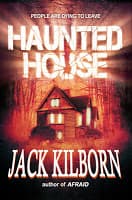
Jack Kilborn (2013)
Genre
Thriller / Fantasy / Mystery
Reading Time
12 Minutes
Key Themes
See below
Sign in to track this book
The story begins with several characters, all survivors of horrific past events from previous novels, receiving a mysterious invitation. These individuals include Jim and Amy (from AFRAID), Ken, Joe, and Nancy (from TRAPPED), and Paul and Sarah (from ENDURANCE). The invitation is for a 'haunted house experience' at Blackwood Manor, a remote, run-down mansion, with a large cash prize for those who finish it. Skeptical but curious, and many still affected by their past, they decide to go. Each has their own reasons: some want the money, others seek a strange form of closure or an explanation for why they lived. They do not know that the person behind this event has a deeper, more dangerous plan than just entertainment.
When the survivors arrive at Blackwood Manor, a decaying Victorian mansion with a heavy atmosphere, they find other invited guests. These include Dr. Frank Belgium, a mysterious and unsettling character from ORIGIN. Belgium, a brilliant but morally questionable scientist, introduces himself as the host and explains the 'game's' rules. He claims the house is truly haunted and that their challenge is to survive the night, or several nights, while recording any paranormal activity. The cash prize is repeated, and participants are encouraged to explore the house, which is filled with old furniture, eerie portraits, and a strong sense of dread. The first interactions among the survivors are tense, marked by suspicion and a shared, unspoken understanding of their violent histories.
As night falls, Blackwood Manor's true nature appears. The house, more than just a prop, starts to show real supernatural events. Lights flicker, doors slam shut on their own, whispers echo through the halls, and chilling figures are glimpsed. The survivors, initially trying to explain the events as tricks or psychological manipulation by Dr. Belgium, find their doubt fading. Their past traumas reappear, making them especially open to the house's evil influence. Panic slowly starts as they realize this is much more than a staged event. Their survival instincts, sharpened by past horrors, are again needed. The line between reality and hallucination blurs, and the group's unity begins to break under the constant psychological attack.
Dr. Belgium, watching the unfolding terror with detached interest, eventually gives some vague details about Blackwood Manor's dark history. He says the house was once home to a family involved in dark rituals and has been a center for supernatural energy for centuries. More disturbingly, he hints at his own long-standing interest in the paranormal and the human mind under stress, suggesting that the 'haunting' is not just an accident but a controlled experiment. He mentions a device or method he is using to amplify the house's inherent evil, effectively turning it into a living thing designed to feed on their deepest fears. This revelation shifts the participants' focus from just surviving the ghosts to understanding Belgium's twisted plan.
The house's influence grows, exploiting each survivor's individual psychological weaknesses. Jim sees visions of his deceased wife, Amy relives her abduction, Ken battles hallucinations of the cultists who tormented him, and Joe and Nancy are haunted by the memory of their ordeal in the pit. The group becomes more fragmented as fear and paranoia take hold, leading to accusations and mistrust. Dr. Belgium, through a hidden surveillance system, observes their reactions, making subtle adjustments to the house's manifestations, tailoring the terror to each person. Physical threats are minimal at this stage; the real danger is the psychological breakdown and the house's ability to drive them to madness or self-destruction by forcing them to face their most horrific memories.
The 'game' moves from psychological torment to physical danger. Pushed to the edge of sanity by the house's constant attack, some participants give in to its influence. One character, overwhelmed by personal demons, commits suicide in a gruesome way, seemingly driven by a hallucination. Another is brutally murdered by a seemingly possessed houseguest, showing how blurred the lines are between supernatural and human evil. These deaths shatter any remaining belief the survivors held about the 'experience' being harmless. The stakes are now clearly life or death, and the survivors realize that escape, not just endurance, is their main goal. The house itself seems to enjoy their fear and suffering, growing stronger with each death.
Realizing that Dr. Belgium is the true creator of their nightmare, the remaining survivors combine their resources and decide to confront him. They navigate the booby-trapped and increasingly hostile mansion, battling both the house's spectral inhabitants and their own fading sanity. They eventually corner Belgium in a hidden laboratory or control room within the manor, where he reveals the full scope of his experiment. He explains his theory that intense trauma and fear create a specific energy that can be collected and amplified, and that their past experiences made them ideal subjects. His ultimate goal is to understand and control this energy, believing it holds the key to unlocking new aspects of human experience or even immortality.
In his lab, Dr. Belgium proudly shows the device he has been using to manipulate Blackwood Manor and its inhabitants. It is a complex array of scientific equipment and occult artifacts, designed to amplify the house's inherent supernatural energies and channel the fear and trauma generated by the survivors. He explains that the house itself is a center of dark energy, a conduit to something ancient and evil, and that he is simply 'tuning' it. His goal is not just observation, but control – to master the forces that have historically plagued humanity. The survivors understand that they are not just victims, but unwilling catalysts for Belgium's grand, horrific experiment, and that their continued suffering is essential to his success.
Despite their weakened state, the survivors, united by a common enemy, launch a desperate counter-attack against Dr. Belgium. They use their collective trauma and survival skills, honed in previous horrors, to fight back. The battle is complex: they must deal with Belgium's cunning and traps, the house's intensified supernatural attacks, and their own internal demons. They try to destroy Belgium's device, believing it is the key to stopping the haunting and escaping the manor. The fight is brutal and chaotic, with the house seemingly fighting back, creating new illusions and physical obstacles to protect its master and its own dark power.
The climax shows the survivors making a desperate, final effort to stop Belgium and destroy the source of the haunting. They manage to damage or overload Belgium's device, which has a catastrophic effect on Blackwood Manor. The house, unable to contain the unleashed energies, begins to fall apart. Walls crumble, fires erupt, and the supernatural manifestations reach a peak before collapsing entirely. Dr. Belgium, either consumed by his own experiment, trapped in the collapsing mansion, or finally defeated by the survivors, dies. The survivors, battered and scarred, narrowly escape the collapsing inferno, leaving Blackwood Manor to burn to the ground, taking its dark secrets with it.
Immediately after, the few remaining survivors emerge from the burning ruins of Blackwood Manor, physically injured but alive. Authorities find them and struggle to understand their wild stories of a haunted house and a mad scientist. While the immediate danger is gone, the experience at Blackwood Manor adds another layer of trauma to their already difficult lives. They are forever changed, having faced not only external horrors but also the deepest parts of their own minds. The ending leaves a lingering feeling that while the house is destroyed, the scars of their experiences, and perhaps the evil energy Belgium sought to control, will continue to haunt them in different ways, questioning what survival truly means.
The Protagonist
Jim grapples with his past trauma, ultimately finding a new resolve to fight for his life and others, even if true peace remains elusive.
The Protagonist
Amy confronts her lingering fear and trauma, learning to channel her past experiences into a renewed will to fight for survival and escape.
The Protagonist
Ken's skepticism is challenged by undeniable supernatural forces, forcing him to adapt his worldview and fight for survival in a realm beyond his understanding.
The Supporting
Joe continues to fight for the group's survival, demonstrating courage despite his weariness, reinforcing his role as a protector.
The Supporting
Nancy's fear is amplified by the house, forcing her to confront her deepest anxieties and find unexpected reserves of courage.
The Supporting
Paul applies his survival skills to a new, supernatural threat, adapting his methods to combat both the physical and metaphysical dangers.
The Supporting
Sarah's empathy and observation skills become crucial for understanding the house's nature and motivating the group to fight back.
The Antagonist
Belgium's pursuit of ultimate knowledge and control over supernatural forces leads to his grand, destructive experiment and eventual demise, a victim of his own hubris.
The novel deeply explores how past trauma continues to affect individuals, appearing not just as psychological scars but as active weaknesses. The characters, having survived previous horrors, are chosen because their minds are already open to fear. Blackwood Manor preys on these existing wounds, forcing them to relive their worst moments, showing that survival is not the end of the battle, but often the start of a new, internal one. This theme highlights the lasting impact of extreme violence and psychological abuse.
“The house knew their fears, because their fears were already living inside them, waiting for a chance to break free.”
HAUNTED HOUSE examines evil in many forms: the supernatural malice of Blackwood Manor, the calculated cruelty of Dr. Frank Belgium, and the potential for evil within humans pushed to their limits. The story blurs the lines between these, suggesting that the house's power is amplified by human fear and suffering, and Belgium's scientific curiosity is indistinguishable from pure sadism. It questions whether evil is an inherent force, a human creation, or a symbiotic relationship between both, ultimately showing how easily one can become a monster, or be consumed by one.
“Some houses are just old. Others are hungry.”
Despite the overwhelming horror, a core theme is the human will to survive. The characters are already 'survivors,' and the novel tests their resilience to its limits. They endure extreme psychological and physical torment, finding strength in their shared experience and their refusal to give up. This theme celebrates the human spirit's ability to endure unimaginable suffering, fight back against impossible odds, and cling to life even when hope seems lost, though it acknowledges the heavy cost of such endurance.
“They had survived worse. They would survive this, or die trying.”
The novel critically explores the theme of exploiting human suffering, primarily through Dr. Frank Belgium. He deliberately gathers individuals with deep-seated trauma, not to help them, but to use their fear and pain for his scientific experiments. This raises ethical questions about seeking knowledge at any cost and treating individuals as less than human for a greater, twisted purpose. Belgium represents the darkest side of scientific ambition, where empathy is absent, and human lives are merely data points in a grand, horrific plan.
“Your fear, your pain, it's all just energy. And I'm learning how to conduct it.”
A physical setting that acts as a character and antagonist.
Blackwood Manor is not merely a backdrop; it is a central antagonist. The house is depicted as a living, malevolent entity that feeds on fear and trauma. It actively manipulates the environment, creates illusions, and amplifies the characters' deepest fears, making it a character in itself. Its decaying grandeur and dark history contribute to the oppressive atmosphere, and its destruction is crucial to the story's climax, signifying the defeat of a primary source of evil.
Using established backstories to deepen character vulnerability and connection.
The novel leverages the pre-existing backstories of its characters from previous Kilborn novels. This device allows for immediate character depth and vulnerability without extensive exposition. The shared trauma creates an instant bond and understanding among the survivors, but also provides Dr. Belgium with specific psychological targets. Their past experiences inform their reactions, fears, and survival strategies, making the 'haunting' deeply personal and intensely effective, as the house preys on known weaknesses.
A technological and occult apparatus amplifying the haunting.
Dr. Frank Belgium's device serves as a crucial plot device, bridging the gap between scientific horror and supernatural terror. It's a tangible explanation for the house's intensified malevolence, allowing Belgium to control and amplify the haunting. This device provides a clear goal for the protagonists – to destroy it – and grounds the supernatural elements in a quasi-scientific framework, making the horror more immediate and controllable, rather than purely mystical. Its destruction is key to breaking the house's power.
The primary method of torment, exploiting characters' minds.
The novel heavily employs psychological warfare as its main plot device for generating horror. Instead of relying solely on jump scares or physical threats, the haunting primarily targets the characters' minds, forcing them to confront their deepest fears, guilt, and past traumas. This is achieved through illusions, personalized hallucinations, disorienting sounds, and subtle manipulations of their environment. This method makes the horror deeply personal and inescapable, as the characters are battling not just external forces, but their own fractured psyches.
Ready to see how well you understood this book? Take our interactive quiz with 10 questions.
Biography coming soon.







