“The only way to find true happiness is to risk being completely cut open.”
— A character reflects on the nature of vulnerability and self-discovery in the story.

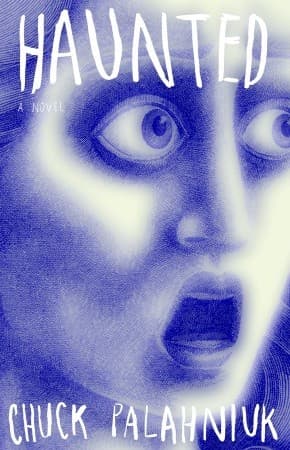
Chuck Palahniuk (2005)
Genre
Thriller / Fantasy / Mystery
Reading Time
840 min
Key Themes
See below
Sign in to track this book
A group of aspiring artists, trapped in a decaying theater with dwindling resources, weave increasingly grotesque and competitive tales of survival, each vying to become the protagonist of their shared, manufactured horror story.
Twenty-three aspiring writers, all with unusual personalities and dark pasts, respond to a newspaper ad for an 'Artists Retreat' promising three months of isolation to create their work. They go to an old, large theater, isolated and with limited food and no outside contact. The group includes 'Sister Vigilante,' 'Saint Gut-Free,' 'Miss America,' 'Director Denial,' and 'Mother Nature.' A mysterious 'Mr. Whittier' meets them, setting rules and encouraging them to share their disturbing stories, supposedly for their art. The start is hopeful but uneasy.
The 'artists' start sharing stories, each one more shocking than the last. These stories, presented as chapters, include graphic accounts of abuse, self-mutilation, cannibalism, and extreme sexual acts. The participants, at first encouraged for art, soon compete, trying to outdo each other with tales of greater suffering and depravity. 'Lady Baglady' tells of homelessness and abuse, while 'Commander Commando' shares his violent past. Storytelling becomes a twisted therapy and a desperate grab for attention and validation, as they believe their experiences will become a blockbuster.
As the retreat continues, supplies quickly run out, leading to severe food shortages, no heat, and poor living conditions. The participants' physical and mental health worsens. Malnutrition and isolation cause paranoia, hallucinations, and a shared belief that their suffering is part of a plan to create a bestselling book or film. They imagine fame and fortune from their ordeal, seeing 'Mr. Whittier' as a producer for their 'masterpiece.' Stories become more extreme, showing their growing desperation and the breakdown of social rules. 'Chef Assassin' hoards the last food, increasing tension.
Driven by their distorted idea of artistic truth and the wish to be the 'most damaged' character for the imagined project, some participants start self-mutilating. 'Mr. Meathooks' removes his teeth, 'Queen Orgy' tries to remove a rib, and others hurt themselves. They also sabotage each other, stealing supplies and spreading rumors, all to improve their personal stories of victimhood. This stage marks a deep descent into madness, blurring reality and their fabricated 'art,' fueled by Mr. Whittier's manipulation.
The participants slowly realize the 'Artists Retreat' is not what it seemed. 'Mr. Whittier' is not a producer but a sadistic organizer. They are not creating art but are trapped in a social experiment. Their stories are not for a book or film they will benefit from; they are being recorded and used for a sinister purpose. This realization comes as their physical and mental health collapses, and no rescue arrives. They are prisoners, their suffering intentionally prolonged by unseen captors, and their 'art' is just a result of their torment.
As conditions become unbearable and they understand their captivity, some resourceful participants organize an escape. They find a way out of the theater, only to find the building is part of a larger, abandoned complex, surrounded by barbed wire. Their escape is short and violent, with booby traps and more signs of their captors' careful planning. Some are hurt or killed, showing resistance is useless and revealing the depth of their trap. This failed escape destroys any remaining hope, pushing survivors into deeper despair.
With no food and their bodies failing, cannibalism begins. The participants, mad from hunger and despair, start eating the bodies of those who died, or those they killed. This act shows the complete collapse of morality and humanity. Trust is gone, and betrayal is common. Their stories are now not just about past trauma but about the atrocities they commit against each other. This stage shows the extreme mental and physical degradation planned by their captors, pushing human limits.
After much suffering, a 'rescue' team arrives. The few thin, traumatized survivors are taken away, not to freedom, but to another facility. Their 'rescue' is a move to the next phase of the experiment. They are questioned, their stories documented, and their experiences prepared for an unseen audience. The 'happy ending' they imagined of fame is a perversion; their suffering is turned into a product, and their identities are removed, leaving them as data points or entertainment.
The 'rescued' survivors are institutionalized, their stories published not under their names, but as anonymous 'found manuscripts' or sensational accounts. Their tragedies become bestselling books, films, and documentaries, making money for their captors. The survivors get nothing but continued confinement and medical care to keep them alive. They are proof of the experiment's success, their broken minds and bodies showing the depths of human depravity and resilience when pushed. They have lasting psychological and physical scars, forever changed by their experiences and the knowledge their suffering was a spectacle.
The novel ends with the revelation that the entire ordeal was a planned scheme to create marketable 'found' literature and entertainment. The final pages show a new advertisement, like the one that lured the first group, seeking new 'artists' for another 'retreat.' This ending shows the dark truth that exploiting human suffering is a continuous, profitable business. The survivors stay institutionalized, their voices silenced, while the system of commodified trauma prepares to trap a new group of victims, continuing the cycle.
The Antagonist
Remains a static, unseen manipulator throughout the story, orchestrating the suffering of others for profit.
The Supporting
Begins with a strong sense of purpose, but descends into the general madness and desperation of the group.
The Supporting
His physical and mental state deteriorates alongside the group, highlighting the body's breaking point under duress.
The Supporting
Starts with a focus on external validation, but her arc devolves into self-mutilation and a distorted pursuit of 'authenticity'.
The Supporting
Maintains a facade of control and purpose, even as the situation spirals into chaos, reflecting the group's denial.
The Supporting
Her environmental ideals are warped and corrupted by the extreme conditions, leading to a darker expression of her beliefs.
The Supporting
Her past resilience to hardship is tested to its limits, ultimately breaking down under the retreat's extreme conditions.
The Supporting
His self-destructive tendencies escalate dramatically in the retreat, culminating in severe self-mutilation.
The Supporting
His obsession with food transforms from culinary extremism into a desperate, controlling struggle for survival.
This theme is a core idea in 'Haunted,' showing how extreme human suffering is packaged and sold. The 'Artists Retreat' is an experiment meant to get horrifying stories from participants, which are then published as 'found' manuscripts. The characters' pain, abuse, and cannibalism are not for their art, but for the financial gain of unseen organizers. This is clear at the end, when the survivors' experiences become bestsellers, while they stay institutionalized.
“You are not creating art. You are creating product.”
The retreat participants all use pseudonyms, leaving their real names for a new, 'artistic' self. This renaming shows their separation from past lives and their adoption of a persona defined by trauma and stories. It also shows their dehumanization; they become types rather than people. Their true identities are erased when their stories are published without names, reinforcing that their histories are just material for a commercial narrative.
“We were no longer our names. We were our stories.”
'Haunted' questions the line between real experience and made-up stories. Participants are encouraged to tell shocking stories, leading to competition where truth might be exaggerated or invented to get attention. The book itself is a collection of these stories, blending the main story with the individual tales. This theme explores how trauma shapes stories, how stories can reshape identity, and how wanting an audience can corrupt truth.
“The more horrific the story, the more 'authentic' it felt to the audience, even if it was a lie.”
As conditions in the retreat worsen, participants experience extreme physical and mental decline. Food shortages, isolation, and manipulation drive them to self-mutilation, violence, and cannibalism. This theme explores the breaking point of human morality when facing absolute desperation. The novel details the descent into primal survival, removing social rules and showing the darkest parts of human nature under pressure. Their survival costs them their humanity.
“We ate ourselves, piece by piece, until there was nothing left but our stories.”
A main reason many participants join is the promise of fame and validation through their 'masterpiece.' They believe their suffering will lead to a bestselling book or film, making them heroes of their own tragic stories. This desire for outside recognition blinds them to their real situation and fuels their competitive storytelling and self-destructive acts. The novel critiques the modern obsession with celebrity and how it can be used, turning people into willing participants in their own exploitation.
“We were all hoping to be discovered, to be the star of our own suffering.”
A collection of individual tales embedded within a larger framing story.
The primary plot device of 'Haunted' is its structure as a collection of short stories told by the characters, nested within the overarching narrative of the Artists Retreat. Each character's 'story' serves as a chapter, detailing their past traumas or grotesque fantasies. This device allows Palahniuk to explore a multitude of dark themes and character archetypes, while the framing story of the retreat provides context for the escalating desperation and competitive nature of the storytelling. It blurs the line between fiction and reality, as the characters' lives become their art.
Characters adopt descriptive aliases that define their roles and pasts.
Each participant in the retreat sheds their real name and adopts a pseudonym (e.g., 'Sister Vigilante,' 'Saint Gut-Free,' 'Miss America'). These names are not just labels; they are archetypal descriptions that immediately convey the character's primary trauma, obsession, or role within the group dynamic. This device dehumanizes the characters, turning them into representations of specific forms of suffering or deviance, reinforcing the idea that they are raw material for a story rather than complex individuals. It contributes to the book's stark, often allegorical tone.
The group's shared distorted perception shapes the reality of the story.
The narrative's reliability is constantly undermined by the collective delusion of the participants. As they suffer from starvation, isolation, and psychological manipulation, their perception of reality becomes warped. They genuinely believe their ordeal is part of a grand artistic project that will bring them fame, despite overwhelming evidence to the contrary. This unreliable narration, particularly through the lens of the 'Director Denial' character, makes the reader question what is truly happening versus what the characters rationalize or imagine, enhancing the horror and psychological breakdown.
Graphic descriptions of self-mutilation, violence, and cannibalism.
Palahniuk employs extreme body horror and transgression as a pervasive plot device to shock, disturb, and explore the limits of human endurance and morality. Descriptions of characters removing their own teeth, attempting to remove ribs, graphic sexual acts, and ultimately, cannibalism, are used not just for sensationalism but to illustrate the complete breakdown of the human body and mind under duress. These acts are often framed as desperate attempts at 'authenticity' or survival, pushing the boundaries of what is acceptable in storytelling and human behavior.
The story comments on its own construction and the nature of storytelling.
'Haunted' is highly metafictional, constantly drawing attention to its own status as a constructed narrative. The characters are aware they are telling stories, and they discuss the elements of good storytelling, character development, and plot twists, even as they are living (and dying) within their own 'story.' This device highlights the theme of the commodification of suffering, as the characters are essentially creating the 'product' (their stories) that will later be exploited. The book itself becomes a commentary on the act of writing and consuming horror.
“The only way to find true happiness is to risk being completely cut open.”
— A character reflects on the nature of vulnerability and self-discovery in the story.
“We all die. The goal isn't to live forever, the goal is to create something that will.”
— A philosophical musing on legacy and mortality within the narrative.
“Your past is just a story. And once you realize this, it has no power over you.”
— A character discusses overcoming personal history and trauma.
“The first step to eternal life is you have to die.”
— A darkly humorous take on immortality and transformation in the plot.
“We're all haunted by something. The trick is to make it work for you.”
— A central theme of the book, exploring how characters deal with their ghosts.
“Nothing of me is original. I am the combined effort of everyone I've ever known.”
— A reflection on identity and influence from other characters.
“The truth is, we're all just stories in the end. Make yours a good one.”
— A motivational insight shared among the characters.
“Fear is the most honest emotion. It never lies.”
— A character analyzes human emotions and authenticity.
“You don't have to be crazy to live here, but it helps.”
— A sarcastic remark about the bizarre and unsettling setting of the story.
“The only real prison is fear, and the only real freedom is freedom from fear.”
— A philosophical statement on liberation and psychological constraints.
“Every saint has a past, and every sinner has a future.”
— A commentary on redemption and the complexity of characters.
“What doesn't kill you makes you stranger.”
— A twist on the common saying, reflecting the book's surreal and dark themes.
“The world is full of obvious things which nobody by any chance ever observes.”
— A nod to mystery and perception within the thriller elements.
“We are what we pretend to be, so we must be careful about what we pretend to be.”
— A warning about identity and the consequences of deception.
Ready to see how well you understood this book? Take our interactive quiz with 10 questions.
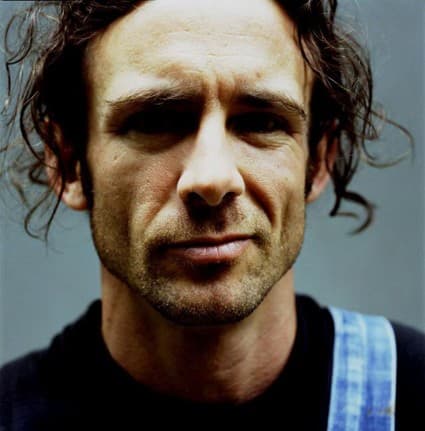
Chuck Palahniuk is a highly influential contemporary author, best known for his debut novel "Fight Club." His works, including "Haunted" and "Guts," are characterized by their transgressive themes, dark humor, and often shocking narratives. Palahniuk's distinctive style has earned him a significant cult following and cemented his reputation as a master of postmodern fiction.







