“All he had to do was survive.”
— Brian's initial realization after the plane crash, focusing on his basic goal.

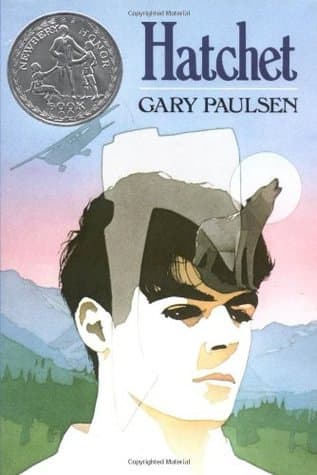
Gary Paulsen (1986)
Genre
Children's / Young Adult
Reading Time
240 min
Key Themes
See below
Sign in to track this book
Stranded in the unforgiving Canadian wilderness with only a hatchet, thirteen-year-old Brian Robeson must transform from a self-pitying boy to a resourceful survivor, battling hunger, fear, and the elements while grappling with the secret that shattered his family.
Thirteen-year-old Brian Robeson flies in a small Cessna 406 bush plane from Hampton, New York, to the oil fields of northern Canada to visit his father. He thinks about 'the Secret' – his mother's infidelity, which caused his parents' divorce. Mid-flight, the pilot, Jim, complains of a shoulder ache, then clutches his chest and dies from a heart attack. Brian, who has only briefly been shown how to steer, tries to contact air traffic control but fails. The plane runs out of fuel. Brian crash-lands it into an L-shaped lake, barely escaping the wreckage as it sinks. He swims to shore, alone and overwhelmed by despair. The only item he has is the hatchet his mother gave him.
After the crash, Brian reaches the shore, exhausted and traumatized. He spends his first night curled up against a rock, bothered by mosquitoes and the sounds of the wilderness. He vomits from the smell of the dead pilot and the trauma. The next morning, he feels immense thirst and hunger. The memory of the pilot's death and his mother's affair still trouble him. He explores his immediate surroundings and finds a small, shallow rock overhang. This offers some protection from the elements. It becomes his first shelter, giving him a small sense of security in the vast, unknown wilderness.
Hunger drives Brian to search for food. He finds a bush with red berries, which he eats. These 'gut cherries' cause severe stomach cramps and diarrhea throughout the night. This teaches him a painful lesson about identifying edible plants. The next day, he finds another bush with sweeter, larger raspberries. He cautiously tastes them and finds them safe. He also locates a clear, clean stream flowing into the lake, giving him a reliable source of fresh water. This early foraging experience starts his practical education in survival. He learns to observe and test his environment carefully.
One night, a porcupine enters Brian's rock shelter, startling him. In a panic, Brian throws his hatchet, missing the porcupine but hitting the rock wall. The hatchet creates sparks. This accidental discovery gives Brian an idea: fire. He spends days trying to make sparks and gather suitable tinder. After much frustration, he finally creates a small, persistent flame. Fire becomes his most valuable tool. It provides warmth, protection from animals, a way to cook food, and a morale boost. This marks a turning point in his struggle.
With fire, Brian looks for more substantial food sources. He struggles to catch fish with his bare hands and tries to hunt larger game. He observes 'foolbirds,' a type of grouse, and realizes they are easily approached. After many failed attempts, he builds a crude bow and arrow from forest materials. With this new weapon, he successfully hunts his first foolbird. This is a significant achievement in his self-sufficiency. He also develops a fishing spear, sharpening a long stick with the hatchet. He learns to catch fish in the lake, adding variety to his diet.
As days turn into weeks, Brian's body gets stronger, and his senses sharpen. He learns to read the forest, anticipating weather changes, identifying animal tracks, and understanding nature's rhythms. He reinforces his rock shelter, making it a more secure lean-to. He also learns to store food, drying fish and berries. Mentally, he changes a lot. He moves past self-pity and constantly thinking about 'the Secret.' He develops an appreciation for the natural world and a resilience he did not know he had. He focuses entirely on survival and problem-solving.
The wilderness presents ongoing dangers. One day, while gathering berries, a large cow moose charges and gores Brian. He is bruised and shaken. He escapes by playing dead. The encounter leaves him terrified and shows nature's unpredictability. Shortly after, a skunk tries to steal the turtle eggs Brian has collected and buried. Brian throws sand at it, and the skunk sprays him directly in the eyes. This temporarily blinds him and causes intense pain. These incidents show the constant threats and the need for vigilance in his environment.
After almost two months, a powerful tornado rips through the area. It destroys Brian's lean-to, scatters his tools, and puts out his fire. He is devastated, feeling all his hard work is undone. However, the tornado also brings an unexpected chance: the storm pushes the tail section of the submerged Cessna plane above the water. Brian realizes the survival pack, which the pilot mentioned, might still be inside. This discovery rekindles his hope for rescue and gives him a new goal.
Determined to reach the plane, Brian spends several days building a sturdy raft, which he names 'Brushpile,' using logs and branches. He paddles out to the partially submerged plane. After much effort and nearly drowning, he cuts through the aluminum skin of the fuselage with his hatchet. He dives into the murky water, facing the sight of the pilot's decaying body, and retrieves the survival pack. This act shows his courage and resourcefulness. He overcomes his fear to get essential supplies.
Brian brings the heavy survival pack back to shore and opens it. Inside, he finds a first-aid kit, food rations (freeze-dried meals, fruit drinks), a sleeping bag, a waterproof container, and an emergency transmitter. He is amazed by the luxury of these items, especially the food, which he prepares and enjoys. While experimenting with the transmitter, he accidentally activates it. A few days later, a bush plane, responding to the signal, lands on the lake. Brian is rescued after fifty-four days in the wilderness, changed by his experience.
The Protagonist
Brian transforms from a dependent, emotionally troubled boy into a self-reliant, capable survivor who understands and respects the natural world.
The Mentioned
Her influence on Brian shifts from being a source of pain and distraction to fading as Brian focuses on survival, only to resurface slightly after his rescue.
The Mentioned
His role remains largely static as the distant destination, representing the life Brian was leaving behind.
The Supporting
His presence is brief but his death is the catalyst for Brian's entire survival journey.
The Supporting
Its brief appearance serves as a turning point in Brian's ability to survive.
The Supporting
Its attack is a moment of extreme danger that tests Brian's resilience and shows his vulnerability.
The Supporting
Its interaction with Brian teaches him a lesson about protecting his resources.
The Supporting
His appearance signifies the end of Brian's survival journey and his return to society.
This theme focuses on Brian's physical and mental struggle to stay alive against overwhelming odds. It explores how a young boy, initially unprepared, adapts to the harsh wilderness. Brian's resilience shows through his repeated failures and learning, from identifying edible berries to making fire and hunting. His ability to recover after setbacks, like the porcupine incident or the tornado, highlights the human spirit in the face of trouble.
“He was not the same. The plane crash was the end of the time before, and now this was the new time, and he had to work with the new time.”
Brian changes a lot, letting go of his old self and finding inner strength. The wilderness acts as a test, removing his previous concerns (like 'the Secret' and self-pity) and forcing him to face his true abilities. He learns self-reliance, patience, and a connection to nature. This change is not just about survival skills but also about mental and emotional growth. He matures from a boy into a more capable and aware individual.
“He was not the same boy who had come to the lake on the plane. He was not the same at all.”
This theme explores the conflict and eventual relationship between Brian and nature. Initially, nature is scary and hostile, presenting challenges like hunger, thirst, dangerous animals (moose, skunk), and extreme weather (tornado). Over time, Brian learns to understand, respect, and work with nature, using its resources for survival instead of fighting it. He learns to read the forest's signs, becoming part of the ecosystem rather than an outsider.
“The hatchet was part of him, had become a part of him. It was a link to all the things he had learned.”
Brian's survival depends on his ability to observe his surroundings and learn from his experiences and mistakes. From watching birds to understand what they eat, to noticing sparks from his hatchet, to analyzing animal behavior, observation is key. His learning process is repeated and often painful (e.g., eating gut cherries). This theme shows that knowledge, even gained through trial and error, helps in adapting and overcoming challenges, especially without formal teaching.
“He had learned the most important thing, the one thing that allowed him to live, and that was that food had to be worked for, hunted for, and that meant he had to be hunter.”
Brian's journey includes alternating times of hope and despair. The initial crash makes him feel hopeless, but small successes like making fire or finding berries bring hope. Setbacks, such as the moose attack or the tornado, often lead him back to despair. Then, a new discovery (like the plane's tail) rekindles his will to survive. This back and forth shows the psychological fight of survival and the importance of keeping some hope, even in the worst moments.
“There had been a time when he thought he would lose his mind, that the aloneness would take him. But he had fought it, pushed it away.”
A symbolic and practical tool for survival and transformation.
The hatchet, a gift from Brian's mother, is the only tool Brian has after the crash. It serves both practical and symbolic functions. Practically, it's essential for making fire, building shelter, cutting wood, and eventually, opening the plane. Symbolically, it represents his last link to his old life, but more importantly, it becomes an extension of his will to survive, a testament to his ingenuity and adaptability. Its use in creating fire is a pivotal moment, marking his transition from helpless victim to active survivor.
Brian's internalized trauma that initially hinders but eventually fades from his focus.
The 'Secret' refers to Brian's knowledge of his mother's affair, which led to his parents' divorce. It haunts him throughout the initial days of his ordeal, contributing to his despair and emotional paralysis. This internal conflict serves as a psychological burden, but as Brian is forced to focus entirely on physical survival, the 'Secret' gradually fades into the background. It represents his past life and the emotional baggage he must shed to fully engage with his new reality, highlighting his mental transformation.
A recurring dream that provides Brian with subconscious guidance.
Brian experiences vivid dreams, particularly one involving his father and his friend Terry, trying to communicate something about fire. These dreams serve as a subconscious processing of his experiences and needs. The dream about Terry making fire, though not a direct instruction, plants the seed of the idea in Brian's mind, which he later connects to the sparks from his hatchet. This device illustrates how the mind, even under extreme stress, can work to solve problems and guide actions, often through non-linear thought processes.
Intimate narration allowing direct access to Brian's thoughts and feelings.
The story is told from a close first-person perspective, allowing the reader direct access to Brian's internal monologue, fears, hopes, and learning process. This narrative choice immerses the reader in Brian's isolation and his minute-by-minute struggle, making his transformation deeply personal and relatable. We experience his hunger, pain, despair, and eventual triumphs directly through his eyes and thoughts, intensifying the emotional impact of his survival journey and emphasizing his psychological development.
“All he had to do was survive.”
— Brian's initial realization after the plane crash, focusing on his basic goal.
“The hatchet was the key to it all.”
— Brian reflecting on how the tool became essential for his survival.
“He was not the same now—the Brian that stood and watched the wolves move away and nodded to them was completely different.”
— Brian recognizing his personal transformation after months in the wilderness.
“Patience, he thought. So much of this was patience—waiting, and thinking and doing things right. So much of all this, so much of all living was patience and thinking.”
— Brian learning the importance of patience in survival situations.
“The secret was to stay busy, to keep looking for food, to keep working.”
— Brian's strategy to maintain mental stability and purpose.
“He would not die. He would not let death in.”
— Brian's determined mindset after facing multiple life-threatening challenges.
“The disappointment was a cloud over him, a misery.”
— Brian's emotional reaction after failing to make fire initially.
“Food was everything.”
— Brian's realization about the fundamental importance of sustenance.
“He had to make a home.”
— Brian deciding to build a shelter to establish stability.
“The fire was his friend.”
— Brian's appreciation for fire as a source of warmth, protection, and comfort.
“He was new. He was born new.”
— Brian's feeling of rebirth after surviving the initial crash and adapting.
“The mistakes were part of learning.”
— Brian reflecting on how failures contributed to his growth.
“He had to be ready. He had to be ready for anything.”
— Brian's mindset after encountering dangers like animals and storms.
“The memory was like a knife.”
— Brian's painful recollection of his parents' divorce and the Secret.
Ready to see how well you understood this book? Take our interactive quiz with 10 questions.
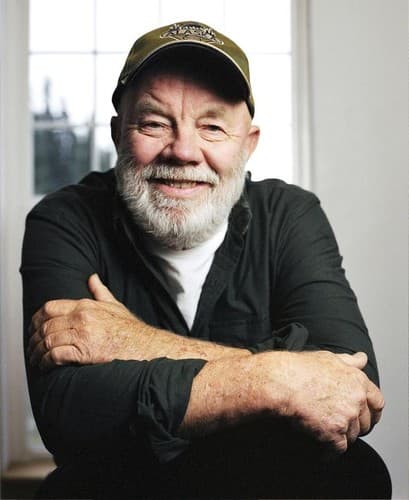
Biography coming soon.
Dan Gemeinhart
4.5

Kate O'Hearn
4.4

Jeanne Birdsall
4.4

Jen Wang
4.4

Wendelin Van Draanen
4.3

John Marsden
4.3

Chris Van Allsburg
4.3
Jennifer A. Nielsen
4.2