“It does not do to dwell on dreams and forget to live.”
— Albus Dumbledore advises Harry after seeing the Mirror of Erised.

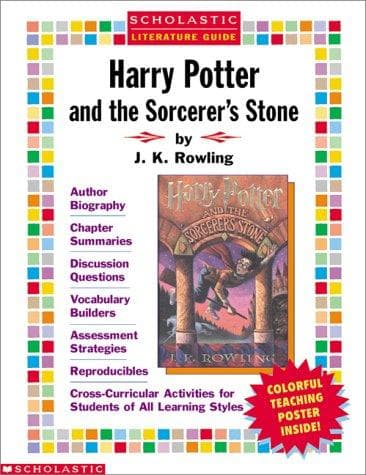
J.K. Rowling (1997)
Genre
Fantasy / Children's / Young Adult
Reading Time
247 min
Key Themes
See below
Sign in to track this book
Rescued from a miserable life under the stairs, an orphaned boy discovers he's a wizard destined for a magical school, where he uncovers a dangerous secret tied to the dark wizard who murdered his parents.
On the night of November 1st, 1981, Albus Dumbledore, Minerva McGonagall, and Rubeus Hagrid deliver the infant Harry Potter to the doorstep of his aunt and uncle, Petunia and Vernon Dursley, at Number Four, Privet Drive. Harry is an orphan. His parents, James and Lily Potter, were murdered by the dark wizard Lord Voldemort. Miraculously, Harry survived Voldemort's Killing Curse, which rebounded and seemingly destroyed the Dark Lord, leaving only a lightning-bolt scar on Harry's forehead. Dumbledore explains that Harry will be safer growing up away from the wizarding world, protected by his mother's sacrifice and the blood magic of living with his maternal aunt.
For ten years, Harry lives a wretched life with the Dursleys, who dislike anything out of the ordinary, particularly magic. He is forced to live in a cupboard under the stairs, wear Dudley's oversized hand-me-downs, and is constantly belittled. On his eleventh birthday, mysterious letters begin arriving addressed to 'Mr. H. Potter, The Cupboard under the Stairs.' Vernon Dursley, enraged, tries to prevent Harry from receiving them, moving the family first to a hotel and then to a remote shack on a rock in the sea. However, on the stroke of midnight on Harry's birthday, the giant Rubeus Hagrid bursts in.
Hagrid informs Harry that he is a wizard and has been accepted to Hogwarts School of Witchcraft and Wizardry. He also reveals the truth about Harry's parents' death and his own fame in the wizarding world as 'the Boy Who Lived.' Hagrid then takes Harry to Diagon Alley, a hidden magical shopping street. There, Harry withdraws money from his Gringotts vault (left by his parents), buys his school supplies, including his wand from Ollivanders (which mysteriously matches his own), and receives a snowy owl, Hedwig, as a birthday gift from Hagrid. Harry feels a sense of belonging he has never experienced before.
Harry boards the Hogwarts Express from Platform 9 ¾ at King's Cross Station. On the train, he meets Ron Weasley, a kind-hearted boy from a large, poor wizarding family, and Hermione Granger, a bright but initially bossy Muggle-born witch. They quickly become friends. Upon arrival at Hogwarts, the first-year students are led to the Great Hall, where they are sorted into one of the four houses by the Sorting Hat. Harry, Ron, and Hermione are all sorted into Gryffindor, despite Harry's brief apprehension about Slytherin due to his encounter with Draco Malfoy.
Life at Hogwarts is exciting for Harry. He learns about magic, attends classes like Potions with the strict Professor Snape and Transfiguration with Professor McGonagall, and finds a true home. During his first flying lesson, he proves to be a natural on a broomstick, leading to his recruitment as Seeker for the Gryffindor Quidditch team, a rare feat for a first-year. While exploring the castle late one night, Harry, Ron, and Hermione accidentally stumble upon a forbidden third-floor corridor guarded by a monstrous three-headed dog named Fluffy, protecting a trapdoor. They realize something important is being hidden there.
The trio becomes obsessed with finding out what Fluffy is guarding. Through research and eavesdropping, Hermione discovers that Nicholas Flamel, a famous alchemist, is the only known creator of the Sorcerer's Stone, an artifact capable of granting immortality and turning any metal into gold. They deduce that Fluffy must be guarding the Stone, which Dumbledore has secretly brought to Hogwarts for safekeeping. They suspect Professor Snape is trying to steal it, especially after Harry sees Snape talking menacingly to Professor Quirrell and later witnesses Snape's leg injury, which he believes is from Fluffy.
During the Christmas holidays, Harry remains at Hogwarts with Ron. He receives several gifts, including an anonymous package containing his father's Invisibility Cloak, accompanied by a note suggesting he 'use it well.' Harry immediately puts the cloak to use, exploring the castle at night. He discovers the Mirror of Erised, which shows him his deepest desire: his parents and extended family alive and happy. Dumbledore later warns Harry that the mirror shows only illusions and can trap people, moving it to a new location.
The trio discovers Hagrid secretly hatching a dragon egg, which soon produces a Norwegian Ridgeback named Norbert. Keeping a dragon is illegal and dangerous. When Norbert grows too large and aggressive, they arrange to have him sent to Ron's older brother, Charlie, who studies dragons in Romania. This requires a risky midnight operation, using the Invisibility Cloak, to get Norbert to the highest tower for pickup. This escapade results in Harry, Hermione, and Neville Longbottom being caught by Professor McGonagall, losing fifty house points each and earning them detention.
As punishment for their nocturnal adventures, Harry, Hermione, Neville, and Draco Malfoy are sent into the Forbidden Forest with Hagrid to investigate a creature attacking unicorns. They split into two groups. Harry and Draco, accompanied by Hagrid's dog Fang, discover a cloaked figure drinking the blood of a dead unicorn. The figure, revealed to be Voldemort's servant, turns to attack Harry, but he is saved by the centaur Firenze, who explains that unicorn blood sustains life for those at death's door, but at a terrible cost, and identifies the figure as Voldemort himself.
After overhearing Snape threatening Quirrell and believing Snape is making his move, Harry, Ron, and Hermione decide they must secure the Sorcerer's Stone before Snape does. They use the Invisibility Cloak to bypass Fluffy. Below the trapdoor, they face a series of magical challenges set by the Hogwarts professors: a Devil's Snare (Professor Sprout), a room full of flying keys (Professor Flitwick), a giant chess game (Professor McGonagall), a troll (Professor Quirrell's oversight), and a logic puzzle involving potions (Professor Snape).
Only Harry makes it through the final challenge. Instead of Snape, he finds Professor Quirrell, who reveals himself to be the true villain and Voldemort's unwilling host. Voldemort's face is grotesquely attached to the back of Quirrell's head, concealed by his turban. Voldemort, weakened and possessing Quirrell, seeks the Stone to regain his full power. He commands Quirrell to force Harry to look into the Mirror of Erised, which now holds the Stone. Harry, wishing to find the Stone but not use it, miraculously finds it appearing in his pocket.
Voldemort, using Quirrell, orders Harry to hand over the Stone. A struggle ensues. When Harry touches Quirrell, his skin burns and disintegrates due to Lily Potter's protective love magic that still resides in Harry. Quirrell crumbles to ash, and Voldemort's spirit flees through Harry. Harry passes out. He wakes up in the hospital wing, where Dumbledore explains everything, confirming that the Stone has been destroyed to prevent future attempts at its retrieval. Dumbledore also reveals that it was he who gave Harry the Invisibility Cloak.
At the Leaving Feast, Dumbledore announces the final House Cup standings. Slytherin is in the lead, but Dumbledore awards last-minute points for bravery and intelligence: 50 points to Ron for the chess game, 50 points to Hermione for her logic and quick thinking, 60 points to Harry for his courage against Voldemort, and 10 points to Neville for standing up to his friends. These points push Gryffindor into first place, causing a jubilant celebration. Harry feels a sense of belonging and achievement as he looks forward to returning to Hogwarts next year, knowing he has a true home.
The Protagonist
From an insecure, abused orphan, Harry transforms into a confident young wizard who embraces his identity and destiny, finding true friendship and a sense of belonging.
The Supporting
Ron grows from a somewhat insecure boy into a brave and integral member of the trio, solidifying his role as Harry's steadfast companion.
The Supporting
Hermione learns the value of friendship and rule-breaking for a greater good, balancing her intellect with bravery and loyalty.
The Supporting
Dumbledore remains largely consistent, serving as a wise and powerful protector who subtly guides Harry toward his destiny.
The Supporting
Hagrid's role as Harry's first friend and protector solidifies, demonstrating unwavering loyalty and care.
The Supporting
Snape's character is introduced as a seemingly antagonistic figure whose true loyalties remain ambiguous, setting the stage for future revelations.
The Antagonist
Quirrell's character arc reveals his true villainous nature, from a seemingly harmless professor to the host of Lord Voldemort, ending in his demise.
The Antagonist
Voldemort attempts to regain his physical form and power through the Sorcerer's Stone but is ultimately thwarted by Harry's protective magic, remaining a disembodied spirit.
The Supporting
Draco solidifies his role as Harry's antagonist and foil, embodying the pure-blood prejudice Harry will continue to encounter.
The Supporting
Neville begins as a timid and insecure boy but shows flashes of bravery, hinting at his future growth and importance.
The theme of love and sacrifice is central to the narrative, particularly through Lily Potter's ultimate act of love. Her willingness to die for her son creates a powerful, ancient magic that protects Harry from Voldemort's Killing Curse, making Harry immune to physical harm from the Dark Lord. This protection is what ultimately allows Harry to defeat Professor Quirrell, as Quirrell cannot touch Harry without burning. Dumbledore explains this as a form of magic Voldemort, who cannot comprehend love, can never understand or overcome.
“'Your mother died to save you. If there is one thing Voldemort cannot understand, it is love.'”
Harry's journey is about finding his true identity and a place where he belongs. Raised in a hostile, unloving environment by the Dursleys, Harry feels like an outcast. His discovery of the wizarding world and Hogwarts provides him with a sense of home and family he has never known. He learns about his heritage, his parents, and his unique place in the magical community. The friendships he forms with Ron and Hermione further solidify this sense of belonging, transforming him from a lonely orphan into a cherished member of a new world.
“'You're a wizard, Harry.'”
The conflict between good and evil is established through the ongoing struggle between Harry Potter and Lord Voldemort. Voldemort represents pure evil, driven by a desire for power and immortality, willing to commit murder and manipulate others. Harry, on the other hand, embodies goodness, courage, and loyalty, fueled by the protective love of his mother. The story shows that even a weakened form of evil can be insidious and dangerous, but that the power of love, friendship, and self-sacrifice can ultimately triumph over it.
“'There is no good and evil, there is only power, and those too weak to seek it.'”
Courage, both physical and moral, is a recurring theme. Harry, Ron, and Hermione repeatedly show bravery by defying rules, facing dangerous creatures, and confronting the Dark Lord's servant. Their friendship is the bedrock of their adventures; they support each other, pool their unique strengths (Harry's bravery, Ron's loyalty, Hermione's intellect), and are willing to risk their lives for one another. Neville Longbottom's act of standing up to his friends also shows that true courage can manifest in many forms, not just grand heroic gestures.
“'There are all kinds of courage. It takes a great deal of bravery to stand up to our enemies, but just as much to stand up to our friends.'”
While destiny is mentioned (Harry being 'the Boy Who Lived'), the narrative emphasizes the power of individual choice. Dumbledore explicitly tells Harry that his choices, not his abilities or background, truly define him. This is evident when Harry chooses Gryffindor over Slytherin, despite the Sorting Hat's suggestion that he could be great in the latter. His decision to pursue the Sorcerer's Stone to protect it, rather than out of a desire for personal glory, further illustrates this theme, showing that his moral compass guides his actions.
“'It is our choices, Harry, that show what we truly are, far more than our abilities.'”
Harry's unique survival of Voldemort's attack makes him a legendary figure.
Harry's status as 'the Boy Who Lived' is a central plot device. It immediately establishes his unique position in the wizarding world, linking him directly to the most feared dark wizard and setting him apart from his peers. This legend drives much of the initial curiosity and awe directed at Harry, and it explains why Voldemort is so obsessed with him. It also provides the underlying reason for the protective magic that ultimately saves Harry, making him a symbol of hope against darkness.
A magical artifact allowing Harry to move unseen and explore Hogwarts.
The Invisibility Cloak, inherited from Harry's father, serves as a crucial plot device for enabling Harry, Ron, and Hermione's nocturnal adventures. It allows them to sneak around Hogwarts undetected, facilitating their discovery of Fluffy, their visits to the Mirror of Erised, and their final mission to retrieve the Sorcerer's Stone. Beyond its practical use, it connects Harry to his family's legacy and hints at deeper magical artifacts within the wizarding world.
A magical mirror that shows the viewer their deepest desires.
The Mirror of Erised is a symbolic and functional plot device. It reveals Harry's deepest desire – his family alive and together – highlighting his profound loneliness and yearning for love. More importantly, it becomes the final safeguard for the Sorcerer's Stone, designed by Dumbledore to only give the Stone to someone who wishes to find it, but not use it. This clever enchantment thwarts Voldemort's greedy intentions while allowing Harry, whose desire is pure, to obtain the Stone.
A legendary artifact capable of granting immortality and wealth.
The Sorcerer's Stone is the central MacGuffin of the plot. Its immense power (granting immortality and transmuting metals into gold) makes it a highly coveted object, driving the narrative's conflict. It provides a clear objective for the antagonist (Voldemort/Quirrell) and a compelling reason for Harry and his friends to act. Its journey from Gringotts to Hogwarts, and the elaborate protections placed upon it by the professors, structure the entire latter half of the book, leading to the climactic confrontation.
Hogwarts' organizational structure and reward system.
The Hogwarts House system (Gryffindor, Hufflepuff, Ravenclaw, Slytherin) and the house points system serve as both a world-building element and a plot device. They create immediate rivalries and loyalties among students, particularly between Gryffindor and Slytherin, personified by Harry and Draco. The accumulation and deduction of points provide a tangible measure of success and consequence, culminating in the dramatic awarding of points by Dumbledore at the end, which directly influences the outcome of the House Cup and reinforces the themes of bravery and friendship.
“It does not do to dwell on dreams and forget to live.”
— Albus Dumbledore advises Harry after seeing the Mirror of Erised.
“I solemnly swear that I am up to no good.”
— Harry and his friends activate the Marauder's Map.
“It takes a great deal of bravery to stand up to our enemies, but just as much to stand up to our friends.”
— Dumbledore awards Neville Longbottom house points for courage.
“There is no good and evil, there is only power and those too weak to seek it.”
— Quirrell, possessed by Voldemort, speaks to Harry.
“The truth. It is a beautiful and terrible thing, and should therefore be treated with great caution.”
— Dumbledore warns Harry about the dangers of knowledge.
“It's leviOsa, not levioSA!”
— Hermione corrects Ron's pronunciation of the Wingardium Leviosa spell.
“To the well-organized mind, death is but the next great adventure.”
— Dumbledore shares his philosophical view on death.
“There are some things you can't share without ending up liking each other, and knocking out a twelve-foot mountain troll is one of them.”
— Narrator describes Harry, Ron, and Hermione's bonding moment.
“Your mother died to save you. If there is one thing Voldemort cannot understand, it is love.”
— Dumbledore explains to Harry why Voldemort couldn't kill him.
“I'm going to bed before either of you come up with another clever idea to get us killed - or worse, expelled.”
— Hermione expresses frustration with Harry and Ron's risky plans.
“It is our choices, Harry, that show what we truly are, far more than our abilities.”
— Dumbledore advises Harry after the Sorting Hat's decision.
“Nitwit! Blubber! Oddment! Tweak!”
— Dumbledore's humorous start-of-term speech at the feast.
“The Stone was really not such a wonderful thing. As much money and life as you could want! The two things most human beings would choose above all - the trouble is, humans do have a knack of choosing precisely those things that are worst for them.”
— Dumbledore explains the dangers of the Sorcerer's Stone.
“You're a wizard, Harry.”
— Hagrid reveals Harry's true identity to him.
Ready to see how well you understood this book? Take our interactive quiz with 10 questions.

Joanne Rowling, best known by her pen name J. K. Rowling, is a British author and philanthropist. She wrote Harry Potter, a seven-volume children's fantasy series published from 1997 to 2007. The series has sold over 600 million copies, been translated into 84 languages, and spawned a global media franchise including films and video games. The Casual Vacancy (2012) was her first novel for adults. She writes Cormoran Strike, an ongoing crime fiction series, under the alias Robert Galbraith.







