“We've all got both light and darkness inside us. What matters is the part we choose to act on. That's who we really are.”
— Sirius Black speaking to Harry about his anger and the influence of Voldemort.

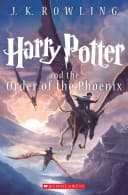
J.K. Rowling (2022)
Genre
Fantasy / Children's / Young Adult
Reading Time
900 min
Key Themes
See below
Sign in to track this book
In a year of oppressive secrets and the threat of Voldemort, Harry Potter and Dumbledore's Army secretly train for war, shown through Jim Kay and Neil Packer's dark illustrations.
Harry Potter spends another miserable summer with the Dursleys. He and his cousin, Dudley, are attacked by two Dementors in a dark alley in Little Whinging. Harry uses a Patronus Charm to save them, an act of underage magic outside of school. Soon after, he gets a letter from the Ministry of Magic, saying he has been expelled from Hogwarts for using underage sorcery. Mrs. Figg, his Squib neighbor, reveals she is part of the wizarding world and confirms Dumbledore's orders to watch Harry. Later, members of the Order of the Phoenix, including Mad-Eye Moody, Nymphadora Tonks, and Remus Lupin, arrive to take Harry to a secret location, which relieves and confuses him.
Harry goes to 12 Grimmauld Place, the Black family's ancestral home and the secret headquarters of the Order of the Phoenix. There, he reunites with Ron and Hermione, who, along with Fred, George, and Ginny, have been staying there all summer. Harry is frustrated and angry that they have been kept unaware of Voldemort's return and the Order's activities, feeling isolated and ignored. He learns that the Order works to fight Voldemort and his Death Eaters, but the Ministry of Magic, under Cornelius Fudge, denies Voldemort's return and publicly discredits Harry and Dumbledore. Sirius Black, Harry's godfather, also lives at Grimmauld Place, confined because he is a wanted man.
Harry attends a hearing at the Ministry of Magic. Cornelius Fudge, who leads the hearing, wants to convict Harry. Dumbledore arrives to defend Harry, bringing Mrs. Figg as a witness. Despite Fudge's biased efforts, Harry is cleared of all charges. Back at Hogwarts, students find out that Dolores Umbridge, a Senior Undersecretary to the Minister for Magic, has been appointed the new Defence Against the Dark Arts teacher. Umbridge is a sweet but sinister woman who refuses to teach practical defensive magic, instead focusing on theoretical, Ministry-approved texts. She quickly starts new rules and 'Educational Decrees' to control the school, which upsets students and staff.
Dolores Umbridge steadily gains power at Hogwarts. She becomes the High Inquisitor, able to inspect, evaluate, and fire teachers. She bans clubs, limits communication, and punishes students, especially those who talk about Voldemort's return. Harry, for insisting Voldemort is back, is forced to write lines with a Blood Quill, leaving permanent scars on his hand. Hogwarts becomes more oppressive and fearful under Umbridge's tight control. She turns the once lively school into a grim, surveillance-filled institution that reflects the Ministry's denial and control.
Umbridge's refusal to teach practical Defence Against the Dark Arts, and the threat of Voldemort, frustrates Harry. Hermione suggests Harry teach a group of students himself. With Ron's help, they form 'Dumbledore's Army' (D.A.), a secret group to learn real defensive spells. They meet in the Room of Requirement, a magical room that appears only when needed. Harry is a good teacher, and many students, including Neville Longbottom, Luna Lovegood, and Ginny Weasley, eagerly join. They find empowerment and hope in their secret lessons. The D.A. becomes a symbol of resistance against Umbridge's oppressive rule.
Throughout the year, Harry has disturbing visions and dreams. He sees events through Voldemort's eyes, including an attack on Arthur Weasley at the Ministry of Magic. He learns that he and Voldemort share a connection, and Dumbledore arranges for Snape to teach Harry Occlumency, the magic of shielding one's mind from outside intrusion. However, Harry struggles with the lessons, often clashing with Snape and finding it hard to clear his mind. His emotional turmoil, fueled by grief over Cedric's death and anger at the Ministry's disbelief, makes him open to Voldemort's mental intrusions, increasing his fear and isolation.
Marietta Edgecombe, a Ravenclaw student whose mother works at the Ministry, betrays Dumbledore's Army to Dolores Umbridge. Dobby the house-elf tries to warn Harry, but it is too late. Umbridge, along with Fudge and other Ministry officials, raids the Room of Requirement. To protect Harry, Dumbledore takes responsibility for forming the D.A., claiming it was his attempt to raise an army against the Ministry. Before he can be arrested, Dumbledore magically incapacitates Fudge and Umbridge and makes a dramatic escape with Fawkes, his phoenix. Umbridge is then appointed Headmistress of Hogwarts, starting an even darker period for the school.
Under Umbridge's oppressive rule, Hogwarts is a joyless place. Fred and George Weasley make a spectacular exit, unleashing magical fireworks and pranks across the school before flying off on their brooms, leaving a legacy of rebellion. Later, Umbridge tries to use Veritaserum on Harry to get information about Dumbledore and Sirius, but Snape pretends to have run out. When Umbridge tries to use the Cruciatus Curse on Harry, Hermione tricks her into going into the Forbidden Forest to find Dumbledore's 'weapon.' There, Umbridge insults a group of centaurs, who abduct her, leaving her fate unknown.
During his Charms O.W.L., Harry has a vivid and terrifying vision of Sirius Black being tortured by Voldemort in the Department of Mysteries at the Ministry of Magic. Convinced Sirius is in danger, Harry, Ron, Hermione, Ginny, Luna, and Neville quickly go to the Ministry using Thestrals. Hermione tries to verify the vision, but Harry's distress and impulsiveness make them believe it is real. They think Voldemort is trying to get a weapon hidden in the Department of Mysteries, and that Sirius is bait to lure Harry there.
At the Department of Mysteries, Harry and his friends find Sirius is not there. Instead, they are in the Prophecy Room, where a glass orb with Harry's name waits. It quickly becomes clear that Voldemort lured Harry there to get the prophecy. Death Eaters, led by Lucius Malfoy and Bellatrix Lestrange, ambush them. A fierce battle happens. Harry and his friends fight bravely, even though they are outnumbered. The prophecy is shattered during the chaos, and several students are injured. Harry manages to grab the prophecy before it is completely destroyed.
Just as Harry and his friends are about to be overwhelmed, members of the Order of the Phoenix arrive, including Sirius, Lupin, Tonks, Moody, and Kingsley Shacklebolt. The battle intensifies. During the fight, Bellatrix Lestrange, Sirius's cousin, hits Sirius with a Killing Curse, sending him through the Veil in the Death Chamber. Harry is devastated and enraged, pursuing Bellatrix into the Atrium. Voldemort himself appears, fighting Dumbledore in a spectacular duel. Fudge and other Ministry officials arrive, seeing Voldemort, finally confirming his return. Dumbledore then reveals the full prophecy: 'Neither can live while the other survives.'
Back in Dumbledore's office, Harry, consumed by grief and guilt over Sirius's death, trashes the room. Dumbledore explains the full prophecy to Harry: 'The one with the power to vanquish the Dark Lord approaches... and either must die at the hand of the other for neither can live while the other survives...' He reveals he kept Harry in the dark to protect him, fearing Voldemort would exploit their connection. Harry finally understands the immense burden he carries and his destiny. He also learns that the vision of Sirius was a trick by Voldemort to lure him to the Ministry. The wizarding world finally acknowledges Voldemort's return, but Harry is left with sorrow and the heavy weight of his future.
The Protagonist
Harry moves from isolated anger and denial of his connection to Voldemort to a clearer, albeit painful, understanding of his destiny and the true nature of his bond with the Dark Lord.
The Supporting
Hermione solidifies her role as an indispensable strategist and leader, demonstrating her capacity for proactive resistance against injustice.
The Supporting
Ron grows in confidence and commitment, particularly in his role as a D.A. member and Quidditch player, demonstrating his enduring loyalty.
The Antagonist
Umbridge rises to absolute power within Hogwarts, only to be dramatically removed by the centaurs and ultimately discredited by Voldemort's public return.
The Supporting
Dumbledore's arc involves a deliberate period of isolation from Harry for protection, culminating in a full revelation of the prophecy and his true intentions.
The Supporting
Sirius struggles with confinement and the desire for freedom and action, ultimately sacrificing himself for Harry.
The Supporting
Snape's arc reinforces his complex and ambiguous role, deeply loyal to Dumbledore but perpetually antagonistic towards Harry, revealing glimpses into his painful past.
The Supporting
Luna establishes herself as a steadfast and insightful friend, proving the value of her unconventional perspective in a time of crisis.
The Supporting
Neville transforms from a timid and insecure student into a brave and capable fighter, fueled by his personal connection to the fight against Voldemort.
The Supporting
Fred and George transition from school pranksters to open rebels, establishing their independence and commitment to fighting oppression through their unique brand of chaos.
This theme is central to the conflict between Harry and the Ministry of Magic, especially Dolores Umbridge. The Ministry, through Umbridge, tries to control information, suppress truth, and exert total authority over Hogwarts. This oppressive force causes rebellion among the students, leading to Dumbledore's Army. The Weasley twins' spectacular exit is another act of defiance against unjust authority, showing the importance of standing up against tyranny, even when it seems overwhelming.
“'You are to refer to it as Defence Against the Dark Arts, not defensive magic, because there is no need for you to use defensive magic in this school.'”
Harry deals with grief over Cedric Diggory's death, which fuels his anger and isolation. This unresolved grief makes him vulnerable to Voldemort's mental intrusions and affects his impulsive decisions. The loss of Sirius Black deeply traumatizes Harry, forcing him to face the harsh realities of war and the personal cost of fighting Voldemort. His emotional journey through grief is a big part of his character development. It makes him mature and understand the sacrifices needed.
“'The world isn't split into good people and Death Eaters. We've all got both light and dark inside us. What matters is the part we choose to act on. That's who we really are.'”
Amidst Harry's isolation and the Ministry's disbelief, the loyalty of Ron, Hermione, and Dumbledore's Army gives him support. Their willingness to believe him, train in secret, and fight alongside him in the Department of Mysteries shows the strength found in unity and friendship. This theme shows how collective action and mutual trust can empower individuals to resist oppressive forces and overcome difficult odds, even against powerful enemies.
“'Things we lose have a way of coming back to us in the end, if not always in the way we expect.'”
The Ministry of Magic's deliberate deception about Voldemort's return is a main conflict. Cornelius Fudge and Dolores Umbridge actively spread misinformation, discredit Harry and Dumbledore, and suppress evidence of the truth. This creates fear and denial, forcing Harry and his allies to work in secret. The struggle to expose the truth, ending with Voldemort's public appearance at the Ministry, is a critical part of the plot. It shows the dangers of ignoring reality and the importance of seeking and speaking truth.
“'You are not to tell lies about Lord Voldemort, Harry. The Ministry of Magic guarantees that I am telling you the truth.'”
The prophecy — 'Neither can live while the other survives' — puts a heavy burden of destiny on Harry. He struggles with the idea that his life is predetermined and that he is fated to face Voldemort. Dumbledore's explanation of the prophecy emphasizes that while it points to a path, Harry's choices and his capacity for love truly define his power and ability to defeat Voldemort. This theme explores the balance between a fated path and an individual's agency in shaping their future.
“'It is our choices, Harry, that show what we truly are, far more than our abilities.'”
A hidden prophecy foretelling Harry and Voldemort's ultimate conflict.
The prophecy concerning 'the one with the power to vanquish the Dark Lord' serves as a driving force for the plot, revealing the deep connection between Harry and Voldemort. It explains why Voldemort initially targeted Harry and why their fates are intertwined. The Ministry's desire to obtain it, and Harry's later understanding of its full meaning, shapes his destiny and provides a clear, albeit tragic, purpose for his ongoing struggle against the Dark Lord. It emphasizes the concept of a chosen one and the immense burden that comes with it.
A psychic connection between Harry and Voldemort, allowing Harry to see into the Dark Lord's mind.
Harry's scar acts as a conduit for a mental link to Voldemort, allowing him to experience visions and emotions from the Dark Lord's perspective. This device is crucial for plot progression, as it provides Harry with vital (though sometimes misleading) information, such as the attack on Arthur Weasley and the false vision of Sirius's torture. It also highlights Harry's vulnerability and the constant threat of Voldemort's influence, leading to Dumbledore's decision to have Snape teach Harry Occlumency to shield his mind.
Umbridge's official regulations used to exert control over Hogwarts.
The 'Educational Decrees' are a series of arbitrary rules imposed by Dolores Umbridge, allowing her to systematically dismantle Dumbledore's authority and control every aspect of Hogwarts life. These decrees serve as a symbol of the Ministry's oppressive reach and Umbridge's tyrannical nature. They create a climate of fear and restrict freedoms, directly leading to the formation of Dumbledore's Army as a rebellious counter-measure, thus advancing the conflict between authority and rebellion within the school.
A secret magical room that appears when needed, used as the headquarters for Dumbledore's Army.
The Room of Requirement is a magical plot device that provides a safe and secret space for Dumbledore's Army to meet and practice defensive magic. Its ability to transform into whatever the user needs makes it the perfect hideout from Umbridge's surveillance. It symbolizes the resilience and resourcefulness of the students in the face of oppression and enables their clandestine training, which becomes vital for their survival in the Battle of the Department of Mysteries. Its magical nature adds to the sense of wonder and ingenuity within the wizarding world.
The magical art of closing one's mind to outside intrusion, taught to Harry by Snape.
Occlumency is introduced as a crucial skill Harry must learn to protect his mind from Voldemort's intrusions. It highlights the dangerous mental connection between them and underscores Dumbledore's concern for Harry's vulnerability. Harry's struggles with Occlumency, often due to his emotional state and animosity towards Snape, directly contribute to him falling for Voldemort's trap at the end of the book. It serves as a reminder of the subtle, psychological warfare being waged, beyond just physical duels.
“We've all got both light and darkness inside us. What matters is the part we choose to act on. That's who we really are.”
— Sirius Black speaking to Harry about his anger and the influence of Voldemort.
“The world isn't split into good people and Death Eaters. We've all got both light and darkness inside us. What matters is the part we choose to act on. That's who we really are.”
— Sirius Black offering advice to Harry after his disciplinary hearing and visions.
“It is our choices, Harry, that show what we truly are, far more than our abilities.”
— Dumbledore's words of wisdom, often recalled by Harry, emphasizing the importance of decisions.
“Things we lose have a way of coming back to us in the end, if not always in the way we expect.”
— Luna Lovegood comforting Harry after he loses something important.
“You are less like your father than you know, Harry. He, too, was proud, he, too, was boastful, and he, too, was rather fond of breaking rules.”
— Snape's cruel assessment of James Potter during an Occlumency lesson, revealing more about his past.
“Indifference and neglect often do much more damage than outright dislike.”
— Dumbledore explaining the dangers of apathy and its impact on individuals and society.
“Youth cannot know what age thinks and feels. But old men are guilty if they forget what it was to be young.”
— Dumbledore reflecting on the generational gap and the importance of understanding.
“The mind is not a book, to be opened at will and examined at leisure.”
— Snape instructing Harry on the difficulties and privacy of the human mind during Occlumency lessons.
“Every human life is worth the same, and worth saving.”
— Kingsley Shacklebolt expressing a fundamental belief in equality and the value of life.
“The Ministry has fallen.”
— A chilling proclamation indicating the shift in power and the escalating conflict.
“Just because you have the emotional range of a teaspoon doesn't mean we all have.”
— Hermione Granger's exasperated retort to Ron, highlighting his lack of emotional sensitivity.
“Working hard is important, but there is something that matters even more: believing in yourself.”
— Dumbledore's advice to Harry, emphasizing self-belief as crucial for success.
“We are only as strong as we are united, as weak as we are divided.”
— Dumbledore's powerful message about the importance of unity in the face of adversity.
“You're just as sane as I am.”
— Luna Lovegood's comforting and characteristic statement to Harry, indicating her unique perspective.
Ready to see how well you understood this book? Take our interactive quiz with 10 questions.

Joanne Rowling, best known by her pen name J. K. Rowling, is a British author and philanthropist. She wrote Harry Potter, a seven-volume children's fantasy series published from 1997 to 2007. The series has sold over 600 million copies, been translated into 84 languages, and spawned a global media franchise including films and video games. The Casual Vacancy (2012) was her first novel for adults. She writes Cormoran Strike, an ongoing crime fiction series, under the alias Robert Galbraith.







