BookBrief
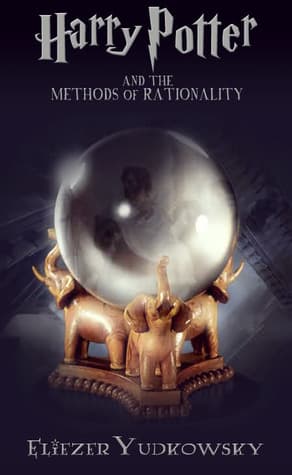
Harry Potter and the Methods of Rationality cover
Archivist's Choice

Harry Potter and the Methods of Rationality

Eliezer Yudkowsky (2015)

Genre

Fantasy / Science Fiction / Philosophy / Young Adult

Reading Time

2000+ min

Key Themes

See below

Track Your Reading

Sign in to track this book

In an alternate reality, a science-obsessed Harry Potter, raised by a biochemist, arrives at Hogwarts determined to apply the rigorous methods of rationality to unravel the mysteries of magic, upending the wizarding world with unexpected and logical precision.

Synopsis

Harry Potter, raised by a loving Oxford biochemistry professor and Petunia, arrives at Hogwarts not as a wide-eyed innocent, but as a child prodigy obsessed with the scientific method and rational thought. He immediately begins to systematically deconstruct the magical world, applying logic, statistics, and game theory to everything from potion-making to spellcasting. He forms an unlikely, intellectually stimulating bond with Professor Quirrell, who becomes his mentor in Machiavellian strategy and realpolitik, while simultaneously navigating friendships with Hermione Granger and Ron Weasley, and engaging in philosophical debates with Dumbledore. Harry's rational approach quickly uncovers inconsistencies and dark secrets within the wizarding world, leading him to investigate the mystery of the Philosopher's Stone, not as a simple treasure hunt, but as a complex puzzle involving hidden motives and strategic deception. He eventually uncovers Quirrell's true identity as Lord Voldemort, who has been subtly guiding Harry's development as part of a grander, more terrifying scheme to achieve immortality and reshape the magical world through rational, albeit ruthless, means. Harry, utilizing his scientific understanding of magic and his mastery of strategic thinking, ultimately defeats Quirrell/Voldemort, but not before a re-evaluation of morality, power, and the nature of good and evil, leaving him with a deeper understanding of the complexities of the universe and his place within it as a force for rational change.
Reading time
2000+ min
Difficulty
Hard
Pacing
Variable
Mood
Intellectual, Philosophical, Thought-Provoking, Darkly Humorous, Strategic
✓ Read this if...
You enjoy thought experiments, philosophical debates, and seeing familiar fantasy tropes deconstructed with scientific rigor and rational analysis.
✗ Skip this if...
You prefer traditional fantasy narratives, simple character motivations, or find extensive philosophical discourse and scientific explanations disruptive to storytelling.

Plot Summary

The Boy-Who-Lived, Reimagined

Harry James Potter-Evans-Verres, an intellectually precocious and scientifically-minded ten-year-old, lives with his adoptive parents, Professor Michael Verres (an Oxford biochemist) and Petunia Evans-Verres. He has been home-schooled and educated in scientific reasoning and critical thinking, which has shaped his worldview. On his eleventh birthday, Professor Quirrell, the new Defense Against the Dark Arts teacher at Hogwarts, visits him and reveals the existence of magic and Harry's true identity as the Boy-Who-Lived. Harry, initially skeptical, applies his scientific methodology to test Quirrell's claims, eventually accepting the reality of magic but determined to understand its underlying principles through rational inquiry. He is particularly interested in the concept of 'magic' as a new field of physics.

Arrival at Hogwarts and Initial Investigations

Upon his arrival at Hogwarts, Harry is sorted into Ravenclaw, much to his own satisfaction as he values intelligence above all else. He quickly befriends Hermione Granger, a bright student, and later Draco Malfoy, whom he attempts to 'reform' from his pure-blood supremacist upbringing through rational debate and exposure to scientific thought. Harry's scientific approach to magic immediately clashes with the traditional, rote-learning methods of Hogwarts. He experiments with spells, questions fundamental magical laws, and tries to derive the 'rules' of magic, often to the consternation of his professors and the bewilderment of his peers. His first major investigation involves the transfiguration of inanimate objects, seeking to understand the limits and possibilities.

The Mystery of the Stone and the Troll

Harry, Hermione, and Draco soon uncover hints about a powerful magical artifact, the Philosopher's Stone, being hidden within Hogwarts. They deduce it is in the forbidden third-floor corridor, guarded by various enchantments. During Halloween, a troll is unleashed in the dungeons, seemingly a distraction. Harry, using his quick wit and understanding of human psychology (and a touch of magic), manages to save Hermione from the troll, solidifying their friendship. He suspects that the troll incident was orchestrated, and begins to view the entire situation, including the Stone, as a complex puzzle or a 'game' designed by a powerful intelligence, possibly Dumbledore or Quirrell, to test him.

The Quirrell-Harry Dynamic and the Dark Lord

Harry develops a complex and influential mentor-mentee relationship with Professor Quirrell. Quirrell, a brilliant but enigmatic figure, encourages Harry's rationalist tendencies and pushes him to think critically about magic, power, and morality. He teaches Harry advanced magical theory, dueling techniques, and the darker aspects of magical history, often framing these lessons as 'games' or 'strategic challenges'. Unbeknownst to Harry, Quirrell is secretly Lord Voldemort, having survived his defeat by possessing Quirrell's body. Voldemort manipulates Harry, subtly guiding him towards a path of power and strategic thinking, testing his potential as a successor or a formidable opponent, all while feigning a persona of a wise, cynical, and somewhat amoral professor.

The Time-Turner and Strategic Thinking

Harry discovers the existence of a Time-Turner, initially given to Hermione for her demanding class schedule. He quickly realizes its immense potential for learning and manipulating events. With Quirrell's subtle encouragement and guidance, Harry uses the Time-Turner to gain extra hours for study, practice magic, and even observe past events, often with the goal of improving his strategic decision-making and understanding of complex systems. This device becomes a crucial tool in his arsenal, allowing him to outmaneuver opponents and achieve seemingly impossible feats, further cementing his belief in the power of applied intelligence and careful planning over raw magical might.

The Trial of Draco Malfoy and the Rise of the Chaos Legion

Draco Malfoy faces expulsion after a misguided attempt to frame Hermione leads to a public duel and an accusation of attacking a professor. Harry, applying legal and logical reasoning, defends Draco during a mock trial, successfully arguing for a lesser punishment. This event highlights Harry's commitment to justice and his ability to influence others through persuasive argumentation. Following this, Harry establishes the 'Chaos Legion,' a student organization dedicated to rational thought, scientific inquiry, and strategic thinking. This group, initially composed of Ravenclaws and Slytherins, is a vehicle for Harry to implement his ideas, conduct experiments, and challenge the status quo within Hogwarts, further solidifying his influence among his peers.

The Confrontation at the Mirror of Erised

Harry, believing he is playing Dumbledore's game, navigates the final challenges protecting the Philosopher's Stone, using his intellect and strategic skills rather than brute force. He reaches the Mirror of Erised, which reveals the Stone only to those who wish to find it but not use it. There, he confronts Professor Quirrell, who reveals himself to be Lord Voldemort. Voldemort, having been possessing Quirrell, attempts to manipulate Harry into helping him retrieve the Stone. Harry, though initially shocked, engages Voldemort in a battle of wits and magic, ultimately outsmarting him by understanding the Mirror's true mechanism and preventing Voldemort from gaining the Stone. This confrontation is a turning point in Harry's understanding of good, evil, and the true nature of power.

The Death of Quirrell and the Horcrux Revelation

During the confrontation, Harry inadvertently destroys the Horcrux containing a fragment of Voldemort's soul that resides within Quirrell. This act results in Quirrell's death, though not before Harry experiences a traumatic memory of Voldemort's past. Dumbledore arrives shortly after, and in the aftermath, reveals the existence of Horcruxes to Harry. Dumbledore explains that Voldemort split his soul into multiple pieces to achieve immortality, and that Harry himself is an accidental Horcrux, containing a fragment of Voldemort's soul from the night his parents died. This revelation impacts Harry, forcing him to grapple with his own identity and connection to the Dark Lord, and setting him on a new path to understand and combat Voldemort's influence.

The Prophecy and the End of First Year

Following the events with Quirrell and the Horcrux, Dumbledore reveals the full prophecy regarding Harry and Lord Voldemort. Harry, initially skeptical of prophecies, processes this information through his rational lens, seeking to understand its implications and how it might be manipulated. He grapples with the weight of his destiny and the immense power of Voldemort. The first year concludes with Harry having undergone significant personal growth, his rationalist worldview both challenged and strengthened by his magical experiences. He is now aware of the dangers he faces and the complex moral landscape of the wizarding world, preparing himself for a long-term strategic conflict against Voldemort.

Building Alliances and Strategic Planning

As his first year ends, Harry begins to proactively build alliances and plan for the future. He strengthens his bonds with Hermione and Draco, transforming their initial friendships into strategic partnerships. He also starts to consider how to reform the wizarding world, seeing its inefficiencies and dogmatism as major weaknesses. He outlines a long-term strategy to combat Voldemort, not just through direct confrontation but also by dismantling the societal structures that allow dark magic to thrive. This involves gathering information, developing new magical theories, and preparing himself and his allies for the inevitable return of the Dark Lord, signaling a shift from reactive problem-solving to proactive, strategic engagement.

Principal Figures

Harry James Potter-Evans-Verres

The Protagonist

Harry evolves from a naive, purely academic rationalist to a strategic thinker who understands the importance of emotional intelligence and social influence in achieving his goals.

Professor Quirrell / Lord Voldemort

The Antagonist

Quirrell's facade is maintained throughout much of the first year, gradually revealing his true identity as Voldemort, whose ultimate goal is to regain full power and escape the limitations of his current existence.

Hermione Granger

The Supporting

Hermione learns to question authority and tradition more readily under Harry's influence, becoming more flexible in her thinking while retaining her strong ethical core.

Draco Malfoy

The Supporting

Draco transitions from a prejudiced pure-blood heir to a more nuanced individual who questions his upbringing and becomes a strategic ally to Harry.

Albus Dumbledore

The Supporting

Dumbledore remains largely static in his role as the wise, manipulative, and ultimately benevolent, if sometimes frustrating, guardian of the wizarding world, guiding Harry from a distance.

Petunia Evans-Verres

The Supporting

Petunia's arc is less central in the first year, but she begins to confront her deep-seated resentment towards magic through her love for Harry.

Michael Verres

The Supporting

Michael's role is largely foundational, providing Harry's initial intellectual framework. He remains a stable, rational anchor in Harry's life.

Minerva McGonagall

The Supporting

McGonagall remains a consistent figure of authority, gradually coming to acknowledge Harry's unique abilities while still upholding the rules of the school.

Themes & Insights

Rationality vs. Tradition

The central theme explores the clash between Harry's scientific, evidence-based approach to the world and the magical community's reliance on tradition, dogma, and intuition. Harry constantly questions why magic works the way it does, seeking to derive underlying laws rather than simply accepting spells. This is evident in his experiments with transfiguration, his logical deductions about the Philosopher's Stone, and his attempts to 'reform' Draco through rational debate. The narrative argues for the power of rational thought and the scientific method to understand and master even the most fantastical phenomena.

What is magic, anyway? Just a set of rules nobody's bothered to write down yet. Or rather, a set of rules that haven't been discovered yet.

Harry Potter-Evans-Verres

The Nature of Power and Morality

The story explores different forms of power—magical, intellectual, and social—and their ethical implications. Harry grapples with the responsibility that comes with his immense magical potential and his superior intellect. His interactions with Professor Quirrell/Voldemort force him to confront the darker aspects of power, self-interest, and the choices between good and evil. The narrative questions whether 'good' can be achieved through 'dark' means, and explores the idea that true power lies not just in magical ability but in strategic thinking, influence, and the ability to minimize suffering. Harry's internal struggle to define his own moral code is central.

The world is not split into good people and Death Eaters. We've all got both light and dark inside us. What matters is the part we choose to act on. That's who we really are.

Sirius Black (as quoted by Harry)

Learning and Education

The novel critically examines different teaching approaches. Hogwarts represents a traditional, rote-learning system, while Harry champions active experimentation, critical thinking, and self-directed learning. Harry's use of the Time-Turner to maximize his study time and his establishment of the Chaos Legion to encourage rational inquiry among his peers highlight his belief in superior learning methods. The theme emphasizes that true understanding comes from questioning, testing hypotheses, and continually refining one's knowledge, rather than passively accepting information from authority figures. It also explores the importance of teaching others to think, not just what to think.

Intelligence is not enough. You must also be rational. You must know how to win.

Professor Quirrell

Identity and Self-Discovery

Harry's journey is one of self-discovery as he grapples with his identity as the Boy-Who-Lived, an accidental Horcrux, and a rationalist in a magical world. He questions what makes him 'Harry Potter' versus the fragment of Voldemort's soul within him. His interactions with his adoptive parents, his friends, and especially Quirrell, force him to define his own values, goals, and sense of self, separate from prophecies or societal expectations. This theme explores the idea that identity is not predetermined but actively constructed through choices and actions.

I will not be a pawn in anyone's game. I am Harry Potter-Evans-Verres, and I will choose my own path.

Harry Potter-Evans-Verres

Plot Devices & Literary Techniques

The Time-Turner

A magical device allowing its user to travel back in time for short periods.

The Time-Turner is initially introduced as a tool for Hermione to attend multiple classes. However, Harry quickly repurposes it as a crucial strategic asset. It allows him to gain extra hours for intense study, practice magic, conduct experiments, and gather information without sacrificing sleep or other activities. This device significantly accelerates Harry's learning curve and problem-solving abilities, enabling him to achieve feats that would be impossible within normal temporal constraints, thereby amplifying his rationalist advantage and highlighting the power of optimized time management.

The Mirror of Erised

A magical mirror that shows the viewer their deepest desire.

In HPMOR, the Mirror of Erised functions as a crucial plot device in the climax. While it still shows the viewer their deepest desire, its specific mechanism for revealing the Philosopher's Stone is reinterpreted. It requires a specific, non-selfish intention to retrieve the Stone, essentially acting as a moral and logical puzzle. Harry's ability to deduce and exploit this mechanism, rather than being tempted by the mirror's illusion, demonstrates his superior rational thinking and strategic insight compared to Voldemort, who is consumed by his desire for the Stone, thus preventing him from obtaining it.

The Horcrux

A magical object containing a fragment of a wizard's soul, granting immortality.

The concept of the Horcrux is central to Voldemort's immortality and, significantly, to Harry's own identity. The revelation that Harry himself is an accidental Horcrux provides a deep personal connection between him and Voldemort, forcing Harry to confront the nature of his own being and the Dark Lord's influence. It elevates the conflict beyond a simple hero vs. villain dynamic, introducing a complex internal struggle for Harry and giving him unique insights into Voldemort's mind and motives. The destruction of Quirrell's Horcrux is a pivotal moment, shaping Harry's understanding of dark magic.

Prophecy

A foretelling of future events, often ambiguous and self-fulfilling.

The prophecy concerning Harry and Voldemort serves as a narrative framework, but in HPMOR, it is treated with a rationalist skepticism. Harry initially dismisses it as a 'self-fulfilling prophecy' or a social construct. However, as the story progresses, he learns to analyze its components, considering how it might be interpreted, manipulated, or even defied. The prophecy acts as a motivating factor and a source of information, but the characters, especially Harry, actively try to understand its mechanics and implications rather than passively accepting their fate, emphasizing agency over destiny.

Critical analysis

Notable Quotes

The world is not a safe place, and you are not a special snowflake. You are a child, and you are going to be in danger. But you are also a witch, and you are going to be powerful. And you are going to be needed.

Professor McGonagall's stern advice to Harry during their first meeting, emphasizing the harsh realities of the magical world.

There is no justice, there is just us.

Harry's internal monologue reflecting on the lack of external forces to ensure fairness, highlighting the need for individuals to act.

If you are not trying to get to the bottom of things, you are not doing science.

Harry's early musings on the nature of scientific inquiry and his frustration with the magical world's lack of systematic investigation.

The greatest enemy of knowledge is not ignorance, it is the illusion of knowledge.

Harry's observation about the tendency for people to believe they understand something when they actually don't, hindering true learning.

Every problem is a science problem.

Harry's core belief that any challenge can be approached and potentially solved using a scientific, rational methodology.

What do you do when you're faced with an impossible problem? You break it down into smaller, possible problems.

Harry explaining his approach to complex challenges, a fundamental principle of rational problem-solving.

The universe doesn't care about your feelings, it cares about what you do.

A harsh but pragmatic reminder from Harry about the objective nature of reality and the importance of action over emotion.

If you can't imagine a way that you might be wrong, you're not thinking hard enough.

Harry's emphasis on the importance of actively seeking out potential flaws in one's own reasoning, a key aspect of critical thinking.

No plan survives contact with the enemy. But that doesn't mean you don't make a plan.

Harry's pragmatic view on planning, acknowledging its limitations while affirming its necessity as a starting point.

The fundamental problem with magic is that it doesn't have a source code.

Harry's frustration with the arbitrary and unexplained nature of magic, contrasting it with the systematic understanding of technology.

If you don't know what you're doing, you're doing it wrong.

A direct and uncompromising statement from Harry about the importance of understanding and intentionality in any endeavor.

The true meaning of 'impossible' is 'I haven't figured it out yet'.

Harry's optimistic and determined reinterpretation of what 'impossible' signifies, reflecting his belief in the power of persistent inquiry.

The greatest power is the power to choose.

A recurring theme emphasizing the importance of free will and deliberate decision-making in shaping one's destiny.

Quiz

Test Your Knowledge

Ready to see how well you understood this book? Take our interactive quiz with 10 questions.

10
Questions
~5
Minutes
?
Best Score

Key Questions (FAQ)

The core premise reimagines Harry Potter as a scientific prodigy raised by Petunia Evans and an Oxford biochemistry professor. This upbringing instills in him a deep understanding of scientific methods and cognitive biases, which he rigorously applies to the magical world, leading to drastically different interpretations of spells, magical creatures, and the societal structure of wizards compared to J.K. Rowling's original series.

About the author