“The dog was smarter than I was. He knew it, and I knew it. That made for an interesting relationship.”
— Describing the relationship with Ike, the dog.

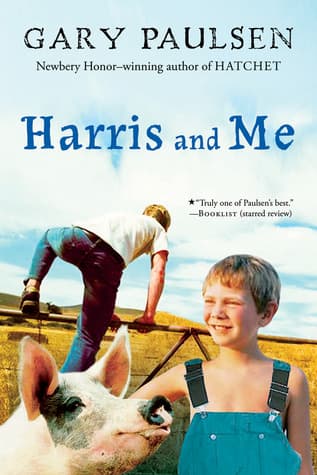
Gary Paulsen (1993)
Genre
Children's / Historical Fiction / Young Adult
Reading Time
150 min
Key Themes
See below
Sign in to track this book
A summer of outrageous farm escapades with his mischievous cousin Harris transforms a young boy's ordinary tenth year into a riotous, unforgettable adventure filled with heartwarming chaos and country charm.
The story begins with the unnamed narrator, a nine-year-old boy, being dropped off at the Minnesota farm of his Aunt Eva and Uncle LeRoy. His parents, constantly drunk and oblivious, have decided he is better off there for the summer. He is a city kid, skinny and timid, completely unprepared for the raw, boisterous life of a working farm. Upon arrival, he meets his cousin, Harris, a wild, red-haired, slightly older boy who seems to have all the chaos and energy of the country. Harris's first interaction is to challenge the narrator to a fight, setting the tone for their unpredictable relationship and the narrator's entry into a world very different from his previous one.
Life on the Larson farm is a continuous series of unexpected, often painful, lessons. Harris immediately takes the narrator under his wing, which mostly involves dragging him into dangerous situations. Their first 'chore' is cleaning the chicken coop, which quickly becomes a chaotic battle with the chickens, leaving the narrator covered in filth and peck marks. Fights between the cousins happen daily, started by Harris and always ending with the narrator getting bruised, but also strangely toughened. These fights, while physical, are rarely mean, serving as a strange way of bonding and Harris's way of introducing the narrator to his world.
One of the most memorable early events involves the narrator's terrifying encounter with the farm's enormous, vicious boar, named Paul. Harris, always the instigator, dares the narrator to get closer to the boar, leading to a narrow escape from a potentially fatal attack. This event shows the dangers and wildness of farm life. Amidst the chaos and scrapes, Aunt Eva's cooking is a constant source of comfort and food. Her massive, delicious meals, served three times a day, are famous, providing the physical and emotional fuel for the demanding farm life and the boys' endless escapades. The narrator, previously underweight, starts to do well on her food.
Under Harris's teaching, and often through painful mistakes, the narrator begins to learn how farm life works. He learns to milk cows, though at first he is clumsy and gets kicked. He learns about horses, specifically the massive, gentle draft horse named Prince, and the smaller, more spirited horse named Queen, which Harris rides bareback. He also sees and helps with various farm activities, from haying to taking care of various animals, getting a basic understanding of the routines and responsibilities of country life. These experiences, though hard, slowly build his confidence and connection to the farm.
Harris introduces the narrator to farm machinery, starting with the old mowing machine. Despite the dangers, Harris lets the narrator operate it, leading to a close call where the narrator nearly gets his leg caught in the blades. Later, Harris teaches him to drive the tractor, a powerful and scary machine. These experiences, while terrifying, also make the narrator feel incredibly capable, as he has never been trusted with such responsibility before. He starts to feel a sense of control and ability that was completely absent in his previous life, finding a strange joy in the control and power of the machines.
The farm is a small example of nature, and the narrator sees its harsh realities firsthand. He watches the farm cats, especially one named Lucy, expertly hunting rats in the barn. This gives a clear lesson in the food chain and how necessary such actions are for survival on a farm. He also experiences the birth of a calf, a moment of new life among the daily struggles. These observations, while sometimes unsettling, add to his growing understanding of the farm's living system and how all its inhabitants are connected, moving him further away from his sheltered city upbringing.
One of the most memorable adventures involves Harris and the narrator riding a horse, Queen, bareback across the fields. Harris, as usual, pushes the limits, and the ride quickly becomes a wild, uncontrolled gallop. The narrator holds on for dear life, terrified but also feeling an exciting sense of freedom and danger. The ride ends with them crashing into a barbed-wire fence, resulting in scrapes and bruises but also a shared, unspoken thrill of survival. This incident further strengthens the bond between the cousins, formed by shared danger and excitement.
Harris decides they should raid a wild beehive for honey, a venture that, predictably, goes wrong. Despite their attempts at protection, the boys are swarmed and stung many times, leading to painful welts and a quick retreat. This incident, like many others, shows Harris's impulsive nature and the boys' often-naive approach to the dangers of the farm. Despite the pain, it is another lesson learned about respecting nature's defenses and the consequences of their actions, adding to the narrator's growing knowledge of farm-acquired wisdom.
As the summer goes on, the narrator changes a lot. The constant physical activity, the good food, and the challenges of farm life turn him from a scrawny, timid city boy into a sturdy, more confident person. He gains weight, his muscles grow, and his skin tans. More importantly, he develops a strength and a sense of self-reliance he never had before. He learns to stand up for himself, not just against Harris's playful aggression, but against the difficulties of the farm. He begins to appreciate the hard work and the simple joys of country living, finding a sense of belonging.
As summer ends, the narrator's parents, still largely oblivious, return to pick him up. He is no longer the same boy they dropped off. He is stronger, healthier, and carries the unspoken wisdom of a summer spent in the wild, unpredictable world of the farm. He says goodbye to Aunt Eva and Uncle LeRoy, and most significantly, to Harris. Though Harris remains his boisterous, challenging self until the very end, a clear, deep bond of brotherhood has formed between them. The narrator returns to his old life, but the experiences, the lessons, and the memory of Harris and the farm will stay with him forever, shaping who he is.
The Protagonist
He transforms from a weak, timid, neglected boy into a stronger, more confident, and resilient individual who gains a profound appreciation for life and hard work.
The Supporting/Co-Protagonist
Harris remains largely unchanged, serving as a constant force of nature, but his relationship with the narrator deepens into a true friendship.
The Supporting
Her character remains consistent, embodying warmth, generosity, and the tireless spirit of a farm wife.
The Supporting
His character remains consistent, representing the steadfast and hardworking nature of a farmer.
The Mentioned
Paul remains a formidable and dangerous animal, a static but impactful force.
The Mentioned
Prince's character remains consistent as a powerful, working farm animal.
The Mentioned
Queen's character remains consistent as a spirited and energetic farm animal.
The Mentioned
Lucy remains a skilled hunter, fulfilling her role in the farm's ecosystem.
The main idea is about the narrator's change from a timid, neglected city boy into a strong, self-reliant person. Through his experiences on the farm, he faces fears, learns practical skills, and develops physical and emotional strength. The constant challenges and the reality of farm life make him adapt and grow, discovering abilities he never knew he had. This journey is marked by his increasing confidence and his ability to navigate a world much more demanding than his previous life, as seen when he learns to drive the tractor or withstand Harris's playful aggression.
“I was getting muscles and getting tough. I was starting to grow.”
The book clearly shows the harsh yet beautiful reality of farm life and the natural world. From the terrifying encounter with the boar, Paul, to the quiet moments of watching a calf being born, the narrator experiences nature in all its forms. The farm is not romanticized; it is a place of hard work, danger, and the constant cycle of life and death, but also great satisfaction and beauty. This idea is clear in the descriptions of the vast fields, the powerful horses, and the demands of the seasons, showing nature as both a powerful force and a source of connection.
“Life wasn't neat. It wasn't tidy. It was something that happened.”
Despite the initial apprehension and the rough interactions, the narrator finds a sense of family and belonging on the Larson farm that was missing in his own home. Aunt Eva's nurturing care and abundant food, Uncle LeRoy's quiet presence, and especially Harris's lively companionship create a supportive, though unusual, environment. The constant fights with Harris, far from being mean, create a deep bond of brotherhood. This idea shows how connection and acceptance can be found in unexpected places, offering the narrator a true home for the summer.
“I had a family now. A real one. Harris and Aunt Eva and Uncle LeRoy.”
Despite the seriousness of the narrator's neglect and the dangers of farm life, the book is full of humor, often coming from the absurd situations the boys find themselves in. Harris's antics, the physical comedy of their fights, and the narrator's wide-eyed observations of the farm's unusual characters provide comic relief. This humor makes the story lighter, making the harsh realities easier to accept and showing the joy and spontaneity of childhood, even in challenging circumstances, such as the chaotic chicken coop cleaning or the disastrous bee attack.
“I was still bleeding from the chicken fight, but it was a good day.”
The story is told from the perspective of an older, reflective narrator looking back on his childhood summer.
The entire novel is narrated in the first person by an unnamed protagonist, implicitly Gary Paulsen, recalling his experiences as a nine-year-old boy. This retrospective viewpoint allows for a blend of immediate childhood wonder and fear with the wisdom and humor of an adult looking back. The narrator's older voice often interjects with observations or summaries that a child wouldn't fully grasp in the moment, adding depth and thematic resonance to the chaotic events. It also allows for foreshadowing and a more polished, evocative description of the farm and its inhabitants.
Harris serves as a dynamic contrast to the narrator, highlighting his transformation.
Harris acts as a classic foil to the narrator. While the narrator begins as timid, scrawny, and inexperienced, Harris is boisterous, strong, and completely at home on the farm. Harris's constant energy and instigation directly challenge the narrator, forcing him out of his comfort zone and into situations where he must grow and adapt. Through their interactions, the narrator's journey of physical and emotional transformation is starkly highlighted, as he gradually becomes more like his robust cousin, gaining confidence and resilience. Harris's static, wild nature emphasizes the narrator's significant development.
Aunt Eva's cooking represents nourishment, comfort, and love.
Aunt Eva's cooking, particularly her massive and delicious meals, serves as a powerful symbol throughout the book. For the neglected and underweight narrator, this food represents not just physical sustenance, but also the emotional nourishment, care, and love he has been deprived of. It is a constant source of comfort and stability amidst the farm's chaos and Harris's antics. The descriptions of the food emphasize the generosity and warmth of the farm family, contrasting sharply with the narrator's previous home life, where he often went hungry. It symbolizes the abundance of love and life on the farm.
The cyclical nature of farm chores and boyish antics reinforces the rhythm of farm life.
The narrative often employs a repetitive structure, detailing the daily cycle of farm chores, the relentless eating, and the recurring pattern of Harris instigating a fight or adventure, followed by the narrator's involvement and subsequent injury/lesson. This repetition emphasizes the predictable yet demanding rhythm of farm life, where tasks are endless and the boys' energy seems inexhaustible. It also highlights the narrator's gradual adaptation and growing resilience, as he learns to anticipate and even participate more actively in these recurring patterns, rather than just being a passive victim.
“The dog was smarter than I was. He knew it, and I knew it. That made for an interesting relationship.”
— Describing the relationship with Ike, the dog.
“It was the first time I had ever been truly, totally, mind-numbingly bored.”
— Reflecting on the initial boredom of farm life before discovering its wonders.
“Harris didn't just walk, he strode. He didn't just talk, he boomed. He didn't just do, he attacked.”
— Characterizing the energetic and larger-than-life personality of Harris.
“There was a whole world out there, waiting to be seen, waiting to be tasted, waiting to be lived.”
— The narrator's growing realization about the richness of the world beyond his previous experiences.
“It was hard work, but it was honest work, and there was a satisfaction to it that I had never known.”
— Reflecting on the physical labor of farm life and the sense of accomplishment.
“Books were like magic. They could take you anywhere, show you anything, let you be anyone.”
— Expressing the transformative power of reading and imagination.
“Fear was a funny thing. It could paralyze you, or it could make you do things you never thought possible.”
— Meditating on the nature of fear and its effects.
“The smell of fresh-baked bread, the sound of the wind in the trees, the feel of warm sun on my face. These were the things that truly mattered.”
— Appreciating the simple sensory pleasures of life on the farm.
“He didn't teach me how to farm, not really. He taught me how to see.”
— Summarizing the profound impact Harris had on the narrator's perception of the world.
“Laughter was a good thing, a healing thing. It made the hard times easier and the good times better.”
— Recognizing the importance of humor and laughter in life.
“Sometimes, the best way to learn was to just watch, to listen, and to not say a word.”
— Reflecting on the value of observation and quiet learning.
“The world was full of stories, if you only knew how to listen for them.”
— A realization about the narrative richness embedded in everyday life.
“There are some things you just know, deep down, without anyone ever telling you.”
— Referring to intuitive understanding and innate knowledge.
Ready to see how well you understood this book? Take our interactive quiz with 10 questions.
Biography coming soon.
Dan Gemeinhart
4.5
Kate O'Hearn
4.4

Jeanne Birdsall
4.4

Jen Wang
4.4
Wendelin Van Draanen
4.3

John Marsden
4.3

Chris Van Allsburg
4.3
Jennifer A. Nielsen
4.2