“I am not a footnote in someone else's history.”
— Mona asserts her own identity and agency.

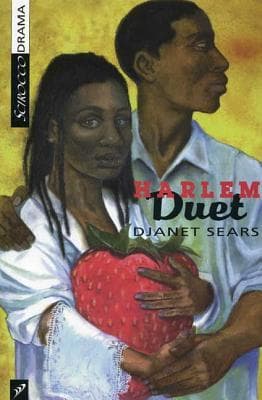
Djanet Sears (1997)
Genre
Historical Fiction / Romance
Reading Time
90 min
Key Themes
See below
Sign in to track this book
Set in Harlem, this play shows Billie's descent into madness after her husband, Othello, leaves her for a white woman. It is a modern retelling of Shakespeare's *Othello*, exploring race and passion.
The play starts in Harlem in 1997, on the corner of Martin Luther King and Malcolm X boulevards. Billie, a Black woman, prepares a meal for her husband, Othello, for their tenth wedding anniversary. The mood is tense. Othello arrives and says he is leaving Billie for a white woman named Mona. Billie, upset and angry, tries to understand why. Othello is firm, saying he needs a new start and wants to reject the 'sickness' he links to their past and racial identity. He says Mona offers him a fresh beginning, free from the historical burdens he feels with Billie. Billie's anger grows, leading to a fight where she bites him. This is a symbolic act of defiance and pain.
The scene changes to 1860, in the American South. This historical parallel shows a different Othello and Billie, who are newly freed slaves. This Othello, like his 1997 counterpart, is also leaving Billie. He wants to leave the past behind and take on a new identity, free from the scars of slavery. He plans to go North, leaving Billie despite her pleas and declarations of love. This historical echo shows a recurring pattern of Othello trying to escape his past and, in doing so, abandoning Billie. Themes of freedom, identity, and the lasting pain of oppression begin to connect across the timelines.
Back in 1997, Billie is recovering from Othello's departure. She finds some comfort in her sister, Amah, and her friend, Magi. Amah, practical and a bit cynical, advises Billie to move on. Magi, who is more spiritual and understanding, tries to comfort Billie and help her deal with her deep grief and betrayal. Billie struggles to understand Othello's rejection, especially his claim that she represents a 'sickness' he needs to escape. She holds onto memories of their past love, agonizing over how their relationship broke down and how Othello could easily dismiss their shared history and identity.
Magi, worried about Billie's mental state, performs a cleansing ritual to help her release her pain and anger. She uses herbs and chants, trying to guide Billie toward healing. But Billie remains focused on Othello. She starts watching his movements and interactions with Mona from her window. Her obsession grows, driven by a desperate need to understand his reasons and maybe win him back. She starts imagining scenes, replaying talks, and becoming more isolated in her grief and anger, despite Amah and Magi's efforts to support her.
The play shifts again, this time to Harlem in 1928, during the Harlem Renaissance. This Othello, a well-known Black intellectual, is also leaving a Billie, who in this timeline, is of mixed race. He feels her lighter skin and mixed heritage hinder his racial goals and his desire to fully embrace his Black identity in the growing cultural movement. He sees her as a reminder of a racial ambiguity he wants to move past. This scene further shows Othello's pattern of abandonment, always tied to his changing sense of self and his rejection of parts of Billie's identity or their shared past.
Mona, Othello's new fiancée, visits Billie. She tries to explain her side, expressing her love for Othello and her wish for peace. Billie, however, is full of jealousy and anger. She confronts Mona, questioning her understanding of Othello and his character, especially his complex relationship with his Black identity. Billie tries to make Mona see Othello's flaws and the pain he causes. The meeting is tense. Billie struggles to accept her love for Othello alongside his betrayal, and Mona tries to handle the situation, unable to fully grasp the historical and emotional weight of Billie's pain.
Consumed by her obsession and a wish for Othello to feel the same deep loss and betrayal she does, Billie plans something terrible. She decides to poison him, believing only such an extreme act can make him understand her suffering. She tells Amah, who is horrified and tries to stop her. Magi, though she understands Billie's pain, also worries about her soul. Billie, however, is determined, convinced this is the only way to regain her dignity and make Othello acknowledge the destruction he has caused.
Othello returns to the apartment to get his remaining things. Billie, with a poisoned apple ready, confronts him one last time. She tries to talk to him, to make him understand the deep impact of his actions. Othello, however, stays distant and dismissive, further fueling Billie's rage and despair. She offers him the apple. This is a symbolic act filled with their shared history and her desperate wish for revenge. The scene is filled with a tragic feeling, as Billie's pain, increased by historical echoes, ends in this desperate act.
The play's ending leaves the exact result of Billie's poisoning unclear, but her actions have lasting consequences. The contemporary Billie is left in deep despair and possibly madness, haunted by her past and the unfulfilled promise of love. The historical Billies are also left abandoned and suffering, showing the repeating nature of their pain. The play ends with Billie, consumed by her grief and the weight of her history, facing the aftermath of Othello's betrayal and her own desperate attempts to regain control and identity.
The Protagonist
Billie descends from heartbroken wife to a woman consumed by anger and a desire for revenge, driven by the historical weight of betrayal.
The Antagonist
Othello's arc is one of consistent self-preservation and rejection of his past, leading to devastating consequences for Billie.
The Supporting
She experiences the initial trauma of abandonment in the wake of newfound freedom, setting a historical precedent for Billie's pain.
The Supporting
He embodies the aspiration for a new identity post-emancipation, even at the cost of abandoning love.
The Supporting
She experiences abandonment due to racial identity politics of the Harlem Renaissance, further complicating the theme of betrayal.
The Supporting
He prioritizes a singular Black identity over personal love, showcasing the internal racial conflicts of the era.
The Supporting
She attempts to guide Billie towards acceptance and moving on, but ultimately cannot deter Billie's path to revenge.
The Supporting
She attempts to provide spiritual healing and comfort to Billie, but struggles to pull her back from the brink of despair.
The Supporting
She enters the narrative as Othello's new love, serving as a direct cause of Billie's heartbreak and a symbol of Othello's desired escape.
The play explores how identity, especially Black identity, is shaped and broken. Othello, in all timelines, tries to redefine himself by shedding parts of his past and, importantly, by leaving Billie, who represents that past. He thinks a new partner (Mona) or a new place (the North in 1860, a 'pure' Black identity in 1928) will let him escape the 'sickness' he links to his racial heritage and shared history with Billie. Billie, on the other hand, sees her identity tied to her history and her relationship with Othello, making his betrayal a harsh attack on her very self. The play questions the cost of changing oneself and if it is possible to truly escape one's origins.
“You are my sickness, Billie. You are my past.”
A main theme is that history repeats itself, especially regarding Black women being betrayed by Black men seeking advancement or a new identity. The play uses three timelines (1860, 1928, 1997) to show how Othello's abandonment of Billie is not a single event but a recurring pattern, a historical hurt that keeps appearing. Each Othello, wanting a 'new start,' leaves a Billie behind. This suggests that past wounds—slavery, racial politics, personal ambition—continue to echo and cause pain across generations. This repeating nature points to a deep, unresolved historical conflict.
“Same story. Different decade. Same story.”
The play examines how race, gender, and personal relationships within the Black community connect. Othello's choice to leave Billie (a Black woman) for Mona (a white woman) in 1997 is not just a breakup. It has deep racial meaning. It relates to historical stories of Black men seeking perceived progress or freedom by aligning with whiteness, often at the cost of Black women. The 1928 story adds to this, showing Othello leaving a mixed-race Billie for a 'purer' Black identity. The play forces a look at internal racial politics and how systemic racism affects close relationships.
“He wants to be white. He's always wanted to be white.”
At its core, *Harlem Duet* is a tragedy of love and loss that turns into a wish for revenge. Billie's deep love for Othello becomes painful grief and, later, a strong need for retribution after his betrayal. Her attempts to make him understand her pain turn into a desperate plan for him to feel a similar loss. The play shows the destructive power of unresolved grief and anger. It shows how the desire for justice can become a desire for vengeance, consuming the main character and leading to tragic results. Billie's actions come from a deep need to regain control after total devastation.
“I want him to feel it. Just for a moment. Just for a moment, I want him to feel it.”
History is not just background but an active force in the characters' lives. The play directly links the current struggles of Billie and Othello to historical events like emancipation (1860) and the Harlem Renaissance (1928). The characters live with the inherited trauma and unresolved conflicts of their ancestors. Othello's desire to shed his 'sickness' is a desire to escape the burden of Black history, while Billie is completely tied to it. The play argues that the past deeply shapes the present, and that escaping it is perhaps an impossible, and harmful, goal.
“We are all walking dead. We all carry the past inside us.”
Three distinct time periods woven together to show historical echoes
The play employs a multi-timeline structure, shifting between 1997, 1860, and 1928. This device is crucial for demonstrating the cyclical nature of Othello's betrayal and Billie's suffering. By presenting three different versions of Billie and Othello experiencing similar abandonment scenarios, the play argues that their contemporary struggles are not isolated but are deeply rooted in historical patterns of race, identity, and gender. This allows Sears to explore how past traumas and societal pressures continue to manifest in present-day relationships, giving the personal story a broader historical and sociological significance.
A geographical location symbolizing racial identity and internal conflict
The setting of the 1997 scenes at the intersection of Martin Luther King Jr. and Malcolm X Boulevards is highly symbolic. These two figures represent different, often conflicting, approaches to Black liberation and identity within the African American community. This intersection embodies the internal ideological struggles and choices faced by Othello and Billie regarding their racial identity, their past, and their future. It highlights the tension between integrationist and separatist ideals, reflecting the deeper conflicts within Othello's psyche and the broader Black experience that the play explores.
A biblical symbol of temptation, knowledge, and ultimately, poison
The apple, particularly the poisoned apple Billie prepares for Othello, is a potent symbol. It carries biblical connotations of temptation, forbidden knowledge, and the fall from innocence (referencing Eve and the Garden of Eden). In 'Harlem Duet,' it symbolizes Billie's desperate attempt to inflict a 'fall' upon Othello, to make him 'know' her pain and the poison of his betrayal. It transforms from a symbol of potential nourishment and love (as she prepares a meal for their anniversary) into an instrument of retribution, signifying the corruption of their love and Billie's ultimate, tragic choice.
A narrative and emotional structure infused with the spirit of the blues
Djanet Sears describes 'Harlem Duet' as a 'rhapsodic blues tragedy,' and this aesthetic permeates the play. The blues tradition is characterized by themes of hardship, lost love, resilience, and a cyclical expression of pain and longing. The play's repetitive narrative (the Othello/Billie dynamic across timelines), its focus on individual suffering within a larger historical context, and its raw emotional intensity all echo the structure and spirit of the blues. This aesthetic provides a cultural framework for understanding Billie's profound sorrow and her attempts to articulate and cope with her pain, much like a blues singer expresses their deepest woes.
“I am not a footnote in someone else's history.”
— Mona asserts her own identity and agency.
“Harlem is a state of mind.”
— Reflecting on the symbolic importance of Harlem.
“Love is a battlefield, and I'm tired of fighting.”
— Expressing exhaustion from romantic struggles.
“We wear our history like a second skin.”
— Commenting on the inescapability of personal and collective past.
“Sometimes the silence between us speaks louder than words.”
— Describing communication breakdown in a relationship.
“In this duet, I sing the blues alone.”
— Expressing loneliness despite being in a partnership.
“The past is a ghost that haunts our present.”
— Reflecting on how history influences current lives.
“You can't escape who you are, no matter how far you run.”
— Acknowledging the persistence of identity.
“Every love story is a tragedy waiting to happen.”
— Cynical view on romance and its inevitable pitfalls.
“We are all actors in someone else's play.”
— Commenting on lack of control in one's own narrative.
“The heart has its own memory, and it never forgets.”
— Emphasizing emotional retention over time.
“In Harlem, dreams are born and buried every day.”
— Describing the cycle of hope and despair in Harlem.
“Sometimes the only way to heal is to bleed.”
— Metaphor for emotional catharsis through pain.
“We are all echoes of a forgotten song.”
— Poetic reflection on legacy and continuity.
Ready to see how well you understood this book? Take our interactive quiz with 10 questions.







