“Now, what I want is, Facts. Teach these boys and girls nothing but Facts. Facts alone are wanted in life. Plant nothing else, and root out everything else.”
— Mr. Gradgrind's opening address to the students at his school in Coketown.

Charles Dickens (1854)
Genre
Thriller / Romance
Reading Time
353 min
Key Themes
See below
Sign in to track this book
In the industrial city of Coketown, a strict utilitarian father's focus on facts starves his children's souls, leading them to bad marriages, crime, and the realization that life needs imagination and compassion.
The novel starts in Coketown, a bleak industrial place with many factories. Thomas Gradgrind, a rich, retired merchant who strongly believes in Utilitarianism and facts, runs a school where imagination is forbidden. He questions Sissy Jupe, a young girl whose father works in a circus. He finds her answers unsatisfactory because she speaks of 'fancy' and 'flowers' instead of 'facts.' Mr. Gradgrind's children, Louisa and Tom, are present, raised in the same strict, fact-based way, without emotional or imaginative development. He dismisses Sissy, thinking she is not right for his system, but the headmaster, Mr. M'Choakumchild, convinces him to let her stay, hoping to 'reclaim' her.
Louisa and Tom, restricted by their upbringing, secretly watch Sleary's circus, a sharp contrast to their dull lives. Later, Mr. Gradgrind discovers that Sissy's father, a clown named Signor Jupe, has disappeared, leaving Sissy behind. He offers Sissy a home, planning to educate her by his rules and save her from the perceived moral dangers of the circus. Sissy, though sad about her father leaving, accepts, grateful for a home. This event is a turning point for Sissy, who, despite the Gradgrind's strict environment, keeps her kindness and emotional depth. She provides a subtle contrast to their fact-driven world.
Josiah Bounderby, a rough factory owner and banker, and a close friend of Mr. Gradgrind, proposes marriage to Louisa. Bounderby, much older than Louisa, is a loud man who constantly brags about his poor beginnings. Louisa feels no love for him, but sees no other choice and believes it might help her brother Tom. She asks her father. Mr. Gradgrind, using his utilitarian logic, presents the marriage as a sensible arrangement, focusing on Bounderby's wealth and status. Louisa, without emotional guidance and seeing no other option, agrees to the loveless marriage, which shows how her upbringing created an emotional emptiness.
Stephen Blackpool, an honest factory worker, is stuck in an unhappy marriage to an alcoholic wife. He asks Bounderby for advice about divorce but is told it is impossible for someone of his class. Stephen is also shunned by his fellow workers after refusing to join a union, believing it will cause more conflict. He is seen as a 'hand' by factory owners and a traitor by his peers, caught between the harsh realities of industrial work and the indifference of the upper classes. His situation highlights how the industrial system dehumanizes people and the lack of compassion for the working class.
James Harthouse, a bored, cynical young aristocrat, arrives in Coketown, sent by Mr. Gradgrind to observe the election. He soon becomes a regular at the Bounderby house. Noticing Louisa's unhappiness and emotional distance, Harthouse, driven by idleness and a desire for entertainment, decides to pursue her. He subtly tries to charm and manipulate Louisa, using her emotional vulnerability and the emptiness of her marriage. His presence brings another layer of moral corruption into the story, representing the decadent side of the upper class, contrasting with Gradgrind's utilitarian strictness and Bounderby's crudeness.
Bounderby's bank is robbed, and a lot of money is stolen. Suspicion immediately falls on Stephen Blackpool, mainly because he had recently been fired from Bounderby's factory and had spoken against him. Tom Gradgrind, Louisa's brother, who has become increasingly corrupt and in debt, is secretly involved in the robbery, having planned it to pay off his gambling debts. He manipulates Stephen into being seen near the bank and then frames him. This act of betrayal shows Tom's moral decay, a direct result of his emotionally deprived upbringing, and how easily an innocent man can be condemned in a society that values facts over justice.
Harthouse directly tells Louisa he loves her, urging her to leave Bounderby and run away with him. Louisa, deeply conflicted and seeing the moral danger, rejects Harthouse. In a moment of despair and emotional exhaustion, she flees Coketown and returns to her father's house. There, she collapses at Mr. Gradgrind's feet, accusing him of depriving her of emotional education or guidance, leaving her unprepared for life's complexities. This confrontation forces Mr. Gradgrind to face the devastating effects of his fact-based philosophy on his own children.
Seeing Louisa's emotional breakdown and hearing her accusations, Mr. Gradgrind is deeply shocked. He begins to realize his utilitarian system has failed. His cherished 'facts' have left his children emotionally empty and vulnerable to corruption. Sissy Jupe, who has always kept her compassion and emotional intelligence, comforts Louisa and helps Mr. Gradgrind see his mistakes. This scene is a moment of self-awareness for Gradgrind, as he starts to question his life's philosophy and recognizes the importance of imagination, empathy, and human connection, things he had suppressed.
Stephen Blackpool, having left Coketown to find work elsewhere, decides to return to clear his name after hearing about the bank robbery and his involvement. On his way back, he falls into an abandoned mine shaft. He is found and rescued but is badly hurt. Before he dies, he speaks of his innocence and hints at the real culprit. His death, a tragic result of both industrial negligence and social injustice, further highlights the harsh realities faced by the working class. His final words, though vague, start the process of uncovering Tom's guilt.
Through careful investigation, mainly led by Sissy Jupe and helped by Mr. Gradgrind and Bitzer, a former student of Gradgrind's who represents the extreme of the fact-based system, Tom's involvement in the bank robbery is found out. Tom confesses his guilt to Louisa, saying his motive was to pay off gambling debts. To save him from arrest, Sissy arranges his escape from the country with the help of the circus performers, Mr. Sleary and his group. Tom, still unrepentant and self-pitying, leaves, having caused much destruction.
After these events, Mr. Gradgrind gives up his strict, fact-based philosophy and spends his life advocating for social reform and a more humane education system. He becomes a Member of Parliament, trying to fix the harm he caused. Josiah Bounderby, his reputation damaged by the scandal and his wife's departure, is revealed to have lied about his poor beginnings and dies of a stroke. Louisa lives alone, never remarrying, but finds purpose in helping Sissy raise her children. Sissy, who embodies compassion, thrives, raising a family and showing the values of love and imagination that Coketown lacked. The novel ends with a vision of a future where emotional intelligence and human connection are more important than cold facts.
The Protagonist/Antagonist
Gradgrind undergoes a significant transformation, realizing the catastrophic failure of his utilitarian system and eventually dedicating his life to advocating for more humane social and educational reforms.
The Protagonist
Louisa experiences an emotional awakening after contemplating an affair and confronting her father, leading her to acknowledge the destructive impact of her upbringing and seek a more meaningful existence.
The Antagonist/Supporting
Tom's arc is one of descent into moral depravity and ultimately, a forced exile, with no real redemption or change of character.
The Antagonist
Bounderby's arc is one of exposure and downfall, as his lies are revealed and his social standing collapses.
The Supporting/Moral Compass
Sissy's arc is one of consistent moral strength and unwavering kindness, ultimately becoming a nurturing figure for others.
The Supporting/Victim
Stephen's arc is one of suffering and injustice, culminating in his tragic death, but with his innocence eventually being revealed.
The Supporting
Rachael remains a steadfast and morally upright character throughout, providing a consistent beacon of human kindness.
The Antagonist/Supporting
Harthouse's arc involves his cynical pursuit of Louisa, his brief success, and his ultimate retreat when confronted by genuine emotion.
The Supporting
Sleary remains a consistent symbol of human warmth and the value of entertainment and imagination.
Dickens criticizes the utilitarian philosophy, supported by Mr. Gradgrind, which values facts and statistics over imagination, emotion, and human connection. The novel shows how this philosophy, when strictly applied to education and society, leads to emotional emptiness, moral decay, and deep unhappiness. Louisa's loveless marriage and Tom's crime are direct results of an upbringing that deprived them of empathy and creativity, forcing Mr. Gradgrind to confront the flaws in his system, as seen in Louisa's emotional breakdown.
“"Now, what I want is, Facts. Teach these boys and girls nothing but Facts. Facts alone are wanted in life. Plant nothing else, and root out everything else."”
The novel shows Coketown as a grim, polluted industrial city where people are reduced to 'hands'—mere parts of production. The repetitive work, uniform buildings, and lack of beauty contribute to the spiritual and emotional poverty of its residents. Stephen Blackpool's struggle, caught between indifferent factory owners and demanding fellow workers, shows how the industrial system wears down individuals, denying them dignity. The widespread soot and smoke symbolize the moral blight that industrialization casts over the human spirit.
“"Fact, fact, fact, everywhere in the air, and everywhere in the earth, and everywhere in the water, and everywhere in the visible world, and in the invisible. The Gradgrind system, in short."”
In contrast to Gradgrind's world of facts, the novel supports the important role of imagination, empathy, and emotion in human life. The circus, with its colors, music, and performance, represents the 'fancy' that Gradgrind tries to remove. Sissy Jupe, who keeps her kindness and emotional intelligence despite exposure to the Gradgrind system, serves as the novel's moral guide. She demonstrates the resilience of the human spirit when nurtured by love and imagination. Her ability to comfort Louisa and help Mr. Gradgrind move towards a more compassionate understanding highlights the need for these qualities for true human well-being.
“"The Grand Junction Canal was a black ditch, and the air above it a black mist, and the whole effect a black picture. But there were lights in the distant streets, and lights in the distant factories, and a light in the distant sky, and the whole was a black picture, not without a certain grandeur."”
Dickens explores the clear divisions and injustices in Victorian society. The novel contrasts the lives of wealthy industrialists like Bounderby and Gradgrind with the poor and exploited working class, represented by Stephen Blackpool. The legal and social systems are shown to favor the privileged, leaving the poor with little help. Stephen's inability to divorce his alcoholic wife, his firing from the factory, and his unjust framing for the bank robbery all highlight the systemic disadvantages faced by the working class, who are seen as interchangeable 'hands' rather than individuals with rights and feelings.
“"He knew of nothing else that was so hard as the hard fact of such a life."”
The physical environment reflects the novel's themes.
Coketown, with its red brick factories, perpetually smoking chimneys, and uniform streets, is a powerful symbol of the dehumanizing effects of industrialism and utilitarianism. Its monotonous appearance and pollution mirror the spiritual and emotional barrenness imposed by the fact-based philosophy. The 'serpent of smoke' coiling from the chimneys visually represents the insidious nature of the system, while the uniformity of the buildings suggests the suppression of individuality and imagination. It's a character in itself, embodying the oppressive forces at play.
Contrasting characters highlight thematic ideas.
Dickens effectively uses foil characters to emphasize the novel's central themes. Sissy Jupe, with her innate compassion and imagination, serves as a direct foil to the Gradgrind children, Louisa and Tom, who are starved of emotional development. Her presence highlights the deficiencies of their upbringing and offers an alternative, more humane way of understanding the world. Similarly, the vibrant, 'fancy' world of the circus acts as a foil to the grim, 'fact-based' world of Coketown, showcasing the importance of joy and imagination.
Discrepancy between appearance and reality.
Irony is prevalent throughout the novel, particularly in the character of Josiah Bounderby. He constantly boasts about his self-made origins, claiming to have been abandoned by his mother and raised in poverty, yet it is later revealed that he had a loving mother who supported him. This ironic contrast between his fabricated persona and his true background exposes his hypocrisy and the superficiality of his 'self-made' image. There is also the overarching irony of Gradgrind's system, which aims to create rational, successful individuals but instead produces unhappiness and moral corruption.
Critique of Victorian society's ills.
Dickens uses 'Hard Times' as a vehicle for sharp social commentary on mid-19th-century industrial practices, education, and class structures. The novel directly criticizes the utilitarian philosophy for its cold, calculating approach to human life, and the factory system for its exploitation and dehumanization of workers. Through characters like Stephen Blackpool, Dickens exposes the profound injustices faced by the working class, while the Gradgrind family's fate serves as an indictment of an educational system that neglects the emotional and imaginative development of children. The entire narrative is structured to highlight these societal flaws.
“Now, what I want is, Facts. Teach these boys and girls nothing but Facts. Facts alone are wanted in life. Plant nothing else, and root out everything else.”
— Mr. Gradgrind's opening address to the students at his school in Coketown.
“The Gradgrind system, by which all children were to be put through a mill and have their heads ground down with facts till they were all of the same shape, was in full operation.”
— Narrator's description of Mr. Gradgrind's educational philosophy and its effect.
“You are to be in all respects an example of the efficiency of the Gradgrind system. You are to prove, every day and hour of your life, that in Gradgrind system, all is right and all is calculated.”
— Mr. Gradgrind speaking to his daughter Louisa about her marriage to Bounderby.
“It was a town of red brick, or of brick that would have been red if the smoke and ashes had allowed it; but as matters stood it was a town of unnatural red and black like the painted face of a savage.”
— Description of Coketown, the industrial city.
“There was a pause, in which the mill worked on, and all the multitude of red eyes in the town seemed to stare at Sissy Jupe.”
— Sissy Jupe is being interrogated by the school board in Gradgrind's classroom.
“The speaker, a man of about fifty, with a large, loud voice, and a stare of perpetual astonishment, which had become a habit with him, was Mr. Thomas Gradgrind.”
— Introduction of Mr. Gradgrind.
“All he had to do was to declare himself a Coketowner, and to be for ever asserting that he was a self-made man.”
— Description of Mr. Bounderby's self-aggrandizing persona.
“It was a good thing for him, you see, that he had no heart, that he had no feeling; for if he had, he would have broken it many and many a time.”
— Narrator's comment on Stephen Blackpool's stoicism in the face of his difficult life.
“She was a child of the circus, a girl of the Fancy, a creature of the imagination, a being of the heart.”
— Description of Sissy Jupe, contrasting her with the Gradgrind philosophy.
“You have been so careful of me, that I never had a child's heart of my own. You have sown the wind, and you must reap the whirlwind.”
— Louisa's emotional outburst to her father, Mr. Gradgrind, about her upbringing.
“She knew that her heart was a void; she knew that she had been taught to avoid the Fancy and the Beautiful; she knew that she had been taught to avoid all graces of the human character.”
— Louisa reflecting on her emotional state and upbringing.
“It was a great comfort to him, and a great support, that Stephen Blackpool was a 'hand'.”
— Mr. Bounderby's dehumanizing view of his factory workers.
“The only difference between the two was, that one had been brought up in a Factory, and the other in a Circus. But the Factory was better than the Circus, for the Factory had Facts.”
— Satirical comparison of upbringing between Tom Gradgrind and Sissy Jupe.
“It was a town of red brick, or of brick that would have been red if the smoke and ashes had allowed it; but as matters stood it was a town of unnatural red and black like the painted face of a savage.”
— Description of Coketown, emphasizing its industrial blight.
“He knew that he was a man who had missed his life; a man who had never been able to make a satisfactory impression on his own children.”
— Mr. Gradgrind's late-life realization about his failures as a father.
Ready to see how well you understood this book? Take our interactive quiz with 10 questions.
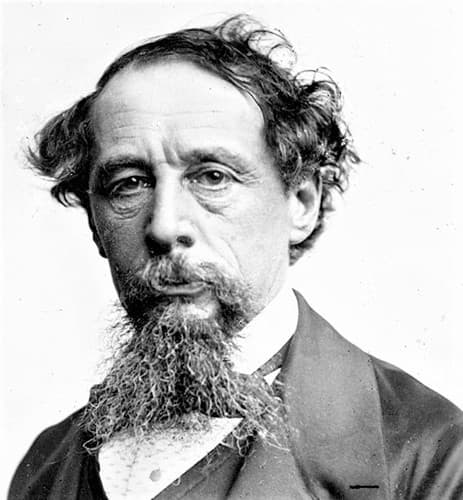
Charles John Huffam Dickens was an English writer and social critic who created some of the world's best-known fictional characters and is regarded by many as the greatest novelist of the Victorian era. His works enjoyed unprecedented popularity during his lifetime and, by the 20th century, critics and scholars had recognised him as a literary genius. His novels and short stories are widely read today.







