“Every time I choose, I'm losing every other choice.”
— The narrator reflecting on the nature of decision-making and its inherent sacrifices.

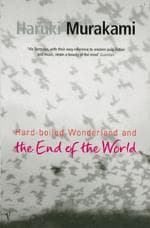
Haruki Murakami (1985)
Genre
Literary Fiction / Fantasy / Science Fiction
Reading Time
10-12 hours
Key Themes
See below
Sign in to track this book
In a divided Tokyo, a data shuffler with a jazz obsession navigates a war between 'Ciphers' and the 'System,' while in a dreamlike 'End of the World,' a man without a shadow reads skulls and battles memory loss to find a shared truth.
The unnamed Narrator, a 'calcutec' (data shuffler), arrives at a secret lab deep beneath Tokyo to meet a Scientist. The Scientist, who likes strange experiments, explains a complex process involving the Narrator's subconscious mind and special brain implants for 'shuffling' encrypted data. The Narrator agrees, despite the risks, and goes through a detailed sensory deprivation and stimulation process. This process is linked to a 'soft-boiled' data encryption method the Scientist created, which needs a specific type of consciousness to work. During the process, the Narrator has vivid, disturbing hallucinations, foreshadowing the strange events to come.
After the data-shuffling, the Narrator visits a public library for a seemingly ordinary task. There, he meets a very large and unusual librarian, who can take in huge amounts of information and food. She directs him to a secret archive where he finds a book about 'Infrasound,' a low-frequency sound that can cause certain psychological states. This idea of Infrasound later plays a key part in the Scientist's experiments and the creation of the 'End of the World' realm. The librarian's quirks and knowledge hint at a world far more complex than the Narrator first believes.
At the same time, another story begins in a dreamlike, walled town called 'The End of the World.' This Narrator, who is the same person, wakes up with no memory, his shadow 'cut off.' The Gatekeeper immediately tells him the town's rules and assigns him the job of 'Dreamreading.' The town is always autumn, surrounded by a Wall that cannot be passed, and its 'Townsfolk' all lack shadows. The Narrator's shadow, now separate, is left in the West Woods, slowly losing its life. This stark, sad setting establishes the main mystery of the 'End of the World' and the Narrator's place in it.
The Narrator in the End of the World starts his new job as a Dreamreader. He goes to the Library, where he interacts with the Librarian (a different character from the one in Hard-Boiled Wonderland, though similar) and learns to 'read' old dreams kept in the skulls of dead Unicorns. These Unicorns are the town's main animals, and their dreams hold the town's shared memories. This process allows the shadowless inhabitants to keep some sense of identity. The Narrator's first experiences are confusing, but he slowly gets used to the town's strange customs and its quiet, sad mood.
Back in Hard-Boiled Wonderland, shadowy figures ambush the Narrator in his apartment. They use 'Infrasound' to disable him, trying to get information or his consciousness. The Scientist's granddaughter, who appears unexpectedly, saves him. The Scientist later explains that these attackers are 'Semiotecs,' a rival group to his 'Calcutecs.' The Semiotecs are interested in the 'soft-boiled' data encryption and the Narrator's unique ability to process it. This attack shows the dangerous side of the Narrator's work and the hidden war between these two groups in Tokyo's underworld.
The Narrator is sent to a Professor, an unusual academic who lives in a confusing house filled with strange objects and a collection of Unicorn skulls. The Professor explains his ideas about consciousness and memory, hinting at a link between the Unicorn skulls and the 'End of the World' realm. He reveals that the skulls store memories and that the Unicorns are central to a complex system. This meeting gives important clues about the Narrator's situation and the science behind the dreamlike world he is experiencing, connecting the two stories.
In the End of the World, the Narrator's shadow, weaker and more desperate, often visits him, asking to be reattached. The shadow explains that without it, the Narrator will eventually lose all memory and stop being himself. The shadow stands for the Narrator's past, emotions, and individual identity, all of which the town's rules are slowly taking away. This interaction shows the main conflict of the End of the World story: the fight to keep one's self when facing oblivion. The Narrator feels deep sympathy for his shadow but is bound by the town's inescapable laws.
The Narrator confronts the Scientist, demanding answers about his increasingly broken reality. The Scientist finally tells the truth: the 'End of the World' is a simulated reality, a creation within the Narrator's own mind, made by the 'soft-boiled' data shuffling. The procedure was meant to separate and protect a large amount of dangerous data within the Narrator's subconscious, creating a separate 'self' to live in the simulated world. The Narrator in Hard-Boiled Wonderland is slowly losing his memories as they move to his alternate self, destined to live permanently in the End of the World.
Knowing the truth, the Narrator, with help from the Scientist's granddaughter, plans to get the important data before his 'Hard-Boiled Wonderland' self completely disappears. This means going through dangerous underground passages and facing the 'Darkness'—monstrous, shapeless beings that feed on consciousness. Their journey is risky; they are chased by the Semiotecs and face the mental strain of losing memories. The granddaughter's loyalty and cleverness are vital in this dangerous mission.
In the End of the World, the Narrator grows closer to the Librarian. She eventually reveals a hidden truth about the town's Library: it holds not just dreams, but also the 'hearts' or core identities of the Townsfolk. She explains that she guards these hearts and that his own heart is there too. This discovery deepens the mystery of the town and its inhabitants, suggesting a way to reclaim his identity. The Librarian, despite her distant manner, shows a subtle worry for the Narrator's coming fate.
As his memories quickly fade, the Narrator in Hard-Boiled Wonderland reaches a turning point. He has gotten some of the data, but the mental cost is huge. He understands that he will become the permanent resident of the End of the World. He decides to fully accept this fate, letting his 'Hard-Boiled' self disappear, accepting the change into the dreamlike world. This moment brings a deep sense of resignation and acceptance, as he prepares to shed his old identity for a new, shadowless life.
In the End of the World, the Narrator, now fully part of the town's reality, confronts his shadow one last time. He understands that reattaching his shadow would destroy the End of the World and his new, peaceful life. He chooses to stay in the town, accepting his shadowless state and the loss of his past self. This decision, while sad, shows an acceptance of his new identity and the strange, beautiful reality he now lives in. The town, with its quiet beauty and the gentle presence of the Librarian, becomes his new home.
The Protagonist
He transforms from a detached professional into a man forced to confront his own identity and accept a new, shadowless existence.
The Protagonist (alternate self)
He begins as a blank slate and slowly builds a new identity, ultimately choosing to embrace his new life in the End of the World.
The Supporting
He remains largely static, a catalyst for the Narrator's journey, but reveals deeper ethical concerns by the end.
The Supporting
She begins as a mysterious helper and proves to be a crucial, brave ally, embodying loyalty and courage.
The Supporting
She remains a static, enigmatic figure, serving as a source of information and an embodiment of the story's surrealism.
The Supporting
She begins as a detached guide and evolves into a confidante, revealing the town's deepest secrets and her own compassionate nature.
The Supporting
It slowly weakens and fades, representing the Narrator's gradual acceptance of his new, shadowless self.
The Supporting
He remains a static, eccentric source of knowledge, providing crucial exposition and philosophical insight.
The Supporting
He remains a static, symbolic figure representing the town's immutable rules.
This is a main theme, explored through the Narrator's slow memory loss in Hard-Boiled Wonderland and his shadowless life in the End of the World. Cutting the shadow symbolizes losing his past and individuality. 'Dreamreading' in the End of the World tries to save shared memory, but the individual self is given up. The Narrator's acceptance of his new, shadowless state shows a deep surrender of his old identity, highlighting how fluid and fragile selfhood is. This is clear in the Shadow's desperate pleas to the Narrator in the End of the World, representing the fight to keep one's past.
“Once you've lost your shadow, you are no longer whole. You are a mere fragment of what you once were.”
The novel constantly blurs the lines between reality, dream, and simulation. The two parallel stories, at first seemingly unrelated, are shown to be two parts of the same consciousness. The 'End of the World' is a construct within the Narrator's mind, a 'soft-boiled' reality. This challenges the reader's idea of what is real and what is imagined, suggesting that reality itself can be made or experienced differently by each person. The Professor's ideas on consciousness and the Scientist's experiments directly address how perception and existence can be changed. The contrast between chaotic Tokyo and the calm, sad walled town emphasizes this theme.
“The world is not a single, solid place. It has a soft-boiled part, and a hard-boiled part. And sometimes, those parts get mixed up.”
The novel looks deeply into how the human mind works, especially the subconscious. The Narrator's 'data shuffling' uses his subconscious, and the 'End of the World' is a reflection of his inner world. The 'Darkness' in Hard-Boiled Wonderland and the Unicorn skulls in the End of the World are physical representations of hidden psychological processes and shared memory. The story suggests that vast, unknown areas exist within our minds, able to create whole worlds and hold great power. Dreamreading, in particular, shows the subconscious as a place where identity and memory are stored.
“Your subconscious is a vast, uncharted ocean. It contains things you've never even dreamed of.”
The advanced scientific procedures, like 'soft-boiled' data encryption and brain implants, bring up important ethical questions. The Scientist's willingness to sacrifice the Narrator's identity for data protection shows how technology can take away humanity. The rivalry between the 'Calcutecs' and 'Semiotecs' highlights the dangers of scientific knowledge used for control or harm. The novel explores the thin line between scientific progress and violating individual freedom, asking if technology's benefits outweigh the personal cost. The Narrator's final fate is a direct result of these technological advances.
“Science is a double-edged sword. It can illuminate, but it can also blind.”
Despite many characters, a strong sense of loneliness runs through both stories. The Narrator in Hard-Boiled Wonderland is largely detached, and the people in the End of the World are shadowless, symbolizing a lack of deep connection. However, moments of true connection appear, such as the bond between the Narrator and the Scientist's granddaughter, or the quiet understanding between the Narrator and the Librarian in the End of the World. These connections, though brief, offer comfort and meaning in worlds that often feel isolating and uncaring. The Shadow's wish for reunion also speaks to the basic human need for completeness and connection.
“In the end, all we have are our connections. And sometimes, even those are lost.”
Two distinct stories that intertwine and eventually merge.
The novel employs two seemingly unrelated narratives, 'Hard-Boiled Wonderland' and 'The End of the World', presented in alternating chapters. This device creates suspense and mystery, as the reader gradually seeks connections between the disparate events and characters. The parallel structure highlights the theme of duality and the fragmented nature of the protagonist's identity, ultimately revealing that both narratives are facets of the same consciousness. This allows for a deeper exploration of internal conflict and the complex interplay between the conscious and subconscious mind.
The protagonist's perception of reality is increasingly called into question.
As the Narrator in Hard-Boiled Wonderland experiences memory loss and bizarre events, his ability to accurately perceive and recount reality diminishes. This device creates a sense of disorientation and encourages the reader to question what is real and what is a product of his deteriorating mind or a simulated environment. The unreliability deepens the mystery and forces the reader to actively participate in piecing together the true nature of his predicament, reflecting the theme of the subjective nature of reality.
The physical manifestation of the Narrator's lost past and identity.
In 'The End of the World' narrative, the Narrator's shadow is literally 'cut off' and exists as a separate, fading entity. This powerful symbol represents the protagonist's past memories, emotions, and individual identity that are being stripped away. The shadow's desperate pleas to be reunited highlight the tragic loss of self and the human need for wholeness. Its ultimate fate underscores the theme of identity loss and the acceptance of a new, albeit diminished, existence.
The blending of fantastical and dreamlike elements into a realistic setting.
Murakami seamlessly integrates elements of the fantastical—such as Unicorns, voracious librarians, and subterranean monsters—into the otherwise grounded, contemporary Tokyo setting. This creates a dreamlike, often unsettling atmosphere that blurs the lines between reality and imagination. This device allows for the exploration of complex philosophical themes in an engaging and accessible way, making the abstract concepts of consciousness and identity tangible through surreal imagery and events. It enhances the sense of wonder and mystery throughout the narrative.
Physical spaces that mirror the complexity of the plot and the mind.
Both the underground laboratories and passages in Hard-Boiled Wonderland and the walled town in the End of the World function as labyrinthine settings. The former represents the intricate and dangerous subconscious mind and the hidden scientific underworld. The latter, with its impenetrable Wall and the winding paths to the Library, symbolizes the inescapable nature of the simulated reality and the journey into one's inner self. These settings enhance the themes of entrapment, exploration, and the search for truth within complex systems.
“Every time I choose, I'm losing every other choice.”
— The narrator reflecting on the nature of decision-making and its inherent sacrifices.
“What we see is a world that has been reorganized, a world in which everything is in its proper place, a world in which there are no more anomalies. That is the world of the End of the World.”
— The Librarian explaining the nature of the End of the World.
“The human heart is like a vast, dark forest. It's easy to get lost in there.”
— The narrator contemplating the complexities of human emotion and consciousness.
“Nothing is perfect. This is the one fact of life that can make you truly happy.”
— A philosophical observation made by the narrator.
“In this world, there are things you can only do alone, and things you can only do with somebody else. It's important to know which is which.”
— The narrator's reflection on solitude and companionship.
“Memory, in its own way, is a form of love.”
— The narrator's thoughts on the power and significance of memory.
“I was living in a world of my own making, a world that only I could see.”
— The narrator describing his subjective reality.
“The most important thing is to be yourself. Unless you're a total idiot, in which case you should probably try to be someone else.”
— A humorous and slightly cynical piece of advice from the narrator.
“Sometimes I feel like a character in a book, and I wonder who the author is.”
— The narrator's meta-fictional musings on his existence.
“The truth is a funny thing. It can be right in front of your face, and you still not see it.”
— The narrator reflecting on the elusiveness of truth.
“To be truly alone, you have to be completely forgotten.”
— A poignant thought about the nature of isolation and memory.
“There are some things you can't get back, no matter how hard you try.”
— The narrator's acceptance of irreversible loss.
“The world is a complex place, and it's full of mysteries. Some of them are worth solving, and some of them are best left alone.”
— The narrator's view on the nature of reality and curiosity.
“We are all prisoners of our own minds, in a way.”
— A reflective statement on the limitations of individual consciousness.
Ready to see how well you understood this book? Take our interactive quiz with 10 questions.

Haruki Murakami is a Japanese writer. His novels, essays, and short stories have been bestsellers in Japan and internationally, with his work translated into 50 languages and having sold millions of copies outside Japan. He has received numerous awards for his work, including the Gunzo Prize for New Writers, the World Fantasy Award, the Frank O'Connor International Short Story Award, the Franz Kafka Prize, and the Jerusalem Prize.







