“It was a tiny house, built of gingerbread and covered with a frosting of sugar, with windows of clear spun sugar and a roof tiled with chocolate bars.”
— Hansel and Gretel discover the witch's house.

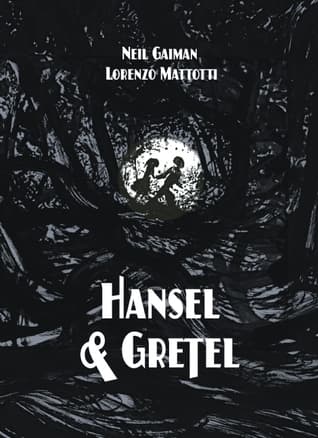
Neil Gaiman (2013)
Genre
Fantasy / Children's
Reading Time
15 min
Key Themes
See below
Sign in to track this book
Lost in a dark forest, two hungry children find a gingerbread house, unaware its sweet facade hides a child-eating witch.
In a small, poor cottage at the forest's edge, Hansel and Gretel live with their woodcutter father and stepmother. Famine grips the land, and food is scarce. One night, Hansel overhears his stepmother convincing their father to abandon the children in the forest so they can survive. The woodcutter, heartbroken but desperate, agrees. Hansel, quick-witted, plans to leave a trail of white pebbles to find their way home, gathering them secretly while his parents sleep.
The next morning, the stepmother gives Hansel and Gretel small crusts of bread and leads them deep into the forest. Their father follows, pretending to work. Hansel, lagging slightly behind, secretly drops the white pebbles he collected. They are left by a fire, told to wait for their parents. As night falls and their parents do not return, Gretel cries. Hansel comforts her, promising they can find their way home. Under the moonlight, the pebbles gleam, guiding them back to their cottage, much to the stepmother's dismay and the father's relief.
Undeterred, the stepmother insists on a second attempt, this time locking the door to prevent Hansel from gathering pebbles. The next morning, Hansel, having only a piece of bread, crumbles it and drops a trail of breadcrumbs as they are led even deeper into the forest. The parents again leave them by a fire, promising to return. As dusk settles, Hansel and Gretel wait. Hansel goes to find his trail but discovers that hungry birds have eaten every last crumb. They are truly lost this time, with no way to navigate the dense, dark woods.
With their breadcrumb trail gone, Hansel and Gretel wander aimlessly through the vast, silent forest for two days and two nights. They eat only a few wild berries and drink dew from leaves, growing weaker and more despairing. The forest, once familiar, now feels menacing and endless. Gretel is often near tears, but Hansel, despite his own fear, tries to stay strong and hopeful for his sister, constantly looking for any sign of a path or human dwelling.
On the third day of their desperate wandering, guided by a little white bird that seems to beckon them, Hansel and Gretel discover an extraordinary sight: a small cottage made entirely of gingerbread, cakes, and sugar candy. The roof is cake, the windows are clear sugar, and the walls are adorned with sweets. Overjoyed and ravenously hungry, they rush to it, breaking off pieces to eat. Hansel breaks off a piece of the roof, and Gretel eats from a window, savoring the delicious, sweet food they so desperately needed.
As Hansel and Gretel devour parts of the edible house, a sweet, soft voice calls out from within: "Nibble, nibble, little mouse, who is nibbling at my house?" A very old woman, with a kindly demeanor, opens the door and steps out. She pretends to be warm and hospitable, inviting the children inside, promising them soft beds, delicious food, and a warm fire. Exhausted and believing they have found salvation, Hansel and Gretel, despite a flicker of unease, accept her invitation and enter the cottage, unaware of the sinister trap.
The next morning, the old woman's true nature is revealed. She is a wicked witch who built the gingerbread house to lure children. She immediately seizes Hansel, locks him in a small cage in the stable, and declares her intention to fatten him up and eat him. She forces Gretel into servitude, making her a maid. Every day, the witch demands to feel Hansel's finger to check if he is getting fatter. Hansel, however, cleverly offers a small bone instead, tricking the nearly blind witch into believing he is still too thin.
Gretel is forced to perform endless chores for the witch, fetching water, sweeping, and cooking. She is given only meager scraps to eat, while Hansel, in his cage, is fed rich, delicious food to make him plump. Gretel constantly worries about her brother, watching him waste away from fear and confinement, despite the food. She cries often, feeling helpless and trapped, knowing that Hansel's life depends on her finding a way to outsmart their captor, but sees no immediate opportunity for escape.
After weeks of this routine, with Hansel consistently offering the bone, the witch grows impatient and furious. Her eyesight is poor, and she cannot understand why Hansel isn't fattening up. She declares that she will wait no longer. Regardless of his size, she decides she will eat Hansel the very next day. She orders Gretel to heat the oven, preparing it for baking bread, but secretly intending to use it for a more sinister purpose—to roast Hansel.
The next morning, the witch orders Gretel to check the oven's heat, claiming she needs to see if it's hot enough for baking. Gretel, sensing a trap, pretends she doesn't know how to do it. The witch, exasperated, demonstrates by sticking her head into the oven. In that moment, Gretel, with a surge of courage, gives the witch a mighty shove, pushing her entirely into the blazing hot oven. She quickly slams the iron door shut, securing it with the bolt, and the wicked witch is consumed by the flames.
After ensuring the witch is truly gone, Gretel rushes to the stable and frees Hansel from his cage. They embrace, overjoyed at their liberation. Exploring the witch's house, they discover chests filled with pearls and precious jewels hidden in every corner. Realizing the witch was not only evil but also incredibly wealthy, they fill their pockets and aprons with as much treasure as they can carry, knowing this wealth will change their lives and their family's fortunes forever.
With their pockets laden with jewels, Hansel and Gretel set off into the forest. They encounter a large river they cannot cross, but a kind white duck helps them over, one by one. As they continue, the forest begins to look more familiar. Finally, they spot their father's cottage in the distance. They rush home, bursting through the door to find their father, who had been grieving their loss and living in misery since they were abandoned. The stepmother, it is revealed, had died or disappeared, leaving the father alone and full of remorse.
Their father, overjoyed and weeping with relief, embraces Hansel and Gretel, expressing his deep regret for his actions. The children then pour out the pearls and jewels from their pockets and aprons, astonishing their father. With the witch's treasure, their days of poverty and hunger are over. The family is reunited, wealthy, and free from the wicked stepmother's influence. They live together in happiness and prosperity, never again suffering from want, and the dark chapter of their abandonment becomes a distant, though powerful, memory.
The Protagonist
Hansel begins as a clever boy trying to outsmart his parents and grows into a survivor who endures great hardship, emerging with his courage intact.
The Protagonist
Gretel transforms from a scared, dependent child into a brave and decisive figure who ultimately saves herself and her brother.
The Antagonist
The Witch remains static in her evil intent throughout the story, serving as the obstacle to the children's survival until her swift demise.
The Supporting
Initially weak and manipulated, the father experiences deep regret and ultimately finds redemption upon his children's return.
The Antagonist
The Stepmother remains a static figure of malice and cruelty, disappearing from the narrative after the children's return, signifying her defeat.
The Mentioned
The White Bird serves as a symbolic guide, appearing at crucial moments to subtly influence the children's path.
The Mentioned
The White Duck provides a crucial physical aid, facilitating the final stage of the children's journey home.
Survival is a main theme, as Hansel and Gretel face abandonment and a monstrous witch. Hansel's quick thinking, leaving trails of pebbles and breadcrumbs, and later using a bone to trick the witch, shows his resourcefulness. Gretel's act of pushing the witch into the oven is the climax of their fight for survival. Their journey through the dangerous forest and their cleverness against the witch show humanity's drive to overcome difficult situations, seen in how they live on berries and dew.
“"Don't worry, little sister, when the moon rises, I'll find our way home."”
The story presents a duality where both the 'safe' home and the wild forest can be dangerous. The children are abandoned by their own family, making their cottage a place of betrayal. Conversely, the forest, initially a place of peril and getting lost, eventually offers guidance through the white bird and the helpful duck. The witch's house, appearing as a sweet haven, is the ultimate deception. This theme explores how appearances can be deceiving, and true safety or danger can come from unexpected places, blurring the lines between civilization and wilderness.
“"Nibble, nibble, little mouse, who is nibbling at my house?"”
This classic fairy tale clearly separates good and evil. Hansel and Gretel represent innocence and goodness, despite their desperate situation. The stepmother shows a more human, yet cruel, form of evil, driven by famine and selfishness. The witch, however, represents pure malevolence, a supernatural evil wanting to eat children. The story builds to a confrontation where the children's goodness and cleverness overcome the witch's wickedness, restoring balance and justice.
“"The wicked witch was burned to a crisp, and Hansel and Gretel were free."”
The parents' initial betrayal, especially the stepmother's, starts the entire plot. The father's weakness in agreeing to the plan is a form of betrayal, but his later grief and remorse offer a path to redemption. The children, despite the deep hurt, eventually return to a repentant father, symbolizing forgiveness and the possibility of healing broken family bonds. The stepmother, however, receives no redemption, as her fate is left unresolved, emphasizing the consequences of unchecked malice.
“"The father, who had not had a happy hour since they were gone, rejoiced with all his heart."”
The story powerfully shows children's vulnerability in a harsh world, subject to famine, parental abandonment, and monstrous figures. Hansel and Gretel are small, hungry, and easily misled. Yet, their journey also highlights their incredible resilience. Despite their fear and despair, they never give up hope. Hansel's protective instincts and Gretel's decisive action against the witch underscore their courage and inner strength, showing that even the most vulnerable can be remarkably resilient.
“"The children were very hungry, and they broke off pieces of the roof and the windows and ate them."”
Physical markers that represent hope and failed attempts at return.
Hansel's use of white pebbles and then breadcrumbs serves as a crucial plot device. The pebbles symbolize initial hope and successful ingenuity, allowing the children to return home. The breadcrumbs, however, represent a failed attempt, consumed by nature, symbolizing the increasing desperation and the children's complete loss in the wilderness. This device highlights the progression of their plight and the escalating stakes, moving them from a solvable problem to a truly dire situation where external help or a new form of cunning is required.
An inviting facade that conceals a deadly trap.
The gingerbread house is a classic example of a deceptive setting. Its irresistible appearance, made of sweets and cakes, serves as a powerful lure for the starving children. This device highlights the theme of appearances versus reality, as the delicious facade hides a child-devouring witch. It preys on the children's most basic needs (hunger and shelter) to draw them into a deadly trap, making their struggle for survival even more poignant. The house itself is a character in the deception, an active participant in the witch's evil scheme.
A physical infirmity that allows for trickery and ultimately leads to her downfall.
The witch's poor eyesight is a key physical flaw that Hansel exploits to avoid being eaten prematurely by offering a bone instead of his finger. This device underscores the theme of resourcefulness and how even a seemingly powerful antagonist can have exploitable weaknesses. More critically, it allows Gretel to trick the witch into demonstrating how to enter the oven, directly leading to the witch's demise. Without this specific infirmity, the children's escape would have been significantly harder, if not impossible.
Widespread hunger that drives the initial conflict and parental betrayal.
The overarching famine is the primary catalyst for the entire narrative. It is the dire economic circumstance that pushes the stepmother to suggest abandoning the children and compels the woodcutter to reluctantly agree. This plot device establishes the extreme desperation of the family's situation, making the parents' unthinkable act, while still morally reprehensible, understandable within the context of survival. It grounds the fantastical elements of the story in a harsh, realistic struggle for existence, setting the stage for the children's subsequent ordeal.
“It was a tiny house, built of gingerbread and covered with a frosting of sugar, with windows of clear spun sugar and a roof tiled with chocolate bars.”
— Hansel and Gretel discover the witch's house.
“The children knew that the forest was a place of shadows and secrets, of things that rustled in the undergrowth and watched from between the trees.”
— Describing the menacing nature of the forest.
“Hunger makes you do things. It makes you brave and it makes you foolish and it makes you cruel.”
— Reflecting on the motivations driven by extreme hunger.
“The stepmother was not cruel by nature, but her heart had been hardened by hunger, and her mind was filled with the terrible arithmetic of scarcity.”
— Explaining the stepmother's decision to abandon the children.
“There are always tracks in the snow, if you know how to look for them. Footprints, yes, but also the stories of the wind and the trees.”
— Hansel's resourcefulness in leaving a trail.
“Sometimes the cleverness of children is a terrible thing, for it can save them, and then it can doom them.”
— Narrator's reflection on the children's ingenuity.
“The witch smiled, a thin, sharp smile that showed too many teeth. It was not a kind smile.”
— Gretel encountering the witch's true nature.
“The oven was old and black, and it smelled of burnt sugar and something else, something sharp and metallic, like blood.”
— Gretel's description of the witch's oven.
“You do not tell a witch that she is old. Witches are never old. They are simply... long-lived.”
— A warning about the witch's vanity and power.
“Gretel pushed the witch. She did not think. She simply pushed.”
— Gretel's decisive action against the witch.
“The forest swallowed the house whole, leaving no trace, as if it had never been there.”
— The disappearance of the witch's house after her demise.
“They found their way home not by breadcrumbs, for the birds had eaten them all, but by the memory of sunlight on the path and the shape of the oldest trees.”
— The children's journey back to their parents.
“And the parents, when they saw their children, wept tears of joy and sorrow, for they had believed them lost forever.”
— The reunion of Hansel and Gretel with their parents.
“Some stories are like that. They have teeth. They bite.”
— The narrator's meta-commentary on the nature of fairy tales.
Ready to see how well you understood this book? Take our interactive quiz with 10 questions.

Neil Richard MacKinnon Gaiman is an English author of short fiction, novels, comic books, graphic novels, audio theatre, and a screenwriter. His works include the comic book series The Sandman and the novels Good Omens, Stardust, Anansi Boys, American Gods, Coraline, and The Graveyard Book. He has won numerous awards, including the Hugo, Nebula, and Bram Stoker awards, as well as the Newbery and Carnegie medals. He is the first author to win both the Newbery and the Carnegie medals for the same work, The Graveyard Book (2008). In 2013, The Ocean at the End of the Lane was voted Book of the Year in the British National Book Awards. It was later adapted into a critically acclaimed stage play at the Royal National Theatre in London.







