“They had come home. They were back. But they were not the same. And neither were we.”
— The initial shock and mystery of the reanimated dead returning to their homes.


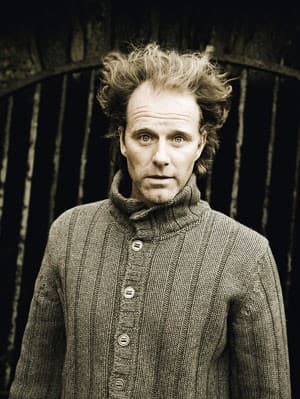
John Ajvide Lindqvist (2010)
Genre
Fantasy
Reading Time
8-10 hours
Key Themes
See below
Sign in to track this book
A heatwave grips Stockholm, causing appliances to malfunction and the recently deceased to reawaken, leading to a haunting return of the dead.
Stockholm experiences a severe heatwave. At the same time, a strange electrical problem affects the city: lights will not turn off, appliances hum constantly, and car engines run even when switched off. This electrical disturbance creates a constant, low hum, adding to a general sense of unease. David, a journalist, sees this when his apartment lights stay on. Elina, an elderly woman, struggles with her oven remaining on. The city's residents are bewildered by these unexplained events, which seem to hint at something much larger and more terrifying.
Reports of the dead reanimating begin to appear, at first dismissed as hoaxes. In the city morgue, staff see the impossible: bodies, including that of Jompa, a recently deceased addict, sit up. Similar events happen in homes where wakes are held. Anna, whose grandmother just died, is horrified when her grandmother's body moves. These reanimated corpses are not violent; they are slow, confused, and emit a low murmur, seemingly drawn to the homes and people they knew. Authorities are overwhelmed and struggle to understand or control the crisis, initially trying to downplay it.
David, still recovering from his wife Eva's sudden death in a car accident, is deep in grief. He feels guilty, believing he is responsible for her death. As news of the dead returning spreads, David's grief mixes with a desperate, impossible hope. He sees the dead returning from a distance, slowly moving across the city. His longing for Eva is clear, and he starts to imagine her among them, despite knowing it is impossible. This sets the scene for his deeply personal encounter with the phenomenon.
Many families find their recently deceased loved ones returning home. Majsan, who recently lost her son, Elias, in a drowning accident, is overjoyed and terrified when he appears at her door. Similarly, Elina, a grieving grandmother, finds her grandson, also named Elias, at her apartment. These 'reawakened' are not the people they once were; they are silent, unresponsive, and seem to exist in a state of limbo, pulled by an instinct towards their former lives. Families struggle with the emotional and ethical problems of housing these silent, living dead, torn between love and revulsion.
As the scale of the reanimations becomes clear, the Swedish government and military must act. They create protocols to control the situation and maintain public order. At first, there is a rule to keep the reawakened in their homes, but this does not last. Public opinion is split: some see the reawakened as a miracle, a second chance, while others see them as an abomination. Large gatherings of the reawakened, moving slowly and silently, become common, disrupting daily life. Authorities are caught between humanitarian concerns and the practicalities of a collapsing social order.
Gustav, a former pastor, becomes obsessed with understanding the religious meaning of the reanimations. He sees the event through a spiritual lens, struggling to fit it with his faith and traditional teachings about life and death. He visits families housing the reawakened, seeking answers and offering guidance, though often finding none. His journey reflects a wider societal search for meaning in the face of the inexplicable, as old beliefs are shattered. He questions the idea of a God who would allow such a thing to happen, and the nature of the soul and the afterlife.
As the initial shock fades, public fear and hostility towards the reawakened grow. Groups of people, driven by panic, start attacking the reawakened, seeing them as monsters. These violent acts are often brutal and unprovoked. The government struggles to protect the reawakened and maintain order, but their large numbers and widespread fear make it impossible. This societal breakdown shows humanity's darker side when faced with the unknown and the collapse of established norms, leading to tragic results for both the living and the reawakened.
David's desperate hope comes true when Eva, reawakened, appears at their apartment. However, the reunion is not the comfort he imagined. Eva is silent, unresponsive, and a shell of her former self, a constant reminder of his loss rather than a true return. David struggles with her presence, moving between love, despair, and unease. He tries to communicate with her, to find some spark of the woman he loved, but she remains distant. This personal tragedy reflects the broader societal struggle to reconcile the living with the reawakened, highlighting the gap between life and this new existence.
Over time, the reawakened start to show collective behavior, slowly moving towards specific places, often parks. They form silent, still congregations, standing together in what some call 'nests.' These gatherings are eerie, drawing both curious onlookers and fearful mobs. The military tries to manage these gatherings, but their numbers and lack of aggression make them hard to disperse without violence. The 'nests' become symbols of the new reality, raising questions about the reawakened's purpose and whether they share a consciousness or are simply drawn by an unknown force.
As suddenly as it began, the heatwave breaks, and the electrical problems stop. At the same time, the reawakened, who had been preserved until this point, begin to decay. Their bodies start to decompose like any normal corpse. This marks the end of their strange existence. The remaining reawakened eventually decompose, leaving families and society to process what happened. The event leaves a lasting mark on Stockholm, forcing its residents to face the fragility of life, the nature of death, and the limits of their understanding.
The Protagonist
David moves from intense grief and guilt to a painful acceptance of Eva's reawakened state, ultimately finding a form of peace in her presence, even if it's not the reunion he longed for.
The Supporting
Eva exists as a static, reanimated presence, serving as a catalyst for David's emotional journey rather than undergoing personal development.
The Supporting
Majsan moves from intense grief to a fierce, protective love for her reawakened son, accepting him despite his changes.
The Supporting
Elias, as a reawakened, does not have a personal arc but serves as a focal point for Majsan's emotional journey and the broader societal questions.
The Supporting
Elina accepts her reawakened grandson with a quiet, enduring love, embodying resilience and a pragmatic approach to the supernatural.
The Supporting
Elias, as a reawakened, does not have a personal arc but serves as a catalyst for Elina's emotional journey.
The Supporting
Gustav grapples with his faith in the face of the supernatural, seeking a new understanding of life and death that transcends traditional religious dogma.
The Supporting
Anna moves from initial horror and confusion to a reluctant acceptance of her grandmother's reawakened state.
The novel explores how people deal with grief when death is no longer final. David's deep sorrow over Eva's death intensifies when she reawakens, forcing him to face a 'loss' that is both present and absent. Majsan's desperate joy at Elias's return shows the human desire to reverse loss, even if the 'return' is incomplete. The reawakened, silent and unresponsive, serve as constant, haunting reminders of what was, rather than true restorations. This forces characters to redefine closure and acceptance. The story suggests that true grief involves letting go, a process complicated when the deceased physically return.
“What is death, if not the end of a story? And what is a story, if not a series of choices?”
The reawakening challenges common ideas about life and death. The reawakened are neither truly alive nor truly dead, existing in a state that blurs these lines. This forces characters like Gustav, the former pastor, to question religious and philosophical definitions of the soul, consciousness, and the afterlife. The phenomenon removes the comfort of established beliefs, prompting a re-evaluation of what it means to be human and what makes a 'person.' The novel suggests that life and death may not be as absolute as once thought, opening up terrifying possibilities.
“They were not dead. But they were not alive either. They were something else.”
The reawakening quickly destabilizes society, showing both the best and worst of human nature. At first, there is confusion and an attempt by authorities to keep order, but as the phenomenon continues, fear turns into prejudice and violence. Groups form to attack the reawakened, showing humanity's capacity for cruelty towards the 'other.' In contrast, characters like Majsan and Elina show deep love and compassion, caring for their reawakened loved ones despite the horror. The breakdown of social norms and the struggle for control illustrate how quickly civilization can unravel when faced with an existential threat that defies explanation.
“Fear makes monsters of us all, whether the monsters are real or imagined.”
Throughout the story, characters and institutions try to understand and control the reawakening. Scientists and government officials attempt to find logical explanations and containment strategies, but the phenomenon defies all scientific frameworks. Gustav's religious search for meaning also reflects this desire for understanding. The inability to understand or control the reawakened creates widespread anxiety and a sense of powerlessness. The novel suggests that some mysteries may be beyond human grasp, and that true control is often an illusion, especially when faced with the unknown.
“We want to understand everything, to put a name on it, to put it in a box. But some things refuse to be boxed.”
A city-wide electrical disturbance that precedes the reawakening.
The persistent electrical malfunction, where lights stay on and appliances hum, serves as a significant atmospheric plot device. It creates a pervasive sense of unease and abnormality, signaling that something is fundamentally wrong with the natural order even before the dead begin to stir. This constant, low-level hum and the inability to control basic household functions mirror the loss of control that society will soon experience on a much larger scale. It functions as an ominous prelude, building tension and foreshadowing the deeper, more profound disruption to come.
The reanimated corpses are unresponsive and emit only a low murmur.
The fact that the reawakened are silent, unresponsive, and merely emit a low, persistent murmur is a crucial plot device. This lack of communication prevents any true reunion or understanding, amplifying the characters' grief and frustration. It underscores that these are not truly 'returned' loved ones but something else entirely, a haunting shell. Their silence makes them enigmatic and terrifying to some, while to others, it allows for projection and a desperate clinging to memory. It highlights the unbridgeable chasm between life and this new form of existence, making them both pitiful and unnerving.
An oppressive, record-breaking heatwave grips Stockholm during the events.
The intense, unyielding heatwave serves as a powerful atmospheric device. It creates a stifling, oppressive environment that physically and psychologically affects the characters. The heat contributes to a sense of discomfort, irritability, and a feeling of being trapped, mirroring the societal and personal suffocation caused by the reawakening. It also adds a layer of surrealism and heightened sensory experience to the unfolding horror, making the city itself feel alien and inhospitable. The breaking of the heatwave coincides with the resolution of the reawakening, linking the environmental anomaly to the supernatural event.
The reawakened gather in silent, unmoving congregations in public spaces.
The formation of 'nests' – large, silent gatherings of the reawakened in parks and public spaces – is a potent symbolic and narrative device. These gatherings are eerie and unsettling, representing the collective, mysterious nature of the phenomenon. They are not aggressive, yet their sheer numbers and silent presence are deeply disquieting, challenging the living's sense of ownership over public spaces. The 'nests' symbolize the unknown purpose or drive of the reawakened, hinting at a collective consciousness or instinct that remains beyond human comprehension, further emphasizing the limits of understanding.
“They had come home. They were back. But they were not the same. And neither were we.”
— The initial shock and mystery of the reanimated dead returning to their homes.
“Death was not the end. It was, apparently, just a pause. A brief intermission before an encore no one had asked for.”
— A reflection on the breaking of the natural order of life and death.
“The problem wasn't that they were dead. The problem was that they were here, and we didn't know why.”
— The core mystery driving the plot, focusing on the unknown motivations and implications of the reawakening.
“Love, it turned out, could be a very selfish thing. Especially when confronted with the impossible.”
— Anna's struggle with her reanimated grandson and the difficult choices she faces.
“We had always defined ourselves by our living. Now, we had to redefine ourselves by our dead.”
— The societal shift and philosophical challenge posed by the return of the dead.
“The silence in the city was not the silence of peace, but the silence of waiting. Of holding breath.”
— The eerie atmosphere in Stockholm after the initial events, before the full implications are understood.
“He was still her husband, in some fundamental, broken way. And that was enough, for now.”
— Eva's desperate attempt to reconnect with her reanimated husband, despite his altered state.
“It was not a miracle. It was an intrusion. A violation of everything we thought we knew.”
— A character's cynical view on the reanimation, rejecting any positive interpretation.
“The smell. It was the smell of something forgotten, something that should have stayed buried.”
— The sensory detail highlighting the unnaturalness of the reanimated bodies.
“Grief was a wound that never truly healed. But this… this was like picking at the scab with a rusty nail.”
— The experience of confronting a reanimated loved one, reopening old wounds.
“They didn't want anything. That was the most terrifying part. No hunger, no malice. Just… presence.”
— The unsettling lack of typical zombie motivations, making the undead even more enigmatic.
“The city was a graveyard that had decided to get up and walk around.”
— A vivid metaphor describing the widespread reanimation and its impact on the urban landscape.
“Perhaps they were not dead at all. Perhaps they were just… different.”
— A philosophical consideration of the state of the reanimated, blurring the lines of life and death.
“The sun still rose, the birds still sang. But the world had irrevocably shifted on its axis.”
— The contrast between the mundane continuity of nature and the profound change in human reality.
Ready to see how well you understood this book? Take our interactive quiz with 10 questions.
Biography coming soon.







