“To be, or not to be: that is the question:”
— Hamlet's famous soliloquy contemplating life and death.

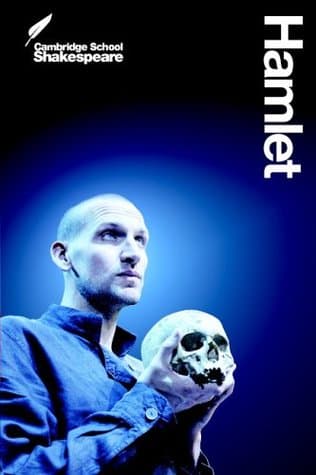
William Shakespeare (2003)
Genre
Young Adult
Reading Time
289 min
Key Themes
See below
Sign in to track this book
A young prince grapples with his father's ghost, a treacherous uncle, and his own spiraling sanity as he plots revenge for a murder most foul.
On the castle walls of Elsinore, guards Bernardo and Marcellus, with Hamlet's friend Horatio, see a ghost that looks like the dead King Hamlet. Horatio, at first doubtful, believes it after seeing it and hearing the guards. They decide to tell Prince Hamlet, who is deep in mourning for his father and upset by his mother Gertrude's quick marriage to his uncle Claudius, now the new King of Denmark. Hamlet feels betrayed and disgusted by the fast remarriage, seeing it as an unholy act and a sign of his mother's weakness. This puts him in a deep sad state even before he hears about the ghost.
Hamlet meets his father's Ghost, who reveals a shocking truth: he was not killed by a snakebite as everyone thought, but poisoned by his brother Claudius, who poured poison into his ear while he slept. The Ghost describes his suffering in Purgatory and asks Hamlet to get revenge for his 'most foul, strange, and unnatural murder.' He tells Hamlet to spare Queen Gertrude, leaving her to her own guilt. Overwhelmed and angry, Hamlet vows to focus entirely on this revenge, sending away his friends and pretending to be mad to hide his true plans against Claudius.
Following the Ghost's order, Hamlet pretends to be mad, acting strangely and speaking in riddles. His odd behavior greatly upsets Ophelia, his love interest, whom he treats with confusing coldness and harshness, further making the court believe he is insane. Polonius, Ophelia's father and the King's chief advisor, thinks Hamlet's madness comes from being lovesick for Ophelia and tells Claudius and Gertrude this. Claudius, however, suspects Hamlet's behavior is more than lovesickness and begins to worry about his own safety, starting a plan to watch Hamlet more closely.
To test the Ghost's claims, Hamlet plans to hire a group of traveling actors to perform 'The Murder of Gonzago.' He changes the play with extra lines to closely match how his father was murdered. During the performance, as the play shows the poisoning of the king, Claudius reacts strongly, standing up suddenly and demanding the play stop. His panicked reaction confirms his guilt to Hamlet. This moment is a turning point, solidifying Hamlet's decision for revenge and making the dangerous game between him and Claudius more intense.
After the play, Hamlet's mother sends for him. Polonius, believing he can find the reason for Hamlet's madness, hides behind a curtain in Gertrude's room to listen to their talk. During a heated argument with his mother, Hamlet hears a noise, assumes it is Claudius spying, and impulsively stabs through the tapestry, killing Polonius. This accidental murder has serious results, making the conflict worse and giving Claudius a reason to send Hamlet away. Hamlet then confronts Gertrude about her quick marriage and Claudius's betrayal, urging her to feel remorse.
Claudius, now afraid of Hamlet and using Polonius's death as an excuse, orders Hamlet to be sent to England. He pretends it is for Hamlet's safety, but secretly sends letters instructing that Hamlet be executed. Meanwhile, the grief and shock of her father Polonius's sudden death, along with Hamlet's cruel rejection and exile, drive Ophelia into deep madness. She walks around the castle singing broken songs, giving out flowers with symbolic meanings, and speaking nonsense. She is a tragic victim of the court's schemes and Hamlet's revenge plan.
Laertes returns from France, angry and heartbroken by his father Polonius's death and his sister Ophelia's later madness. He storms the castle, demanding answers and revenge. Claudius, always manipulative, cleverly turns Laertes's anger from himself to Hamlet, convincing him that Hamlet is fully responsible for their family's suffering. Together, they plan a treacherous scheme: a fencing match between Hamlet and Laertes, where Laertes's sword will be unblunted and poisoned, and Claudius will have a poisoned drink for Hamlet as a backup.
Ophelia, in her madness, drowns in a brook, either by accident or by suicide, her arms full of flowers. Her tragic death further fuels Laertes's wish for revenge. Before her funeral, Hamlet and Horatio meet two gravediggers, who offer dark humor and thoughts on life and death. Hamlet famously holds the skull of Yorick, a former court jester, thinking about how short life is and how decay is unavoidable. This deepens his thoughts on existence before he learns of Ophelia's death and confronts Laertes at her burial.
The fencing match between Hamlet and Laertes begins. Claudius offers Hamlet a poisoned drink, which Gertrude unknowingly drinks instead, dying quickly. Laertes wounds Hamlet with the poisoned sword. In the struggle, Hamlet disarms Laertes and, in a fit of rage, uses the poisoned sword to wound Laertes. Laertes, dying, confesses the plot and names Claudius. Angry, Hamlet then stabs Claudius with the poisoned sword and forces him to drink the remaining poisoned wine, ensuring his death. Hamlet, mortally wounded, dies shortly after, asking Horatio to tell his story.
As Hamlet dies, Fortinbras, the Prince of Norway, arrives with his army, returning from a successful campaign. He is shocked to find the entire Danish royal court dead. Horatio, loyal to the end, promises to tell the full, tragic story of Hamlet and the events that led to the royal family's end. Fortinbras, seeing the carnage, claims the Danish throne, which Hamlet, with his dying breath, had supported. He orders a military funeral for Hamlet, acknowledging his princely status and signaling a new, more stable time for Denmark.
The Protagonist
Hamlet transforms from a grief-stricken scholar to a resolute avenger, albeit one whose actions lead to universal tragedy, grappling with existential questions throughout.
The Antagonist
Claudius rises to power through murder and deceit, then descends into paranoia and desperate measures to maintain his reign, ultimately meeting a deserved end.
The Supporting
Gertrude remains largely passive and reactive, unaware of the full extent of Claudius's villainy, ultimately becoming an unwitting casualty of the revenge plot.
The Supporting
Ophelia transforms from a dutiful and loving young woman into a tragic figure of madness, ultimately succumbing to despair and death.
The Supporting
Polonius's unwavering belief in his own wisdom and his intrusive meddling lead directly to his demise, acting as a catalyst for Ophelia's madness and Laertes's revenge.
The Supporting
Horatio remains a consistent figure of loyalty and reason, enduring the tragedy and becoming the keeper of Hamlet's story.
The Supporting
Laertes transforms from a carefree student into a vengeful son and brother, ultimately finding redemption in his dying moments by exposing Claudius.
The Mentioned
The Ghost's appearance initiates the entire revenge plot, setting Hamlet's destiny in motion.
The Supporting
They arrive as ostensibly loyal friends but become unwitting pawns in Claudius's schemes, leading to their demise as collateral damage.
The play looks at the complex and often harmful nature of revenge. Hamlet is told to avenge his father's murder, but his thoughts about the act, his moral doubts, and his delays show the difference between quick retaliation and a more thought-out form of justice. The play contrasts Hamlet's intellectual approach with Laertes's immediate, passionate desire for revenge, showing how both paths lead to tragic endings. In the end, the cycle of vengeance consumes everyone involved, showing that 'justice' achieved through violent revenge often causes more suffering instead of solving problems, as seen in the final scene where almost all main characters die.
“''Haste me to know't, that I, with wings as swift / As meditation or the thoughts of love, / May sweep to my revenge.'”
Madness is a main idea, shown through Hamlet's 'antic disposition' and Ophelia's real descent into insanity. Hamlet pretends to be mad to confuse his enemies and gain time, using it as a shield and a weapon to speak uncomfortable truths. However, the line between his fake madness and real emotional distress often blurs, raising questions about his true mental state. Ophelia's madness, caused by grief and betrayal, is shown as a tragic result of the corrupt court and Hamlet's actions, demonstrating how fragile the human mind is under extreme pressure. The theme questions what is real and what is perceived within the dangerous court.
“''Though this be madness, yet there is method in't.'”
Hamlet thinks deeply about death, decay, and the meaning of life. His famous 'To be or not to be' speech directly deals with the question of suicide and the fear of what comes after death. The gravedigger scene, with Hamlet holding Yorick's skull, serves as a powerful reminder of death, forcing him to face that death is universal and earthly achievements are ultimately unimportant. This theme looks at how short life is, how death is certain, and the philosophical struggle to find purpose in a world where everyone eventually turns to dust, influencing Hamlet's delays and his deep sadness.
“''To be, or not to be: that is the question.'”
The state of Denmark is presented as corrupt, symbolized by the 'rotten' conditions after Claudius's illegal rise to the throne. Deceit runs through every part of society, from Claudius's murder and cover-up to Polonius's spying and Rosencrantz and Guildenstern's betrayal of Hamlet. Characters constantly spy on each other, twist the truth, and hide their real intentions behind false appearances. This widespread corruption poisons personal relationships, weakens justice, and ultimately leads to the tragic downfall of almost every main character, showing how moral decay in leadership can destroy an entire kingdom.
“''Something is rotten in the state of Denmark.'”
The play deeply examines how family bonds break down because of betrayal. Claudius betrays his brother by murdering him and his sister-in-law by marrying her too quickly, breaking natural and moral laws. Hamlet feels deeply betrayed by his mother's quick marriage, seeing it as a profound disloyalty to his father's memory and a personal insult. Ophelia is betrayed by Hamlet's cruel rejection and by her father's manipulation. These acts of family betrayal start the main conflict and drive the characters toward their tragic fates, showing how broken trust within a family can have terrible results for individuals and the state.
“''Frailty, thy name is woman!'”
A supernatural apparition that reveals the truth and demands revenge.
The Ghost of King Hamlet serves as the primary inciting incident, revealing the secret murder of the former king and directly tasking Hamlet with the burden of revenge. It introduces the supernatural element, challenging the audience's perception of reality and Hamlet's sanity. The Ghost's appearance immediately establishes the central conflict and Hamlet's tragic quest, setting the entire plot in motion and providing the moral imperative for Hamlet's actions, however delayed or convoluted they become.
A theatrical performance designed by Hamlet to confirm Claudius's guilt.
Hamlet's staging of 'The Murder of Gonzago,' which he renames 'The Mousetrap,' is a crucial plot device. It serves as an ingenious test of Claudius's guilt, providing irrefutable proof of his crime through his panicked reaction. This device allows Hamlet to move beyond doubt and commit fully to his revenge. It also highlights the power of theater to reveal truth and mirrors the meta-theatrical nature of the play itself, drawing the audience into Hamlet's intricate scheme and intensifying the dramatic tension.
Extended speeches by characters alone on stage, revealing their inner thoughts and motivations.
Hamlet's numerous soliloquies are vital plot devices that grant the audience unparalleled access to his complex inner world. They reveal his deepest doubts, philosophical ponderings, moral struggles, and true intentions, which he often conceals from other characters. These speeches drive the psychological depth of the play, explain his delays, and articulate the major themes of mortality, revenge, and madness. Without them, Hamlet's character would be enigmatic, and the profound intellectual and emotional layers of the narrative would be lost.
Hamlet's deliberate adoption of erratic behavior to mask his true intentions.
Hamlet's 'antic disposition' is a strategic plot device. By feigning madness, he creates a smokescreen that allows him to observe the court, gather information, and speak uncomfortable truths without immediate reprisal. It gives him license to act unpredictably and deflect suspicion from his true motives of revenge. However, this device also creates ambiguity, blurring the line between his act and genuine distress, and contributes to the tragic misunderstanding and suffering of characters like Ophelia.
“To be, or not to be: that is the question:”
— Hamlet's famous soliloquy contemplating life and death.
“Something is rotten in the state of Denmark.”
— Marcellus's observation after the ghost of Hamlet's father appears.
“Frailty, thy name is woman!”
— Hamlet's bitter reflection on his mother's hasty remarriage.
“Though this be madness, yet there is method in't.”
— Polonius's aside, observing Hamlet's feigned madness.
“Neither a borrower nor a lender be; For loan oft loses both itself and friend.”
— Polonius's advice to Laertes before he departs for France.
“This above all: to thine own self be true, And it must follow, as the night the day, Thou canst not then be false to any man.”
— Polonius's concluding advice to Laertes.
“The play's the thing Wherein I'll catch the conscience of the King.”
— Hamlet's plan to use a play to reveal Claudius's guilt.
“There are more things in heaven and earth, Horatio, Than are dreamt of in your philosophy.”
— Hamlet's comment to Horatio after encountering his father's ghost.
“Get thee to a nunnery: why wouldst thou be a breeder of sinners?”
— Hamlet's harsh words to Ophelia, expressing his disillusionment with women.
“The time is out of joint; O cursed spite, That ever I was born to set it right!”
— Hamlet's lament after learning about his father's murder and being tasked with revenge.
“Sweets to the sweet: farewell!”
— Gertrude scattering flowers on Ophelia's grave.
“A little more than kin, and less than kind.”
— Hamlet's first aside, expressing his displeasure with Claudius, now his uncle and stepfather.
“Report me and my cause aright To the unsatisfied.”
— Hamlet's dying wish to Horatio, asking him to tell his story truthfully.
“We know what we are, but know not what we may be.”
— Ophelia's poignant line, reflecting on her own madness and uncertainty.
Ready to see how well you understood this book? Take our interactive quiz with 10 questions.
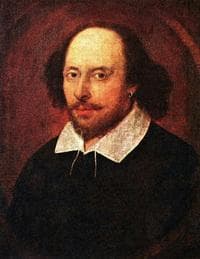
William Shakespeare was an English playwright, poet and actor. He is widely regarded as the greatest writer in the English language and the world's pre-eminent dramatist. He is often called England's national poet and the "Bard of Avon". His extant works, including collaborations, consist of some 39 plays, 154 sonnets, three long narrative poems, and a few other verses, some of uncertain authorship. His plays have been translated into every major living language and are performed more often than those of any other playwright. Shakespeare remains arguably the most influential writer in the English language, and his works continue to be studied and reinterpreted.