“Being a hero isn't about being perfect. It's about being brave enough to try.”
— Jack's reflection on heroism after a difficult decision.

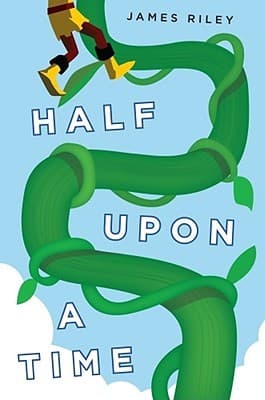
James Riley (2010)
Genre
Fantasy / Children's / Young Adult
Reading Time
450 min
Key Themes
See below
Sign in to track this book
When a giant-slayer's son meets a punk princess who falls from the sky and doesn't believe in magic, they're thrust into a hilariously fractured fairy tale quest to save Snow White from the Wicked Queen.
Jack, a young man from the fairy tale world whose family is known for the beanstalk incident, tries to avoid his grandfather's constant pressure to find a princess. While walking through the woods, he sees a girl named May fall from the sky, landing in leaves. May wears strange clothes, including a t-shirt that says 'Punk Princess,' and carries a device she calls a 'phone.' She says she is not a princess and does not believe in magic or fairy tales. A huntsman, a large man with an axe, appears, chasing May. Jack helps May escape, leading them deeper into the forest, away from the immediate danger.
As Jack and May run from the huntsman, May explains her situation. She says she is from a 'real' world where fairy tales are just stories, and she fell into Jack's world through a portal. She says her grandmother, a woman named Snow, has been kidnapped, and May thinks it is because Snow is the long-lost Snow White. The huntsman, she suspects, works for the Wicked Queen, who May believes wants to finish what she started. Jack doubts May's modern claims but sees the clear link to his world's fairy tale story, especially with Snow White and the Wicked Queen, a great evil in their land.
Jack decides to find the Seven Dwarves, thinking they might know about Snow White. They find the dwarves, who are now gnomes living in an advanced, underground city. The gnomes are careful at first but recognize May's grandmother's description. They confirm that May's grandmother is Snow White, who left the fairy tale world years ago to escape the Queen. The gnomes say the Wicked Queen searches for the 'Happily Ever After' spell, which she believes Snow White knows, to become the most powerful ruler forever. They also say the Queen has been using a magic mirror to find Snow White.
The gnomes, after thinking it over, tell Jack and May that to rescue Snow White, they need to enter the Wicked Queen's castle. They suggest Cinderella might have a key or know a secret passage. They give Jack and May a glass slipper, saying it is how to identify Cinderella. Jack and May go to find Cinderella, hoping she can help them get into the Queen's fortress. Their journey takes them through various fairy tale places, where they meet different versions of classic characters, which helps May understand the magical world.
Jack and May find Cinderella, who is now a bitter woman running a small, messy shop, still bothered by her past with Prince Charming. She is not the princess from stories. Cinderella first refuses to help, upset about her own 'Happily Ever After' falling apart. After some persuasion and an explanation of the problem, she agrees to give them a magical 'master key' that can open any lock in the Queen's castle. She also says Prince Charming, a tired but honorable man, also tries to stop the Queen and might be an ally. Cinderella gives them the key and sends them off.
Following Cinderella's advice, Jack and May find Prince Charming, who is investigating the Wicked Queen's recent power increase and strange magic experiments. Charming is a skilled warrior, burdened by his royal title and his past with Cinderella. He is suspicious of Jack and May at first but is convinced by their story and the urgency. He confirms the Queen's focus on the 'Happily Ever After' spell and her wish to control all magic. Charming agrees to help them get into the castle, seeing the threat the Queen poses to the entire fairy tale world.
With Cinderella's master key and Prince Charming's knowledge, the trio plans to enter the Wicked Queen's castle. The castle has many magical traps and guards. They use the key to open several locked doors and move through the complex corridors. May's modern thinking, combined with Jack's fairy tale instincts and Charming's fighting skills, helps them get past problems. As they go in, they see the Queen's dark magic, finding proof of her experiments and the extent of her power and cruelty. They avoid being caught many times, going deeper into the fortress.
Jack, May, and Charming find Snow White, who is held in a room with the Wicked Queen's Magic Mirror. Snow White is weak but alive, having been hurt by the Queen for information about the 'Happily Ever After' spell. The Queen arrives, happy about her coming victory. She says Snow White, as the first true 'Happily Ever After' recipient, holds the key to the spell. The Queen plans to take this spell, not just to become powerful, but to rewrite all fairy tales, ensuring her own endless rule and misery for her enemies. A fight begins, with the Queen showing strong magic.
A big battle happens between the heroes and the Wicked Queen. The Queen uses her dark magic, creating illusions and casting spells. Prince Charming fights her with his sword, while Jack uses his quick thinking and knowledge of fairy tale weaknesses. May, without magic, uses her modern devices and unexpected cleverness to distract and find weak points. The Magic Mirror itself becomes a weapon and a challenge. Together, and by understanding the Queen's magic and her use of the mirror, they weaken and defeat the Wicked Queen, breaking her power and freeing Snow White.
With the Wicked Queen defeated, Snow White is safe. She thanks Jack, May, and Charming, saying she is relieved and wants a peaceful life away from fairy tale drama. The immediate danger is over, but May now has a choice: return to her own world, or stay in the fairy tale world with Jack and her grandmother. She sees that her grandmother, Snow White, is truly happy here, and she has become close with Jack. The portal that brought her here is still an option, but the idea of adventure and friendship in the fairy tale world is strong. The characters think about what happened, realizing their world has changed forever.
The Protagonist
Jack transforms from a reluctant, somewhat cynical fairy tale resident into a confident and capable hero, embracing his heritage.
The Protagonist
May's journey is one of growing belief and acceptance of magic, transforming from a skeptic to an active participant in the fairy tale world.
The Antagonist
The Queen's arc is one of escalating villainy, culminating in her attempt to seize ultimate power and her eventual defeat.
The Supporting
Snow White's arc involves being rediscovered and ultimately freed from the lingering threat of her past.
The Supporting
The Huntsman's arc is limited to his role as a persistent antagonist and agent of the Queen, ultimately being thwarted.
The Supporting
The gnomes serve as exposition providers and temporary allies, helping to guide the protagonists.
The Supporting
Cinderella's arc involves a brief moment of re-engagement with her heroic past, offering aid despite her cynicism.
The Supporting
Prince Charming's arc reinforces his role as a steadfast protector, even if his own 'Happily Ever After' is complicated.
The Mentioned
His role is largely static, serving as a motivator for Jack's initial reluctance and eventual acceptance of his role.
Jack and May both deal with who they are. Jack struggles with what his family's past expects of him, trying to make his own way instead of just following his ancestor. May, first defined by her modern, non-magical world, must redefine herself in a world where magic is real and she is linked to a fairy tale. Their journey makes them face who they are and who they want to be, leading them to accept their strengths and roles. Jack finds his bravery, and May finds a new sense of belonging.
“'Maybe happily ever afters weren't written in stone. Maybe you had to make them yourself.'”
The book shows the difference between the 'real' world and the fairy tale world. May's doubt questions if magic exists, making the reader (and Jack) think about what is real. Also, the fairy tale world is more complex and less perfect than stories suggest, with bitter princesses and modern gnomes. This theme looks at how stories change, how 'happily ever after' is not always forever, and how different views can change what is true. It questions the perfect versions of classic tales.
“'In this world, magic wasn't pretty. It wasn't glitter and singing birds. It was dangerous and unpredictable.'”
Family connections and history are central to the plot. Jack is constantly reminded of his ancestor's beanstalk adventure, and his grandfather pushes him to honor the family name. May's reason for acting is her love for her grandmother, Snow White, and her wish to rescue her. The book explores how family history can be both a burden and a strength, and how people can choose to accept or change their inherited roles. The continuation of the Snow White story through May shows the lasting effect of family stories.
“'Some legacies were burdens. Others were just... stories you had to live up to. Or not.'”
While the Wicked Queen is a clear enemy, the book also looks at the moral details of other characters. Cinderella is bitter, not purely good. Prince Charming is tired and carries the weight of past failures. The gnomes are selfish but helpful. This theme shows that even in a fairy tale world, characters are not always simply good or bad. It shows the choices people make and what happens because of those choices, rather than just using simple hero types. The Queen's wish for the 'Happily Ever After' spell, twisted into a tool of control, further blurs moral lines.
“'Happily ever after isn't a destination, it's a choice. And sometimes, it's a fight.'”
A magical gateway connecting May's modern world to Jack's fairy tale world.
The portal is the primary device that initiates the entire plot, bringing May from her 'real' world into the fairy tale realm. It serves as a narrative bridge, allowing the two distinct settings and their respective protagonists to interact. Its mysterious nature and the possibility of returning through it create a central dilemma for May. The portal not only facilitates the crossover but also highlights the stark differences and surprising similarities between the two worlds, driving much of the initial conflict and humor as May struggles to adapt.
A powerful, sought-after magical concept that drives the Wicked Queen's ambition.
The 'Happily Ever After' spell is a metaphorical and literal plot device. It's the ultimate goal of the Wicked Queen, who believes that by possessing it, she can control all magic and rewrite all fairy tales to her will. Its existence in Snow White's being makes her a target and provides the central motivation for the heroes' quest. This device transforms a common fairy tale trope into a tangible, dangerous magical force, giving the abstract concept of 'happily ever after' a concrete, powerful, and perilous meaning within the story.
The contrast between May's gadgets and the magical elements of Jack's world.
This device creates both humor and ingenious solutions throughout the story. May's 'phone,' for instance, is a source of confusion and wonder in the fairy tale world, while her logical, scientific approach often clashes with Jack's magical understanding. Conversely, the gnomes' advanced underground city and Cinderella's magical master key demonstrate that magic and technology can coexist in unexpected ways. This contrast highlights the different worldviews of the protagonists and allows for creative problem-solving, as May's modern ingenuity complements Jack's magical knowledge.
The reinterpretation and blending of classic fairy tale elements and characters.
This is the overarching narrative technique of the book. Instead of presenting traditional fairy tales, the story takes well-known characters and plotlines (e.g., Jack and the Beanstalk, Snow White, Cinderella, Prince Charming) and twists them, showing what happens 'after' or presenting them in unexpected, often jaded or modernized ways. This device creates a rich, intertextual world where different stories collide, allowing for a fresh, humorous, and often poignant exploration of these classic narratives and their lasting impact. It provides familiar touchstones while subverting expectations.
“Being a hero isn't about being perfect. It's about being brave enough to try.”
— Jack's reflection on heroism after a difficult decision.
“Sometimes the right thing to do is also the hardest thing to do.”
— May's internal struggle with a moral dilemma.
“Every story needs a villain, but that doesn't mean the villain is always evil.”
— The narrator's commentary on the complexity of character roles.
“Even the smallest of actions can have the biggest consequences.”
— A realization by Jack after a seemingly minor event escalates.
“You can't always choose your family, but you can choose how you treat them.”
— May's thoughts on her complicated family relationships.
“A good plan is only as good as the people executing it.”
— Jack's observation on the importance of teamwork.
“Sometimes, the most dangerous things are the ones that look the most innocent.”
— A warning given to the protagonists about hidden dangers.
“Stories don't just happen; they're made by the choices people make.”
— The underlying theme of free will versus destiny within the narrative.
“It's hard to be a hero when you're mostly just trying not to get eaten.”
— Jack's humorous internal monologue during a perilous situation.
“Home isn't always a place, but a feeling.”
— May's reflection on her longing for belonging.
“The past is important, but it doesn't have to define your future.”
— A piece of advice given to a character struggling with their heritage.
“Even the strongest magic needs a little bit of courage to work.”
— A wise character explaining the limitations of magic without bravery.
“Sometimes you have to break a few rules to do what's right.”
— Jack's justification for bending the rules for a greater good.
“The greatest adventures often begin with the most unexpected friendships.”
— The formation of the unlikely trio at the start of their journey.
Ready to see how well you understood this book? Take our interactive quiz with 10 questions.

Biography coming soon.







