“The only way to get through this is to be stronger than them. To be harder than them. To be more like them than they are.”
— Nathan reflects on his treatment by White Witches and his need to survive.

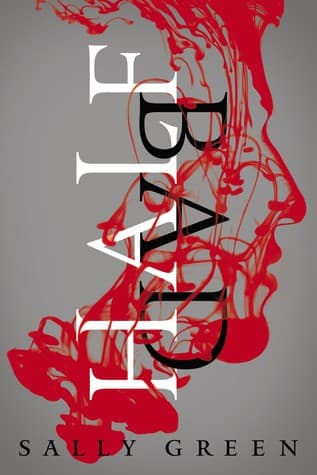
Sally Green (2014)
Genre
Fantasy / Young Adult
Reading Time
7-8 hours
Key Themes
See below
Sign in to track this book
In a world of warring witches, Nathan, the illegitimate son of the most feared dark witch, must escape his captors and confront his lineage to receive his powers before his seventeenth birthday, all while navigating a dangerous world where trust is a luxury he cannot afford.
Nathan Byrn is a sixteen-year-old half-code witch, the son of a White Witch mother, Corrine, and the notorious Black Witch, Marcus Edge. From birth, the White Witch Council, fearing his heritage, treats him as an outcast. He lives with his grandmother and half-siblings, Deborah, Arran, and Jessica, but White Witches, especially Celia, constantly monitor, test, and abuse him. He is often kept in a literal cage, subjected to painful tests and denied basic freedoms. His older sister, Jessica, hates him intensely, while Arran and Deborah show him some kindness, often in secret. Nathan lives in constant fear and longs for acceptance, knowing he must receive his three gifts on his seventeenth birthday to survive.
After another brutal incident where Celia and the Council force Nathan to eat a live rat, he escapes. He flees into the woods, where he meets Annalise O'Brien, a White Witch his age. She is initially scared but soon curious about him. Despite the danger, they form a tentative friendship, meeting in secret. Their hidden meetings offer Nathan a rare taste of normal life and human connection. He also has a brief, unsettling encounter with Gabriel, a Black Witch who saves him from a White Witch hunter, leaving Nathan unsure who to trust.
Jessica discovers Nathan's secret relationship with Annalise. Consumed by her deep hatred and fear, she reports him to the Council. This betrayal leads to Nathan's recapture. He faces even more horrific treatment, including being locked in a cage suspended over a cliff, tortured, and starved. The White Witches try to get information about Marcus from him, believing he has communicated with his father. During this time, Nathan's resolve strengthens, and he becomes increasingly desperate to escape and find Marcus before his seventeenth birthday, which is fast approaching.
Instead of being executed, Nathan is forced into a hunter's program, trained by a harsh but practical White Witch named Mercury. He learns combat skills, how to track and kill Black Witches, and how to survive in the wilderness. This period is a brutal indoctrination, where Nathan must participate in hunts and witness the execution of Black Witches. He is given a special knife and learns to use his half-code abilities to his advantage, though under duress. This training, while terrible, sharpens his survival instincts and fighting ability, making him more formidable.
Nathan takes an opportunity to escape his hunter handlers. Wounded, he flees and eventually finds Gabriel, the Black Witch he met before. Gabriel, a kind and mysterious figure, helps Nathan heal and offers him refuge. Together, they travel to France, a known haven for Black Witches. During their journey, Nathan learns more about the world of witches beyond the prejudiced views of the White Council. Gabriel shares his own struggles and the complex politics between the factions, slowly earning Nathan's trust and becoming a vital ally in his quest to find Marcus.
In France, Nathan and Gabriel continue their search for Marcus. They navigate the dangerous underworld of Black Witches, where allegiances change easily and trust is rare. Gabriel uses his connections and knowledge to guide Nathan, leading them to various contacts and hidden locations. They learn that Marcus is a powerful and elusive figure, feared by both White and Black Witches, and that finding him will be incredibly difficult. Nathan's seventeenth birthday nears, making their mission more urgent, as not receiving his gifts means certain death.
Nathan and Gabriel eventually track Marcus to a remote, heavily guarded location. The reunion is not what Nathan expected. Marcus is cold, calculating, and seems indifferent to Nathan's situation. Instead of the three traditional gifts, Marcus gives Nathan only one: a vial of his own blood, forcing Nathan to drink it. This brutal act is Marcus's way of transferring some of his power, a dark and painful initiation that marks Nathan as a Black Witch and gives him a potent, though raw, ability. The encounter leaves Nathan both empowered and deeply disturbed by his father's nature.
Shortly after Nathan receives his first gift, the White Witches, led by Celia and hunters, launch a surprise attack on Marcus's hideout. In the chaos, Nathan finds Annalise, who has been captured and brought there, likely as bait or a hostage. Faced with a choice between saving Annalise or escaping, and realizing the danger she poses to him, Nathan makes the agonizing decision to kill her. This act, while horrifying, solidifies his survival instinct and breaks his last ties to his former life, immersing him fully in the brutal reality of the witch war.
After the attack and Annalise's death, Nathan is reeling. He struggles with immense guilt and trauma from what he was forced to do, but also with the growing, dark powers he inherited from Marcus. His abilities appear in violent and unpredictable ways, reflecting his inner turmoil. Gabriel stays by his side, offering support and trying to help Nathan understand and control his new gifts. Nathan is now undeniably a Black Witch, marked by his father's blood and his own brutal choices, and the path ahead is uncertain and full of danger.
With his seventeenth birthday passed and his first gift received, Nathan is no longer just a half-code; he is a powerful, though untrained, Black Witch. He, along with Gabriel, retreats further into the Black Witch community, seeking other allies and trying to understand the broader conflict between the factions. Nathan begins to realize that he must make his own way, not simply follow Marcus's, and that his unique heritage might be both a curse and a strength. Despite the darkness of his journey, a glimmer of hope remains that he can find a way to survive and perhaps even bring about change in a world that has always sought to destroy him.
The Protagonist
Nathan transforms from a persecuted, naive boy into a hardened survivor, embracing his Black Witch heritage while struggling to maintain his humanity.
The Antagonist/Mentor
Marcus remains largely unchanged in this book, a force of nature, but his interaction with Nathan sets the stage for Nathan's own transformation.
The Supporting
Gabriel evolves from a mysterious helper to Nathan's most trusted friend and confidant, offering a stable presence amidst chaos.
The Supporting
Annalise's brief arc highlights the tragic consequences of the witch war, as her connection to Nathan ultimately leads to her demise.
The Antagonist
Jessica remains a consistent antagonist, her hatred for Nathan solidifying and driving her destructive actions.
The Supporting
Arran remains a steadfast, if limited, source of familial love and support for Nathan.
The Antagonist
Celia remains a consistently cruel and oppressive figure, representing the institutionalized bigotry against Nathan.
The Supporting
Mercury's role is primarily to provide strategic aid and information, her motivations remaining somewhat ambiguous.
Nathan's struggle to define himself in a world that calls him an 'abomination' is central. He is half White Witch and half Black Witch, belonging to neither side and feared by both. This internal and external conflict drives his quest for survival and understanding. He constantly questions who he is meant to be, especially as he is forced to accept his darker heritage. The pressure to choose a side, or to make his own, is a constant burden. This is clearly shown in his forced training as a hunter, making him kill Black Witches, and later by Marcus's brutal gift, forcing him to consume his father's blood.
“You're a half-code, Nathan. You're nothing. You're an abomination.”
The novel clearly shows how damaging prejudice is through Nathan's persecution. The White Witches, driven by fear and a strict belief in their own purity, subject Nathan to horrific abuse, imprisonment, and torture simply because of his family line. This systemic discrimination mirrors real-world issues of racism and xenophobia, showing how fear of the 'other' can lead to extreme cruelty. The White Witch Council's actions against Nathan are a constant reminder of how deeply rooted prejudice can be, even within families, as seen with Jessica's hatred.
“He's Black Witch. He's dangerous. He's evil.”
Nathan's entire existence is a testament to his strong will to survive. Despite constant physical and mental torment, he clings to life and the hope of receiving his gifts. His resilience is tested repeatedly, from being caged and starved to being forced into a hunter's role. Each challenge, no matter how brutal, hardens him and strengthens his resolve. His desperate flight, his alliance with Gabriel, and his ultimate confrontation with Marcus are all driven by a basic need to live against impossible odds.
“I will survive. I have to.”
Nathan experiences both deep love and devastating betrayal. His tentative, forbidden romance with Annalise offers him a rare glimpse of human connection and acceptance, representing a fragile hope for a different life. However, this love ends tragically, leading to his agonizing decision to kill her. Conversely, the betrayal by his sister, Jessica, and the coldness of his father, Marcus, highlight the dangers of misplaced trust and the harsh realities of his world. These experiences shape his understanding of relationships and survival.
“I loved her. And I killed her.”
The book questions simple ideas of good and evil, particularly through the 'white' versus 'black' witch divide. While White Witches are supposedly good, their actions towards Nathan are often monstrously cruel. Conversely, Black Witches, though feared, are not all inherently evil, as Gabriel's kindness shows. Nathan himself is a mix of both, forcing him and the reader to question whether actions or lineage define one's morality. His transformation into a Black Witch through Marcus's gift blurs these lines further, suggesting that power itself is neutral, and how it is used determines its moral alignment.
“There is no good or bad. There is only power, and those too weak to seek it.”
A magical coming-of-age ritual vital for a witch's survival.
On a witch's seventeenth birthday, they must receive three gifts from their parent (or a close relative) to fully come into their powers and survive the transition to adulthood. Failure to receive these gifts results in death. This serves as the primary ticking clock and driving force for Nathan's quest. It highlights the patriarchal and traditional aspects of witch society and the unique danger Nathan faces as an orphan of a Black Witch, making his survival hinge on finding Marcus, his feared father.
A literal and symbolic prison for Nathan.
Nathan is frequently confined to a literal cage by the White Witch Council, symbolizing his physical imprisonment and the mental and emotional isolation he endures. It represents the prejudice and fear that surround him, as well as the Council's desire to control and contain what they deem dangerous. The cage is a constant reminder of his status as an 'abomination' and the dehumanizing treatment he receives, fueling his desperate desire for freedom and self-determination.
Immersive and immediate perspective of Nathan's experiences.
The story is told entirely from Nathan's perspective in the present tense. This narrative choice creates an immediate, visceral, and intense reading experience, allowing the reader to directly feel Nathan's pain, fear, and desperation. It immerses the reader in his subjective reality, making his struggles and emotional turmoil deeply personal. This also limits the reader's knowledge to only what Nathan perceives, enhancing the sense of danger and uncertainty in a world where trust is scarce.
A unique, stigmatized genetic heritage.
Nathan's 'half-code' status, being the child of a White Witch and a Black Witch, is not just a genetic descriptor but a powerful plot device that drives the entire narrative. It immediately sets him apart, making him an outcast and target for both factions. This identity is the root of all the prejudice and abuse he suffers, but also potentially the source of unique, powerful abilities. It forces him to navigate a morally ambiguous world, embodying the conflict between the two warring factions within himself.
“The only way to get through this is to be stronger than them. To be harder than them. To be more like them than they are.”
— Nathan reflects on his treatment by White Witches and his need to survive.
“You can be good or you can be bad. But you can't be both.”
— A common saying among White Witches, reflecting their black-and-white view of the world.
“I hate being half-anything. I hate that I'm not whole. I hate that I'm always going to be half-something.”
— Nathan's internal struggle with his mixed heritage.
“Sometimes the only way to stay alive is to be a monster.”
— Nathan justifies harsh actions taken for survival.
“Fear can be a useful tool.”
— Marcus, a Black Witch, gives Nathan advice.
“You can't choose your family, but you can choose who you let into your heart.”
— Nathan's thoughts on his complicated family relationships.
“The world isn't black and white. It's a million shades of grey.”
— Nathan's realization about the complexities of good and evil.
“Being different doesn't make you weak. It makes you unique.”
— Gabriel offers comfort and encouragement to Nathan.
“Love is a dangerous thing. It makes you weak.”
— A cynical view on love, often heard by Nathan.
“I'm not a monster. Not yet.”
— Nathan's internal battle against succumbing to his darker nature.
“You don't need magic to be powerful. You need will.”
— A lesson learned by Nathan about true strength.
“Sometimes the things you hate the most are the things that save you.”
— Nathan's conflicting feelings about his Black Witch heritage.
“Trust no one. Not even yourself.”
— A harsh reality Nathan learns in his journey.
“Every choice has a consequence. Even not choosing.”
— Nathan reflects on the impact of his decisions and inactions.
Ready to see how well you understood this book? Take our interactive quiz with 10 questions.

Biography coming soon.







